
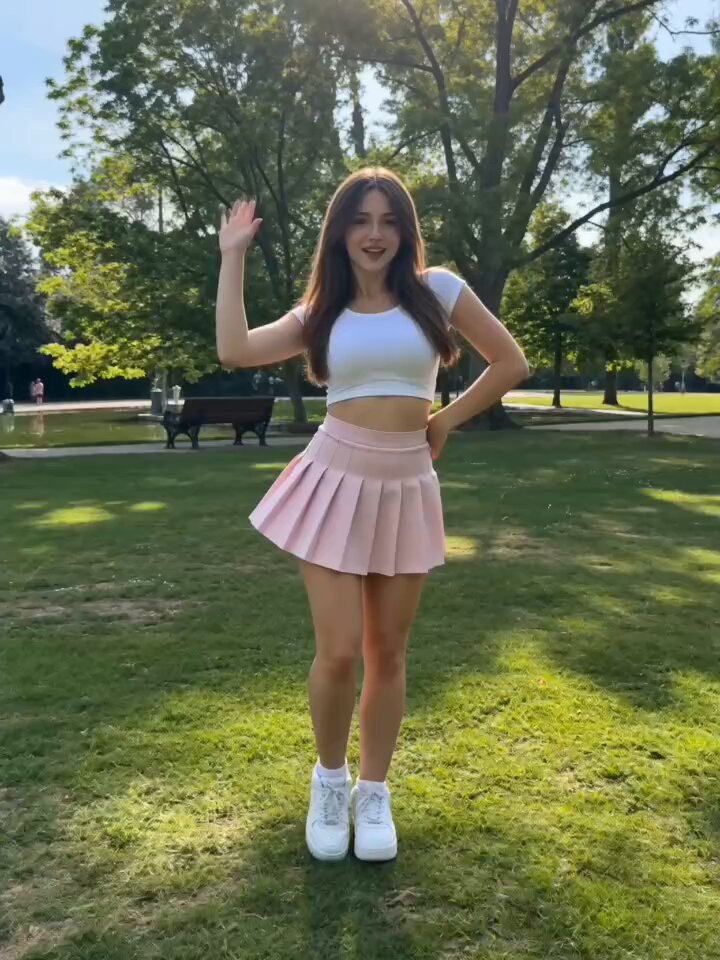
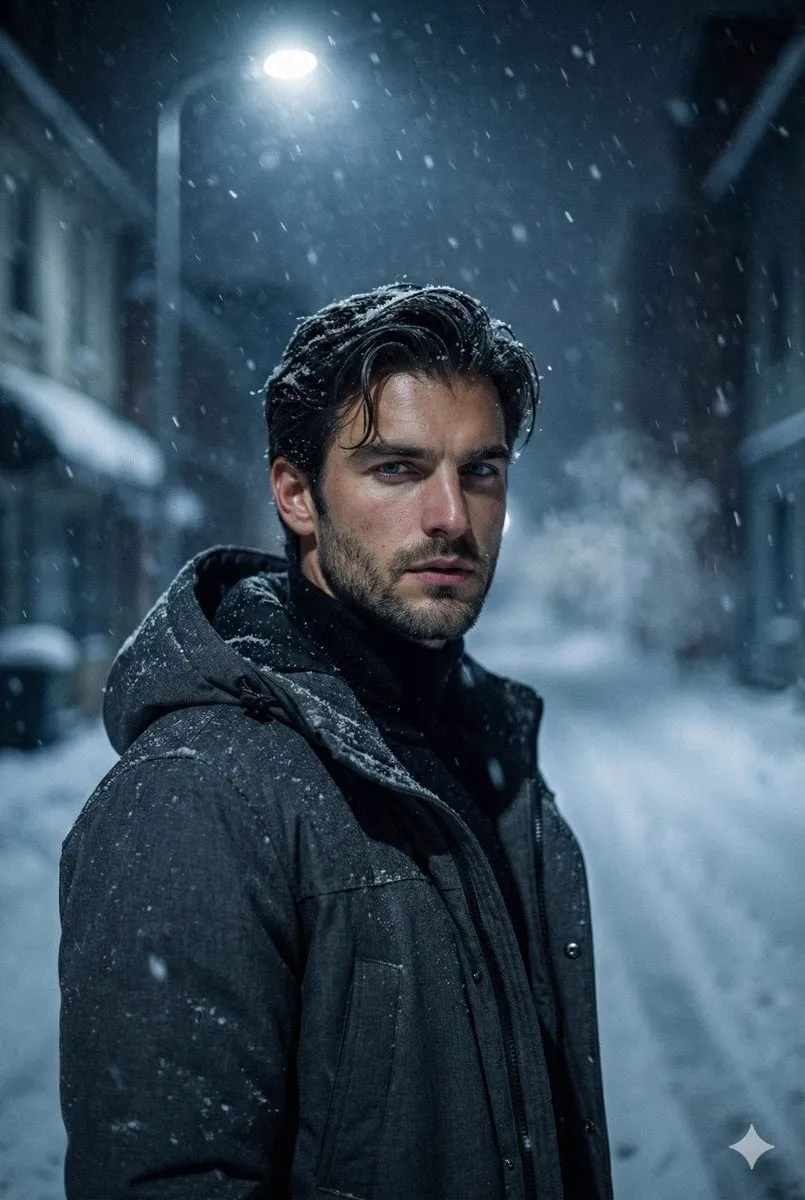
Every year, the Golden Globes nominations give filmmakers and audiences a masterclass in visual storytelling. The films that make the shortlist rarely get there by accident: their frames are composed with intent, their light is shaped to serve emotion, and their camera movements are choreographed to control how we feel from one moment to the next. For a long time, the only way to study those techniques was to sit on a set, go to film school, or spend years shooting your own projects and learning the hard way. That has changed. Modern AI video tools now let anyone deconstruct award-level cinematography, understand why it works, and recreate comparable looks in their own projects without a camera crew or a Hollywood budget.
This guide walks through the core principles of cinematography as demonstrated by award-nominated films, then shows how to apply each principle with current AI tools. You will learn how to approach composition, lighting, color, camera movement, and pacing; how to translate a reference frame into a usable AI prompt; and how to choose the right model for the effect you want. The goal is not to copy a specific movie. The goal is to internalize the language of professional cinematography so you can speak it fluently with a text prompt.
Why Study Award-Nominated Cinematography
Award-nominated films are, in effect, a public library of visual solutions. When a cinematographer frames a character at the edge of the frame to express isolation, or floods a room with warm practical light to suggest nostalgia, they are solving an emotional problem with a visual answer. Those solutions have been refined over decades of professional practice and are now documented, analyzed, and taught in every serious film program.
Studying them is valuable for three reasons. First, it gives you a vocabulary. When you can name the technique you want, you can describe it to an AI model with precision. Second, it trains your eye. The more award-level frames you study, the faster you will notice when your own AI output feels flat, generic, or accidentally amateur. Third, it gives you a reference standard. A good prompt engineer does not invent composition rules; they retrieve them from visual memory and apply them deliberately.
The films nominated for major awards tend to share some visual DNA even when their styles differ wildly. They respect the grammar of the frame: clear subject separation, deliberate negative space, motivated light sources, consistent color logic, and camera behavior that supports the narrative rather than distracting from it. Those are exactly the qualities that separate a striking AI video from a forgettable one.
How AI Changed the Cinematography Game
For most of the history of moving images, the gap between "I can imagine this shot" and "I can produce this shot" was enormous. It involved locations, permits, actors, lenses, lighting rigs, and months of post-production. Generative AI has compressed that gap to a single prompt box. Models like Runway Gen-4, OpenAI Sora, and Kling can now produce footage with genuine temporal coherence: objects stay put, characters remain recognizable, and motion follows physics well enough to feel believable.
That capability matters for cinematography because cinematography is a craft of intention. Every element of the frame exists because someone decided it should. With AI, you can now make those decisions at the level of language: choose a camera angle, describe the light, specify the color grade, and indicate how the camera moves. The model handles the rendering; you handle the intent.
The practical implication is that the bottleneck in video creation has moved from production logistics to visual literacy. The person who understands framing, light, and motion will get dramatically better results from the same tools than someone who types "cinematic video" and hopes for the best. That is why this guide focuses on principles first and prompts second.
1. Composition and Camera Angles: The Backbone of the Frame
Composition is the arrangement of visual elements inside the frame, and it is the first thing an audience reads, often before they consciously notice anything else. Award-nominated cinematography almost always demonstrates disciplined composition. The most famous rule, the rule of thirds, divides the frame into a three-by-three grid and places key subjects on the intersections or along the lines. It is not a law; it is a starting point that creates natural tension and balance. When a character's eyes land on an upper-third intersection, the frame instantly feels more intentional.
Beyond the rule of thirds, professional frames use several recurring strategies. Leading lines pull the eye toward the subject, whether they are roads, window frames, or the edge of a table. Negative space isolates a character and communicates loneliness, freedom, or scale. Symmetry and centered framing create formality, power, or stillness, and are common in scenes involving authority figures or ritual. Depth layering, with a clear foreground, midground, and background, gives a frame the three-dimensional feel that flat AI images often lack.
When you work with an AI video model, composition starts in the first frame. Describe the placement of your subject explicitly: "a lone figure positioned on the left third of the frame, looking across empty space to the right," will produce a completely different shot than "a person standing in the middle." Reference images help even more. If you have a still from a film that demonstrates the composition you want, feed it to the model as a visual reference or use it to guide your written description. Then keep that composition stable across the sequence by describing it consistently in every shot of the scene.
Camera angle carries as much meaning as composition. A low angle makes a subject feel dominant or threatening. A high angle makes them feel small or vulnerable. An eye-level shot feels neutral and intimate, while a Dutch angle, tilting the horizon, communicates instability or unease. These are not decorations; they are semantic choices. The best AI prompts name the angle explicitly, because most models will default to a generic eye-level medium shot if you give them no direction.
2. Dramatic Lighting and Cinematic Color Palettes
The single clearest difference between amateur footage and award-level cinematography is light. Golden Globes-caliber films do not simply illuminate their scenes; they sculpt them. Light in a professional frame is motivated, meaning it appears to come from a believable source, and it is shaped to direct the eye and set the mood.
Hard light from a single source creates deep shadows and high contrast, which reads as drama, mystery, or danger. Soft, diffused light wraps the subject gently and reads as warmth, safety, or romance. Practical lights, like lamps and neon signs that appear inside the scene, add realism and color. Backlight separates the subject from the background with a luminous edge, a technique so common in award-nominated films that audiences read it as "cinematic" instantly.
Color is the second half of that equation. Professional films usually operate on a deliberate color logic, not random saturation. Teal and orange has become the cliché of blockbuster color grading because warm skin tones contrast naturally with cool shadows. But the best films go further, building entire palettes around emotion: muted desaturated tones for grief, warm amber for memory, cold blue for isolation. Some films restrict the palette almost entirely, allowing a single saturated accent, a red coat in a gray landscape, to carry enormous symbolic weight.
AI video models respond strongly to color direction. A prompt that specifies "cool blue tones, soft diffused light, deep shadows with a single warm practical lamp" will produce a visibly different result from "bright, colorful, happy." You can push this further with reference images. Many modern tools support image-to-video or style-reference workflows, where you feed the model a still whose lighting and palette you admire and ask it to preserve that look while animating new content. This is one of the fastest ways to move from generic AI output to something that looks graded by a professional.
3. Camera Movement and Narrative Pacing
Cinematography is not only about the still frame; it is about how the camera behaves over time. A static shot says "observe." A slow push-in says "we are entering this character's mind." A handheld wobble says "this moment is unstable." A long, slow dolly shot can build tension over minutes, while quick cuts and whip pans can communicate chaos in seconds.
Award-nominated directors and cinematographers treat camera movement as narrative punctuation. The key insight for AI creators is that you can now specify this movement in your prompt: "slow dolly-in toward the subject's face," "handheld following shot," "aerial shot starting wide and descending," "static tripod shot." Models like Runway Gen-4 and Sora have improved dramatically at interpreting camera language, and Kling and Luma also handle movement well, though each has its own strengths and quirks.
Pacing, the rhythm of shots and scenes, is harder to control directly in a single generation but can be orchestrated through editing. Generate your shots as discrete beats, then assemble them with intentional rhythm: a slow establishing shot, a medium shot that holds, a rapid sequence of close-ups, and a final wide that releases the tension. This editing-level control is where AI video projects either start to feel like films or collapse into a slideshow.
For scene-level pacing, several AI tools now let you define start and end frames or keyframes. You specify what the first frame should look like and what the last frame should look like, and the model fills in the motion between them. This is a powerful way to create controlled camera moves, like a reveal that begins on a detail and ends on a full scene, without relying on the model to invent the entire trajectory.
4. From Photorealism to Expressive Styles
Not every project needs photorealism, and some of the most striking AI video work deliberately avoids it. Award-nominated films span an enormous stylistic range, from documentary-like naturalism to heavily stylized expressionism. Knowing which end of the spectrum you are targeting will change the models you choose and the way you write prompts.
Photorealistic output, the kind that could pass for live-action footage, is the specialty of the current flagship video models. They excel at realistic skin texture, believable physics, and natural light. If your goal is a commercial, a documentary-style short, or a narrative scene set in the real world, you want these models, and you want to pay close attention to consistency: the same character, the same lighting, the same lens across every shot.
Stylized output opens a different set of doors. Animation looks, painterly textures, anime aesthetics, and abstract visual effects are increasingly well served by specialized models and by image-first workflows. A common approach is to generate a key image in the style you want, using an image model like Flux or similar, and then animate that image with a video model. This two-stage pipeline gives you far more control over style than trying to describe an anime aesthetic from scratch in a text prompt.
There is no objectively "best" style; there is only the style that serves your story. The skill is matching the aesthetic to the emotion. A whimsical animation style undermines a scene about grief; a cold documentary style flattens a fantasy. When you study award-nominated films, pay attention not just to how they look but to why their visual style fits their story. That fit is the real lesson.
5. Using Visual References for Artistic Control
Text prompts are good at describing general intent, but they are weak at conveying precise visual qualities. No amount of words can fully capture the exact texture of a particular film's grain, the specific hue of its shadows, or the way its lens flares. That is where reference images become essential.
Modern AI workflows increasingly support multimodal input: you can supply one or more reference images alongside your text prompt, and the model will treat them as anchors for style, composition, or character identity. This is the closest thing AI video currently has to a cinematographer's lookbook, and it is the single most effective habit you can adopt.
Build a personal reference library. Save stills from films you admire, organized by quality: lighting, color palette, composition, camera angle. When you need a shot, pull the reference that matches the emotion you want, and write a prompt that tells the model what to keep and what to change. For example, "keep this lighting and color palette, but change the setting to a rainy city street at night and the subject to an older man in a trench coat." The model has a concrete visual anchor, and your written prompt supplies the narrative details.
The same technique works for consistency across a project. If you establish a character's face, wardrobe, and environment with reference images at the start, every subsequent scene can draw on those anchors. The result is a multi-scene project that feels like one film instead of a collection of unrelated clips.
6. Choosing the Right AI Model for the Job
The model you choose is a creative decision, not just a technical one. Different models have different personalities, and learning them is part of learning cinematography in the AI era.
Runway Gen-4 is a strong all-around choice for narrative and cinematic work. It has excellent temporal coherence, respects camera direction well, and handles longer, more complex scenes better than earlier generations. OpenAI Sora is the model to watch for physics and realism; it produces some of the most believable motion and complex scene behavior, though access and cost can be limiting. Kling excels at realistic human motion and is a favorite for character-driven content, while Luma has built a reputation for fast turnaround and clean results on shorter clips. For image generation that feeds your video pipeline, Flux and Midjourney are both excellent, and the choice between them often comes down to your preference for photorealism versus stylization.
There is no single correct answer, and the landscape shifts quickly. The practical approach is to keep a small roster of models, learn each one's strengths through tests, and match the model to the shot. A slow emotional close-up, a fast action sequence, and an abstract transition will not necessarily all be best served by the same tool. Budget matters too: premium models cost more, so reserve your most expensive generations for hero shots and use cheaper or faster models for experiments, drafts, and B-roll.
A Practical Workflow: From Golden Globe Frame to Your Own Shot
A disciplined workflow converts what you learned above into repeatable results. Start by choosing a reference frame from an award-nominated film and study it for thirty seconds. Name the composition strategy, the dominant light source, the color logic, and the camera position. Write those four observations down in plain language. That written analysis is your de facto shot list.
Next, translate that analysis into a prompt template: subject, setting, composition, lighting, color palette, camera angle, and camera movement. Fill in the template with your own story elements, keeping the visual qualities from the reference. Generate a still first if your model allows image generation, because a still is cheap to iterate on, and only animate it once the frame looks right.
Then animate, review, and iterate. Watch the generated clip for the three classic failure modes: flickering or morphing objects, inconsistent character appearance, and camera movement that does not match your request. If the character drifts, add reference images. If the camera does something unexpected, simplify the movement language in your prompt. If the color drifts between shots, standardize the color description and, where possible, use a consistent reference image.
Finally, edit with rhythm. Assemble your clips into a sequence with deliberate pacing, and grade them together if your editing software supports color tools. A shared grade across all shots is often the difference between "clips" and "a film," even when the underlying AI output is excellent.
Common Mistakes to Avoid
The most common mistake is prompting for "cinematic" without specifying what that means to you. The word is so overused that models have learned a generic, shallow interpretation of it: teal shadows, lens flare, anamorphic streaks, slow motion. Use the word sparingly and back it up with concrete visual direction.
The second mistake is ignoring consistency across shots. A single beautiful clip is easy; a coherent scene is hard. Plan your character and environment references before you generate, and reuse them every time.
The third mistake is treating the first generation as the final answer. Professional cinematography is a process of iteration, and AI video is no different. Generate multiple takes, pick the best, and refine. The discipline of reviewing your own output against the principles above is what turns good tools into good films.
FAQ
Can I legally study a film's cinematography and imitate its style with AI?
Studying technique and style is a normal part of creative education. The safest path is to aim for inspiration rather than replication: use the underlying principles, not frame-for-frame copies, and never reproduce copyrighted material directly.
Do I need a powerful computer to create cinematic AI video?
Most serious video models run in the cloud, so your local hardware matters far less than it does for traditional rendering. A decent internet connection and a browser are usually enough to get started.
Which AI video model is best for beginners?
Start with whichever tool you can access most easily and learn its strengths before branching out. Many creators begin with Kling or Luma because they are approachable, then add Runway or Sora as projects demand more control.
How do I keep the same character looking identical across scenes?
Use reference images of the character in every prompt, keep the lighting and lens descriptions consistent, and generate all shots for one scene in the same session. Some platforms also offer character or identity features that store a face for reuse.
Is AI cinematography going to replace human cinematographers?
It is changing the job, not eliminating it. Someone still has to decide what to shoot, how to light it, and what it means. The people who understand cinematic principles will be the ones directing these tools.
What is the best way to learn faster?
Study one frame a day. Write down one sentence about its composition, one about its light, and one about its color. In a month, you will have trained your eye more than a year of casual watching would.
