

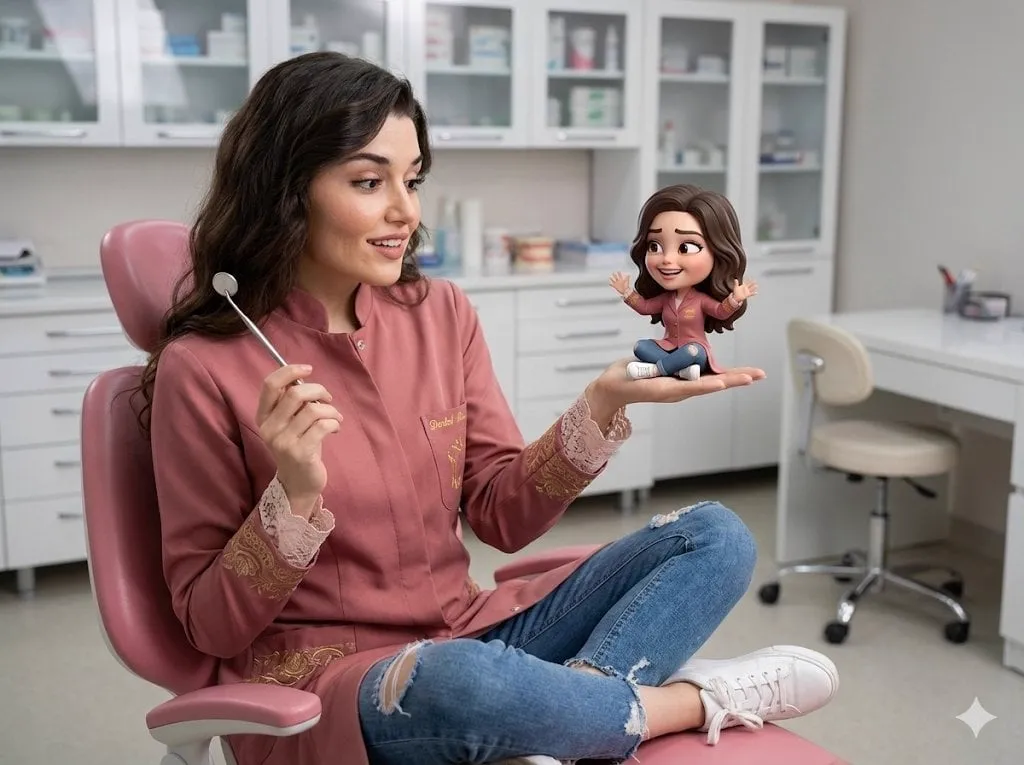

Short-form video is the most competitive content format in the world, and the bar keeps rising. A raw, shaky clip that might have performed in 2022 barely registers in 2025. The platforms are saturated, audiences are pickier, and the algorithms demand both authenticity and production quality. The good news is that generative AI has leveled the field: the tools that once required a studio now fit in a prompt.
This guide walks through how to make successful TikToks using insights from the latest video trends. It covers the science of the first few seconds, the consistency that builds a recognizable account, the audio trends that drive discovery, and the AI-assisted workflow that lets you publish at scale without burning out.
The Landscape: Higher Bar, Bigger Reward
The short-form ecosystem in mid-2025 is defined by one word: polish. Audiences scroll past anything that looks cheap, but they reward content that looks intentional - even if it was generated. That paradox is the opportunity. AI lets independent creators achieve a level of production value that used to require a team, and the algorithm does not know or care that the footage came from a model.
At the same time, authenticity still matters. The winning formula is high production value wrapped around a genuine idea. Synthetic media works when it serves a real story; it fails when it is used as a substitute for one. Understanding that balance is the core skill of the current era.
The Foundations of Viral Attention
The Anatomy of a Perfect Hook
Retention is the holy grail of TikTok. The algorithm does not care how good your video is if people leave in the first two seconds. The hook is a synthesis of visual shock and narrative urgency: it must make the viewer stop scrolling and want to know what happens next.
A strong hook does three things at once. It shows something unexpected. It creates a question in the viewer's mind. And it promises that the answer comes quickly. Practical examples: starting mid-action, opening with a bold claim, showing the end result before the process, or teasing a transformation. Whatever the tactic, the first frame and the first line of audio must carry the weight of the whole video.
Consistency in Character and Style
TikToks are ephemeral, but accounts are not. Viewers return to creators who feel recognizable, and recognizability comes from consistency: a recurring character, a consistent visual style, a familiar voice, a repeated format. This is where AI video has traditionally struggled and where the latest tools have improved most.
Modern AI video tools support reference images and style locking, which means the same character can appear across many videos without drifting. The creators winning in 2025 treat their AI output like a brand system: fixed character sheets, documented prompts, and a style guide. The result is an account that feels like a series rather than a pile of unrelated clips.
Audio Trends: From Niche Sounds to Full Soundscapes
Audio is not background decoration on TikTok; it is the primary driver of trends and a major algorithmic signal. Creators who integrate trending sounds within the first 48 hours of a trend often see exponential reach. The sound tells the algorithm what your video is about and connects it to the broader trend ecosystem.
The trend in 2025 is moving beyond single sounds to complete soundscapes: layered audio with dialogue, effects, and music that builds a mood. AI tools increasingly generate or assist with voiceovers, sound effects, and even full musical tracks. The creators who treat audio as a first-class element - matching the sound to the visual rhythm - consistently outperform those who treat it as an afterthought.
The Technological Revolution: AI as Director and Editor
AI Agent Directors
The biggest change in the creator workflow is the rise of AI agent directors: systems that do not just generate clips but plan them. Give an agent a story idea, and it proposes a shot list, camera angles, lighting, and pacing. This shifts the creator's job from "operate the tool" to "direct the vision," which is a much higher-value activity.
For a typical TikTok creator, this means you can go from a rough idea to a structured production plan in minutes. The agent handles the mechanical decisions - how many shots, what order, what transitions - while you focus on the concept, the tone, and the message. It is the difference between being a technician and being a director.
Mastering a Library of Video Models
No single model does everything well. The current ecosystem has specialists: models with exceptional style consistency, models with superior motion, models optimized for anime, and models that produce photorealistic humans. Learning to select among them is the modern equivalent of learning to edit.
The practical recommendation is to build a personal shortlist. Test the major options in your niche, note their strengths and weaknesses, and standardize on two or three. Depth beats breadth: knowing exactly how to prompt your chosen tools produces better results than dabbling across ten.
Frame-to-Frame Control
The most requested capability in 2025 is frame-to-frame control: the ability to keep the same character, the same setting, and the same object across shots and across videos. This is what separates coherent stories from disconnected clips. The techniques include keyframe references, image-to-video generation from a consistent base frame, and multi-image fusion that combines several reference images into one coherent scene.
For TikTok creators, frame-to-frame control unlocks serialized formats: a character that returns week after week, a recurring setting, a product demonstrated consistently. Those formats build audience loyalty because viewers start to care about the world, not just the individual video.
Content Strategy: Beyond the Surface Hook
Telling Authentic Stories with Synthetic Media
The suspicion around AI content is fading as quality rises, but authenticity is still the currency of trust. The most successful AI-assisted accounts are transparent about their methods and use the tools to tell stories they could not otherwise afford. The story is real even if the footage is synthetic.
This changes the creative brief. Instead of asking "what can I generate," ask "what story do I want to tell, and which parts of it are too expensive or impossible to film?" AI fills the gaps: the exotic location, the historical setting, the impossible physics, the consistent mascot. The human element - the idea, the voice, the point of view - remains non-negotiable.
Micro-Trends and Vertical Dominance
Big trends are easy to see and hard to win; micro-trends within your niche are where independent creators build audiences. The creators who grow fastest are the ones who spot a micro-trend early - a format tweak, a recurring joke structure, a visual motif - and make it their own before it saturates.
Vertical video remains dominant, and the technical requirements are unforgiving: correct aspect ratio, safe zones for captions, and mobile-first pacing. Content that looks like it was made for a phone outperforms content that was simply cropped to fit one. Design for the vertical canvas from the start.
Collaboration and Model Sharing
The community layer of AI video is growing. Creators share styles, prompt libraries, and even trained models. Collaboration - duets, stitches, joint series - remains one of the strongest growth levers on the platform, and AI makes it easier because the production cost of contributing to a collaboration is low.
Publishing your own styles or models can also build a following beyond the content itself. A creator who is known for a distinctive look attracts both viewers and other creators who want to learn it. In 2025, the account is the brand, and the brand can extend into the tools themselves.
Implementation: An AI-Assisted Production Pipeline
A realistic AI-assisted TikTok pipeline looks like this:
- Idea stage: note five content ideas from your niche's trends and your own expertise.
- Plan stage: use an AI planning tool to structure the best idea into a shot list.
- Generation stage: generate each shot with the appropriate model, using character references for consistency.
- Edit stage: assemble in a mobile or desktop editor, add captions and transitions.
- Audio stage: select or generate the sound, sync it to the cuts, check levels.
- Review stage: watch as a stranger would; fix pacing and clarity issues.
- Publish stage: post at your proven best time, with a caption that reinforces the hook.
The pipeline should be fast enough that you can respond to trends within hours. Speed is a feature.
Mistakes That Keep Creators Stuck
Three mistakes explain most stalled accounts. The first is inconsistency: publishing in different styles and niches confuses both the algorithm and the audience. Pick a lane, define your look, and repeat. The second is ignoring retention data: creators who never check where viewers drop off cannot fix the problem. The third is treating AI as a magic button: generating without a plan, a hook, or a story produces technically impressive but emotionally empty content.
A Minimal Tool Checklist
You do not need a big stack to start. You need a generation tool that supports image references, a mobile or desktop editor with caption support, a way to source or generate audio, and a simple analytics habit. Master these four before adding anything else. Every extra tool should earn its place by measurably improving output or saving time.
A common trap is tool hopping: switching editors or generators every week because something new appeared. Every switch resets part of your learning curve. Commit to a stack for at least a month, measure the output, and only then evaluate alternatives. The best tool is the one you have mastered.
FAQ
How long should a successful TikTok be?
Long enough to tell the story, short enough to hold retention. Most winning videos run 15 to 45 seconds. Longer formats work when the hook justifies them; the key is that every second earns its place.
Can AI-generated videos go viral on TikTok?
Yes, and increasingly often. The algorithm cares about retention and engagement, not how the footage was produced. What matters is that the video holds attention and triggers interaction.
How do I keep my AI characters consistent?
Use reference images for every generation, document your prompt structure, and test until the output matches your character sheet. Consistency is a system you maintain, not a feature you switch on.
What is the fastest way to grow?
Publish consistently in a focused niche, respond to trends quickly, and study your retention data. Growth is compounding: every video teaches you something about your audience.
Do I need expensive tools?
No. Start with free or low-cost editors and the most affordable generation tier that meets your quality bar. Upgrade when the revenue justifies it.
How often should I post to grow?
Post at least three to five times per week with a consistent format and niche. Predictable output gives the algorithm signal and gives your audience a reason to follow. Quality per video matters more than raw count.
What is the fastest way to learn the tools?
Pick one generation tool and one editor, and make ten videos with them before exploring alternatives. Depth on a small stack beats breadth across many tools. Document what works so the next video starts from a proven template.
Should I use the same hook structure every time?
Use the same structural principles, not the same formula. The hook must always create curiosity in the first two seconds, but vary the delivery: a bold claim this week, a surprising visual next week, a question the week after. Variety within a consistent framework keeps the account fresh.
How important are captions?
Essential. A large share of viewers watch without sound, and captions also improve retention for viewers who do listen. Keep them short, legible, and synced to the rhythm of the video.
What if a video flops?
Treat it as data, not failure. Check where retention dropped, adjust the hook or pacing, and try again with a different angle. Every flop narrows the range of what your audience ignores, which is exactly how you learn the range of what it loves.
Conclusion
Making successful TikToks in 2025 is a craft with clear rules: hook instantly, stay consistent, ride the audio, and use AI to remove the production bottlenecks. The creators who win are not necessarily the most creative; they are the ones with a repeatable system and the discipline to publish. Build the pipeline, respect the retention curve, and let the trends tell you where to go next.
