
Why Prompt Writing Is Now a Core Production Skill
AI video generation has moved firmly out of the novelty phase. What started as short, glitchy clips has matured into a production tool capable of b-roll, product spots, concept films, and full narrative sequences. But the quality gap between a mediocre result and a professional one is rarely about the model anymore. It is almost always about the prompt.
A prompt is not a wish. It is a specification. The generator does not know your intentions, your brand guidelines, or the mood you pictured at two in the morning. It only knows the words you give it. Creators who treat prompting as a casual typing exercise get casual results. Creators who treat it like writing a shot brief for a cinematographer get work that holds up in a client review.
This guide walks through a complete prompt-writing system: the anatomy of a strong prompt, how to adapt language to different models, how to keep characters and styles consistent across shots, how to direct camera movement with words, and how to iterate efficiently instead of rolling the dice dozens of times. The principles apply whether you are generating a five-second social clip or assembling a multi-scene narrative piece.
The Anatomy of a Strong Video Prompt
Vague prompts produce vague video. The fastest way to improve output quality is to structure every prompt around a consistent set of components. Think of it as filling out a shot sheet:
- Subject: who or what the shot is about, described specifically.
- Action: what the subject is doing, in present tense, with clear motion verbs.
- Setting: where the action happens, including era, weather, and atmosphere.
- Camera: shot size, angle, lens character, and movement.
- Lighting: quality, direction, and color of light.
- Style: the visual language — film stock look, animation style, color grade.
- Mood: the emotional tone that ties everything together.
Consider the difference between these two prompts:
Weak: "A woman walking in a city."
Strong: "A woman in her thirties wearing a mustard raincoat walks briskly through a rain-slicked Tokyo alley at night, neon signs reflecting in puddles, medium tracking shot at eye level, shallow depth of field, anamorphic lens flare, teal and magenta color grade, cinematic and moody."
The second prompt gives the model dozens of concrete decisions so it does not have to guess. Every element you specify is one less random choice the generator makes on your behalf.
Prioritize What Matters Most
Most models weight the beginning of a prompt more heavily than the end. Put the subject and action first, then camera, then lighting and style. If your prompt is getting long, cut adjectives before you cut structure. "Golden hour backlight" earns its place; "beautiful, stunning, amazing" does not. Superlatives do not translate into pixels — concrete visual details do.
Matching Your Prompt Language to the Model
Not all video models speak the same dialect. Each has a strength profile: some excel at photorealistic human motion, others at stylized animation, others at fluid physics like water, smoke, or fabric. Prompt language that unlocks great results in one model can confuse another.
Before writing a single prompt, answer three questions about the model you are using:
- What is it best at? If a model is known for realistic motion and human faces, lean into narrative and character-driven prompts. If it excels at stylized visuals, describe the aesthetic vocabulary of that style explicitly.
- How long are its clips? A model that produces five-second clips rewards a single clear action. A model that produces ten-second clips can handle a two-beat action: "She sets down the cup, then turns toward the window."
- What parameters does it expose? Duration, aspect ratio, motion intensity, camera control, and seed settings all shape the result. Fold them into your plan rather than treating them as afterthoughts.
Read the Model's Own Vocabulary
Spend thirty minutes studying prompts shared by the model's community or documented examples. You will start to notice patterns: some models respond well to film terminology like "dolly in" and "85mm lens," while others prefer plain descriptions like "the camera moves slowly closer." Mirror the vocabulary that demonstrably works for that model, and keep a per-model prompt template in your notes. Over time you will build a small library of proven phrasings you can adapt to any project.
Negative Prompting: Sculpting by Subtraction
Positive prompts describe what you want. Negative prompts describe what you refuse to accept. Used well, negative prompting is one of the most underappreciated techniques for raising baseline quality.
Common negative terms include:
- Distortion-related: "warped faces, extra limbs, deformed hands"
- Quality-related: "blurry, low resolution, compression artifacts, jittery motion"
- Style-related: "watermark, text overlays, logo, frame borders"
- Content-related: anything off-brand for your project
Keep Negative Lists Short and Purposeful
A mistake many beginners make is pasting a hundred-word negative list into every generation. Overly long negative prompts can muddy the model's attention and suppress things you actually want. Instead, maintain a short core list of known failure modes for your chosen model, and add targeted negatives per shot. Generating food content? Negate "uncanny textures, plastic-looking surfaces." Generating dialogue scenes? Negate "lip sync errors, morphing mouths."
Negative prompting is also an iteration tool. When a specific artifact keeps appearing — say, flickering backgrounds — add it to the negative list before you rewrite the entire positive prompt. Subtraction is often cheaper than addition.
Character and Style Consistency Across Shots
The hardest problem in AI video is continuity. Getting one gorgeous shot is easy. Getting the same character, wearing the same outfit, in the same lighting logic, across twelve shots is what separates a reel of clips from a film.
Anchor the Character in Language
Give every recurring character a fixed, portable description block — a sentence or two that never changes between prompts:
"Maya, a woman in her late twenties with short curly black hair, a small scar above her left eyebrow, wearing a charcoal wool coat and a red scarf."
Paste this block verbatim into every prompt featuring Maya. Then change only the action, camera, and setting around it. The more specific and stable the anchor (the scar, the coat, the scarf), the better the model holds the identity across shots.
Lock the Style Block Too
Consistency of look requires the same discipline. Define a style block — for example, "shot on 35mm film, warm amber grade, soft grain, shallow depth of field" — and reuse it word for word. If one scene says "warm amber grade" and the next says "cinematic color palette," the model will happily drift. Consistency in, consistency out.
Use Reference Images and Seeds Where Available
Many workflows let you feed a reference frame or reuse a seed value. Combine these with your language anchors: a reference image pins the face, while the text block pins wardrobe and mood. When a model supports multi-image references, generate a clean character sheet first, then use it as the foundation for every scene. Build a small continuity bible for each project — character blocks, style block, palette notes, and lighting rules — and treat it like a real production document. It will save you hours of regenerating shots that almost match.
Directing the Camera With Words
Camera language is where AI video prompts graduate from description to direction. Modern models respond remarkably well to cinematography vocabulary, and using it deliberately is the difference between footage that feels like someone shot it and footage that feels like it happened.
Shot Size and Angle
Name the framing explicitly: "extreme close-up," "medium shot," "wide establishing shot," "over-the-shoulder," "low angle," "high angle," "dutch tilt." Each term carries a strong visual prior that steers composition immediately.
Lens Character
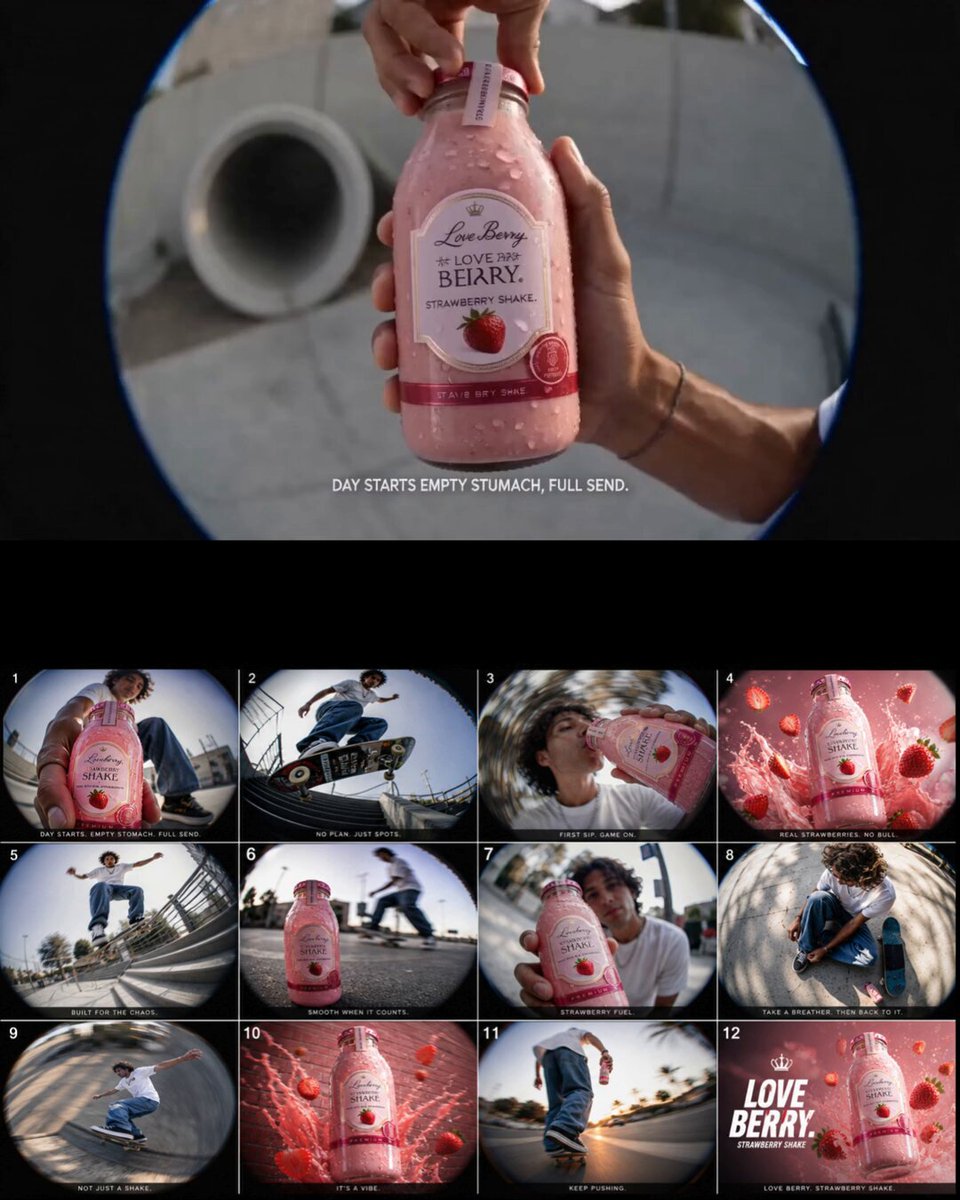
Lens language shapes depth and texture: "shot on 24mm wide-angle" implies expansive space and slight distortion; "85mm portrait lens, shallow depth of field" implies creamy background separation; "anamorphic" implies oval bokeh and horizontal flares. You do not need to be a cinematographer — you need to borrow the vocabulary of one.
Movement
Describe motion with classic terms: "slow dolly in," "smooth crane shot rising above the crowd," "handheld tracking shot following behind the subject," "static locked-off tripod shot," "whip pan." Also state movement speed and stability. "Slow" and "smooth" are two of the highest-value words in AI video prompting, because models love to over-animate. If you want restraint, say so: "minimal camera movement, subject motion only."
One practical rule: one camera move per shot. Just as a real director would not dolly, crane, and whip-pan simultaneously, a model asked to do everything will do nothing well.
A Repeatable Iteration Workflow
Great prompts are rarely written; they are revised. The most productive creators follow a disciplined loop instead of regenerating at random.
Step 1: Write the Master Prompt
Draft a full, structured prompt using the anatomy above. Do not shorten it yet. This is your hypothesis about what the shot should be.
Step 2: Generate a Small Batch
Run two to four generations rather than one. A single generation tells you almost nothing about whether a phrasing works; a small batch reveals whether an element is stable across seeds or just lucky.
Step 3: Diagnose Before You Change
When results disappoint, resist the urge to rewrite everything. Identify the single biggest problem — wrong framing, wrong motion, wrong mood — and change only the words responsible for it. Keep a change log: "v3: added 'shallow depth of field' to fix busy background." This turns prompting from superstition into engineering.
Step 4: Lock Winners, Then Layer
When a prompt produces a strong result, freeze it. Save the exact text, the model, the settings, and the seed. Build subsequent shots from proven language rather than starting fresh each time. Over a project, this compounding library of working phrasings becomes your real asset.
Step 5: Upscale and Finish Deliberately
Plan your finishing pipeline early. If you intend to upscale, stabilize, or interpolate frames, generate with that in mind — slightly longer clips give editing room, and clean compositions upscale better than busy ones. Prompting and post-production are one workflow, not two.
Tailoring Prompts to Project Type
A prompt that works for a moody short film will fail a product commercial, and vice versa. Adjust your emphasis by project type.
Commercial and Product Video
Commercial work lives and dies on product fidelity. Put the product first and describe it with catalog precision: materials, colors, proportions, surface finish. "A matte black ceramic coffee mug with a thin copper rim" beats "a stylish mug" every time. Keep backgrounds simple and controlled — "seamless studio backdrop, soft gradient" — because busy environments invite artifacts. Favor slow, deliberate camera moves that showcase the product rather than flashy motion that draws attention to the generation itself.
Narrative and Artistic Work
Story work shifts the emphasis to mood, atmosphere, and performance. Spend more of your prompt budget on lighting, weather, texture, and emotional context: "tense," "melancholic," "triumphant" — but always backed by visual evidence of the mood, such as "harsh side lighting carving deep shadows" rather than the word "sad" alone. For stylized projects, name the aesthetic lineage explicitly: "hand-painted animation style," "stop-motion claymation look," "grainy documentary footage." Models know these visual traditions and will reach for them when invited.
Social Content
Short-form social video rewards immediacy. Front-load the hook visually — a striking subject, bold motion, saturated color — and remember the vertical frame. Specify aspect ratio deliberately and compose for it: tight vertical shots, faces high in frame, key action in the central band where platform interfaces will not cover it.
Common Prompting Mistakes and How to Fix Them
Even experienced creators fall into predictable traps. Here are the ones that cost the most time:
- Overstuffing the prompt. Forty conflicting details produce mush. If two elements fight for attention, split them into separate shots.
- Asking for multiple actions in one short clip. "She enters, sits down, pours tea, and smiles" in five seconds guarantees chaos. One clear action per clip; imply the rest through editing.
- Neglecting motion description. Many prompts describe appearance perfectly and motion not at all, leaving the model to invent movement. Always answer: what moves, how fast, in which direction?
- Changing everything at once. If you adjust five variables between generations, you learn nothing. Change one, compare, record.
- Ignoring aspect ratio and duration until the end. Composition and pacing are prompt-level decisions, not export-level ones.
- Chasing perfection in one generation. Professionals assemble the final result from several good passes. A slightly static wide shot plus a beautiful close-up often cuts together better than one compromised "everything shot."
Frequently Asked Questions
How long should an AI video prompt be? There is no universal length, but 40 to 80 well-chosen words is a productive range for most models. Long enough to specify subject, action, camera, light, and style; short enough that no element dilutes another. If you exceed roughly a hundred words, audit for redundancy before adding more.
Do cinematic terms like "35mm" or "dolly shot" actually work? In most modern models, yes — dramatically. These terms map to strongly learned visual patterns. Test them individually: add one film term to an otherwise stable prompt and compare batches. You will quickly learn which vocabulary your model respects.
How do I keep the same character across many clips? Use a fixed character description block, reuse reference images or seeds where supported, keep the style block identical, and generate scenes in consistent lighting conditions. Treat continuity as a documentation problem as much as a prompting problem.
Should I write prompts in English even if my project is in another language? Most models were trained predominantly on English-language descriptions, so English prompts tend to produce more reliable results. You can draft in your working language for clarity, then translate the final prompt carefully, keeping concrete visual nouns intact.
Is it better to generate one perfect clip or many clips to edit together? Plan for assembly. Generating coverage — a wide, a medium, a close-up, a detail — gives your edit rhythm and hides imperfections, exactly as live-action production does. The best AI video work is edited, not generated wholesale.
How do I fix flickering or morphing between frames? Add negatives for the specific artifact, reduce the amount of on-screen motion, avoid complex background detail, and prefer slower camera moves. If the model offers motion-intensity settings, lower them before rewriting your prompt.
Closing Thoughts
Prompting is a craft with a low floor and a very high ceiling. The fundamentals — structured prompts, model-aware language, disciplined iteration, and consistency blocks — will carry you further than any single trick. Start by rewriting one upcoming shot with the full anatomy: subject, action, setting, camera, lighting, style, mood. Generate a small batch, diagnose, adjust one variable, and save what works. Do that across a dozen shots and you will not just have better clips; you will have a personal prompting system that makes every future project faster, more consistent, and more ambitious.
