
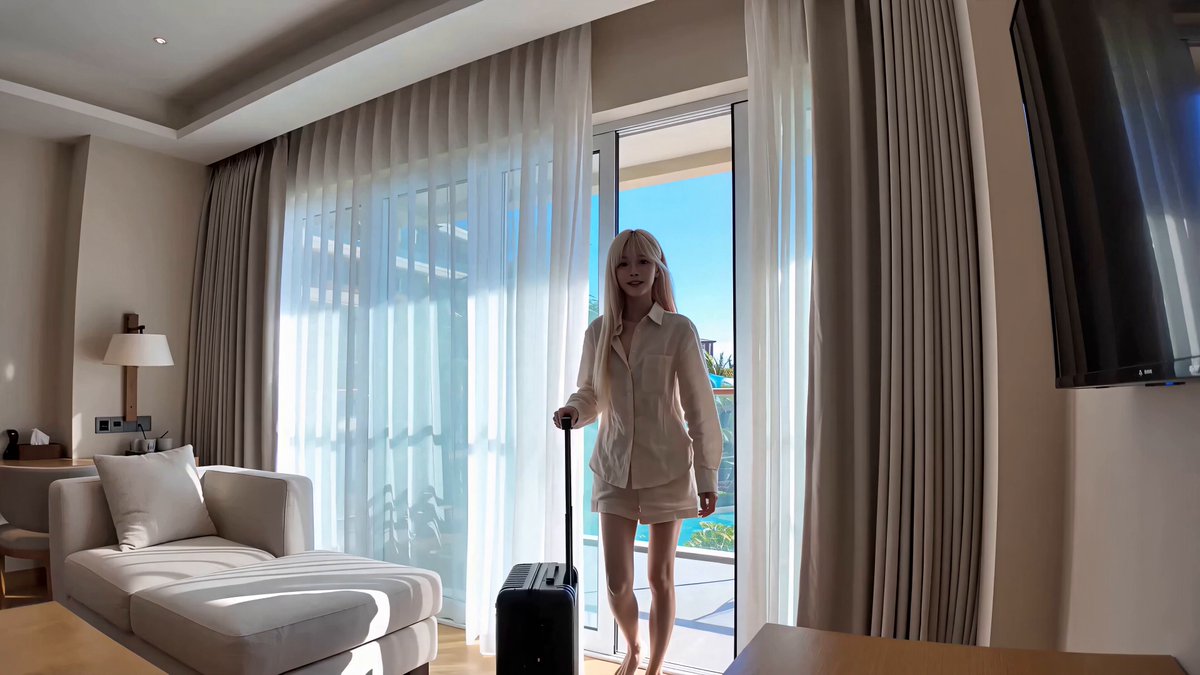
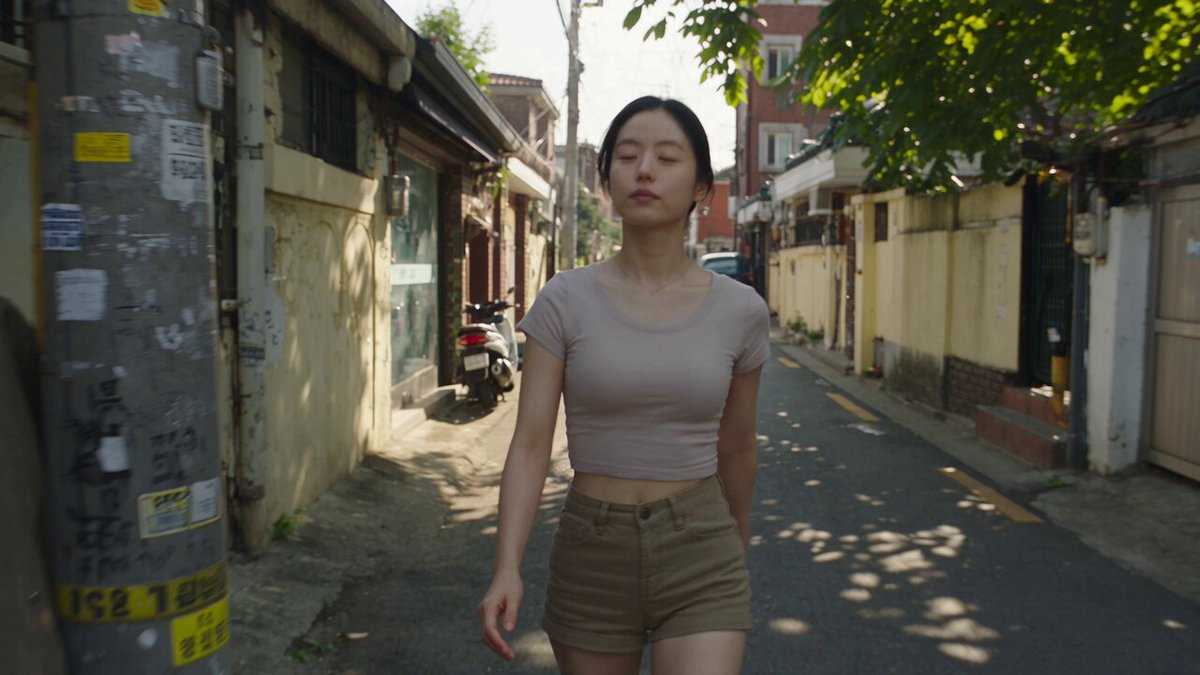
Why Image-to-Video Prompting Is a Different Skill
Text-to-video asks a model to invent a world from nothing. Image-to-video asks it to continue a world that already exists. That single difference reshapes how you write prompts, what you can safely omit, and which errors ruin a clip.
When you animate a still, the model inherits a huge amount of information it did not have to guess: the subject's face, the wardrobe, the color palette, the lens character, the framing, the grain. Your prompt is no longer a description of a scene. It is an instruction set for change. You are telling the model what should move, how much it should move, where the camera should go, and what must stay exactly as it is. Everything you write that duplicates what the image already shows is wasted tokens competing for attention with the words that actually matter.
This is why experienced animators write shorter prompts for image-to-video than they do for text-to-video, not longer ones. A twelve-word prompt that says "slow push-in, hair lifts in the wind, eyes blink once, warm rim light holds" will often beat a paragraph of scene description, because the paragraph spends its influence re-describing a face that is already pixel-perfect in the source frame.
The mental model that works best is a delta model. You are not describing the video. You are describing the difference between frame one and frame N. The smaller and more precise that delta, the more control you keep.
Preparing the Source Still So the Model Has Something to Move
Most disappointing image-to-video results are decided before a single word of prompt is typed. The source image is the contract, and the model will honor its weaknesses.
Resolution, aspect ratio, and cropping
Feed the model an image at or slightly above its native generation resolution. Upscaling a 512-pixel-wide still to a widescreen frame before animating introduces mush that the model then interprets as texture-less regions and fills with smeared motion. Crop to your target aspect ratio first — 16:9 for landscape delivery, 9:16 for vertical, 2.39:1 if you want anamorphic framing — because letting the model reframe for you is how heads get cut off mid-clip.
Depth cues and separation
The best source frames have clear depth layers: a crisp foreground element, a mid-ground subject, and a background that is slightly softer or lower in contrast. When those layers exist in the still, motion reads as parallax instead of as a flat wobble. If your source is flat, add a subtle depth-of-field pass in an image editor before animating.
Leave room for motion
A subject jammed against the frame edge has nowhere to go. Leave negative space in the direction of the intended movement — the left third empty for a rightward pan, headroom for a rising camera. This one adjustment removes more artifacts than any prompt rewrite.
Clean the frame of ambiguity
Remove stray objects, half-visible hands, and unclear shapes. Image-to-video models are aggressive interpreters: they will pick the most motion-plausible reading of an ambiguous blob, and that reading is usually wrong. A cheap cleanup pass is worth more than three extra prompt clauses.
The Core Prompt Architecture: Subject, Motion, Camera, Look, Constraint
A reliable image-to-video prompt has five slots. You do not need all five every time, but knowing the slots keeps you from writing in circles.
1. Motion verb and direction. What changes? "She turns her head to the left," "steam rises," "fabric ripples outward." One primary motion per clip. Two competing motions of similar energy produce the classic morphing melt.
2. Speed and magnitude. "Barely," "slowly," "steadily," "in one quick beat." Models have no shared definition of slow, so pair an adjective with a physical anchor: "slow enough that the coffee surface does not break."
3. Camera instruction. Push in, pull back, truck left, tilt up, orbit, hold static. Covered in detail below.
4. Look and light continuity. Only include what the model is likely to drift on: "warm rim light stays on the left," "preserve the teal-and-amber grade."
5. Constraint. What must not change: "face stays identical," "no new objects enter frame," "background stays fixed."
Ordering clauses for a stable first second
Models weight the beginning of a prompt heavily. Put the most important instruction first, and put the camera instruction before the subject motion if you want a stable opening frame. "Static camera. She blinks once. Light unchanged." reads differently from "She blinks once while the camera slowly drifts." The first protects the composition; the second invites drift.
Negative phrasing that works
Avoid long lists of forbidden nouns. Instead, phrase negatives as preservation instructions, which models handle far better: "keep the background locked," "preserve the original framing," "no change to facial structure." Preservation language is more actionable than prohibition language because it names the target state.
Camera Language: The Highest-Leverage Words in a Prompt
Camera vocabulary does more per word than any other category, because it controls the entire frame rather than a single object.
Movement types and their emotional read
- Push in (dolly in): intimacy, rising tension, attention narrowing.
- Pull out (dolly out): reveal, isolation, context arriving late.
- Truck / track sideways: geography, following, a sense of journey.
- Tilt up or down: scale, awe, or a descent into detail.
- Orbit / arc: hero framing, product showcases, character reveals.
- Handheld micro-shake: documentary immediacy — use at low strength or it reads as an earthquake.
- Static lock-off: the safest choice when subject motion is complex.
Lens and framing vocabulary
Terms like "35mm," "85mm portrait compression," "shallow depth of field," "wide-angle distortion," and "macro" shift how the model renders space. "Slow push-in on an 85mm lens, shallow depth of field, background bokeh blooms slightly" gives a model three coordinated instructions: focal character, depth behavior, and a specific background response.
Combining camera and subject motion
Opposing motion is powerful and dangerous. A subject walking toward a camera that is pushing in creates a compressed, intense shot — but it also doubles the amount of geometry the model must synthesize. If a clip fails, remove one of the two movements rather than adding qualifiers. Ninety percent of failed camera prompts are simply over-ambitious combinations.
Consistency Across Shots: Characters, Wardrobe, and Style
A scene is not a clip. Once you cut between generated shots, consistency becomes the hard problem.
Lock the reference, then lock the language
Reuse the same source still or the same character reference for every shot in a sequence. Then keep a compact "continuity block" — a fixed string of descriptors you paste into every prompt: age, hair, wardrobe, palette, lens, grade. Never rephrase it between shots. Small wording changes produce visible character drift even when the image reference is identical.
Change one axis per shot
Give each shot a single differentiating variable: a new camera angle, a new location, a new time of day. Everything else stays in the continuity block. Shot two might be "same character, same wardrobe, medium shot, low angle, same warm grade, slow tilt up." Shot three becomes the same prompt with "wide shot, eye level, static." This is shot grammar — the visual difference between clips comes from framing, not from re-describing the person.
Style drift and how to slow it
Style drifts because models treat every generation as a fresh interpretation of aesthetics. Counter it by naming the medium explicitly and repetitively: "35mm film still, fine grain, muted contrast, no digital sharpening." Grain and contrast descriptors are surprisingly strong anchors because they affect every pixel uniformly, which gives the model a global constraint to satisfy.
Temporal chaining for hard cuts
When you need a shot to end exactly where the next begins, generate the first clip, export its final frame, and use that frame as the source image for the next clip. Chain three or four of these and you get a sequence that reads as a single continuous take, without ever asking a model to hold a long camera move.
Light, Atmosphere, and Time as Prompt Controls
Lighting instructions do double duty: they set mood and they stabilize the render.
Volumetric light. "Light shafts through the blinds," "haze visible in the beam," "dust motes drifting through backlight." Volumetrics give the model something to animate in empty space, which reduces the chance it invents motion on the subject instead.
Camera response to light. "Slight bloom on highlights," "lens flare as the camera passes the window," "exposure adjusts as she steps into shade." Mentioning how the lens reacts makes the clip feel photographed rather than rendered.
Time of day and weather. These are cheap, high-impact anchors. "Golden hour, low warm sun from the left" tells the model the shadow direction, the color temperature, and the contrast curve in one clause.
Atmosphere as motion. Fog, rain, snow, smoke, and drifting particles are the easiest convincing motions to generate. If your clip looks static and lifeless, adding atmosphere is often a faster fix than increasing subject motion.
A Repeatable Iteration Workflow
Random prompting produces random results. This loop keeps progress measurable.
Step 1: Write a base prompt and freeze it
Write one prompt with a primary motion, a camera instruction, a look anchor, and a preservation clause. Save it verbatim. It is your control condition.
Step 2: Generate at least three variations with different seeds
Never judge a prompt on a single output. Model variance is large. Three seeds gives you a sense of the distribution; two good results out of three means the prompt is solid, not lucky.
Step 3: Change one variable at a time
Test motion strength, then camera, then look. Change one, regenerate, compare against the base. This is the only way to learn which words your specific model actually responds to.
Step 4: Keep a prompt log
Record prompt text, seed, model, source image filename, and a one-line verdict. After twenty clips you will have a personal evidence base far more useful than any generic tip list.
Step 5: Finish in post
Let the model do eighty percent of the work. Stabilize with a tracker, retime with frame interpolation for smooth slow motion, and add grain or a grade on top to unify shots. Models are bad at being final; they are excellent at being raw material.
A reusable template
[Camera] on [lens/framing]. [Primary motion, with speed and direction]. [Secondary atmosphere motion]. [Light anchor]. [Preservation clause]. [Look anchor: medium, grain, grade].
Filled in: "Static medium close-up on an 85mm lens. She turns her head slightly to the left and blinks once. Steam drifts upward from the cup. Warm rim light stays on her left cheek. Keep the background and facial structure unchanged. 35mm film still, fine grain, muted contrast."
Tool-Specific Tuning Without Tool-Specific Habits
Different generators have different strengths, and knowing them saves hours.
Motion-first models (Runway, Kling, Luma Dream Machine, Pika) reward explicit camera vocabulary and handle a single strong motion well. Keep prompts tight and lean on image references. Kling tends to favor cinematic camera language; Luma often responds well to atmosphere-driven motion; Pika is forgiving with stylized sources but drifts on photoreal faces.
Physics-and-duration models (Veo, Sora-class systems) tolerate longer prompts and multi-beat action, but they still benefit from a clean delta prompt. Use them when a shot needs a genuine sequence of events rather than a single gesture.
Open-source pipelines (Wan, Hunyuan Video, LTX, Stable Video Diffusion inside ComfyUI) give you direct control over motion strength, frame count, guidance scale, and reference conditioning. Here the settings matter as much as the words: a high motion-strength value will happily destroy a careful prompt, and lowering it is often the correct fix for warping.
AnimateDiff-style approaches work best with style-locked LoRAs and short clips, and they reward consistency blocks more than camera language.
Regardless of tool, keep your prompt style portable. If you rely on one platform's magic keywords you lose all that learning when you switch, and switching is inevitable.
Common Failure Modes and Their Fixes
Melting faces and warping hands. Usually caused by too much motion for the amount of detail in the source. Fix: reduce motion magnitude, add a preservation clause, or crop closer so the face occupies more pixels.
Everything moves at once. The model is animating texture instead of subject. Fix: name one primary motion, add "background remains still," and consider lowering motion strength.
The clip drifts off-model in style. Fix: add medium, grain, and grade anchors, and reuse them verbatim across shots.
Camera moves but the subject slides. Fix: specify subject grounding — "feet planted, body stays in place" — and prefer subject motion OR camera motion, not both, on the first attempt.
Color shifts mid-clip. Fix: name the palette and the light direction in the look anchor. "Consistent teal shadows, warm highlights, no color shift" is a legitimate prompt clause.
Uncanny smoother-than-real look. Fix: add imperfection language — "fine grain, slight handheld sway, natural skin texture, no beauty smoothing." Applying real grain in post also helps enormously and takes ten seconds.
Clip looks frozen. Fix: switch from subject motion to environmental motion. Hair, fabric, smoke, and light flicker are cheap and convincing.
FAQ and Final Checklist
How long should an image-to-video prompt be? Between ten and forty words for most models. Long enough to cover motion, camera, and preservation; short enough that no clause gets ignored.
Should I describe the subject in the prompt? Only what must stay constant. Describe the person once in your continuity block and reuse it, rather than rewriting their description per clip.
Do seeds matter? They matter for reproducing a good result. Lock the seed when you find a keeper and change it when you are still exploring.
How many clips should I generate per final shot? Plan on five to ten generations for a hero shot and two to three for background texture. Budgeting for that ratio prevents the frustration of treating a first attempt as a verdict.
Can I animate a still I did not create? Yes, but know the rights attached to the source image. Generated output is not a license to use someone else's photograph.
What is the single biggest quality upgrade? Better source images. Depth, clean edges, and room for motion in the frame beat any prompt trick.
Pre-flight checklist: crop to target ratio, check depth layers, leave motion space, write one motion, one camera move, one look anchor, one preservation clause, generate three seeds, keep the winner in a log, finish in post.
Run that loop twenty times and the craft stops feeling like luck. The prompt stops being a wish and becomes a shot specification — and that is the difference between generating clips and directing them.
