

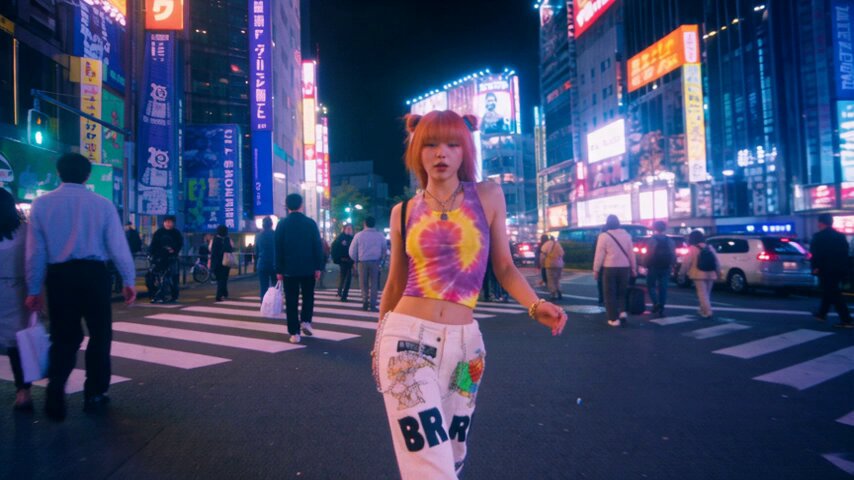

The film industry is being rebuilt around generative video
The film and content industries are at a historic turning point. The transition from traditional production to AI-driven creation has not only accelerated timelines; it has redefined what visual creativity means. At the center of this transformation sit two models with very different philosophies: Sora, OpenAI's flagship video generator, and Kling, the rapidly maturing model from Chinese developer Kuaishou. Both turn text into cinematic video, but they approach the problem from different angles, with different strengths and different trade-offs.
For independent filmmakers, agencies, and content teams, the choice between them is not a matter of brand loyalty. It is a practical decision about which tool delivers the visual quality, consistency, speed, and creative control that a specific project demands. This comparison breaks down the two models across the dimensions that actually matter in production: architecture, visual realism, consistency, speed, creative controls, and workflow integration.
Architecture: two philosophies of video generation
Sora is built on an advanced transformer architecture that models visual data as spatio-temporal patches. Instead of treating video as a sequence of separate frames, the model learns the relationship between space and time in a unified representation. This design gives Sora its signature strength: an intuitive grasp of physical interactions. Reflections, collisions, fluid motion, and object persistence emerge naturally, which is why Sora's output feels physically believable even in complex scenes.
Kling takes a different optimization path. Its focus is on precise adherence to the text prompt and on cinematic control. The model is tuned to respect detailed descriptions of camera movement, framing, and scene composition, making it particularly strong for shots that feel directed rather than merely generated. Where Sora excels at emergent physics, Kling excels at following instructions.
The practical consequence: Sora is closer to a creative partner that interprets a scene, while Kling is closer to a precise tool that executes a brief. Neither is universally better; they shine in different production contexts.
Visual quality and physical realism
Visual quality is the first thing audiences notice, and both models deliver at a level that was unthinkable a couple of years ago. But they achieve realism through different means.
Sora's transformer-based modeling produces impressive physical coherence: liquids splash believably, shadows align with light sources, and multiple objects interact without obvious contradictions. This matters most in narrative scenes where the audience is looking for causal logic in the imagery – a glass falling off a table should break, not float.
Kling's strength is cinematic presentation. Its outputs often carry a polished, film-like quality with strong composition, depth of field, and camera dynamics. For product showcases, atmospheric establishing shots, and stylized sequences, Kling's visual language frequently feels more "shot" than "rendered."
A useful heuristic: if the scene depends on physical cause-and-effect, Sora tends to lead. If the scene depends on mood, composition, and camera craft, Kling often impresses more.
Consistency: keeping characters and objects stable
Consistency across scenes and shots has historically been the greatest obstacle in generative video. A character whose face changes between cuts, or a product whose logo drifts, ruins the illusion and makes the footage unusable for professional work.
Both models have made significant progress, and both rely on reference images to maintain consistency. The workflow is similar: generate a reference still of the character or object, then use it as an anchor for subsequent shots. The difference lies in how faithfully each model preserves the reference across motion and lighting changes.
In practice, teams working on multi-shot projects find that careful reference management works with either model, but the tolerance for error differs. Projects that demand strict brand consistency – advertising, product films, series content – benefit from testing both models with the same reference set before committing.
Speed and computational cost
Production speed is where the models diverge most visibly. Kling's versions are designed with efficiency in mind, offering options that balance quality against generation time. Teams producing large volumes of content – social media variants, localized versions, test batches – value this flexibility highly.
Sora also offers speed tiers, with turbo variants that trade some quality for faster generation. The choice of tier is a production decision: iterate quickly on the fast tier, render the final version on the quality tier.
The economic dimension matters just as much. Cost per generation varies with model version, resolution, and duration, and teams that generate many iterations need a cost structure that does not punish experimentation. The practical advice is to calculate cost per published video, not cost per generation – a more expensive model that nails the result on the first try beats a cheap model that requires dozens of retries.
Creative control: from cinematic settings to complex scenes
Creative control separates professional tools from toys. Modern video models offer a range of controls, and the depth of these controls varies between Sora and Kling.
Sora's control surface is oriented toward scene-level direction: describe the action, the setting, and the mood, and the model composes accordingly. It handles complex multi-element scenes well, which suits narrative experimentation and concept visualization.
Kling's controls are more granular on the cinematographic side: camera movement, shot framing, duration management, and scene transitions respond well to explicit direction. For directors who think in shots rather than scenes, Kling's control model is more natural.
Reference-based workflows – starting from an image, controlling the first and last frame of a sequence – are available in both ecosystems and are increasingly the standard way to plan structured shots. Mastering these controls matters more than the raw quality difference between the models.
Workflow integration and production ecosystems
A model is only as useful as the workflow around it. For individual creators, ease of use and community resources matter. For teams and agencies, API stability, scalability, and integration with existing editing pipelines are decisive.
Sora benefits from OpenAI's broader ecosystem and infrastructure. Kling's ecosystem, while younger, has grown quickly, with integrations into third-party platforms and a strong community of creators producing tutorials and templates.
Three workflow factors deserve attention:
- Iteration speed: how quickly can you go from prompt to a viewable result? Fast iteration is the engine of creative refinement.
- Editing handoff: can generated clips be exported in formats that drop cleanly into your editing software, with transparent backgrounds or alpha channels when needed?
- Automation potential: does the provider offer APIs that let you build repeatable pipelines? Teams that produce weekly content benefit enormously from template-based automation.
Practical guidance: which model for which project
The following patterns reflect how production teams are actually using these models:
- Narrative short films and concept teasers: Sora's physical coherence and scene-level composition make it a strong choice for storytelling experiments.
- Commercial and branded content: Kling's cinematic presentation and prompt adherence suit polished product and brand films.
- High-volume social content: choose the faster, more economical tiers of either model and reserve premium tiers for hero pieces.
- Character-driven series: invest in reference management; both models can hold consistency if the workflow is disciplined.
- Experimental R&D: run both models side by side on the same briefs; the field is moving so quickly that the best tool changes every few months.
The most important recommendation is to build a small evaluation pipeline: take one representative brief, run it through both models, and compare the results against your own quality criteria. The answer that matters is not which model is "better" in reviews, but which one produces the footage your project needs at a cost you can sustain.
How production teams are using these models
Beyond the technical comparison, it helps to see how real teams have integrated Kling and Sora into their workflows. The patterns below repeat across agencies, indie studios, and brand teams.
Pre-visualization in a small studio. A three-person animation studio uses Sora to explore visual ideas before committing to full production. Directors describe scenes, moods, and camera paths, and the model produces concept clips in minutes. This replaced weeks of storyboard revision and lets the team test multiple narrative directions with clients in a single meeting. Kling enters later, for the shots that need precise camera work and must match the final art direction.
Regional ad variations for a consumer brand. A brand team produces localized versions of a single commercial. The hero footage is generated once with Sora, exploiting its physical coherence for the product hero shots. Kling is used for the regional variants that need different actors, settings, and voiceover timing, because its prompt adherence makes it easy to generate each market's cut quickly. The result: one concept, ten markets, a fraction of the traditional budget.
Character-driven content for social. An influencer agency builds recurring AI characters for client campaigns. The key requirement is consistency: the same face, outfit, and personality across dozens of short clips. The team locks identity with reference images and tests both models on the same references. They standardize on the model that holds the character better for their specific style, and reserve the other for scenes that demand its particular strengths. Consistency, they found, is decided by workflow discipline, not by the model alone.
High-volume test pipelines for agencies. A media agency generates hundreds of candidate clips per week for performance campaigns. Speed and cost dominate the decision, so they default to Kling's fast tiers for volume testing, then render the winning concepts at premium quality on whichever model best fits the specific brief. The pipeline is largely automated: briefs in, clips out, metrics back.
The common thread across all these cases is hybrid usage. Teams rarely commit to a single model; they allocate work to each tool's strengths and design workflows around that allocation.
FAQ
Is Kling comparable to Sora in quality? In many scenarios, yes. Sora leads in complex physical interactions and scene-level narration, while Kling leads in cinematic composition and prompt adherence. The right choice depends on the project.
Which model is cheaper to use? Cost structures differ by version, resolution, and duration, and both models offer speed tiers. Evaluate cost per finished video for your specific production pattern rather than comparing list prices.
Can I maintain character consistency across scenes? Yes, with reference images and disciplined workflows. Consistency is a process achievement, not an automatic property of either model.
Do I need a powerful computer to use these models? No. Both are cloud services; generation happens on the provider's infrastructure. A decent internet connection and browser are sufficient.
How long until AI-generated video replaces traditional filmmaking? It will not replace it; it will absorb large parts of pre-visualization, effects, and short-form production. Traditional filmmaking retains its role for physical production, performance, and large-scale projects. The two approaches will coexist and increasingly blend.
How long does it take to generate a clip? From seconds to minutes depending on the model version, resolution, and complexity. Fast tiers return results quickly for iteration; premium tiers take longer but deliver higher quality. A typical production workflow alternates between the two.
Can I use these models for commercial client work? Yes, provided you check the licensing terms of the specific service and disclose AI generation where the client or platform requires it. For client work, document the workflow, keep the prompts and references organized, and confirm usage rights before delivering assets.
What equipment do I need to start? A modern browser and a stable internet connection are enough for most workflows. Heavy automation via APIs requires some technical setup, but the creative work itself runs entirely in the cloud. Hardware upgrades matter only for teams that run local open-source models.
Which model should I learn first? Pick the one that matches your most frequent task and learn it deeply before exploring alternatives. Master the reference workflow, the speed tiers, and the export options. The skills transfer: once you understand how to brief, iterate, and evaluate, adding another model is a matter of days, not weeks.
How do I keep up with rapid model updates? Build a lightweight evaluation habit instead of chasing every release. Re-run your standard test briefs whenever a major version lands, keep a simple scorecard of quality, speed, and cost for your use cases, and revisit your model allocation every few months. The goal is not to always use the newest tool, but to know reliably when a change actually improves your production.
