

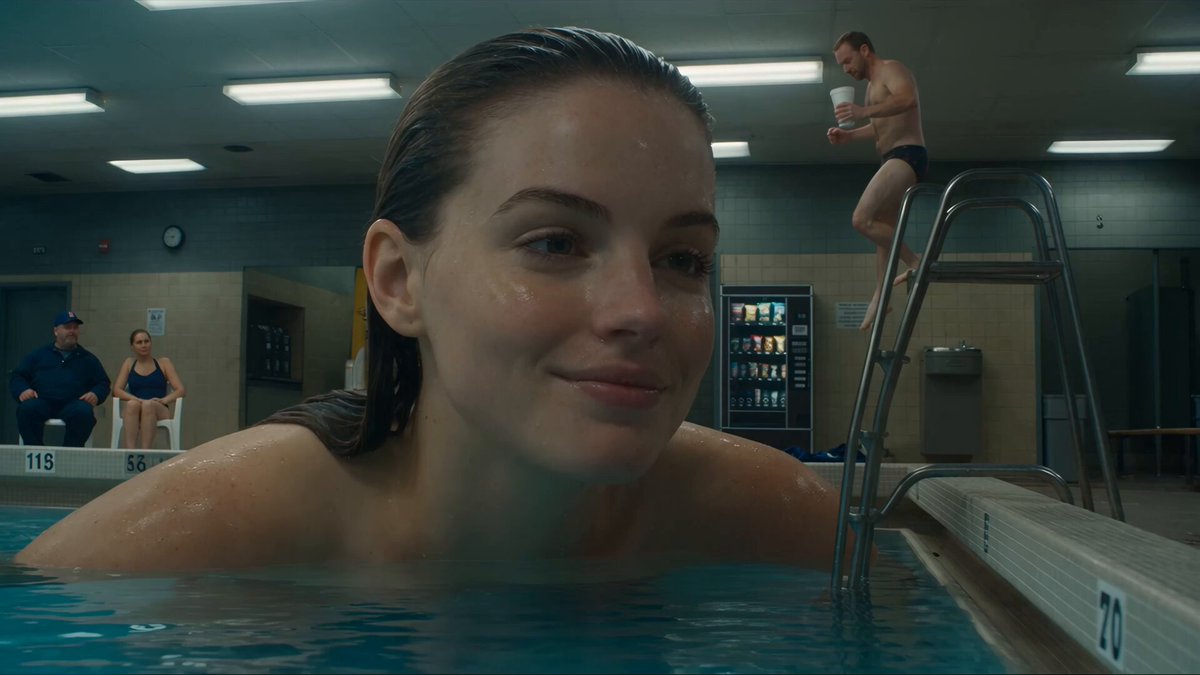

Why Character Consistency Is the Real Bottleneck in AI Video
Generating a beautiful five-second clip is a solved problem. Generating twenty beautiful five-second clips that all feature the same person, wearing the same jacket, with the same jawline and the same eyebrow shape, is still where most AI video projects collapse.
Audiences forgive imperfect physics. They forgive slightly soft backgrounds and mildly odd hand gestures. What they do not forgive is a lead character whose face changes between cuts. The moment a viewer notices that the hero's nose is different in shot twelve than it was in shot three, the illusion of narrative breaks and the video stops being a story and becomes a demo reel of unrelated clips.
This matters more as AI video moves from novelty into production. Marketing teams want a recurring spokesperson. Small studios want episodic series with a recognizable cast. Independent creators want a protagonist who can carry a three-minute short. All of those goals depend on one capability: keeping a character's identity stable across scenes, camera angles, lighting conditions, and time.
Multi-image fusion is the technique that makes this practical. Instead of describing a character in words and hoping the model interprets those words the same way twenty times, you supply actual images of the character and let the system fuse that visual identity into every generation. This guide covers how the approach works, how to build reference material that holds up, how to structure a full production workflow, and how to diagnose the failures that still creep in.
How Multi-Image Fusion Works Under the Hood
At its core, multi-image fusion answers a simple question: how does the model know what your character looks like? Text prompts are inherently lossy. "A woman in her thirties with dark wavy hair and a calm expression" could describe thousands of different people, and a generative model will sample a different one nearly every time.
Reference Images as Identity Anchors
Reference images replace ambiguity with evidence. When you provide several images of the same subject, the system extracts visual features — facial geometry, proportions, skin tone, hair structure, distinctive marks — and encodes them into a representation that can be reused during generation. That representation acts as an anchor. The prompt still describes the scene, the action, and the mood, but the identity layer is no longer left to chance.
The quality of that anchor depends heavily on the images you supply. Five well-lit, sharply focused, varied-angle photos will produce a far more stable character than twenty snapshots taken in the same pose under the same lamp.
Fusion Versus Repeating a Long Text Prompt
The older approach was prompt inflation. A creator would write an increasingly detailed paragraph describing the character and paste it into every shot, hoping that identical text would yield identical results. It rarely did. Models are sensitive to tiny changes elsewhere in the prompt, and even a fixed seed does not guarantee identity stability once the camera angle or the action changes.
Multi-image fusion inverts the relationship. The character is stored visually, and the text prompt is freed up to describe what changes: the location, the camera move, the emotional beat. Identity becomes a constant; everything else becomes a variable. That division of labor is what makes long sequences tractable.
Where Fusion Sits in a Modern Pipeline
In practice, multi-image fusion appears in three places:
- Image generation stage. You create a character sheet — a set of consistent stills — that will later be animated.
- Image-to-video stage. Those stills become the first frames or reference frames for each shot, so motion is generated from a known identity rather than from scratch.
- Post-processing stage. A compositing or face-consistency pass corrects small deviations that survived generation.
Strong workflows use all three. Relying on a single stage is where most consistency problems originate.
Building a Reference Set That Holds Up Over Time
The reference set is the foundation of the entire project. Time spent here pays back across every shot you will ever generate.
Coverage: Angles, Expression, Lighting
Aim for coverage that resembles a photographic reference shoot:
- A straight-on neutral expression
- A three-quarter turn to each side
- A slightly low and slightly high camera angle
- Two or three distinct expressions (calm, smiling, speaking)
- One full-body or three-quarter-body shot for wardrobe and proportion
Ten to twelve images is a comfortable range. Fewer than five and the identity anchor is thin; more than twenty and you start introducing contradictory information without adding much benefit.
Technical Quality Rules
Sharpness beats beauty. The system needs to read structure, not mood. Prioritize:
- Adequate resolution with a clear face occupying a good portion of the frame
- Even lighting with no harsh half-face shadows
- Neutral or simple backgrounds
- No compression artifacts, watermarks, or text overlays
What to Avoid
- Sunglasses, heavy filters, or hair covering the face
- Radically different makeup between images
- Motion blur or low-light noise
- Identical poses repeated — variety is the point
- Images with a second prominent person who could be confused for the subject
If you are designing a character from scratch, generate the sheet first with a consistent still-image workflow, review it as a set, and only then move into video. It is much cheaper to fix an inconsistent sheet than an inconsistent film.
The End-to-End Workflow: Script to Locked Sequence
A repeatable process beats ad-hoc generation. Here is a workflow that scales from a thirty-second ad to a multi-minute narrative.
Step 1: Break the Script Into a Shot List
Create a table with one row per shot and columns for scene, action, camera, lighting, wardrobe, and props. This forces you to notice continuity requirements before you generate anything. Note which shots share a location and which require the character to be seen full-face versus in profile.
Step 2: Create and Validate the Character Sheet
Generate your reference set, then run a validation test. Produce three test shots in genuinely different conditions — one close-up in warm light, one medium shot in cool light, one wide shot in daylight. Compare them side by side. If the character reads as the same person across all three, proceed. If not, fix the sheet before continuing.
Step 3: Generate Shot by Shot With a Gate Check
Generate in small batches, not in one massive run. After each batch, check identity retention, wardrobe accuracy, and lighting continuity against the previous batch. Approve or regenerate. This gating habit prevents the nightmare scenario of discovering at the end that shot four broke continuity and invalidated everything that followed.
Step 4: Assemble and Run a Continuity Pass
Edit the sequence in your editor of choice, then watch it once without stopping. Your eye catches drift that a frame-by-frame review misses. Mark timestamps where identity or wardrobe shifts, and only reshoot those moments.
Step 5: Fix Drift With Targeted Reshoots
Resist the urge to regenerate an entire scene when one shot is off. Adjusting the reference weighting, adding a clearer anchor frame, or reusing a nearby successful shot as an additional reference is usually enough. Regenerating broadly introduces new inconsistencies rather than removing old ones.
Prompting for Fusion: The Controls That Matter
Once identity is handled visually, the prompt becomes a control surface for everything else. Structure it in blocks so you can change one variable at a time.
The Four-Block Prompt
- Identity block. A short, stable description that matches the reference set. Keep it identical across shots.
- Performance block. What the character is doing and feeling in this specific moment.
- Camera block. Shot size, angle, lens feel, movement.
- Look block. Lighting, color temperature, film grain, atmosphere.
When a shot goes wrong, you can now diagnose which block caused it. A wardrobe error is usually the identity or performance block. A wrong feel is the look block. This is far faster than rewriting an unstructured paragraph and guessing.
Weighting and Negative Prompts
If your tool exposes identity strength or reference influence, treat it as a dial. Too low and the character drifts; too high and the performance becomes stiff or the model refuses to change the pose. Increase it for close-ups and dialogue moments, soften it for wide shots and action beats.
Negative prompts are useful for containing specific recurring failures: extra fingers, warped facial proportions, sudden hairstyle changes, unintended age shifts, or wardrobe substitutions. Keep the list short and specific. A bloated negative prompt starts suppressing legitimate detail.
Lighting Continuity
Identity drift is often misdiagnosed. Frequently, the face has not changed at all — the lighting has. A character lit from below with a hard blue source will read as a different person than the same character in soft daylight. Define two or three lighting presets for your project and reuse them rather than inventing new setups per shot.
Multiple Characters in One Frame
When two fused characters share a shot, reduce identity strength slightly for each and specify positions explicitly. Crowded frames are the hardest case for fusion systems, because attention must be split. Generate a clean plate or a simpler composition first, then add complexity.
Choosing Tools and Models Without Wasting Weeks
Model names change constantly, and benchmark clips rarely reflect your project. Evaluate on your own material instead.
Test Criteria That Actually Predict Success
- Identity retention over ten shots. Not one hero example — ten varied shots with the same reference set.
- Motion plausibility. Does walking look like walking, or like a slow dissolve?
- Control surface. Can you set reference influence, seeds, camera moves, and duration precisely?
- Iteration speed. A slower model with better first-pass accuracy often beats a fast model requiring five retries.
- Output resolution and aspect ratio flexibility. Vertical, square, and widescreen should all be viable.
Run the same short test sequence through two or three candidates and compare them blind. Trust the comparison over the marketing.
Stylized, Animated, and Photoreal Projects
Photoreal humans are the most demanding case, because viewers have extremely fine-tuned detectors for faces. Stylized and animated looks are more forgiving — and often more consistent — because small deviations read as stylistic variation rather than identity failure. If consistency is your primary pain point and the project allows it, a slightly stylized look can dramatically reduce your iteration load.
Hybrid Stacks
Many strong workflows combine tools: a still-image model for the character sheet, a video model for motion, and a compositing application for grading and continuity patching. Treating these as one flexible stack rather than searching for a single tool that does everything gives you much more control.
Common Mistakes and Practical Fixes
Mistake 1: A thin reference set. Two or three images rarely hold. Fix: expand to eight to twelve with real angle variety.
Mistake 2: Reusing one anchor frame for every shot. The model overfits to that pose and ignores new camera angles. Fix: rotate anchors so each shot starts from the closest matching reference.
Mistake 3: Changing prompts between test and production. New wording shifts results unpredictably. Fix: freeze the identity block and change only what the shot requires.
Mistake 4: Ignoring wardrobe continuity. Faces stay stable while jackets change color. Fix: include wardrobe in the identity block and in the sheet.
Mistake 5: Generating everything before reviewing anything. Drift compounds. Fix: batch and gate.
Mistake 6: Over-cranking identity strength. Characters become rigid and expressions flatten. Fix: dial strength per shot type.
Mistake 7: Mixing aspect ratios mid-project. Cropping changes facial proportions. Fix: lock the ratio before you start.
Mistake 8: No continuity pass. Small errors survive to the final export. Fix: watch the full sequence start to finish at least twice.
Continuity Beyond the Face: Wardrobe, Props, and Sound
Identity is the headline problem, but narrative continuity has other layers. Wardrobe, props, and even audio carry continuity weight that viewers register subconsciously.
Build a small continuity bible: one page listing each character's wardrobe per scene, key props and their positions, and the time of day. Reference it during the shot list stage, not after. A character holding a mug in one shot and an empty hand in the next will break immersion just as quickly as a changed face.
Audio consistency matters too. If you are using a synthetic voice, lock the voice profile early and reuse it. Changing pitch or pacing between scenes makes the same character feel like two different people. For music, keep the same theme and instrumentation family across related scenes so the audience associates a sound with a character or location.
Managing Iteration Time and Compute
Consistency is not free. It costs generation cycles, review time, and patience. A few habits keep the budget reasonable:
- Batch similar shots together. Shots with the same lighting and location can often be generated and reviewed as a group, which reduces context switching.
- Reuse successful frames as anchors. A shot that worked is a better reference for the next shot than the original sheet.
- Keep a rejection log. Note what failed and why. Patterns emerge fast, and the log becomes a checklist for the next project.
- Set a retry limit. Three attempts per shot, then change an input rather than rolling the dice again. Repeated identical attempts are the most common time sink.
- Test at low resolution, finish at high resolution. Confirm identity and framing cheaply, then commit to final quality only on approved shots.
If you are producing a series, invest once in a clean, well-documented character sheet and a locked prompt template. That initial investment typically reduces per-episode effort significantly.
FAQ
How many reference images do I actually need?
Eight to twelve with genuine angle and lighting variety is the sweet spot for most projects. Go higher only when the character appears in extreme conditions, such as heavy profile shots or action sequences.
Can I fix a character that already drifted?
Yes, but patch locally. Identify the drifted shots, add a strong anchor frame from a correct shot, and regenerate only those. Wholesale regeneration usually spreads the problem rather than solving it.
Is multi-image fusion only for human characters?
No. It works for animals, mascots, products, vehicles, and props. Anything that must look identical across shots benefits from the same approach.
Do I still need detailed prompts if I use reference images?
Yes, but for different reasons. Reference images handle identity; prompts handle performance, camera, and look. The two layers are complementary, not redundant.
Why does my character look different in wideshots?
Small faces give the model less pixel-level information to work with. Either increase identity strength for wide shots or generate them at higher resolution and reframe.
Should I use the same seed for every shot?
A fixed seed helps stability within a similar shot type but can lock you into a composition. Vary seeds across different camera angles and rely on the reference set for identity instead.
How do I handle a character who ages across the story?
Create two reference sets — one per life stage — and transition with intermediate shots. Blending both sets in a single generation tends to produce a face that reads as neither.
What is the fastest way to test a new model for consistency?
Ten shots, same reference set, varied camera angles and lighting. Review them side by side without knowing which model produced which. That single test tells you more than any feature list.
The Short Version
Consistency in AI video is not a matter of luck or of writing a longer prompt. It is a systems problem: capture identity visually, stabilize it with a well-built reference set, control everything else through structured prompts, and review in gated batches so errors surface early.
Start with a character sheet you would be proud to shoot from. Validate it with three deliberately different test shots. Freeze your identity block, vary only what the shot requires, and watch the full sequence before you export. Do that, and the same face will walk through every scene of your next video — which is exactly what turns a collection of clips into something an audience will actually watch to the end.
