
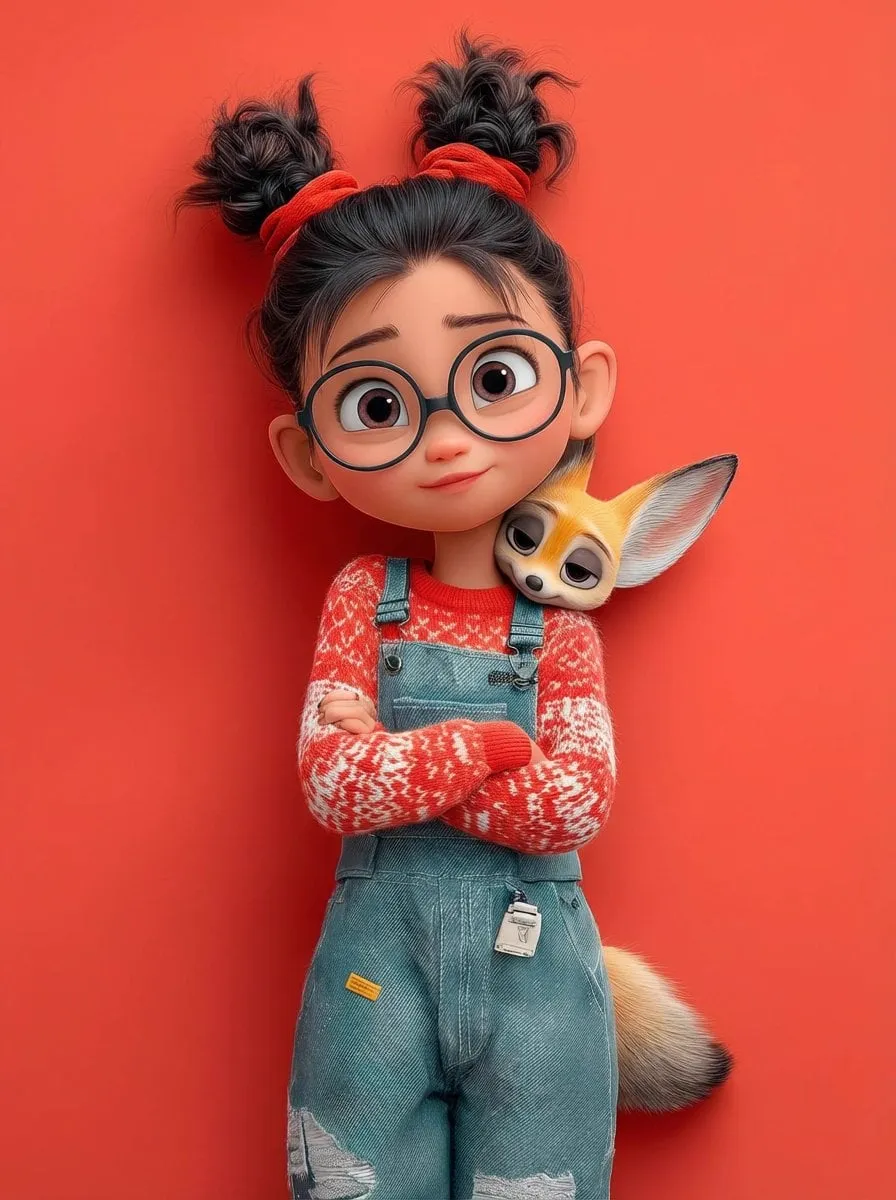

Why Multi-Image Fusion Is the Skill That Separates Clips From Films
A single generated shot can look astonishing. Two shots of the same person in the same room usually do not. The jawline widens, the jacket shifts shade, a kitchen counter migrates from the left wall to the right, and the viewer registers exactly one thing: something is fake. Multi-image fusion is the practical answer to that problem. Instead of describing a character with words alone, you hand the model several images of the same subject - a face from three angles, a costume under two lighting setups, a product from front, profile, and detail - and let it reconstruct that subject in new situations.
It fixes a specific set of failures:
- Identity drift across cuts, where facial structure and apparent age shift scene to scene.
- Wardrobe and prop mutation, where a jacket gains a pocket or a bottle label changes shape.
- Lighting and color mismatch that makes consecutive shots feel like they were captured in different decades.
- Style inconsistency across episodes, where a series stops feeling like one coherent library.
The important mental shift is this: multi-image fusion is not a button you press once. It is a workflow that spans reference preparation, keyframe generation, shot production, and post-production matching. Teams that treat it as a workflow ship consistent sequences. Everyone else spends their evenings regenerating shot four because shot four refuses to look like shot one.
The Four Axes of Consistency, and Where Drift Appears First
Consistency is not a single property. It is four properties that fail in different ways, and knowing which one you are fighting saves hours.
Identity
Face geometry, apparent age, hair volume and parting, skin tone, eyebrows, and any distinctive feature such as a scar or a gap in the teeth. Identity is the most sensitive axis because humans are finely tuned to faces. A two percent shift in eye spacing reads as a different person, even when nothing else changed.
Style and grade
Palette, contrast curve, grain, lens character, and the overall emotional temperature of the image. Style drift is more forgiving than identity drift but far more damaging to perceived production value, because it breaks the illusion that all shots came from one camera department.
Space and geography
Where walls, doors, windows, and furniture live. Which way the subject faces relative to the room. Screen direction, the 180-degree rule, and eyeline height. Geographic drift is the most common cause of the sensation that a sequence was assembled from unrelated footage.
Motion and physics
Weight, gait, fabric behavior, how a hand grips a cup, how hair responds to a turn of the head. Physics drift is subtle until it is not, and it usually appears as floatiness rather than as a hard error.
Where drift shows up first
On a phone screen, viewers forgive a surprising amount until something moves close to camera. In practice, check these before anything else:
- Hairline, ears, and the shape of the jaw at the first and last frame of every clip.
- Jewelry, logos, buttons, and small props that can silently change count or shape.
- Shadows: direction, softness, and length.
- Eyelines and the side of the face that is lit.
- Hands and anything a hand touches.
- Text on packaging, signage, and screens.
- Background extras and reflections in windows or mirrors.
How Multi-Image Fusion Works Under the Hood
A working understanding of the mechanism is not academic trivia. It tells you which knob to turn when a shot misbehaves.
Reference conditioning at the attention layer
Modern video generators receive text as one conditioning signal and reference images as another. The references are encoded into embeddings that the generation process can attend to while it builds each frame. Text tells the model what kind of thing to make. References tell it which specific thing to make. With one reference image, the model interpolates aggressively and invents the rest. With several, it has enough evidence to reconstruct the subject from a genuinely new angle instead of guessing.
Identity anchors versus style anchors
Separate your references into two mental buckets. Identity anchors define who or what is on screen: face, build, wardrobe, product geometry. Style anchors define how the image looks: palette, lighting quality, film emulation, lens character. Blending the two in one bucket is the most common source of frustration, because over-weighting a style reference flattens identity, while over-weighting an identity reference can drag the grade away from the rest of the sequence.
The fidelity and motion tradeoff
Strong reference adherence tends to reduce motion amplitude. Frames stay close to the reference, which keeps the face stable, but gestures shrink and the camera becomes conservative. Weak adherence produces livelier movement and looser framing, with identity drifting in the background. The practical answer is not to pick a side globally but to vary it per shot type: hold identity hard on close-ups and dialogue coverage, then relax adherence on wide action beats where the face occupies fewer pixels and the audience is reading motion rather than features.
Within-clip coherence versus across-clip coherence
These are different problems. Within a clip, the model maintains temporal consistency internally. Across clips, nothing is carried over unless you carry it. Every new generation needs the same reference pack, the same invariant prompt prefix, and ideally the same seed family, otherwise you are starting a new film each time you press generate.
Building a Reference Pack the Model Can Actually Read
Coverage beats quantity
A pack of eight to twelve carefully chosen images outperforms twenty random ones. Aim to cover:
- Angles: straight on, three-quarter left, three-quarter right, one profile.
- Heights: at least one shot slightly below eye level and one slightly above.
- Expressions: neutral, mid-smile, speaking.
- Lighting: soft daylight plus one harder key, and a low-light frame if the story needs it.
- Framing: full body once, medium once, close-up once or twice.
What to leave out
Blurry frames, motion-blurred frames, watermarks and overlaid text, images where wardrobe conflicts with the wardrobe you intend to use, frames containing other people who might bleed into the result, and heavily filtered images whose color science fights your target look. Also exclude images of the subject at visibly different ages if you need a fixed apparent age.
Naming, folders, and versioning
Treat reference packs like source assets, because that is what they are. One folder per character, product, or location. A short readme noting what the pack is for and what it must not influence. Version numbers such as v01, v02, and a clearly marked locked set once a look is approved. Record which pack produced which approved shot. When someone asks in three weeks why shot twelve looks different, the answer will be in the folder, not in someone's memory.
A Repeatable Multi-Shot Workflow
Step 1 - Write the look bible first
One page. Palette anchors, key light direction, lens feel, grain level, wardrobe list, character description, and two or three tone references. This document is what you diff against when a shot feels wrong.
Step 2 - Lock keyframes as still images
Generate stills before video, every time. Stills iterate faster and cost far less, and a locked keyframe per shot gives you a target to compare against once motion enters the picture. Lock the framing, the lighting, and the wardrobe in image space first.
Step 3 - Generate the hero shot first
The hero shot is the one with the most screen time or the most identity-critical content. Get it right before producing anything else. Every subsequent shot is then measured against a known-good anchor rather than against an idea.
Step 4 - Branch instead of remixing
Derive each new shot from the locked reference pack, not from frames of an earlier generated clip. Using output frames as inputs compounds artifacts: softness stacks, color shifts accumulate, and small identity errors become permanent. Keep the pack as the single source of truth.
Step 5 - Assemble, grade, and trim
In the editor, cut on motion, trim a couple of frames into each cut so transitions feel intentional, and apply a single grade across the sequence rather than grading clip by clip. A light, consistent grain pass over the whole timeline hides small differences in generation quality better than any per-clip fix.
Prompt Patterns for Consistent Characters, Products, and Places
The invariant prefix method
Structure every prompt in three blocks and keep the first two byte-identical across the whole sequence.
Subject block (never changes): name, age range, build, hair, wardrobe, distinctive features
Look block (never changes): palette, key light, lens, grain, contrast
Shot block (changes per shot): framing, angle, action, camera move, duration
Only the shot block should be edited between generations. If you paraphrase the subject block, the model reinterprets the character, and you will spend the next hour wondering why the nose changed. Copy and paste is not laziness here; it is craft.
Products and packaging
Reference a product from front, three-quarter, top, and one macro of the label. Avoid glossy reflections that confuse geometry. If label text must be perfectly sharp, generate the plate without reading the text and composite the real label in post. Generated microtext is the fastest way to look amateur.
Locations and establishing shots
Two or three wides plus one detail frame, such as a doorknob, a sign, or a window latch. Decide the screen direction of the location early and never flip it, because a mirrored establishing shot silently disorients the audience and looks like an error even when they cannot say why.
Tool Selection: Criteria That Outlast Any Model Release
Model names change monthly. These criteria do not.
| Criterion | What to check | Why it matters |
|---|---|---|
| Reference depth | Multiple image slots, separate identity and style slots, weighting control | Determines whether consistency is achievable at all |
| Iteration cost | Time and spend per retry | Consistency work is iterative, so retry economics dominate |
| Clip length and resolution | Native duration, upscaling, aspect ratios | Long takes reduce the number of consistency seams |
| Control surface | Camera moves, masks, image-to-video, extension | Lets you fix one element without regenerating everything |
| Queue and hardware | Local versus hosted, batch behavior, seed control | Turnaround shapes how many passes you can afford |
| Pipeline fit | Export formats, editor integration, alpha support | Prevents manual exports from becoming the bottleneck |
Prioritize reference depth and iteration cost. A model with spectacular realism but shallow reference control will cost you more time than it saves on any project longer than one shot.
Quality Control: A Five-Minute Drift Audit
What to check, in order
- Compare the first and last frame of every clip for face and hairline shape.
- Compare wardrobe details across cut points, especially collars, cuffs, and pockets.
- Sample skin tone and the dominant background wall color across shots; if the numbers wander, the grade will not save you.
- Verify screen direction and eyeline height shot to shot.
- Inspect hands, props, and anything being held.
- Inspect text and logos.
- Check shadow direction against the key light established in the look bible.
The fix ladder
Change one variable at a time. Prompt wording first, then the reference pack, then adherence weighting, then seed, then motion settings, and only then a manual compositing fix in post. Most drift is solved at the second rung, which is why reference hygiene pays for itself so quickly.
Mistakes That Quietly Destroy Continuity
- Reusing frames from a previous clip as references instead of the original pack.
- Mixing reference images captured under wildly different lighting conditions.
- Rewording the character description in every prompt and calling it creative variation.
- Changing wardrobe mid-sequence and assuming the audience will not notice.
- Flipping screen direction between shots of the same conversation.
- Over-weighting a style reference until the face loses its structure.
- Adding references endlessly; past a point, each new image adds ambiguity rather than information.
- Chasing maximum motion strength, which trades identity stability for movement you can generate elsewhere.
- Grading each clip separately instead of once across the whole sequence.
- Keeping no version log, so approved looks cannot be reproduced.
Scaling Consistency Across Long Projects and Teams
Once a sequence works, the challenge becomes repeatability. Standardize shot codes such as S01_SH003_v02 so everyone references the same asset with the same name. Freeze approved reference packs and require a written reason before anyone edits them. Keep an approved look still pinned next to the timeline as the visual reference point for reviews. Build review gates at keyframe stage, not at final render stage, because catching identity drift in a still takes seconds while catching it after twenty clips have been generated takes a weekend.
Two practical guardrails matter as projects grow. First, licensing: only use reference images you have the rights to use, and get explicit consent when a real person's likeness is involved. Second, transparency: keep a short record of which images informed which outputs, so you can answer questions later without reconstructing the process from memory.
FAQ
How many reference images do I actually need?
Three is a workable minimum for a face, six to twelve is a comfortable range, and beyond roughly fifteen you usually start adding contradictions rather than detail. Judge a pack by coverage, not by count.
Why does my character look correct in stills but drift in video?
Video models add temporal reasoning, which redistributes attention across frames and lets motion blur soften identity features. Shorten clips, reduce motion amplitude, increase identity adherence, and cut more often rather than generating longer takes.
Can I keep one character consistent across different generation tools?
Not perfectly. Each tool builds its own internal representation, so identity will shift when you switch. Keep the pack and look bible portable, expect a regrade, and treat output from each tool as a separate plate that you match in post.
Do I need reference images of the location too, not just the character?
Yes, if the location recurs. A small location pack prevents the geography drift that makes a series feel like unrelated footage, and it costs far less effort than fixing room layout in post.
What is a realistic starting point for a first consistent sequence?
Pick three shots, one character, one location, and one minute of finished runtime. Build a pack of eight references, lock a keyframe for each shot, produce the hero shot first, then branch. Expect the first pass to expose two or three specific drift problems, which you can then fix with a single variable change each.
Does a consistent workflow slow production down?
Only at the start. Reference preparation and keyframe locking add perhaps an hour to a short project, and they typically remove several hours of regeneration later, because you are fixing problems in cheap stills rather than in expensive motion passes.
