
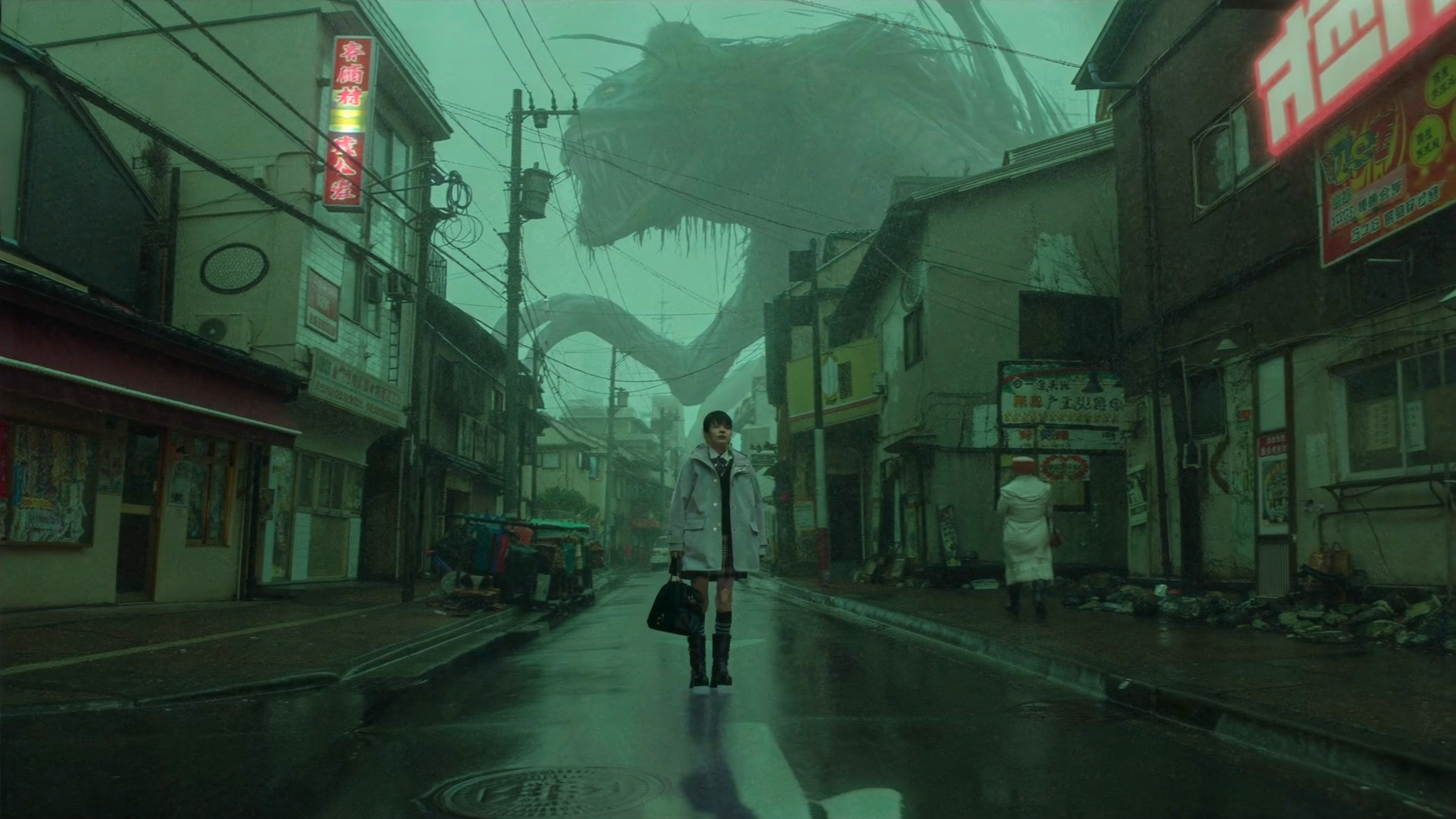
Why Character Consistency Is the Hardest Problem in AI Filmmaking
Anyone who has tried to tell a story with generative video runs into the same wall. The first shot is gorgeous: a woman in a rust-colored coat stands at a crosswalk in the rain. The second shot is supposed to be the same woman, closer, saying something. Instead you get her cousin — same coat, similar haircut, subtly different jawline, different nose, and eyes that read as a completely separate person. The audience notices instantly, even if they cannot articulate why.
The reason is structural, not a bug you can prompt your way out of. Generative video models do not store characters. They sample from a probability distribution conditioned on text. A prompt like 'a woman in her thirties with dark curly hair and a rust coat' describes an archetype, not an individual. Every sampling step is a fresh draw, and small variations compound across shots: the face drifts, the hair length changes, the coat shade wanders, the apparent age slides. By shot twelve, you are directing a stranger.
Human perception makes this unforgiving. Viewers lock onto identity cues — the spacing of the eyes, the shape of the nose, the set of the mouth, skin tone, hairline — within a fraction of a second, and they track those cues across cuts without conscious effort. In live action, the performer's face is a fixed physical object, so continuity is guaranteed by physics. In AI video, continuity has to be engineered. That is the job multi-image fusion was built for.
This guide is a practical workflow for keeping characters stable across an entire short film: what multi-image fusion does, how to build references that actually help, how to prompt, which pipeline shape suits which project, and the quality-control habits that catch drift before it ruins a scene.
What Multi-Image Fusion Actually Does
Multi-image fusion means conditioning a generative model on several reference images of the same subject at once, so the model blends or attends across those references instead of relying on a single image or on text alone. Instead of saying 'this is what she looks like' once, you show the model five different views and let it infer what stays constant.
Reference images beat text descriptions
Text is a lossy channel for identity. Words can carry hair color and general build; they cannot carry the specific geometry of a face. A reference image carries thousands of unspoken details in one tensor. Combining both is the strongest setup: text sets intent and scene, images set identity.
The three channels to control separately
Think of a character as three stacked channels, each with its own control lever.
- Identity — bone structure, eye spacing, nose shape, skin tone, hairline, age markers, scars, freckles, dental details.
- Appearance — wardrobe, hair styling and length, accessories, makeup, the props the character carries.
- Environment — lighting direction and quality, lens character, color grade, atmosphere, depth of field.
Most consistency failures come from mixing these channels inside one prompt or one reference. If your reference photo has dramatic orange rim light, the model may treat that rim light as part of the identity. Separate the channels and each one becomes easier to lock.
Why several images beat one
A single reference creates the photocopy problem: the model reproduces the reference's pose, expression, background, and lighting along with the face. Give it five views and a pattern emerges — the model can begin to distinguish what is constant about this person from what merely varies between photos. Statistically, one sample tells you almost nothing; several samples let you separate signal from noise. Fusion is that separation, automated.
Where fusion happens in a pipeline
Fusion can be applied at three points, and mature workflows use more than one:
- Still generation — producing character sheets, keyframes, and story beats as images before any motion exists.
- Image-to-video — conditioning the first frame, and often the last, so motion starts from an approved identity.
- Identity adapters — embeddings, identity tokens, or lightweight fine-tunes that bias the model toward one face across many generations.
Building a Reference Kit That Works
The reference kit is the single highest-leverage asset in the whole project. A weak kit cannot be rescued by a better model; a strong kit makes mediocre models look consistent.
The five-image minimum
Aim for five to eight references per character:
- Straight-on, neutral expression, even light
- Three-quarter left and three-quarter right
- Profile views, both sides if the character appears in chase or crowd shots
- One slight low angle and one slight high angle
- One full-body shot for proportions and wardrobe silhouette
- One in-scene shot that shows the character in the film's actual lighting and grade
Lighting and lens neutrality
Shoot or generate references under soft, even, front-facing light. Avoid harsh rim light, heavy colored gels, strong shadows across the face, and extreme wide-angle distortion. Keep roughly the same focal length across the set — mixing a 24mm and an 85mm reference teaches the model two different face shapes.
Expressions: mostly neutral, a few controlled
A kit that is entirely neutral leaves the model guessing how the face deforms when it emotes; a kit full of extreme expressions teaches it nothing stable. Use roughly seventy percent neutral and thirty percent controlled expressions — a small smile, a thoughtful look, a laugh — so the model learns the underlying structure.
Technical cleanup
- At least 1024 pixels on the short side, ideally higher
- Consistent aspect ratio across the kit
- No watermarks, subtitles, logos, or other people in frame
- Tight crops with a little headroom; never crop the jaw
- Remove heavy compression artifacts and oversharpening halos
- Normalize white balance so skin tone does not shift between references
Document the kit
Write a one-page character bible: immutable traits as a bullet list, the exact prompt block used for identity, file names of approved references, wardrobe variants, and style notes. This document is what keeps a five-person team consistent, and it is what saves you when you return to the project after three weeks away.
A Step-by-Step Multi-Image Fusion Workflow
Here is a repeatable sequence for a short film of, say, three to eight minutes with two or three recurring characters.
Step 1 — Write the character bible before generating anything
Describe each character in three tiers: immutable traits that never change, wardrobe states that change only between scenes or acts, and scene-specific variables that change every shot. Decide the film's visual grammar too: aspect ratio, lens feel, grade, grain. Locking this before generation prevents the slow aesthetic drift that makes an assembled film feel like a compilation.
Step 2 — Generate and approve a hero plate
Create one definitive image per character: neutral light, neutral expression, clean background, correct wardrobe. Iterate as long as needed — this single image anchors everything downstream. Approve it explicitly; do not almost-like-it your way forward.
Step 3 — Expand the hero plate into a reference kit
Generate the additional angles from the approved plate rather than from scratch. Consistency across the kit matters more than variety within it.
Step 4 — Generate stills for every shot before animating anything
Turn the script into a shot list, then generate each shot as a still using fusion with the character's kit. This is where continuity work is cheap: a still takes seconds to regenerate, while a video clip takes minutes and often has to be redone from scratch. Approve stills in sequence, not one at a time in isolation — drift is easiest to spot when you flip through the sequence.
Step 5 — Animate with keyframe conditioning
Use the approved still as the first frame and, where the shot allows, generate or specify a last frame. Conditioning on both ends dramatically reduces mid-clip morphing. Keep clips short — three to five seconds — and stitch in the edit, because identity drift grows with duration.
Step 6 — Assemble, review, patch
Cut the film together. Watch it twice: once for story, once for continuity with a notepad. Log every drifting shot with a timecode and a one-line description of what is wrong, then regenerate only those shots. Batch similar fixes together so you keep the same prompt and reference setup in front of you.
Prompt Patterns That Preserve Identity
Prompts are not just descriptions; they are conditioning input that competes with your references. Treat them as structured documents.
Split the prompt into blocks
Use a consistent four-block structure, in the same order every time:
- Identity block — the exact same wording, verbatim, for every shot of that character
- Scene block — location, action, wardrobe state, time of day
- Camera block — shot size, angle, lens, movement
- Style block — grade, film stock, grain, mood
Keep the identity block frozen
Copy and paste it. Do not improve the wording between shots. Swapping 'freckles across the nose' for 'a scattering of freckles' changes the conditioning and reintroduces drift. If you must revise the block, revise the whole project and regenerate the sequence.
Tune reference strength deliberately
Most fusion interfaces expose a strength or weight control. Too low, and text takes over and the face drifts. Too high, and the character freezes into the reference pose, loses expressiveness, and drags background elements from the reference into the new scene. Start around the middle, generate a test grid of four variations at different strengths, and pick the value that holds identity without flattening the performance. Record that value in the character bible.
Use negatives that target identity failure
Negative prompts work well for consistency problems: different person, face morph, identity shift, changing hairstyle, inconsistent eye color, extra fingers, melted features, waxy skin, duplicate character, text overlays. Keep the list short and specific; bloated negatives make outputs bland.
Change one variable at a time
When a shot fails, do not rewrite the prompt, swap the references, and change the seed simultaneously. You will not know what fixed it. Change the seed first, since it is cheapest, then the camera block, then the reference strength, then the references themselves.
Choosing the Right Tool for the Job
There is no single best approach; there is a best approach per shot and per project.
Image-to-video with first-frame conditioning
The workhorse. Generate a still, animate from it. Excellent identity control, moderate motion flexibility, and easy to debug because problems stay isolated to either the still or the animation. Best for dialogue, close-ups, and controlled camera moves.
Reference-conditioned and identity-adapter models
These accept one or more reference images directly and bias generation toward them. Convenient for large volumes of stills and for scenes that need variety. Watch for background bleed and for the model averaging features across references of different people.
Custom-trained identities
Training a small adapter on fifteen to thirty clean images of one character locks identity more tightly than any prompt-level technique. It becomes worthwhile when a character appears in hundreds of shots, an episodic series, or a recurring brand asset. The cost is preparation time and rigidity: a trained identity is harder to age, injure, or restyle.
Hybrid pipelines
Node-based workflows let you chain a trained identity for the face, a separate control for pose, and a separate control for depth or edge structure. This is the most controllable and the most technical option. Choose it when consistency is the product, not when you need one scene by Friday.
A quick decision guide
| Situation | Recommended approach |
|---|---|
| One-off short film, two or three characters | Stills with multi-reference fusion, then image-to-video |
| Long-running series with the same lead | Train an identity adapter, keep fusion for wardrobe |
| Stylized or animated look | Fusion plus a locked style block; expect looser facial fidelity |
| Multiple characters in one frame | Generate separately where possible, composite in the edit |
Continuity Beyond the Face: Wardrobe, Props, and Sets
The face is only the loudest continuity signal. Audiences also track clothing, props, and geography.
Build a wardrobe plate for each character per act — one approved reference of the full outfit — and use it whenever that outfit appears. Track props the same way: a specific mug, a specific bag, a specific car. For sets, generate one wide location plate and reuse it as a reference for every shot in that location so wall colors, window placement, and furniture stay put.
Grade everything at the end in a single pass. Even with perfect identity, mismatched color across shots reads as discontinuity. Keep screen direction and eyeline consistent as well: if a character looks frame-left in one shot and frame-right in the reverse, viewers read a spatial error regardless of how stable the face is.
Common Mistakes and How to Fix Them
Using one reference image. The model copies the pose and background along with the face. Fix: build a kit of five or more angles.
Mixing references with different lighting. The model averages the lighting into the identity. Fix: normalize references to soft, even light.
Rewriting the identity block. Small wording changes shift the character. Fix: freeze the block and version-control it.
Approving a shot that is almost right. Inconsistency compounds. Fix: regenerate at the still stage, where a retry costs seconds rather than minutes.
Generating long clips. Drift grows with duration. Fix: keep clips at three to five seconds and stitch in the edit.
Over-relying on upscaling. Upscalers sharpen everything, including identity errors. Fix: solve identity at generation and upscale last.
Ignoring hands and silhouettes. Hands and body proportions drift too. Fix: include full-body references and check hands in every close-up.
Quality Control: A Continuity Checklist for Every Shot
Run this list before a shot enters the timeline:
- Face geometry matches the hero plate — eye spacing, nose, jawline, hairline
- Apparent age matches, with no sudden smoothing or aging
- Hair length, parting, and color match the scene's wardrobe state
- Wardrobe matches the correct plate for that act
- Skin tone is consistent with neighboring shots
- Props in frame match their references
- Set layout, wall color, and window positions match the location plate
- Lighting direction is plausible given the previous shot
- Color grade and grain are consistent
- Eyeline and screen direction are continuous
- No morphing artifacts at clip start or end
- Audio and voice stay consistent across the cut
Keep a simple continuity log: shot number, character, wardrobe state, references used, reference strength, and status. When drift appears three scenes later, the log tells you exactly which generation to revisit.
FAQ: Multi-Image Fusion in Practice
How many reference images do I need? Five to eight well-lit, consistent images is the practical sweet spot. Below four, drift rises sharply; above ten, returns diminish unless the references are unusually clean.
Can I get by with one image? For a single shot, yes. For a film, no. One reference forces the model to copy pose and lighting along with identity.
Why does my character still drift even with references? Usually one of four causes: references that disagree with each other, a rewritten identity block, reference strength set too low, or clips that run too long.
Does fusion work for stylized or animated characters? Yes, often better than for realistic faces, because stylized designs have bolder, more distinctive shapes. The trade-off is that fine facial detail moves less predictably.
How do I handle two characters in one frame? Generate them separately where the blocking allows and composite in the edit, or use a region-based pipeline that assigns a reference to each area of the frame. Locking two identities in one generation is possible but fragile.
Can I fix one shot without regenerating the film? Absolutely. Keep the character bible and the approved stills, regenerate the failing still with the same settings, then re-animate. Never rebuild the whole sequence for one shot.
Do I need to train a custom identity? Only if a character recurs across many projects or hundreds of shots. For a short film, fusion plus a good reference kit gets you most of the way.
The bottom line: multi-image fusion is not a magic button, it is a discipline. Build a clean reference kit, freeze your identity language, work at the still stage, animate short, and audit continuity on a schedule. Do that, and your audience will stop noticing the face and start following the story — which is the only continuity metric that ever mattered.
