
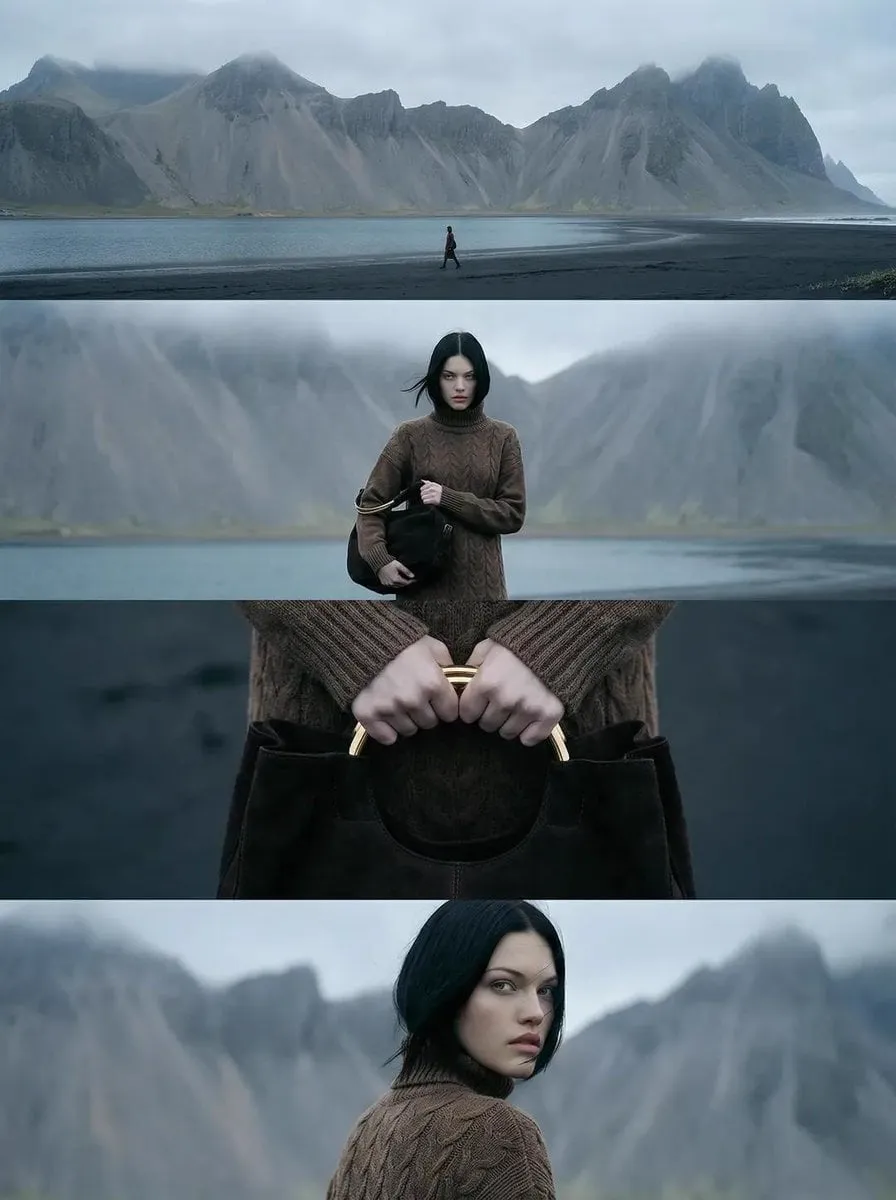

Two Tools, Two Different Jobs
Video creation tools have split into two very different camps. On one side are traditional online editors: web-based applications where you upload footage, cut clips, add text, transitions, and music, then export. On the other side are AI video generators: platforms that create footage from a text prompt, an image, or a reference clip, so you describe what you want and the model produces it.
Creators often treat these as competitors and ask which one is better. That is the wrong question. They are different tools for different jobs, and most serious workflows use both. An online editor is like a cutting room; an AI generator is like a camera crew that can also invent scenes. You cannot edit footage that does not exist yet, and you cannot fine-tune the timing of a clip that the model decided for you.
This guide compares the two approaches across the dimensions that actually matter — control, speed, cost, quality, and learning curve — and gives you concrete decision criteria for choosing the right tool, or the right combination, for your next project.
What Traditional Online Editors Do Well
Online editors such as CapCut, Canva, Clipchamp, and WeVideo have one enormous advantage: total control over the final timeline. You decide exactly where a cut happens, how long a clip stays on screen, what text appears and when, and how the audio behaves. For content that depends on precise timing — tutorials, product demos, interviews, anything with a script — that control is essential.
They are also forgiving. If a clip is too long, you trim it. If the background music drowns the voiceover, you lower the volume. If the caption is wrong, you retype it. Every element of the final video is inspectable and adjustable, which makes iteration predictable. You always know what changed between version one and version two.
For beginners, the learning curve is gentle. The modern crop of online editors is built around templates: choose a style, drop in your clips and text, and export. A complete social video can be assembled in minutes without any knowledge of codecs, keyframes, or color grading.
Finally, online editors are excellent at finishing. They bundle everything you need for distribution: subtitles, captions, cover images, aspect ratios for every platform, and direct export to social channels. The last ten percent of a video — the polish — is where these tools shine.
Where Traditional Editors Hit Their Limits
The fundamental limitation of an online editor is that it can only work with footage you already have. If you need a shot of a product in a desert at sunset and you do not have that footage, no amount of editing will create it. You would need to film it, buy stock, or commission an animation — all slow, expensive, or both.
Editing is also manual. Every cut, every caption, every transition is an explicit action. For a high-volume content operation producing dozens of videos per week, the time cost adds up. Teams often discover that their bottleneck is not creativity but assembly: moving clips around a timeline consumes hours that could be spent on strategy.
There is a ceiling on imagination too. Editors can rearrange, crop, color, and overlay, but they cannot invent new content. You can make an existing clip feel different, but you cannot make it show something that was never captured.
What AI Video Generators Bring to the Table
AI video generators — platforms built around models like Runway, Sora, Kling, Pika, and Luma — attack the problem from the other direction. Instead of assembling existing footage, they synthesize new footage from a description or a starting image. This changes the creative equation in three ways.
First, anything can be shown. A desert scene, a futuristic city, a character doing a backflip — if you can describe it, the model will attempt it. For concept exploration, mood boards, product visualization, and stories that would be expensive or impossible to film, this is a genuine superpower.
Second, speed of exploration. With an editor, changing direction means re-cutting; with a generator, it means re-prompting. You can generate twenty variations of a scene in the time it would take to storyboard one traditional shoot. That speed makes AI generators ideal for iterating on ideas before committing to a production path.
Third, they remove the skill barrier for footage creation. Someone who cannot operate a camera can still produce cinematic-looking shots. The craft shifts from technical operation to language: describing mood, camera movement, lighting, and style precisely enough for the model to follow.
Where AI Generators Fall Short
The counterpart to control in editors is unpredictability in generators. Models do not always do what you ask. A character's face may drift between shots, a hand may distort, and the physics of a scene may quietly break. You can regenerate, but you cannot precisely fix a single frame the way you would in an editor.
Duration is another constraint. Most models generate short clips measured in seconds, not minutes. A long narrative must be built from many generated shots, which brings back the need for shot lists and consistency management — the exact planning discipline editors make unnecessary.
Cost is also front-loaded. Generating many attempts to get one good clip consumes compute, and the most capable models are the most expensive per generation. Unlike editing, where rework is mostly your own time, AI rework has a direct resource cost.
Finally, AI output still needs finishing. Text overlays, captions, subtitles, audio mixing, and final pacing usually happen in an editor anyway. Pure AI generation without an editing step produces raw material, not a finished video.
The Cost Question
Cost is rarely a simple either-or. Traditional editing tools are cheap or free at the entry level but expensive in time and require source footage. AI generators charge per generation and can burn through budgets fast when you are searching for the perfect take.
A useful mental model is to separate creation cost from finishing cost. If your project is mostly assembling footage you already have, editors win on cost. If your project needs footage that does not exist, editors force you to buy or film it, and a generator can be cheaper despite its per-use pricing.
For teams, the practical answer is usually a budget rule: spend generously on generation for hero shots and concept exploration, and keep everything else on efficient, template-based editing. The winning economics come from knowing which part of the pipeline creates value and which part just needs to be executed cheaply.
Hybrid Workflows: The Best of Both
The strongest creator workflows treat editors and generators as complementary stages of one pipeline. A common pattern looks like this:
- Write the script and build a shot list.
- Generate a storyboard using an image model to lock character and scene design.
- Use an AI video generator to create each shot from the storyboard frames.
- Bring every clip into an online editor.
- Cut for pacing, add captions and text overlays, mix audio, and export.
In this model, the generator handles the impossible or expensive shots, and the editor handles the finishing that makes the video feel professional. The result is a workflow where neither tool is forced to do a job it is bad at.
Another hybrid pattern uses AI to enhance editing directly: automatic captions, background removal, text-to-speech voiceovers, and clip selection based on the best takes. Even creators who never generate footage benefit from AI features inside modern editors.
Decision Criteria for Your Next Project
When a new project arrives, run it through these questions:
- Does the footage already exist? If yes, start in an editor.
- Is the footage impossible or too expensive to film? If yes, consider a generator.
- Is precise timing the core of the video? Tutorials and demos demand editing control.
- Is the goal to explore visual ideas quickly? Generation wins for speed.
- Will the video need captions, subtitles, and platform-specific versions? Budget editor time regardless.
- What is the budget for compute? If tight, lean on templates and stock, not generation.
There is no universal winner. The right tool is the one that gets you to a finished, effective video with the least total cost in time, money, and frustration.
Real-World Scenarios
A solo educator making weekly tutorials: record screen, upload to an editor, add captions and zooms. Generators add little value here; the footage is real and the timing matters.
A product marketer who needs lifestyle shots of a product in settings that do not exist yet: generate a storyboard with an image model, generate video variations, then edit the best takes into an ad. This is a pure hybrid play.
A social media manager producing thirty short clips a month: use templates in an editor for volume, and reserve generation for a few hero pieces that need to stand out. Efficiency comes from knowing which ten percent of content deserves the expensive pipeline.
An indie filmmaker prototyping a scene before a real shoot: generate a full animatic with AI, then use the animatic to plan the actual production. The AI version is a planning tool, not the final product.
A Simple Scorecard for Choosing
When in doubt, use a quick scorecard. For each candidate tool, rate it from one to five on five axes: control over the final timeline, speed to first draft, cost per finished minute, visual quality ceiling, and learning curve. Add a sixth axis that matters more than any other: does the footage exist?
If you already have the footage, control and finishing dominate, so the editor wins. If the footage does not exist and would be expensive or impossible to capture, generation wins regardless of its other weaknesses. If the answer is mixed, split the project: generate what you cannot film, edit everything.
The scorecard also prevents a common mistake: buying the most impressive tool for the wrong job. A beautiful generator cannot fix a timeline that needs precise cuts; a powerful editor cannot create a scene that was never captured. Match the tool to the axis that your project actually depends on.
When the Tool Dictates the Workflow
There is one more factor that rarely gets discussed: workflow lock-in. Online editors reward a structured pipeline — collect footage, assemble, refine, export — and most creators settle into a rhythm that mirrors their tool. AI generators reward a different rhythm: describe, generate, review, regenerate. Neither rhythm is wrong, but switching between them mid-project is expensive.
The practical consequence is to design your pipeline before you buy anything. Write down the steps your project will actually take, from idea to published video, and choose tools that fit those steps. Teams that pick tools first and workflow second spend their first weeks adapting their process to the software. Teams that decide the workflow first spend that time making videos.
FAQ
Can AI generators replace editors? Not yet. Generators produce footage; editors produce finished videos. Most professional workflows need both.
Which is cheaper for beginners? Online editors with free tiers are cheaper to start. Generation costs money per attempt and beginners waste attempts while learning prompting.
Do I need to learn prompting to use editors? No. Editors are largely visual. Prompting is only needed for the generation stage.
Can I edit AI-generated footage? Yes, and you should. The best AI videos go through an editing stage for pacing, captions, and audio.
Are AI-generated clips good enough for professional work? For many use cases, yes, especially with good prompting and finishing. For broadcast-grade work, they may still require review and manual fixes.
What about all-in-one platforms? Many modern platforms blur the line, offering both generation and editing. They are convenient, but check whether each half is strong enough for your needs — a great editor with weak generation is still just an editor.
How do I learn AI generation skills? Start with the platform's tutorials, then copy good prompts from communities and adapt them. Prompting is a language; you learn it by reading and writing a lot of it.
Do I need expensive hardware? No. Both online editors and AI generators run in the cloud. A decent laptop and a good connection are enough.
Final Thoughts
The editor-versus-generator debate is a false choice. Online editors give you control and finishing; AI generators give you imagination and speed. The creators who win are the ones who use each tool for what it does best and build pipelines that combine them. Define the job, check the footage, budget the compute, and choose accordingly. The tool that seems like competition is usually just another stage of the same production line.
