
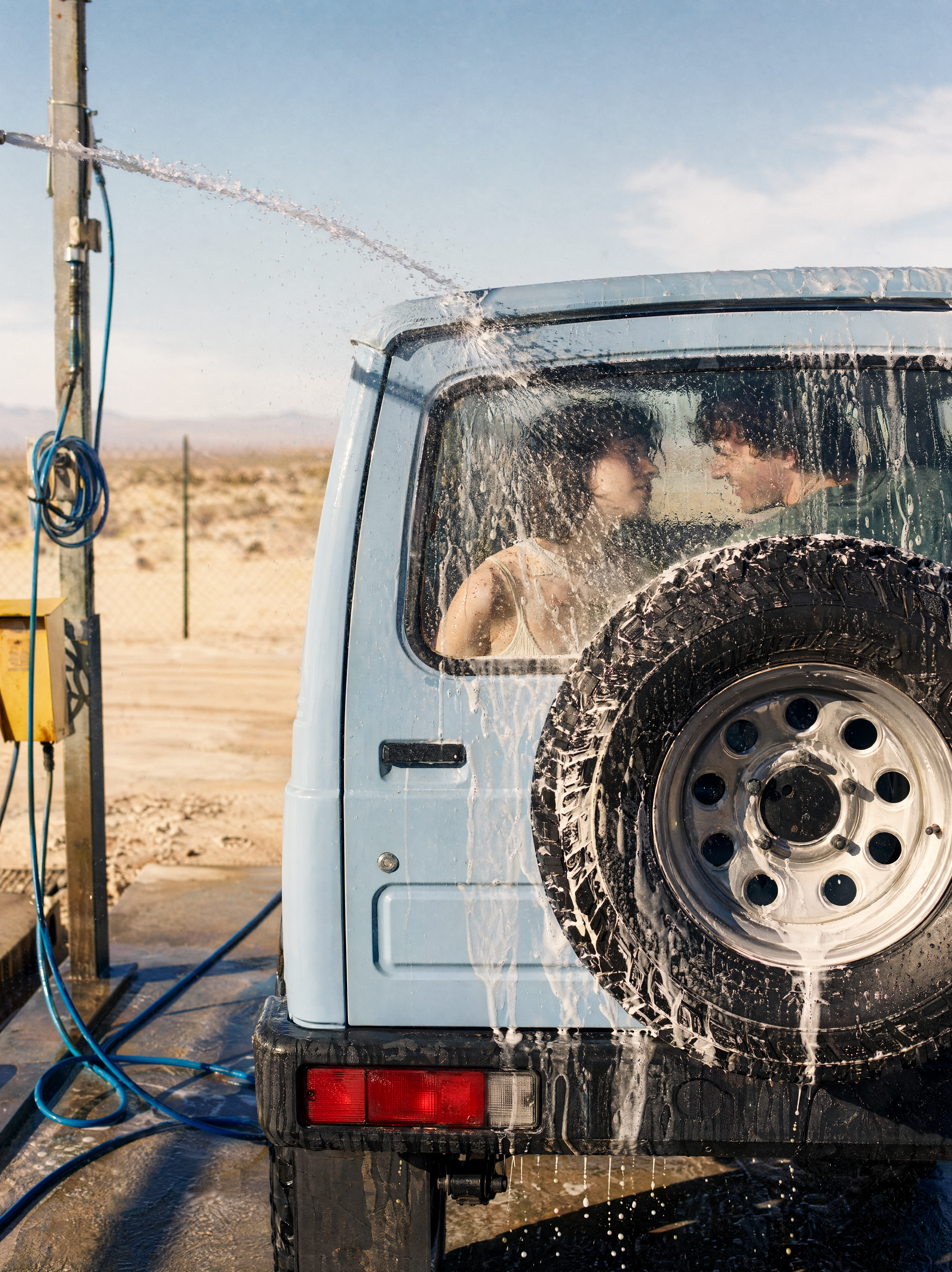
Photorealistic AI portraits have crossed the uncanny valley
Generating photorealistic portraits with artificial intelligence marks a turning point in digital content creation. A few years ago, AI faces had a recognizable artificiality – waxy skin, mismatched eyes, backgrounds that blurred into incoherence. In 2025, that is largely history. The latest models produce portraits that are nearly indistinguishable from real photography, to the point where viewers routinely cannot tell whether an image was shot in a studio or generated from a prompt.
This shift has opened up practical applications far beyond novelty: brand campaigns, editorial illustration, e-commerce product imagery, book covers, character concept art, and even video production, where a generated portrait becomes the anchor for a consistent on-screen character. The technology has moved from the lab to the workflow.
This guide explains the technical foundations of modern portrait generation, the workflows that produce consistent results, and the practical steps you need to generate professional-grade photorealistic portraits of your own.
The technical foundation: diffusion models and latent space
The current era of photorealistic image generation rests on diffusion models. These models work in two stages. During training, they learn to add noise to an image until it becomes pure static; then they learn the reverse process – removing noise step by step to reconstruct a coherent image. At generation time, the model starts from random noise and, guided by your text prompt, progressively denoises it into a picture.
What made portraits suddenly good was the refinement of this process in latent space. Instead of operating directly on pixels, modern models encode images into a compressed latent representation, perform the denoising in that compact space, and decode the result. This is far more efficient and allows the model to reason about higher-level structure: faces, proportions, lighting, and texture.
The quality leap in faces specifically comes from better training data and architecture improvements. Models now understand anatomy well enough to generate symmetrical faces, natural skin texture with subsurface scattering, realistic eyes with catchlights, and hair that behaves like hair rather than painted strands. When a generated portrait still looks off, it is almost always a prompt or guidance problem, not a fundamental model limitation.
Why faces look real now: the details that matter
The difference between "AI-looking" and "photorealistic" faces comes down to a handful of visual cues. Understanding them helps you write better prompts and evaluate outputs more critically.
- Skin texture: real skin has pores, fine hairs, and subtle color variation. Modern models render these micro-details, but only when the prompt does not over-smooth. Phrases like "retouched" or "airbrushed" push toward plastic skin; "natural skin texture" and "shot on 85mm lens" push toward realism.
- Eyes: catchlights – the small reflections of light sources in the eyes – are the single strongest realism cue. Generated eyes that lack catchlights look dead; eyes with two small, natural reflections read as alive.
- Lighting coherence: the light on the face must match the light in the background. A face lit from the left against a sunset background lit from the right is an instant giveaway.
- Hair: realistic hair has flyaways and varying strand widths. Perfectly uniform hair reads as synthetic.
- Background consistency: the environment around the subject needs plausible depth, focus, and perspective. A slightly wrong background undermines an otherwise perfect face.
A good evaluation habit is to zoom into the eyes and the hairline first. If those two regions survive close inspection, the portrait is usually convincing.
Consistency: the challenge of using portraits in real projects
Generating one beautiful portrait is easy. Generating the same person across multiple images – different poses, outfits, backgrounds – is where most projects fail. Consistency is the difference between a portfolio piece and a production asset.
The core technique is reference-based generation. Instead of describing the person anew in every prompt, you provide the model with one or more reference images that anchor the identity. The most reliable setup uses multiple references: a front-facing portrait to fix the face, a full-body shot to fix proportions and wardrobe, and a detail crop to fix specific features like eye color or a scar.
Key principles for reference workflows:
- Use the same seed or style anchor across the batch to reduce drift.
- Keep lighting consistent between the reference and the target scene where possible; dramatic lighting changes strain identity preservation.
- Generate a contact sheet of the same character in several poses first, then pick the strongest take as the master reference for further shots.
- Fix identity in a dedicated step before worrying about composition, wardrobe, or environment. Identity errors are the hardest to repair later.
For video workflows, the same principle applies in the form of character keyframe control: the generated portrait becomes the first frame, the last frame is defined, and the model interpolates the motion between them. This is how AI-generated characters stay recognizable across multiple shots of a short film or ad.
Model selection: quality versus speed
The choice of model determines what is possible in portrait work. In 2025 the landscape splits into two broad camps: models optimized for absolute quality, and models optimized for speed and cost.
- Quality-first models – led by the Flux family and top-tier closed offerings – produce the finest skin detail, most accurate anatomy, and best prompt adherence. They are the right choice for hero assets: campaign images, editorial pieces, product hero shots.
- Speed-first models generate acceptable portraits in seconds, making them ideal for exploration, storyboarding, and high-volume test batches. The quality gap to the premium tier has narrowed, but still exists in fine details and complex scenes.
A pragmatic strategy is two-stage generation: explore composition and ideas with a fast model, then render the final selected concept with a quality-first model. This keeps iteration costs low while delivering professional output.
Platform infrastructure also matters for production work. Teams generating portraits in volume need predictable throughput, batch processing, and reliable APIs. The model choice should include the operational layer, not just the output quality.
From still portraits to video: the natural next step
Photorealistic portraits are increasingly the starting point for video rather than the final deliverable. A generated portrait becomes the reference frame for a video model, and the character is then animated – turning toward the camera, speaking, moving through a scene.
This image-to-video pipeline has become the standard way to produce consistent AI characters. The workflow:
- Generate the master portrait with full control over identity and style.
- Define the first and last frames of the desired motion.
- Run the video model with the portrait as the anchor.
- Review the motion for artifacts, especially hands and face deformation.
- Iterate on the motion prompt, not on the identity – the identity is already fixed by the reference.
The same pipeline supports product films, testimonial-style content, and character-driven ads. For brands, the ability to create a consistent spokesperson or product model without a photoshoot changes the economics of content production entirely.
A step-by-step workflow for a consistent portrait series
Here is a practical, repeatable process for generating a series of consistent photorealistic portraits, whether for a brand, a character, or a personal project.
- Write the character brief: define age, gender, facial features, hairstyle, wardrobe, and personality. The brief is the source of truth for every prompt.
- Generate a master reference: create a front-facing portrait in neutral lighting. Evaluate it closely – eyes, skin, hair, symmetry – and regenerate until it is flawless.
- Lock the identity with a contact sheet: generate the same character in three to five poses and expressions. Confirm the identity holds across all of them.
- Build the scene prompts: for each desired shot, describe the environment, lighting, camera angle, and action, while referencing the locked identity images.
- Batch generate and curate: produce several options per shot, then curate the strongest. Curation is where professional quality emerges.
- Apply a consistency pass: compare the selected shots side by side. Adjust any that drifted from the reference and regenerate.
- Deliver and archive: export the final set with a naming convention and store the master references and prompts for future reuse.
This workflow separates identity from scene, which is the key to scaling a character across dozens of images without quality loss.
Ethics and responsible use
Photorealistic AI portraits carry real responsibilities. The technology can create images of real people without consent, fuel disinformation, and produce deceptive content. Professional practice requires guardrails:
- Never generate a photorealistic portrait of a real, identifiable person without their explicit consent for the specific use.
- Label AI-generated imagery when context makes it material – in editorial, advertising, and journalism.
- Document provenance: keep generation metadata and prompts so the origin of an image can be verified.
- Avoid harmful stereotypes: review character briefs for bias in age, ethnicity, gender, and profession representation.
- Check platform policies: commercial use rules vary, and some uses – political, medical, legal – may be restricted.
None of this diminishes the creative potential of the technology. It simply treats the tool with the respect its power demands.
Common pitfalls and how to fix them
Even with good models and a disciplined workflow, portrait generation fails in predictable ways. Knowing the failure modes saves hours of wasted iterations.
The melted hand problem. Hands remain the classic weak point of generative imagery, and they appear most often in waist-up or full-body portraits. The fix is compositional: frame the shot so hands are partially out of view, or specify simple, static hand positions in the prompt. Complex gestures are where models struggle most.
Identity drift in a series. You generate the same character in five poses, and by the third image the face has subtly changed – the eyes are wider, the jawline softer. This happens when references are inconsistent or prompts drift. The fix is to regenerate from the single master reference every time, rather than using the previous output as the new anchor. Small errors compound; going back to the master prevents that.
Over-processed skin. Portraits that look like wax figures usually result from prompts that push toward perfection: "flawless," "airbrushed," "beauty retouch." The fix is to dial back toward natural language: "natural skin texture, visible pores, soft natural light." Realism lives in imperfection.
Background tells. A convincing face in an implausible background undermines the whole image. Watch for warped architecture, impossible perspective, or objects that blur into mush. The fix is to describe the background with as much care as the face, and to check the edges where the subject meets the environment.
Deformation during video generation. When a portrait is animated, faces can warp during motion, especially in the first and last frames. The fix is to animate short segments, define strong start and end frames, and regenerate motion from the same reference rather than from a warped intermediate frame.
Building these checks into the review step – hands, eyes, skin, background, identity – turns quality control from a vague feeling into a repeatable checklist. Teams that adopt the checklist consistently produce better results with fewer iterations.
FAQ
Which model produces the most photorealistic portraits? The Flux family and top-tier closed models currently lead for fine detail and anatomy. The best choice depends on your quality bar, budget, and whether you need batch workflows.
Can I generate the same person in different scenes? Yes, with reference-based workflows. Generate a master portrait first, then use it as the anchor for all subsequent scenes. Consistency is a process, not a model feature.
Are AI portraits good enough for commercial use? For many categories – product imagery, editorial, marketing – yes. Verify the licensing terms of the tool you use and disclose AI generation where required.
How do I avoid the "AI look"? Focus on natural skin texture, catchlights in the eyes, coherent lighting, and realistic hair. Zoom into the eyes and hairline to evaluate realism before committing to an image.
Do I need technical skills to get started? No. Modern tools accept natural-language prompts. The skills that matter are visual judgment and workflow discipline, not programming.
