

The AI video landscape in 2025 has reached what is best described as selective integration. For the first two years of the text-to-video boom, creators asked a simple question: which single model is best? That question is now obsolete. No single model dominates every task, and the creators producing the most interesting work are the ones who treat the model library like a camera bag, reaching for a different tool depending on the shot.
Pika, Kling, and Sora are the three names most often discussed, and each one represents a distinct philosophy about how AI video should work. Understanding those philosophies matters more than memorizing benchmark numbers, because it tells you which tool to reach for when a specific problem appears. This guide compares the three in practical terms and shows how to build a multi-model workflow that plays to each one's strengths.
The End of One-Model Thinking
The early era of AI video was defined by single-model loyalty. Creators picked one platform, learned its quirks, and produced everything with it. That approach worked when models were simple and expectations were low. It breaks down now, because the range of tasks has widened dramatically: a cinematic commercial, a talking-head explainer, an anime-style short, and a product demo all require different visual behaviors.
The shift is driven by specialization. Some models are trained for photorealism and physical accuracy. Others excel at stylized motion or prompt adherence. The practical consequence is that the best output for any given task usually comes from a model that was tuned for that kind of task, not from the most famous name in the market.
This is not a reason to abandon a familiar tool. It is a reason to build a small, deliberate set of tools and learn when each one earns its place in the workflow.
Pika: Image Integration and Playful Motion
Pika built its reputation on accessible, expressive generation. Its image integration features allow creators to start from a still and push it into motion, which makes it a natural fit for design work, short-form content, and stylized scenes. If your project needs a distinctive look rather than strict realism, Pika's tendency toward playful, energetic motion is an advantage.
Pika also shines in quick iteration. The interface is designed for fast experimentation, so it is a good environment for testing ideas before committing to a more expensive pipeline. Use Pika when you want to explore visual directions quickly, build animated assets from stills, or create content where charm and motion matter more than physical fidelity.
Kling: Prompt Fidelity and Regional Strength
Kling's defining strength is prompt fidelity. When a director has a specific, detailed instruction, Kling tends to follow it more precisely than models that prioritize their own interpretation. That makes it excellent for productions where the creative intent must survive contact with the generator: branded content, storyboard-to-screen tests, and scenes with tightly specified action.
Kling also represents the maturation of models built outside the American ecosystem, with strong support for non-English prompts and culturally specific visual styles. For teams producing content for Chinese-speaking audiences, or for any project requiring a specific cultural aesthetic, Kling often produces results that other models miss.
Its start-to-end variants are optimized for temporal consistency, which matters when a scene needs to hold together over several seconds rather than shine in a single frame.
Sora: World Simulation and Narrative Depth
Sora approaches video generation differently. Rather than animating a picture, it attempts to simulate a world: objects persist, physics behave plausibly, and scenes maintain coherence over longer durations. That makes it the strongest choice for narrative work, complex interactions, and any project where the audience needs to believe the space is real.
Sora's longer generation window is its signature advantage. For filmmakers working on scenes that require setup, action, and resolution within one continuous shot, the ability to generate extended sequences without visible seams is transformative. The tradeoff is that world simulation is computationally heavy and less forgiving of vague prompts, so the planning and prompt-crafting bar is higher.
Comparing Models Side by Side
A practical comparison across the dimensions that actually decide project outcomes:
- Realism and physics: Sora leads for photoreal simulation and complex interaction. Kling is strong, Pika leans stylized.
- Prompt adherence: Kling is the most literal follower of detailed instructions. Pika and Sora require more careful phrasing.
- Motion and style: Pika delivers expressive, energetic motion and stylized looks. Sora excels at natural, continuous movement; Kling at controlled, deliberate action.
- Temporal consistency: Kling's start-to-end variants and Sora's world model both handle long sequences well, while Pika is best for short bursts.
- Image-to-video: Pika is the most accessible for animating stills. Kling also supports image references; Sora's image conditioning continues to improve.
- Speed and iteration: Pika is built for fast loops. Kling balances quality and speed. Sora demands more compute per attempt.
None of these rankings are permanent. Model versions iterate quickly, and last month's gap can close this month. The point of the comparison is to establish a mental model for choosing, not a permanent verdict.
Building a Multi-Model Workflow
The real skill in 2025 is orchestration. A practical multi-model workflow looks like this:
- Pre-visualization: use the fastest tool in your kit to sketch scene ideas, test compositions, and share rough cuts with stakeholders. Speed matters more than polish at this stage.
- Hero shots: route the shots that carry the most visual weight to the model best suited to their needs. A photoreal product hero goes to a realism-focused model; a stylized transition goes to the model with the best motion.
- Character and consistency: keep a reference set for recurring characters, and generate their key shots with the model that gives you the most control over identity. Consistency beats single-shot beauty in any project longer than a minute.
- Assembly: composite the best takes in your editor, apply a consistent grade, and fill gaps with targeted regeneration rather than accepting weak shots.
The workflow only works if you document what each model is used for and why. That documentation becomes the playbook for the next project.
A few practical notes make the difference between a theoretical workflow and one that survives contact with a real deadline. First, always test a model on a sample of your own material before committing a hero shot to it; benchmark scores from the vendor rarely predict how a tool handles your specific subject matter. Second, lock the technical parameters early: resolution, aspect ratio, frame rate, and grade should be decided in pre-production and then treated as fixed, because changing them mid-project forces you to regenerate and re-grade everything. Third, keep a folder of accepted takes alongside a folder of rejected takes with notes on why each rejection happened. That folder becomes your personal training data for future prompts, and it is worth more than any public gallery of examples. Fourth, when a model update lands, re-run your standard test scene before using the new version on client work; a silent behavior change in a prompt-faithful model can derail an entire shoot. Teams that adopt these habits find that their iteration speed compounds, while teams that skip them repeat the same mistakes on every project.
Cost and Consistency: The Real Decision Drivers
Two factors dominate real production decisions more than raw quality: cost per usable shot and consistency across the final edit.
Cost is not simply the price of a generation. A cheap model that requires five attempts to produce one usable shot can cost more than an expensive model that nails it on the first try. Track cost per accepted shot, not cost per generation, and you will make better tool choices.
Consistency is the hidden killer. A project that looks fantastic shot by shot but visibly changes its characters, lighting, or style between shots is a failed project. Consistency is enforced through references, keyframes, and careful grading, regardless of which models generated the individual shots. Budget for the consistency work explicitly; it is the difference between a reel and a film.
A Worked Example: One Campaign, Three Models
To make the multi-model workflow concrete, imagine a 45-second product campaign for a fictional sports drink. The brief: a hero shot of the bottle splashing in slow motion, a stylized transition where the liquid turns into a runner, and a final close-up on a sweaty, determined face. Three different visual jobs, and no single model is the right choice for all three.
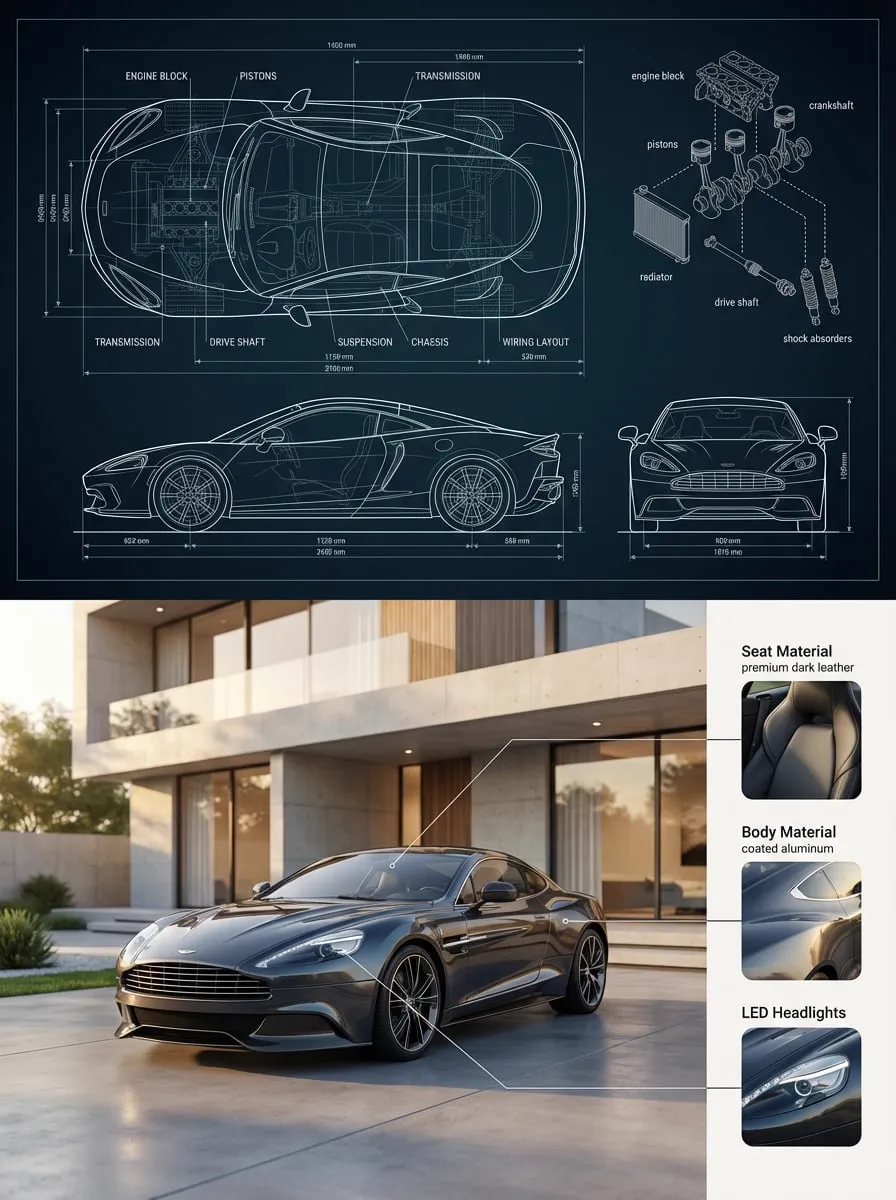
The hero product shot needs realism: the splash must read as liquid, the bottle as glass. This is a job for the most physics-aware model in your kit, typically Sora-class, because the audience will forgive nothing in the centerpiece frame. You generate several takes, check for glass distortion and droplet behavior, and pick the one that looks physically right.
The stylized transition is the opposite job. It needs expressive, eye-catching motion and a distinctive look rather than realism. This is where a model with strong style instincts, Pika-class, earns its place. The transition does not need to obey physics; it needs to feel alive. The same brief, given to a realism-first model, would produce something technically impressive but dramatically flat.
The final close-up needs neither world simulation nor style; it needs a face that feels human and a performance that reads in two seconds. Here prompt fidelity matters most, because the emotional intent is in the details: the micro-expression, the light catching the sweat. A prompt-faithful model, Kling-class, is the safest choice, especially if the actor's identity must match a brand reference.
Then comes assembly. The three takes come from three different tools, with three different color signatures. A consistent grade across the edit, plus the audio bed, is what makes the campaign feel like one piece of work rather than three clips stapled together. The audience never sees the model names; they see coherence.
This example repeats across every genre. A music video might use a stylized model for the performance scenes, a realism model for the narrative inserts, and a camera-control model for the signature moves. A documentary might use realism for interviews and a faster, cheaper model for b-roll placeholders. The principle is always the same: match the tool to the task, enforce coherence in the edit.
FAQ
Which model should a beginner start with? Start with the one that matches your most common output. For fast, stylized short-form work, Pika is approachable. For detailed, prompt-controlled production, Kling rewards careful instructions. For narrative and realism, invest time in Sora once your fundamentals are solid.
How do I know which model fits a specific shot? Build a small test set of your own material and run the same brief through each candidate model. Compare not just the best frame, but the whole take: motion quality, prompt adherence, and how the result feels after a grade. Keep the test results in a folder so the comparison is reusable next time.
What should I do when a model produces a great single frame but fails the sequence? Treat the frame as a promise, not a deliverable. The shot only matters in context. If the sequence breaks, regenerate the weak link with stricter references, or re-time the edit around the take that works. Never ship a sequence just because every still looks good.
Do I need to use all three? No. Many projects only need one. The multi-model approach pays off when your work spans very different visual tasks.
How do I keep characters consistent when using different models? Build a reference set, extract the character's identity once per model, and use the same grade across the edit. Never rely on text alone.
Which is best for commercial work? It depends on the brand and the asset. Branded content usually needs prompt fidelity, so Kling is often the safer default, with hero shots assigned to a realism-focused model when needed.
Will these comparisons stay true for long? No. Track model releases and re-test your own projects regularly. The tools change faster than any article can.
How many models should a serious team support? Two or three well-understood models is enough for most teams. Depth of understanding beats breadth of subscriptions.
