


Why pixel-level control changes AI image generation
For most people, AI image generation still feels like a black box: you type a prompt, wait a few seconds, and get a picture. That works surprisingly well for one-off images, but it falls apart the moment you need consistency. The same character looks different in every frame. The same product changes color between shots. The same style drifts from one scene to the next. In 2025, the industry finally started solving this problem at the lowest possible level: the pixel.
The idea is simple to state and hard to build. Instead of treating an image as a single blob of content that a model re-imagines from scratch, you give the system fine-grained control over what happens at the pixel level. You can lock a face, preserve a texture, transfer a style onto one region while leaving another untouched, and keep those decisions stable across a whole video project. It is like building images out of Lego bricks: each brick is small, but the way you arrange them determines everything.
This guide explains what pixel-level processing really means, how style transfer changed because of it, and how you can use these techniques in real workflows without a degree in machine learning.
From global style transfer to selective control
Traditional style transfer applied a single artistic filter across an entire image. Want your photo to look like a watercolor painting? The whole image becomes watercolor, including the parts you wanted to keep realistic. The result often looks impressive for a second and wrong the moment you look closely. Faces lose their likeness, text becomes unreadable, and edges melt into noise.
Pixel-level style transfer works differently. The system analyzes the image region by region, decides which areas carry content that must be preserved, and applies the stylistic transformation only where it makes sense. A portrait can keep the model's facial identity while the background becomes a painterly landscape. A product shot can keep the logo crisp while the environment shifts to a futuristic set. This selective control is what separates professional results from obvious AI artifacts.
The architecture behind pixel-aware pipelines
Under the hood, modern image processing pipelines decompose input into feature vectors at a very fine granularity. Instead of one embedding for the whole image, the system produces many localized representations: one for the face, one for the clothing, one for the background, one for each important object. These localized features can be referenced, locked, or transformed independently.
When you upload a reference image, the pipeline extracts these features and marks them as mandatory constraints. The generation model is then forced to respect them. This is why a single reference photo can keep a character's face consistent across dozens of generated scenes, and why a brand logo can survive a full restyle of the surrounding artwork.
Why consistency is the real bottleneck
The short video boom made the problem painfully obvious. Any model can generate one nice frame. The hard part is generating ten frames where the hero looks like the same person, wears the same clothes, and stands in the same world. Before pixel-level control became practical, creators solved this with heroic manual effort: generating hundreds of candidates, cherry-picking frames, and patching inconsistencies in editing software.
In 2025 the expectation has shifted. Professional creators now treat consistency as a default feature, not a luxury. They generate a character sheet first, lock the character's identity into the pipeline, and then direct scenes knowing the face will not drift. This changes the economics of content production: a series of branded videos can be planned, generated, and shipped in days instead of weeks.
A practical workflow for consistent style transfer
You do not need to understand diffusion models to benefit from pixel-level control. Here is a workflow that works with most modern tools:
- Start with a reference image. A clear, well-lit photo of your subject gives the pipeline the strongest constraints.
- Generate a character sheet. Create a few variations of the character in different poses and angles, then pick the one that matches your vision.
- Lock the identity. Upload the chosen image as a reference and tell the system it is a mandatory constraint.
- Write scene prompts with the reference in mind. Describe what happens in the scene, not what the character should look like — that is already handled.
- Test on a single frame. Before generating a whole video, verify that the character holds up in one static image.
- Extend to motion. Use the locked image as the first frame of your video generation, and check every shot for drift.
- Review and re-lock. If the character changes, regenerate with a stronger reference or a more detailed character sheet.
Using style transfer in branded content
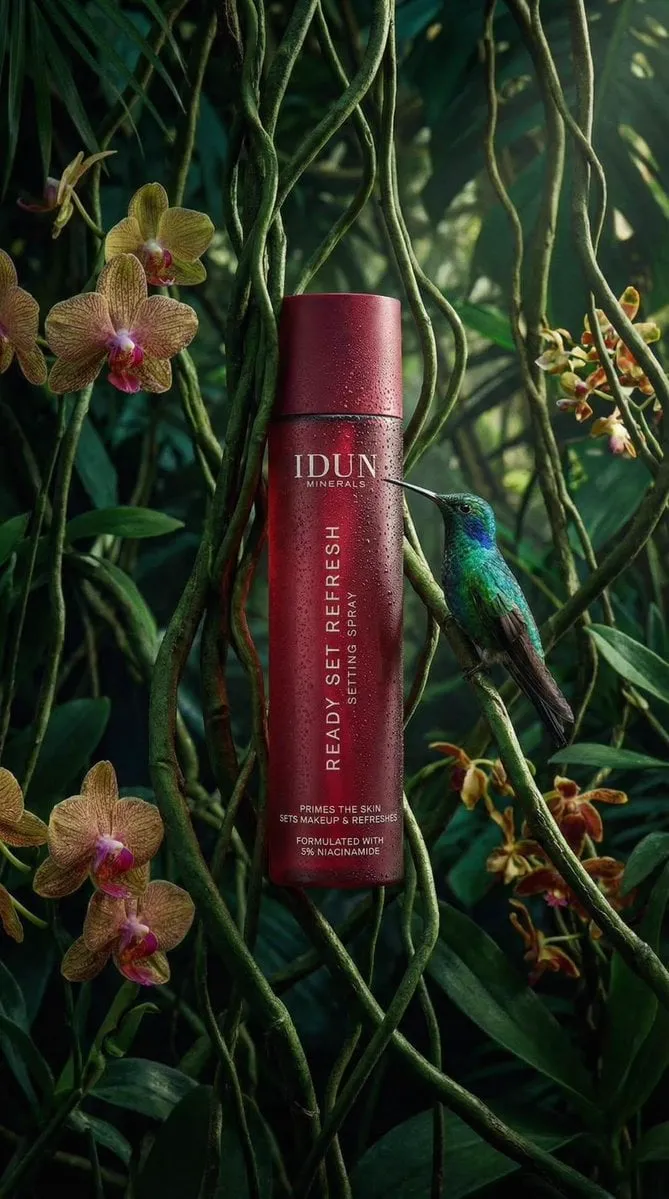
For brands, pixel-level control is a gift. Marketing teams can shoot one product photo and then generate an entire campaign around it: the same product on a mountain, in a studio, in a retro diner, in space. The logo stays sharp, the colors stay true, and the campaign feels coherent even though every background is synthetic.
The key is to treat the product image as a permanent asset. Keep it in a folder with a naming convention, document which prompts produced which results, and reuse the same reference across all campaigns. Over time this creates a small internal library of visual assets that every future project can draw from.
Style transfer for animation and illustration
Pixel-level control is not only for photorealism. Illustrators and animators use the same techniques to keep a hand-drawn style consistent across hundreds of frames. You can define a style reference, lock it, and then generate scenes where the art style stays uniform even when the content changes completely. This is how small studios now produce animated series that would previously have required large teams of in-betweeners.
For characters, the approach is even more powerful. You can define a character in one art style and then re-render the same character in another style without losing its identity. The face structure, proportions, and costume details carry over; only the rendering style changes. That opens creative possibilities that are nearly impossible with traditional animation.
Style transfer for video: keeping the look alive across frames
Everything discussed so far applies to still images, but the real payoff comes when you extend pixel-level control to motion. A locked style is only useful if it survives the jump from one frame to the next. Modern video pipelines handle this by treating every generated frame as a member of the same family: the style reference anchors the look, the identity reference anchors the subject, and the motion model fills in the movement without disturbing either anchor.
The practical result is that a campaign can now be planned as one visual system instead of a pile of one-off clips. You define the palette, the texture, the lighting mood, and the character once. Then every scene you generate — product shot, lifestyle scene, close-up, wide establishing shot — inherits the same visual DNA. Editors and art directors no longer have to fight the tool to make things match; the matching happens at generation time.
This matters even more for series content. A weekly show, a season of branded posts, or a multi-episode tutorial series all need a stable look to build audience trust. With pixel-level control, the look is part of the pipeline, not a happy accident you hope to repeat.
Worked example: restyling a product campaign
Let us walk through a concrete project: a beverage brand wants to turn one real product photo into a full campaign without reshooting.
Step one: shoot or generate one clean reference photo of the can, with neutral lighting and a plain background. This is your locked asset.
Step two: generate style variations of the background. A desert at sunset, a neon city street, a snowy mountain lodge. Each variation keeps the can pixel-locked while the environment changes freely.
Step three: review the variations on a contact sheet. Pick the three strongest compositions, then push each one further with targeted prompts.
Step four: animate the winners. Use each still as the first frame for a short video clip: mist swirling around the can, snow falling, neon reflections moving across the metal.
Step five: assemble the campaign. All clips share the same product identity, so the final edit feels coherent even though each scene lives in a completely different world.
The same workflow scales to characters, vehicles, mascots, or architecture. Whatever the subject, the recipe is identical: lock the subject, vary the world, animate selectively.
Troubleshooting a drifting subject
Even with the right tools, drift happens. When it does, work through this checklist in order:
- Check the reference quality. A blurry, low-contrast, or oddly angled reference will not anchor reliably. Reshoot or regenerate it.
- Check the character sheet. One view is weaker than three consistent views. Add front, three-quarter, and side angles.
- Reduce competing constraints. If the prompt demands too many specific details, the model may sacrifice the subject to satisfy the rest. Simplify the scene description.
- Add an intermediate keyframe. If the subject drifts halfway through a sequence, lock it again at the drift point.
- Change the model. Some models bind references more strongly than others. If one fights you, try a model known for identity fidelity.
- Accept partial fixes. For a stubborn shot, generate variants and composite the best frames in an editor. There is no shame in a final cleanup pass.
Choosing the right models for the job
Not every model handles pixel-level constraints equally well. In practice, the choice depends on what you are optimizing for:
- Photorealism and stable style inheritance: models in the Flux family are known for strong prompt understanding and consistent output, which makes them a safe choice for brand work.
- Long-form narrative coherence: models that excel at scene consistency, such as the latest Runway and Sora generations, help keep characters stable across multiple shots.
- Natural movement and physics: Kling and similar models handle human motion and object interactions well, which matters when your character needs to act, not just pose.
- Budget-friendly experimentation: lighter models are fine for drafts and moodboards, where you only need a rough sense of composition and style.
The practical advice: keep two or three models at hand and route work by task. Draft with the cheap fast one, lock the style with the precise one, and animate with the one that handles motion best.
Common mistakes and how to avoid them
- Uploading a low-quality reference. Garbage in, garbage out. A blurry selfie cannot anchor a face reliably.
- Locking too many constraints. If every detail is mandatory, the model has no room to compose the scene and results look stiff or fail.
- Skipping the character sheet. A single image is weaker than a set of consistent views.
- Judging consistency from one frame. Check multiple frames, especially where the character turns or moves.
- Forgetting to document prompts. The workflow you used to get a great result should be repeatable; write it down.
FAQ
Do I need to know programming to use pixel-level tools? No. Modern platforms expose these features through simple uploads and checkboxes. Understanding the concepts helps you make better decisions, but you do not need to code.
Is pixel-level control available for video too? Yes. The same techniques power keyframe control and multi-image fusion in video generation: you lock a character or object and it remains stable across the whole clip.
What is the difference between style transfer and pixel-level control? Traditional style transfer applies a style to everything. Pixel-level control lets you choose what gets styled and what stays locked, which preserves identity and detail.
How do I keep a logo sharp? Treat the logo as a locked reference. Generate scenes around it rather than expecting the model to redraw it from a text description.
Does this work for non-photorealistic styles? Absolutely. Consistency across frames is valuable for illustration, animation, and game art as much as for realistic footage.
Where this is heading
Pixel-level control is not a finished feature; it is the direction of the whole field. As models improve, the granularity of control will only increase. Soon, creators will direct individual elements of a scene with the same precision editors have in After Effects or Photoshop. The practical consequence is simple: the barrier between imagination and finished visual content keeps shrinking. The creators who learn to work with these tools now will have a durable advantage, because the skills — defining references, locking identity, controlling style region by region — will transfer to every future model that comes along.
