

Why prompt engineering is the real bottleneck in AI video
Text-to-video tools have become easy to start and hard to finish. Typing a sentence and getting a clip takes seconds; getting a clip that fits a shot list, a brand, or a story takes craft. The distance between a nice-looking AI clip and a usable AI clip is almost entirely a prompting problem.
Think about what a video model has to decide in a single pass: who or what is in frame, what they are doing, how the camera behaves, how the light falls, how fast time moves, and where the shot begins and ends. A vague prompt forces the model to guess on all six. A precise prompt constrains the possibilities until almost any plausible output would work for you.
Prompting for video is not about memorizing magic words. It is about translating a director's intent into language a model can act on, then iterating against what you actually see. Creators who treat it as a repeatable production skill ship faster, waste fewer takes, and keep control of their output. Creators who treat it as a slot machine stay stuck generating fifty clips and liking none of them.
This guide covers the structure of a strong video prompt, a reusable template, consistency techniques, how to adapt one idea across different model families, a full production workflow, prompt patterns for common formats, and the mistakes that quietly wreck otherwise good projects.
Anatomy of a strong video prompt
A prompt that works for a still image is not enough for video. Stills only answer what the frame looks like. Video adds time: what changes, in what order, and how the camera moves while it changes. A reliable video prompt has five layers. You do not need all five every time, but knowing which layer is missing explains most disappointing results.
Subject, action, and setting
Start with a concrete subject and one clear action. Specific nouns beat adjectives. A woman in a linen shirt walking through a wet market reads better than a beautiful woman in a beautiful place. Then place her: the stall lights, the narrow aisle, the produce, the crowd density, the time of day.
Keep the action singular in a single shot. If you write a barista steaming milk, pouring a rosetta, wiping the counter, and waving at a customer, the model blends all four into an unreadable smear. One shot, one beat of action. Sequences belong in your edit, not inside one prompt.
Camera, lens, and movement
Camera language is the highest-leverage vocabulary you can learn. Words like wide, medium close-up, low angle, over-the-shoulder, and drone push-in are unambiguous for most models. Add a lens feel when it matters: 35mm, shallow depth of field, anamorphic flare, macro.
Movement needs a direction and a speed. A slow dolly left is readable. Camera moves around is not. If you want a static shot, say locked-off tripod shot, because many models default to drifting motion when nothing is specified.
Light, color, and mood
Lighting words do double duty: they set the look and they stabilize the render. Golden hour backlight, overcast soft light, a single practical lamp, neon spill from a window, harsh noon sun with deep shadows. Pair light with a palette: muted teal and rust, high-key pastel, monochrome with one red accent.
Mood words are weak on their own. Cinematic means different things to different models. It usually works better when you attach evidence: shallow focus, warm highlights, slow movement, wide framing.
Timing, pacing, and duration
Describe how much time passes. A four-second shot of someone turning their head is one beat. A four-second shot of someone crossing a city is a time-lapse request that will look wrong. Match the ambition of the action to the length of the clip.
Useful pacing phrases include real-time, slow motion at half speed, time-lapse of clouds, and continuous single take. If the tool supports duration settings, keep them at the low end while iterating and raise them only when the composition holds up.
Style and format anchors
Finally, anchor the format: vertical 9:16 for short-form, 16:9 for landscape, documentary handheld, studio product tabletop, claymation, 2D anime, ink wash. Format anchors matter because they also imply frame rate, grain, and depth-of-field expectations.
A reusable prompt template
Here is a template that covers the five layers without becoming a wall of text:
[Shot type] of [subject with one distinguishing detail], [single action] in [specific setting], [camera movement and speed], [lighting description], [color and mood], [style or format anchor], [duration or pacing note].
The order matters less than the coverage, but leading with shot type and subject tends to produce the most stable results, because those are the tokens most models weight most heavily.
A worked example: Medium close-up of a bicycle courier with a scratched helmet, catching her breath against a brick wall, narrow alley in early morning, slow handheld push-in, cold blue shade with a single warm streetlamp, gritty documentary look, real-time, six seconds.
Compare that to a courier in a city being cool. The second prompt is not wrong, it is just unfinished. Every word you leave out is a decision you handed to the model.
Negative prompts and technical controls
Telling a model what you do not want is sometimes more powerful than adding more description. Negative prompts are where you remove the failure modes you keep seeing: extra fingers, warped faces, text artifacts, jittery motion, flickering background, watermarks, duplicated limbs, sudden cuts, unnatural lighting.
Two rules keep negatives useful. First, keep them short and specific. A long list of abstract negatives like ugly or bad quality rarely changes anything, because those words are not visual. Second, put negatives in the negative field when the tool has one, rather than writing do not show in the main prompt, which some models read as an instruction to include it.
Beyond negatives, learn the technical controls available to you:
- Aspect ratio and resolution, which affect composition and how much the model has to invent.
- Duration, which should stay short while you iterate.
- Motion strength or motion scale, which controls how aggressively the model animates.
- Seed values, which let you reproduce a result you liked.
- Guidance or adherence settings, which trade prompt obedience for visual smoothness.
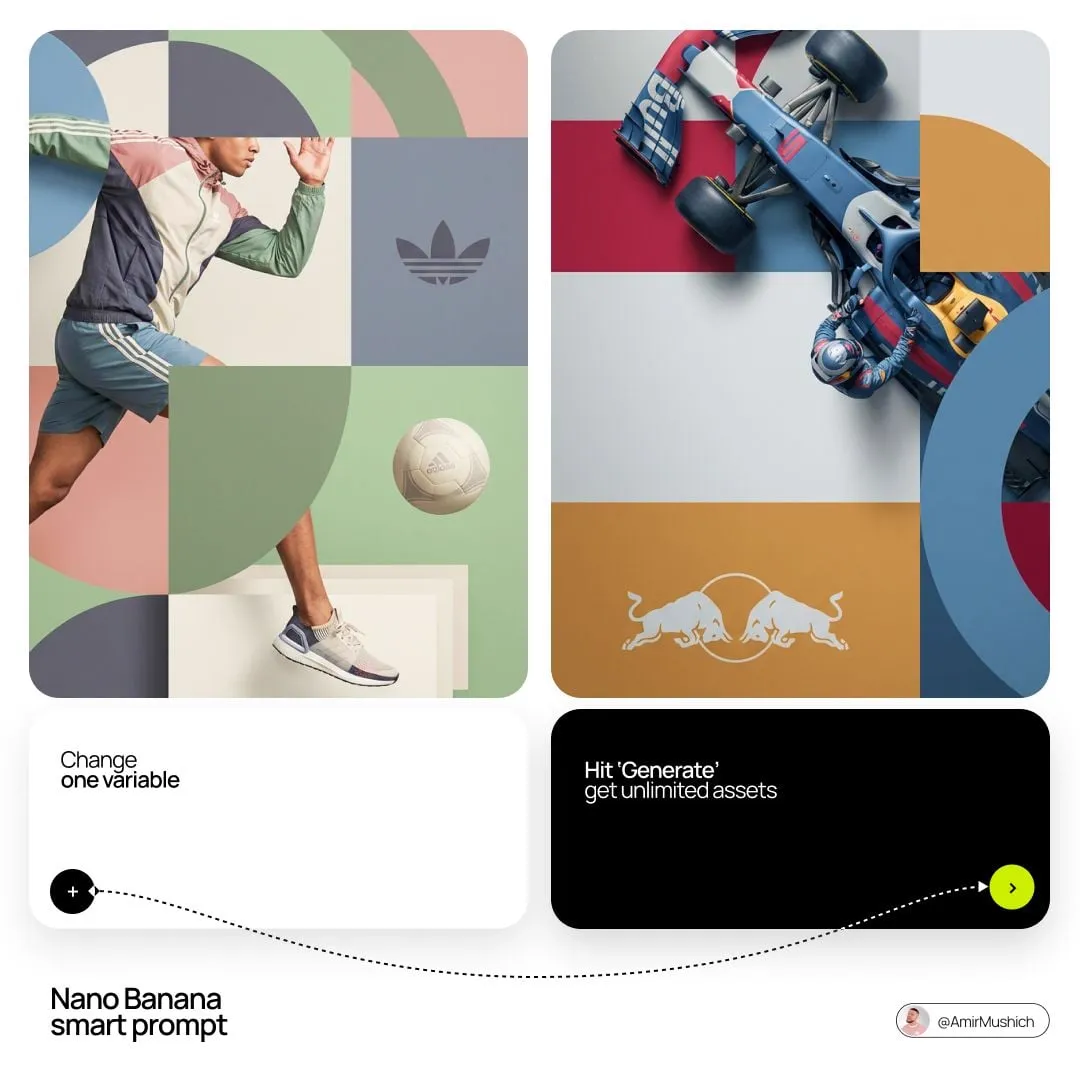
Change one control at a time. If you change the seed, the motion strength, and the prompt in the same pass, you learn nothing about which change helped.
Keeping characters and styles consistent
Consistency is the difference between a clip and a story. Two techniques do most of the work.
Reference images and image-to-video
Generate or photograph a clean keyframe of your character first, then animate that image. Image-to-video gives the model a visual anchor, which is far more reliable than describing a face in words. Use the same reference across shots, and keep the framing and lighting of the reference close to the shot you want.
For products, use a well-lit hero frame on a plain background and animate small, believable motions: a light sweep, a slow rotation, steam rising. Products look fake when the camera does something a real crew would not do.
Seeds, style blocks, and continuity notes
Write a style block once and paste it into every prompt in a project. Something like: muted palette, 35mm film grain, soft directional light, shallow depth of field, vertical framing. Reusing that block is what makes ten separate generations feel like one piece.
Keep a running continuity note per project: character wardrobe, hair, props, time of day, color temperature. Most continuity failures come from memory, not from the model. If shot four happens at night and your style block says golden hour, you will get a mismatch you could have caught on paper.
Adapting the same idea across model families
Models have personalities. Prompts that sing on one will fall flat on another, so treat your template as portable and your phrasing as model-specific.
Realism-first models
Some models excel at photoreal humans, skin texture, and believable physics. They respond well to camera and lighting language, and they punish vague mood adjectives. Describe the scene like a shot list: lens, light source, movement, and one action.
Motion-heavy and stylized models
Other models shine at dynamic movement, stylized animation, or surreal transitions. They tolerate more poetic phrasing and reward strong visual metaphors. Expect to describe motion in more detail and to accept that exact framing will be more interpretive.
Fast draft models
Speed-focused models are for blocking, not for finals. Use them to test composition and pacing cheaply, then regenerate the winning setup on a higher-quality model once you know the shot works. Never polish a shot you have not first validated in draft.
The practical takeaway: build a small prompt library per model. When a result works, save the prompt, the settings, and a note about what you changed last. Over a month, that library becomes your most valuable asset, more than any single output.
A repeatable production workflow
Prompting works best inside a workflow, not as a one-off experiment.
Step 1: Script and shot list
Write the piece as beats before you write a single prompt. A sixty-second video is roughly eight to fifteen shots. For each shot, note the subject, the action, the shot size, and the emotional purpose. This step takes twenty minutes and saves hours.
Step 2: Generate keyframes
Create still frames for each shot first. Stills are cheap, fast, and easy to judge. Approve the look of every frame before you spend time on motion. If a frame is not compelling as a still, animating it will not fix it.
Step 3: Animate and iterate
Animate one shot at a time. Generate three to four variations with small prompt changes, not wild swings. Keep the best one and note why it won. Reshoot only the shots that fail, rather than regenerating the whole project.
Step 4: Assemble, sound, and polish
Cut your clips to the rhythm of your script. Add sound design and music early, because sound changes how long a shot can hold. Then fix the small stuff: speed ramps to hide awkward motion, subtle color grading to unify shots, stabilization, and frame interpolation where movement stutters.
A useful rule: spend a third of your time on stills, a third on motion, and a third on post. Almost everyone overspends on motion.
Prompt patterns for common content formats
Product demo. Tabletop studio lighting, seamless background, slow orbit, macro detail on texture, hands entering frame naturally. Avoid unrequested camera tricks.
Talking-head explainer. Medium shot, eye level, soft key light with a practical background, minimal movement, natural blinking and small gestures. Keep dialogue out of the prompt and record it separately.
Travel and atmosphere. Wide establishing shot, slow drone push, layered foreground, time-of-day light. Ask for one continuous move rather than several.
Social short-form. Vertical framing, subject centered with headroom, punchy movement in the first second, high-contrast color.
Narrative scene. Two-shot framing, motivated lighting, restrained handheld motion, and action that implies a before and after.
Each pattern is just your five layers reweighted. Once you see that, new formats stop feeling like new problems.
Common mistakes that waste hours
- Writing a paragraph of adjectives with no action. The model needs something to animate.
- Asking for multiple actions in one clip, which produces mush.
- Describing emotion instead of behavior. Nervous is weak; tapping a pen and glancing at the door is strong.
- Forgetting to specify camera behavior, so the model drifts.
- Changing five variables at once and losing track of what worked.
- Ignoring duration limits and expecting a full narrative arc in five seconds.
- Regenerating endlessly instead of fixing the prompt. If three attempts fail, the prompt is wrong, not the model.
- Skipping stills and burning time on video iterations of a bad composition.
- Never saving prompts. Your best assets are the ones you can reproduce.
FAQ
How long should a video prompt be? Long enough to cover the five layers, short enough to stay focused. Most strong prompts run two to four sentences. Length is not the goal; coverage is.
Do negative prompts really matter? Yes, when they name visual artifacts you actually see. They do little when they list abstract quality complaints.
What is the fastest way to improve? Recreate one shot you admire from a film or an ad. Break it into the five layers and write a prompt for it. Doing that ten times teaches more than reading about prompting for a month.
Should I always start from a still image? For characters, products, and any recurring element, yes. For abstract textures and atmosphere, direct text-to-video is often faster.
How do I keep motion from looking unnatural? Shorten the action, lower the motion strength, specify a single camera move, and describe a speed rather than just a direction.
Can I reuse one prompt across different models? Reuse the structure, rewrite the phrasing. Keep a per-model library and expect to adjust camera and motion language.
How many variations should I generate per shot? Three to five with small changes. If none work, the prompt or the composition is the problem, not your luck.
What is the biggest mistake beginners make? Treating each generation as a lottery ticket instead of an experiment with one variable changed.
Turning prompting into a durable skill
Prompting for video is a translation skill, and translation improves with deliberate practice. Build a template, learn camera and lighting vocabulary, keep consistency blocks, and iterate one variable at a time. Validate with stills, animate sparingly, and finish in the edit.
Do that consistently and the tools stop being slot machines. They become a camera you can point, and the only limit left is how clearly you can describe what you want to see.
