
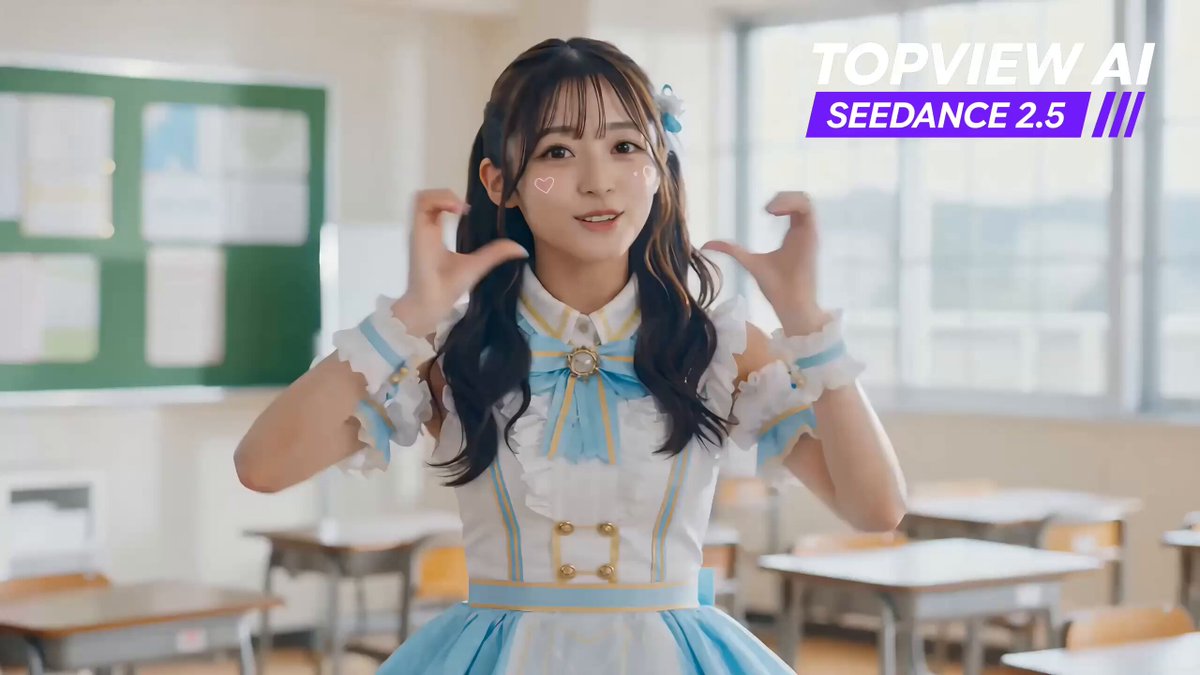


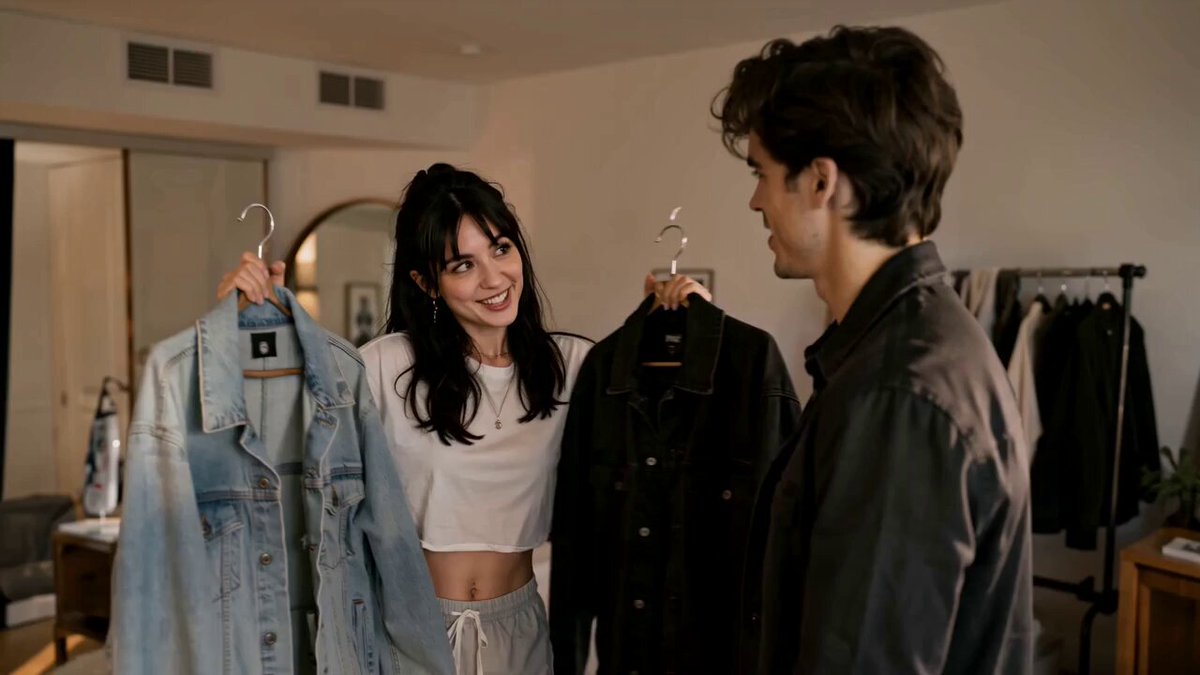
Synthetic video has grown out of the demo stage. Teams now use generated faces, cloned voices, and fully synthetic scenes in commercials, training modules, game cinematics, and short-form social content. That shift creates a practical problem: the same tools that unlock creative freedom can also create legal, reputational, and ethical exposure when they are used carelessly. A safety-first workflow is not a brake on creativity — it is what lets you ship ambitious work repeatedly without wondering whether a shot will be pulled down, disputed, or rejected by a client's legal team.
This guide walks through a complete, consent-based production pipeline for synthetic video: how to choose models, how to keep a character consistent across dozens of shots, how to handle voice and lip sync, where to place review gates, and which mistakes cost teams the most time.
Why synthetic video needs a safety-first workflow
The technical barrier to generating a believable human on screen has collapsed. What used to require a VFX house, a scanning rig, and weeks of compositing can now be prototyped in an afternoon. But the organizational barrier — permissions, disclosures, documentation, and review — has not collapsed with it. Most of the pain teams experience with synthetic video comes from process gaps, not from model quality.
Consider the typical failure modes. An editor swaps a colleague's face into a training video without asking, and the colleague objects after seeing it on the intranet. A marketer clones a voice actor's tone from an old recording and the actor's agent sends a complaint. A creator publishes a stylized character that closely resembles a public figure, and the platform demonetizes the upload. None of these are technical failures. They are permission failures, disclosure failures, and review failures.
A safety-first workflow addresses those three areas directly. It separates the creative question (what do we want to make?) from the rights question (who has agreed to appear?) and the review question (who signs off before it ships?). When those three threads are handled deliberately, generative tools stop feeling risky and start feeling like ordinary production equipment.
The practical benefit is speed. Teams that document consent up front spend less time in back-and-forth emails later. Teams that standardize review gates catch problems while re-rendering a four-second clip is still cheap, rather than after a full edit has been color graded and delivered.
What "risk-free" actually means in practice
The phrase gets used loosely, so it helps to define it. A synthetic video workflow is low-risk when you can answer three questions with documented evidence: whose likeness is on screen, how the audience is told the footage is synthetic, and how the source data was handled. Each maps to a distinct part of production.
Consent, likeness, and release paperwork
Start with a signed release for every identifiable person whose face, voice, or body appears — including AI-generated versions of them. The release should cover the specific project, the intended distribution channels, the duration of use, and whether derivatives are permitted. Generic photo releases written for still photography usually miss clauses that matter here, such as training a model on a performer's likeness or reusing a generated character in future campaigns.
For internal projects, a lighter but still written approval is enough: an email thread confirming scope, a short internal form, or a project-specific agreement. The point is traceability. If the person leaves the company, the approval survives.
Disclosure rules and platform reality
Most major platforms now require labels on realistic synthetic content, and several jurisdictions require disclosure when synthetic media could be mistaken for real events. Treat disclosure as a default rather than an exception. Practical options include a persistent on-screen label, a caption line, a description note, and embedded provenance metadata such as C2PA content credentials, which travel with the file and can be read by supporting tools.
When in doubt, ask a simple question: could a reasonable viewer believe this footage is a recording of a real event involving a real person saying something they did not say? If yes, label it clearly.
Data handling and model provenance
Know where your model came from, what data it was trained on, and what its license permits. Commercial models usually define permitted uses in their terms; open models vary enormously, and some have restrictions on commercial output or on generating real people. Keep a short internal record per project: model name and version, license snapshot, and any usage limits you relied on. That record takes ten minutes to write and resolves most disputes instantly.
Choosing a model that keeps characters consistent
Model variety is a gift and a trap. Every few weeks a new option promises sharper faces, better motion, or longer clips. The right choice depends less on benchmark scores than on whether the model can hold a character together across a full sequence.
Build a repeatable test shot list
Before committing to a model for a project, run the same five-shot test on two or three candidates. A useful test set looks like this:
- A medium close-up with neutral expression and minimal movement.
- A three-quarter turn where the subject speaks a short line.
- A wide shot with the character small in frame, to check identity drift.
- A shot with strong directional light and motion blur.
- A re-render of shot one using the identical prompt, seed, and reference image, to measure reproducibility.
Score each model on identity stability, mouth accuracy, skin texture realism, and how much cleanup the result needs. Keep the winning outputs in a folder as your reference standard. When you revisit the project weeks later, that folder tells you what "good" looked like.
Lock identity with reference stills and seeds
Consistency comes from constraints. Supply a clean reference image — even lighting, neutral background, no heavy makeup changes — and reuse the same seed and prompt skeleton for every shot in a scene. If the model supports identity conditioning or reference-based guidance, keep the reference set small and curated: three to five images is usually better than twenty. A bloated reference set introduces conflicting features and the character's face drifts toward an average of all of them.
The face pipeline, step by step
A reliable face replacement or face generation pass follows a predictable order. Deviating from it usually costs more time than it saves.
- Prepare the source. Shoot or select a performance clip at the highest frame rate you can reasonably handle. Even lighting and a locked-off camera make tracking far easier.
- Clean the plate. Remove obstructions, lens flares, and hard shadows across the face before generation. Models reproduce artifacts as faithfully as features.
- Track and stabilize. Run a face tracking pass and confirm the landmark overlay sits correctly through blinks, fast turns, and partial occlusion by hands or hair.
- Generate in short segments. Four to eight seconds per render keeps errors contained. Long single passes accumulate drift and make frame-level fixes nearly impossible.
- Inspect frame by frame at the seams. Check the first and last three frames of each segment, where identity jumps most often appear.
- Composite and grade. Match grain, sharpness, and color temperature to the surrounding footage so the synthetic shots do not look pasted in.
If the character must be fully synthetic — no performer on set — start from a locked character sheet: front, three-quarter, and profile views, plus a written description of hair, skin, and wardrobe. Feed those into every generation and re-check the sheet at the end of the day, because small prompt variations creep in during long sessions.
Voice, lip sync, and performance
Voice cloning only with documented permission
Voice is the element teams underestimate most. A cloned voice carries the same identity concerns as a face, and voice actors have strong representation when their work is reused. The safe pattern is straightforward: obtain written permission for voice synthesis, specify whether the model may be retrained, and store the resulting voice model in a controlled location with limited access. Never build a voice model from broadcast audio, podcast episodes, or client calls. Those sources have no implied consent, no matter how convenient they are.
Where permission is unavailable, use a licensed synthetic voice library instead. Modern libraries offer enough range that audiences rarely notice, and they remove an entire category of risk.
Checking lip-sync accuracy
Lip sync is where audiences decide whether synthetic video feels acceptable. Judge it at normal speed, not frame by frame, because phoneme-level imperfections that look alarming in a still often disappear in motion. Watch for three specific issues: plosives (P, B, M) where lips should fully close, sibilants (S, SH) that need a narrower opening, and jaw movement that continues after speech stops. If a shot fails, adjust the timing offset by a few frames before re-rendering — a small shift often fixes more than a full regeneration.
Pre-production checklist before you generate anything
Twenty minutes of preparation prevents most rework. Before opening any generation tool, confirm the following:
- Signed likeness and voice permissions for every identifiable person involved.
- A written statement of where the video will be published and for how long.
- The disclosure method you will use, decided in advance rather than retrofitted.
- A locked character sheet with reference images, wardrobe, and hairstyle notes.
- A script with timings, so clip lengths are planned rather than improvised.
- The target format: aspect ratio, frame rate, and delivery codec.
- A named reviewer who has authority to approve or reject shots.
Teams that skip the character sheet and script timings almost always regenerate more material than teams that do not. The checklist is not bureaucracy; it is the difference between one clean pass and five messy ones.
Review gates that catch problems early
Insert review checkpoints at four points, and make each one short and specific.
Gate one: rights review. Confirm permissions and disclosure plan before a single frame is generated. This gate is a conversation, not a document review.
Gate two: identity check. After the first two or three test shots, ask whether the generated character matches the brief and reads clearly at delivery resolution on a normal screen.
Gate three: continuity pass. Once a full scene is assembled, watch it end to end without stopping. Stopping to fix frames destroys your sense of rhythm and pacing.
Gate four: compliance sign-off. Before export, verify the label is present, the metadata is intact, and every person appearing has an approval on file.
Keep a single shared checklist for all four gates. When a stakeholder asks why a shot changed, that checklist answers the question in seconds.
Post-production, color, and delivery specs
Synthetic shots arrive slightly detached from the rest of an edit, usually because of grain, sharpness, and color mismatches. Fix those three things and the footage integrates cleanly.
Match grain last, after color correction. Add grain to the synthetic shots rather than removing it from the live-action plates, since removing grain also removes detail. For sharpness, apply a small amount of softening to synthetic shots — generated footage is often crisper than camera footage, which reads as artificial. For color, sample skin tones from a real reference frame in the same lighting condition and nudge the synthetic shots toward that value.
On delivery, export a high-quality master in ProRes or a comparable intermediate codec and a compressed version in H.264 or H.265 for web. Normalize dialogue to standard web loudness, roughly -14 LUFS integrated, and reserve a separate dialogue stem plus a music-and-effects stem so clients can make last-minute adjustments without re-rendering video. Keep the disclosure label inside the master, not only in the compressed export, so every downstream version carries it.
Common mistakes and how to avoid them
The same problems appear across almost every troubled synthetic video project. Watch for these.
Treating permission as an afterthought. Retrofitting consent after a video is finished means either re-cutting or shelving the work. Get it in writing first.
Using too many reference images for one character. More references do not mean more consistency; they usually mean a face that drifts toward an average. Curate ruthlessly.
Generating long clips. Anything beyond roughly eight seconds accumulates identity drift and makes frame-level repair impractical. Cut into segments and assemble in the edit.
Judging faces in still frames. Faces are built to move. Review at normal speed and at delivery resolution before deciding a shot has failed.
Ignoring audio, then rushing it. Voice and lip sync take as long to get right as the visuals. Schedule them properly instead of collapsing the timeline at the end.
Forgetting the label in derivative cuts. Vertical, square, and short teaser versions are frequently exported separately and lose the disclosure. Build labeling into the export preset.
Failing to archive project records. Model versions, licenses, approvals, and seeds belong in one folder per project. Six months later, that folder is the only reason a re-edit is possible.
FAQ
Do I always need a signed release for synthetic faces?
If the face is based on a real person, or if the generated character is recognizable as a specific real individual, yes. For entirely fictional characters with no real-world reference, you still want written documentation of how the design was created so you can demonstrate it was not derived from a real person's likeness.
How do I keep a character consistent across many shots?
Reuse a small curated reference set, keep prompts structurally identical, and lock the seed. Generate in short segments and re-check identity at each seam. Consistency is a constraint problem, not a prompting trick.
What is the safest way to handle voice cloning?
Get explicit written permission covering the project, the channels, and whether the model may be retrained or reused. Store the resulting voice model in a controlled location. If permission is unclear, use a licensed synthetic voice instead.
How should I label synthetic video?
Use a visible label in the video itself plus a note in the description, and keep provenance metadata embedded in the file. This combination satisfies platform expectations and stays intact when files are re-uploaded.
How long should each generated clip be?
Four to eight seconds is the practical sweet spot. Shorter clips are easier to repair, and longer clips tend to drift in identity and lighting.
Can I use these workflows for internal training content?
Yes — internal use is often the best place to start, because the audience is small and review is fast. The same consent and disclosure rules still apply, even when the audience is a single team.
What should be archived at the end of a project?
Model name and version, license snapshot, approval records, reference images, seeds, prompt versions, and the final master with metadata intact. That archive turns a one-off project into a repeatable process.
When should we bring in legal review?
Bring it in early for any project involving recognizable public figures, minors, sensitive topics, paid advertising, or broadcast distribution. For routine internal work, a written approval from participants is usually sufficient.
Handled this way, synthetic video stops being a gamble and becomes a controllable production method. The creative ceiling stays high; the risk curve flattens. That is the real trade you want: as much freedom as possible, with every permission, label, and version accounted for before the first frame reaches an audience.
