
Why short-form conversion video is its own discipline
A conversion video is any clip built around a single next action: a tap on a link, a save, a follow, a form fill, a cart addition, a demo request. On TikTok and Reels, that action has to be earned inside a feed where the viewer's thumb is already moving. The format is not a trimmed-down television commercial, and treating it like one is the fastest way to lose money on production.
Three constraints shape everything else. First, the attention budget is brutal: a large share of viewers decide within the first second or two whether the clip deserves another second. Second, a meaningful portion of viewing happens with sound off, so the story must survive on captions and visual logic alone. Third, the feed rewards looping, rewatches, shares, and saves, which means a clip that is satisfying on the second pass often outperforms one that is merely clear on the first.
That combination changes the craft. Compression replaces build-up. Contrast replaces nuance. Evidence replaces adjectives. A strong conversion clip answers three questions almost simultaneously: what is this, why should I care, and what happens if I keep watching. If any of those stalls, the viewer is gone before your product ever appears on screen.
It also means you should stop thinking in terms of one hero video. Short-form conversion is a portfolio game. You are testing hooks, openings, proof styles, and endings against each other, then scaling the patterns that survive. The sections below cover how to build that portfolio deliberately, including where AI video tools genuinely help and where they create new problems.
The first three seconds: hook architecture that stops the scroll
The opening is not an introduction. It is a bid for the next second. Treat the first frame as the most expensive real estate in the entire clip, and design it before you design anything else.
Pattern interrupts that work repeatedly
A pattern interrupt is anything that breaks the visual grammar the viewer expects from a scrolling feed. Effective examples include a mid-action opening (the explosion already happening, the door already opening), an unusual camera angle that reads as accidental, a text overlay that contradicts the image, or an extreme close-up of a texture that is hard to identify at a glance.
The test is simple: freeze your first frame, shrink it to thumbnail size, and ask whether it looks like five other clips in the same category. If it does, re-shoot or re-generate it. Sameness is not a neutral outcome in a recommendation feed; it is a penalty.
The value promise inside three seconds
Right after the interrupt, state the benefit in plain language. Not a slogan, not a brand line, a benefit. "This cuts your editing time in half." "Three ways to fix a flat lay that looks cheap." "Watch what happens when you swap the background."
Two rules keep these promises working. Make it specific enough to be falsifiable, and make it visual enough to be shown rather than claimed. A number in the caption plus a matching visual proof in the next two seconds is one of the most reliable structures in short-form.
Sound-first and caption-first variants
Because so much viewing is muted, every clip needs a caption-first version where the hook is legible as text. But muted-first is not the same as muted-only. Sound can be the hook: a sharp cut, a satisfying snap, a sudden silence, a voice that starts mid-sentence. Build at least one version where audio leads and one where text leads, then let the data decide.
A quick diagnostic: cover the audio and watch the first three seconds. Now cover the captions and listen. If only one of those two experiences makes sense, the hook is fragile.
Story frameworks that move a viewer from watching to acting
Once the hook lands, you need a spine. Short-form conversion clips rarely benefit from complex structure; they benefit from one clear framework executed tightly.
The before-and-after reveal
The most durable framework in the format. Show the transformation first, then reverse into how it happened. Starting with the result is counterintuitive for anyone trained in narrative order, but it works because the payoff is the hook and the process is the retention mechanic. The mistake to avoid is a reveal with no stakes: if the before state is not visibly worse, the after state carries no weight.
Problem, proof, payoff
Name a problem the viewer recognizes in their own life, show proof that it is solvable, then present the payoff. The proof is the part most creators skip. Proof can be a screen recording, a side-by-side, a customer result, a stress test, or a demonstration under awkward conditions. Without proof, the payoff reads as a claim.
Character continuity stories
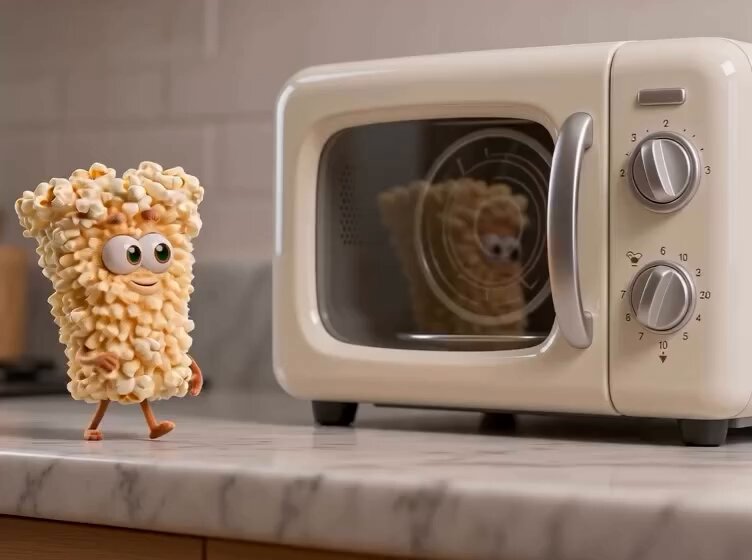
A recurring character turns a single clip into a series. When the same person or stylized figure appears across multiple videos, viewers build familiarity quickly and the account becomes a habit rather than a one-off. This is where AI-assisted production has become genuinely useful, because generating a consistent figure across many shots used to require a full shoot day and now requires a reference image plus disciplined prompting.
Countdowns, checklists, and ranked lists
Lists are easy to follow, easy to caption, and easy to cut into a loop. Three items is usually the sweet spot. Five is the ceiling before retention sags. The last item should be the strongest, not the leftover, because the ending drives shares and rewatches.
Building the shots: where AI video tools actually help
AI video generation has changed the cost structure of short-form production, but not uniformly. It is strongest for shots that are impossible, expensive, or repetitive, and weakest for shots that depend on authentic human presence.
Text-to-video for impossible and expensive shots
Models in the current generation, including the Sora line, the Flux family for stills, Runway's recent generations, Kling, Luma's Ray models, and MiniMax's Hailuo releases, can produce establishing shots, stylized transitions, product-in-environment scenes, and physics-driven moments that would previously need a studio. The practical win is not that they replace a camera crew; it is that they let you test five visual directions in an afternoon instead of committing to one.
A useful rule: use generated footage for anything the viewer will never need to literally believe happened. Use real footage for claims about real outcomes.
Image-to-video and character consistency
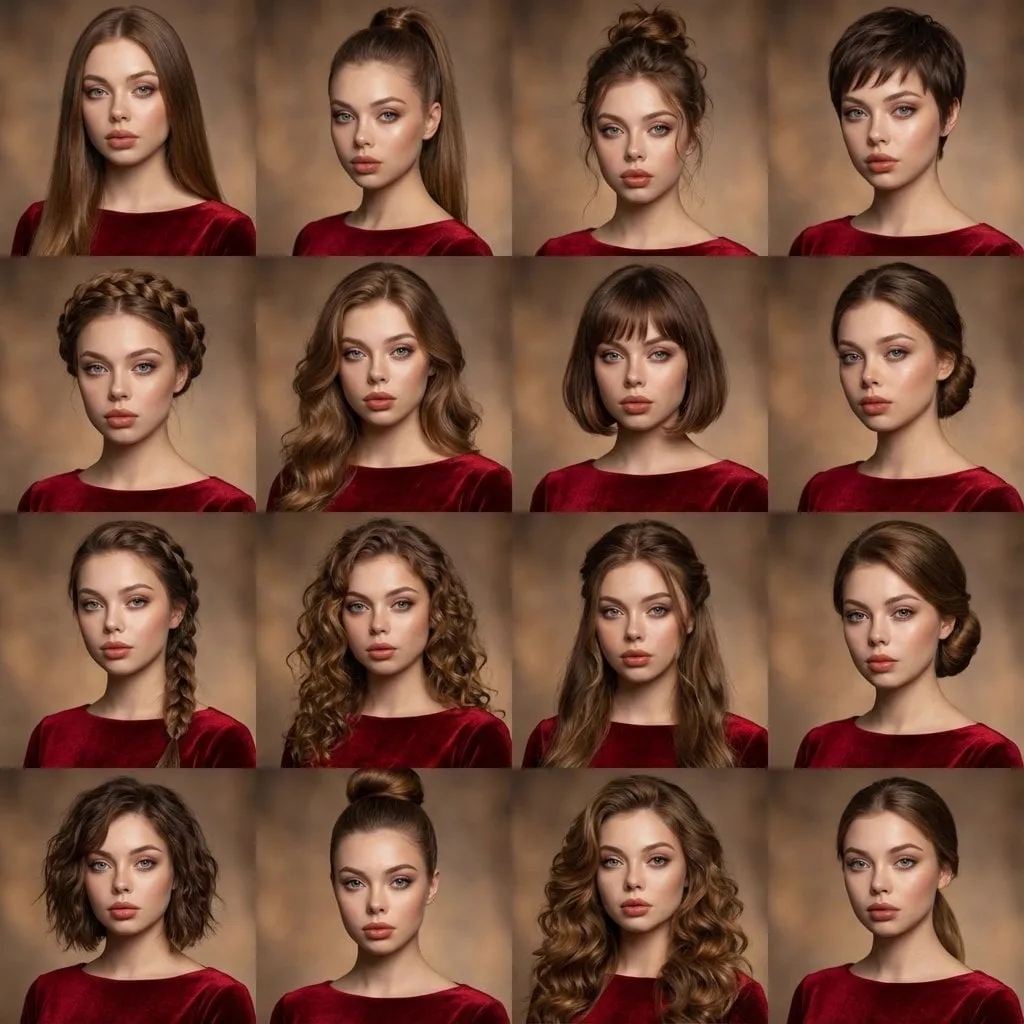
Most consistency problems are solved before the video stage. Generate or photograph a clean reference of your character or product, lock the framing and lighting, then animate from that reference rather than prompting from text alone. Keep a written character sheet with hair, clothing, lighting direction, and lens feel, and paste it into every prompt. Tools like Vidu and Pika are commonly used for reference-driven motion, and the discipline matters more than the specific model.
Frame control and editing precision
Generated clips rarely cut together perfectly on the first attempt. Frame-control workflows, including the Wan series and pack-based approaches that carry context between frames, give you the ability to specify what the last frame of one clip and the first frame of the next should look like. That single habit removes most of the visual jumpiness that makes AI footage feel cheap.
Sound design and interaction prompts
Sound is where short-form clips are most often under-built. Three layers are usually enough: a rhythmic bed, one or two accent sounds timed to cuts, and a voice layer. Synthetic voice works well for narration, but vary pacing deliberately, because flat synthetic delivery is one of the most reliable retention killers. ASMR-style transitions, where a tactile sound bridges two visual states, remain unusually effective because they give the cut a physical reason to exist.
Finally, design for interaction. A visual cue that implies a tap, a slider, a poll, or a swipe invites the viewer to participate, and participation is the highest-value signal you can send to a recommendation system.
A repeatable production workflow
Ideas are cheap; pipelines are what produce consistent output. Here is a workflow that fits a small team and still leaves room for creative risk.
Step 1: define the single action
Write one sentence: "After watching, the viewer will ______." If you cannot fill the blank with one action, split the concept into two clips. Multi-action clips almost always underperform single-action clips because the middle becomes a negotiation instead of a story.
Step 2: write an eight-beat script
Eight beats fits comfortably in fifteen to thirty seconds. A reliable shape: interrupt, promise, problem, proof, mechanism, payoff, action, loop. Write each beat as one line, not a paragraph. Then cut the script in half. The first draft is always too explanatory.
Step 3: storyboard in three visual states
For each beat, decide whether it is real footage, generated footage, screen capture, or text on a plain background. Mixing all four in one clip is fine; mixing all four in the first three seconds is not. Give the opening a single visual language so the viewer's eye has somewhere to land.
Step 4: generate, then select hard
Generate more options than you need for any expensive shot and select ruthlessly. A useful filter: if a shot does not change what the viewer believes or feels, cut it. Most AI-produced clips fail not because the generation is bad but because too many acceptable shots were kept.
Step 5: edit for rhythm, not for completeness
Cuts should land on beats, not on sentence ends. Captions should appear slightly before the words they match, because viewers read faster than they listen. Keep the loop in mind: if the last frame visually rhymes with the first, the replay feels intentional rather than accidental.
Step 6: ship three hook variants
Change only the first two seconds, keep the body identical, and publish the variants close together. This isolates the variable that matters most and gives you usable information within a day rather than a week.
Platform tuning: TikTok, Reels, and Shorts
The same clip rarely performs identically across platforms, but the differences are narrower than most guides suggest. Focus on three adjustments.
TikTok rewards native-feeling content, fast pacing, and text that reads like a comment rather than a caption. The algorithm appears to weight watch-through and rewatches heavily, so loop-friendly endings matter more here. Overly polished footage can read as an ad and get skipped, which is why a slightly raw first frame often outperforms a beautiful one.
Instagram Reels sits inside an app where the viewer may already follow you. That means the hook can assume slightly more context, and the caption can do more work. Saves and shares are strong signals, so clips with a practical, screenshot-worthy moment tend to travel. Vertical safe zones matter here: keep captions clear of the interface elements on both sides.
YouTube Shorts behaves more like a search surface over time. Titles and on-screen text influence whether a clip resurfaces weeks later, so descriptive language in the overlay earns its place alongside the punchy hook.
The practical takeaway: build one master edit, then export platform versions with adjusted opening frames, caption placement, and text tone rather than rebuilding the clip from scratch.
Metrics that tell you what to fix
Vanity metrics will not improve your next clip. Four numbers will.
Hook rate is the share of viewers still watching after the first two to three seconds. If this is weak, the problem is the opening frame, the first caption, or the audio lead. Nothing later in the clip can compensate.
Hold rate is the share reaching the middle. If hook rate is fine but hold rate sags, your promise and your payoff are misaligned, or the middle is doing work the viewer did not ask for.
Completion and loop rate reveal whether the ending earns the replay. Shorten the clip and tighten the final beat if this is low.
Action rate is the share taking your single intended action. When action rate is low but completion is high, the problem is almost always the call to action: too vague, too late, or visually buried.
Read these numbers together, never in isolation. A clip with a huge hook rate and terrible action rate is not a failure; it is a validated opening that needs a different ending. Save it and re-cut it.
Common mistakes that quietly kill conversion
Front-loading the brand. Logos and intros are comfortable for the creator and irrelevant to the viewer. Move identity signals to the last third.
Explaining the mechanism before the payoff. Viewers tolerate explanation only after they want the result.
Over-generating. Ten acceptable AI shots stitched together feel synthetic; three deliberate ones with real footage between them feel produced.
Flat synthetic narration. Vary sentence length, add a pause before the payoff, and rerecord rather than accepting the first pass.
Caption mismatch. Text that paraphrases rather than matches the audio makes muted viewers work harder than they will.
No single action. Two calls to action split intent. Pick one, then let the bio or the link handle the rest.
Chasing trends without a conversion path. Trend audio can boost reach, but if the clip's structure does not lead anywhere, you have bought attention you cannot use.
Frequently asked questions
How long should a conversion clip be? Long enough to deliver the payoff, short enough to reward a rewatch. For most product and service content, twelve to twenty-five seconds is the practical range. If you cannot explain the payoff in that window, the concept needs splitting rather than extending.
Do I need a real person on camera? Not always, but some form of human evidence helps. A hand, a voice, a customer result, or a consistent recurring character all provide the trust signal that pure generated footage lacks.
How many clips should I publish per week? Consistency beats volume. Three to five solid clips per week, each with a clear single action, will teach you more than fifteen rushed ones. The goal is to accumulate reliable patterns, not to fill a calendar.
Can AI-generated footage carry an entire conversion video? It can carry the visual load, especially for abstract, stylized, or impossible-to-shoot concepts. It struggles with claims about real-world outcomes, so pair generated visuals with real proof whenever the promise is concrete.
What is the fastest way to improve a clip that is already underperforming? Re-cut the first two seconds and change the final call to action, leaving everything between them untouched. These two edits address the majority of weak performance, and they take minutes rather than a full rebuild.
How do I keep a series visually consistent? Write down your rules: color palette, caption font, lighting direction, cut rhythm, and recurring character details. Consistency in short-form is less about equipment and more about refusing to improvise the same decisions twice.
Should every clip include a trend? No. Trends are a distribution shortcut, not a strategy. Use them when they fit the story you already planned, and skip them when they would force the payoff to arrive late.
Putting it together
Short-form conversion video rewards a specific kind of discipline: decide the one action, earn the first second, prove the promise quickly, and make the ending feel like it was designed rather than reached. AI video tools expand what you can show, but they do not change what the viewer needs. They still need a reason to stop, a reason to stay, and a reason to act.
Build a small library of tested opening patterns, keep a written consistency sheet for your visuals and captions, and treat every clip as one experiment in a longer series. That approach turns short-form from a scramble for the next idea into a system that produces ideas faster than you can publish them.
