
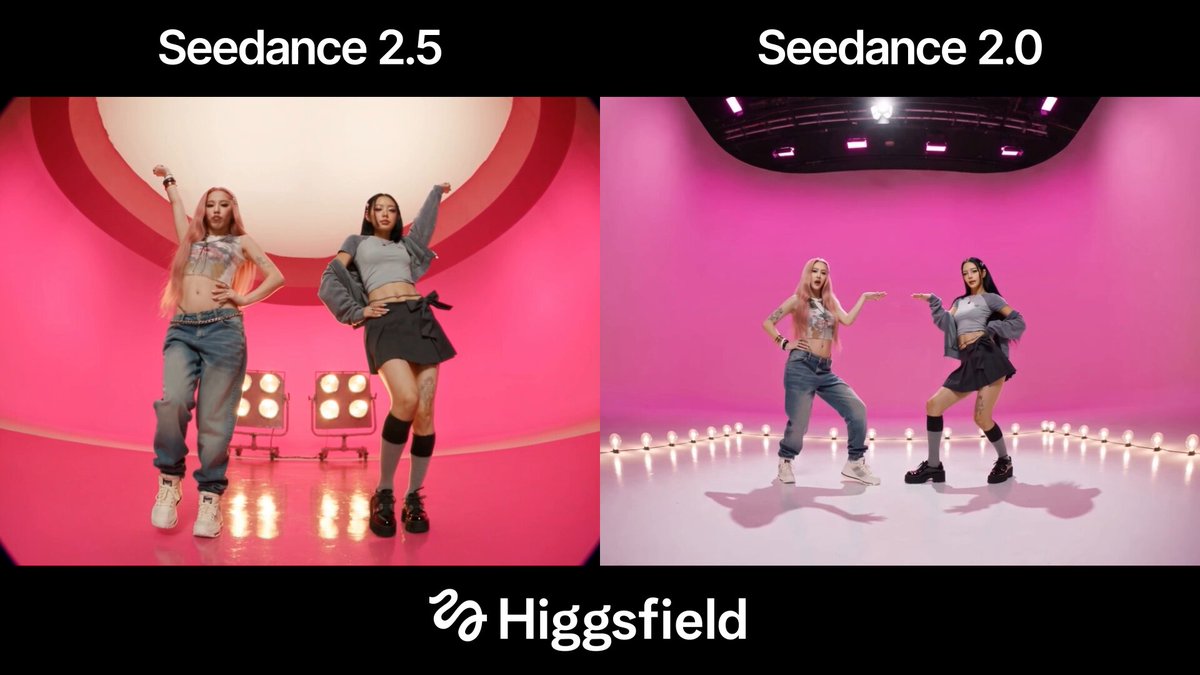
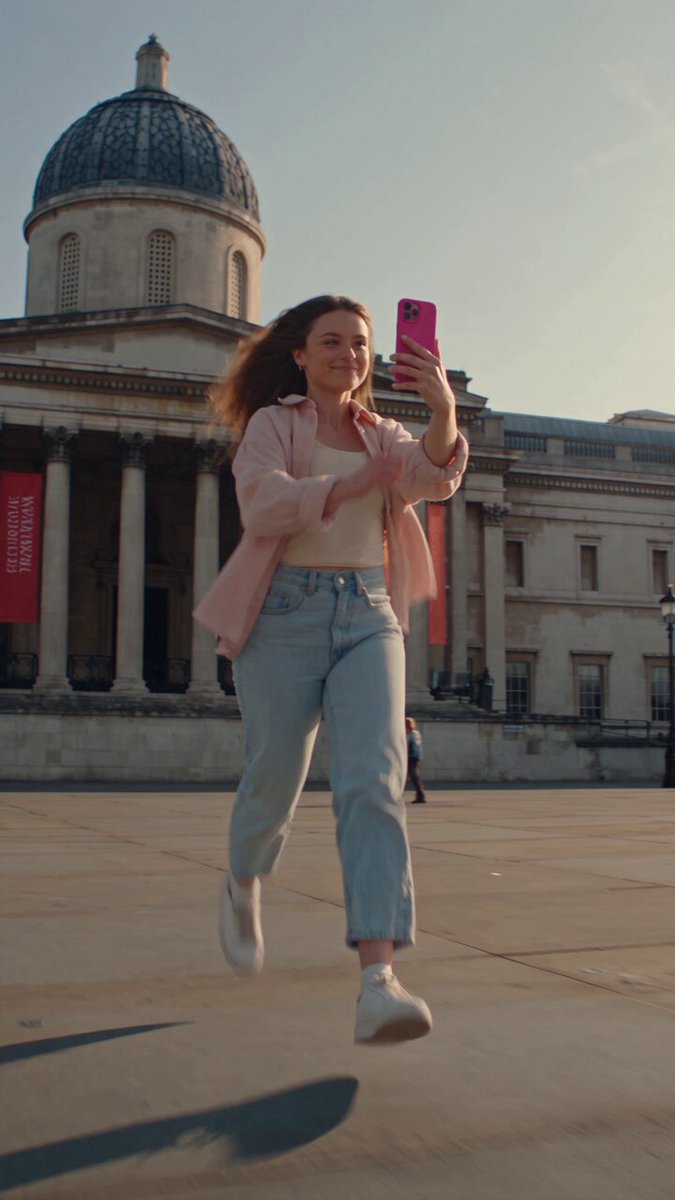
Text-to-video generation has moved from demo reels into the daily production toolbox. A sequence that once required a location scout, a crew, and a week in an editing suite can now be drafted in an afternoon — but only if you understand where these models are genuinely strong and where they quietly fall apart.
This guide is written for the people who actually ship video: marketers producing ad variations, small studios building explainers, educators recording course material, and solo creators who need a finished cut without a camera. It covers the mechanics behind the models, how to choose between them, a repeatable production pipeline, and the quality-control habits that separate a usable clip from an unusable one.
Why Text-to-Video Changes the Production Math
The first shift is not visual quality — it is iteration speed. When a shot concept costs nothing but a prompt and forty seconds of waiting, you stop defending your first idea. Teams that adopt these tools well generate fifteen or twenty visual directions for a single scene, compare them side by side, and commit to the one that actually communicates. That is a fundamentally different creative process from storyboarding a single approach and shooting it.
The second shift is the collapse of certain cost barriers. Aerial establishing shots, macro product rotations, stylized period interiors, abstract transitions, and animated diagrams used to require dedicated shoots or motion-design sprints. Now they are prompt categories. Budget that used to buy a helicopter hour can be redirected into sound design, voice talent, and the writing that makes a video worth watching.
The third shift is less comfortable: these tools do not replace judgment. They amplify it. A weak script produces a beautiful, expensive-looking, unwatchable video faster than ever before. The teams getting real value from generative video treat it as a rendering engine attached to a strong editorial brain, not as a replacement for one.
How Generative Video Models Actually Work
You do not need to read research papers to use these tools, but a working mental model of the machinery will save you hours of confused prompting.
Diffusion and Latent Video Synthesis
Most current systems are diffusion models. They learn by watching training footage get progressively destroyed with noise, then learning to reverse that process. At generation time, the model starts from pure noise and denoises it step by step, guided by your text prompt, until a coherent image emerges. For video, the same idea is extended across time: instead of denoising a single frame, the model denoises a stack of frames that must remain consistent with each other.
This is why prompts about style, lighting, and material behave so differently from prompts about action. The model resolves the "what does it look like" question very well, and the "what happened next, precisely" question less reliably.
Temporal Consistency Is the Real Bottleneck
A model can produce a gorgeous frame and still fail at video. The hard problem is temporal consistency: keeping a face, a jacket, a wall texture, and the direction of light stable from frame one to frame one hundred. Early systems solved this by generating short clips and blending them, which produced the characteristic "morphing" artifacts — hands that gain fingers, backgrounds that dissolve, faces that subtly change identity.
Modern approaches attack this in three ways: training on longer temporal windows so the model learns motion continuity directly, conditioning each generated chunk on the last frame of the previous chunk so drift is corrected at every seam, and adding explicit tracking so a chosen subject is held in place while the camera moves. When you evaluate a model, test it on a slow dolly-in on a human face with a distinctive outfit. If the buttons and the hairline survive eight seconds, the temporal handling is competent.
Model Ensembles, Routing, and Platform Layers
Very few finished videos come from a single generation. The practical reality is that different models excel at different shot types, and the strongest workflows route each shot to the model most likely to nail it. A photoreal talking head, a stylized anime action beat, a product macro, and an abstract data-viz transition may each want a different engine.
Some platforms abstract this routing away, letting you pick a look rather than a model. That convenience is real, but it also hides the variable you most need to control when a shot fails. Knowing roughly which engine produced which result is what lets you debug a bad generation instead of just re-rolling the dice.
Matching the Model to the Shot
Rather than hunting for a single "best" model, build a small internal map of which tool you reach for in which situation. The table below reflects the general strengths you will find across the current generation of systems; treat it as a starting hypothesis to test against your own footage.
| Shot type | What matters most | Where models usually struggle |
|---|---|---|
| Photoreal b-roll | Grain, lens behavior, natural light falloff | Over-smooth skin, floating objects |
| Talking head | Lip sync, micro-expression, stable framing | Mouth shapes on unusual phonemes |
| Stylized animation | Line weight, palette discipline, expressive motion | Style drift between shots |
| Product macro | Surface material, reflections, precise geometry | Text on packaging, logos |
| Abstract transitions | Motion coherence, color continuity | Becoming generic and interchangeable |
The practical move is to run a one-hour bake-off before a project starts. Pick five representative shots from your script, generate each in three or four candidate models with identical prompts, and score the results against your delivery standard. You will end up with a short list you trust, and you will stop wasting time on engines that cannot do what your project needs.
A Repeatable End-to-End Workflow
Ad-hoc prompting produces ad-hoc results. The teams that consistently ship good AI video follow a pipeline that separates creative decisions from generation decisions.
Stage 1 — Script and beat sheet
Write the video as you would normally: hook, beats, payoff, call to action. Then break it into shots, one line each, with the duration you want. A ninety-second video typically lands between eighteen and thirty shots. Writing shot durations before generation is what prevents the common trap of producing beautiful clips that cannot be cut to your runtime.
Stage 2 — Look development
Before you generate motion, generate stills. Create a small set of reference images that define palette, lighting direction, lens character, and texture. Save them. These are your style anchors for every subsequent prompt, and they are the single most effective defense against a video that looks like it was assembled from four unrelated projects.
Stage 3 — Shot list and prompt blocks
Convert each shot line into a structured prompt block containing subject, action, environment, camera behavior, lighting, and finish. Keep the block format identical across the project so you can vary one variable at a time when troubleshooting.
Stage 4 — Stills before motion
Generate the keyframe for each shot first. Reject anything with a broken composition, an extra limb, or the wrong wardrobe before you spend time animating it. Fixing a still is cheap; fixing eight seconds of video is expensive.
Stage 5 — Animate in short bursts
Generate shorter clips than you think you need — three to five seconds — and assemble them in the edit. Short generations drift less, fail faster, and give you cut points. Only stretch to longer durations for shots that must hold, such as a slow push-in on a speaker.
Stage 6 — Assemble and sound
The edit is where generative footage becomes a video. Place your clips, cut on motion, and let sound carry the transitions. Music, room tone, foley, and a human voice-over do more for perceived production value than any amount of additional generation.
Prompt Patterns That Hold Up Under Motion
Subject, action, camera, light, finish
A prompt that names all five dimensions gives the model fewer opportunities to improvise. Compare "a woman walking through a market" with "a middle-aged woman in a linen jacket walking slowly toward camera through a covered market, warm afternoon light from the left, shallow depth of field, 35mm film grain." The second gives the model constraints to satisfy, and constrained models produce more consistent output.
Control drift with explicit negatives
Negative descriptions matter more in video than in stills because drift accumulates. If your character keeps gaining jewelry, name the absence of it. If backgrounds keep dissolving into bokeh, specify that the environment stays legible and in focus.
Budget your shot lengths
Every additional second of generation is another second for the model to lose coherence. If a shot only needs two seconds in the cut, generate three and trim. Long holds are a stylistic choice that should be paid for deliberately, not an accident of default settings.
Keeping Characters, Props, and Locations Consistent
Character consistency is the single most requested capability and the most common source of frustration. There is no magic switch; there are habits.
Build a character sheet
Create a reference set from multiple angles in consistent lighting: front, three-quarter, profile, and a full-body shot. Keep wardrobe, hair, and accessories identical in every reference. Use that same sheet every time the character appears, and describe the character in the same words in every prompt.
Lock the physical details you care about
If a character wears a red scarf, decide whether the scarf is a narrative detail or decoration. If it matters, it must appear in the reference sheet, in the written prompt, and in your negative prompts when it should be absent. Vague intentions produce vague continuity.
Fix drift in the edit, not the generation
Not every inconsistency needs another generation pass. A cutaway, a reaction shot, or a change of angle can hide a continuity break entirely. Editors have solved this problem for a century; use their toolkit before burning another hour of rendering.
Sound, Dialogue, and Lip Sync
Silent AI footage reads as a tech demo; sound makes it a video. Treat audio as a first-class layer with its own pipeline.
Generate or record voice-over separately and cast it deliberately — synthetic voices are improving quickly, but delivery still carries meaning that a text prompt cannot specify. For on-camera dialogue, generate the shot with the mouth unobstructed, then align the performance to the audio. Avoid heavy occlusion, extreme profile angles, and rapid head turns during speech; all three make alignment visibly wrong.
Music should be chosen before final picture lock, not after. A track establishes pace, and pace determines which generated clips survive the cut. Room tone and foley — footsteps, fabric, distant traffic — are the cheapest way to make synthetic footage feel grounded. If a shot feels uncanny and you cannot say why, add a subtle ambient bed before you regenerate anything.
Quality Control Before Delivery
Watch every clip three times with a specific question each pass. First pass: composition and subject integrity. Second pass: motion and physics — do objects have weight, do shadows stay attached, do reflections track. Third pass: continuity with neighboring shots — light direction, wardrobe, screen direction, and color temperature.
Build a rejection checklist and apply it ruthlessly. Common instant-reject signals include hands with the wrong finger count, text that reshuffles between frames, background crowds that melt, feet that slide, and lighting that flips direction mid-shot. None of these are fixable in post at reasonable cost. Regenerate instead.
Finally, test on a phone speaker at low volume. Most of your audience will watch there, and artifacts that are invisible on a calibrated monitor are obvious on a small screen with heavy compression.
Common Mistakes and How to Avoid Them
Generating before writing. The most expensive mistake. Lock the script and shot list first.
Chasing one perfect long clip. Twenty mediocre short clips cut well beat one continuous nine-second generation that drifts.
Ignoring aspect ratio and safe areas. Decide delivery format at the start; vertical and widescreen framings are not interchangeable crops.
Prompting style and action simultaneously and expecting both. Separate look development from motion generation.
Skipping the sound pass. Viewers forgive imperfect visuals far more readily than they forgive bad audio.
Using generated footage where a real shot is faster. Sometimes a phone camera on a tripod in your office is genuinely the best tool for the shot. AI video is one instrument, not the whole orchestra.
FAQ
Do I need a powerful computer to generate video?
Usually not. Most capable models run as hosted services, so the heavy computation happens remotely. A mid-range laptop with a stable connection is enough for the workflow described here. Local generation is possible with open models but demands serious GPU hardware and a tolerance for configuration work.
How long should a single generated clip be?
Three to five seconds is the practical sweet spot for most narrative work. Shorter clips drift less and give you editing flexibility. Reserve longer generations for deliberate slow shots where the camera movement itself is the point.
Can I use AI-generated video commercially?
That depends on the terms of the specific tool you use and the laws of your jurisdiction. Read the license for each engine you rely on, keep records of which tool produced which shot, and be cautious with anything resembling a real person's likeness, trademarked packaging, or recognizable brand environments.
Why does my character change between shots?
Because the model has no memory between separate generations. Consistency comes from reference images, repeated descriptive language, and choosing the first frame of a previous shot as the seed for the next. Treat continuity as an editorial problem you solve across shots, not a single-generation setting.
Is it worth learning prompt engineering in depth?
Yes, but the highest-leverage skill is shot planning, not vocabulary. A well-structured shot list with clear durations and a locked visual reference does more for output quality than any collection of magic phrases. Prompts execute decisions; they do not make them.
What should I learn to get better results fastest?
Editing. The ability to cut on motion, layer sound, and hide imperfection is what turns a folder of generated clips into something an audience will watch to the end. Generative tools change how footage is made; they do not change what makes a video work.
