

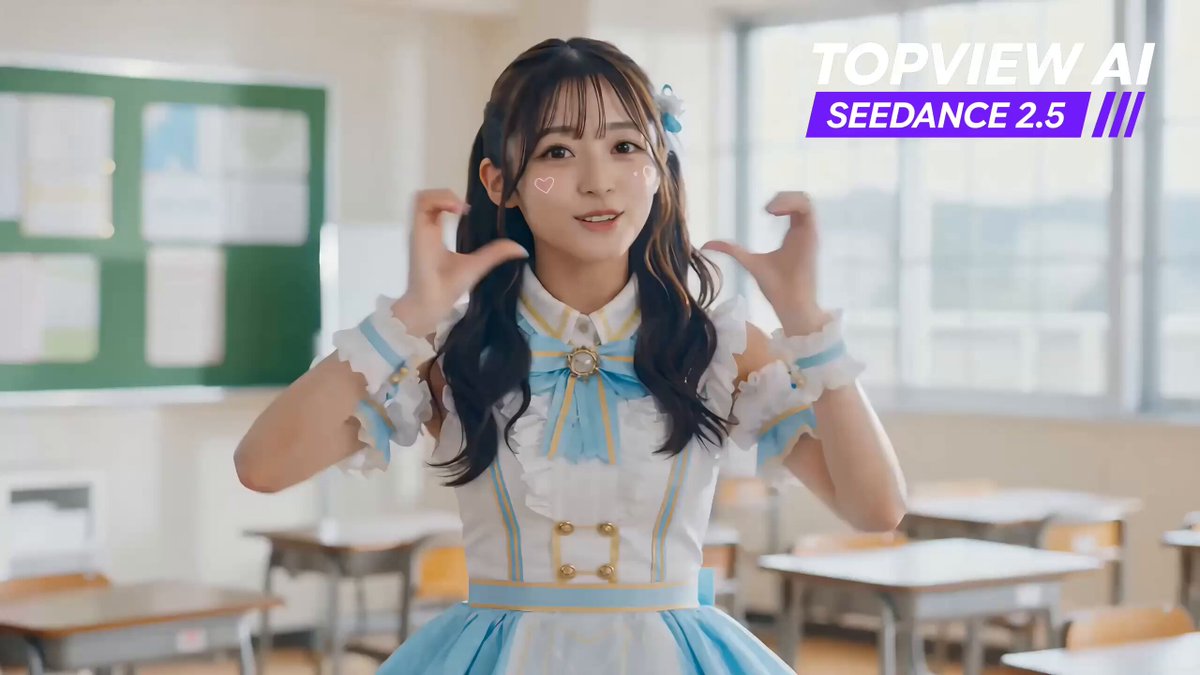

The days when producing animation meant weeks of manual work and serious budgets are over. Text-to-video models now turn a paragraph of description into a moving, cinematic clip in minutes. But with new models appearing constantly, the harder problem has become choosing: which platform should you use for which job?
This guide compares the leading text-to-video models on the metrics that actually matter, explains how the technology works under the hood, and ends with a decision framework you can apply even as new models launch.
How Text-to-Video Models Actually Work
Modern text-to-video models are built on hybrid architectures that combine diffusion and transformer components. The diffusion part is responsible for detailed rendering: lighting, texture, and fine visual quality. The transformer part handles language understanding and temporal coherence, keeping the video consistent as the scene evolves over time.
Two consequences follow for users. First, the quality of your prompt directly limits the quality of the output, because the model genuinely parses your words into visual decisions. Second, models are still generating relatively short clips, typically a few seconds to a couple of minutes, and consistency across separate generations remains a distinct challenge that no single model has fully solved. Understanding these limits helps you set realistic expectations and choose tools accordingly.
The Two Metrics That Matter: Quality and Consistency
Almost every text-to-video decision comes down to a trade-off between two things. Visual quality means resolution, lighting, texture detail, and how convincingly the scene looks like the real thing (or like the style you asked for). Temporal consistency means whether characters, objects, and the environment stay stable across frames and across separate clips.
Different projects weight these differently. A single abstract background clip for a presentation needs quality and almost no consistency. A narrative series with a recurring character needs consistency above almost everything else. When you compare platforms, compare them on the axis that matters for your specific work, not on demo videos that show only the best case.
The Premium Tier: Photorealism and Control
At the high end of the market, the leading names are Flux, OpenAI's Sora line, and Runway's Gen series. These models define the reference point for photorealism and cinematic control.
Flux is known for strong style control and high-fidelity rendering, which makes it a favorite for work where visual polish is non-negotiable. Runway Gen models combine good image quality with the most mature set of camera controls, so they are often the default for commercial and cinematic work where you need predictable results. Sora focuses on long, coherent sequences and is the model to test when your scene needs to hold together over time, with complex motion and consistent characters.
These models cost more to run and typically take longer per generation. They are the right choice when the output is client-facing or when a single scene carries most of the video's weight.
The Value Tier: Asian Models Redefining the Mid-Range
A cluster of models from Asian developers has dramatically improved the cost-performance ratio of text-to-video. Kling has built a strong reputation for vivid, physics-plausible motion, particularly for character action, and its quality is close to the premium tier at a fraction of the cost. MiniMax's Hailuo series offers solid quality with fast iteration, which makes it attractive for volume work and for creators experimenting with many variations.
For creators producing social content, internal previews, or client mood boards, the value tier is often the smart choice. The quality gap to the premium tier is real but shrinking, and the speed advantage lets you explore more directions in the same budget.
Speed and Innovation: The New Generation of Startups
A third group of tools competes on speed, ease of use, and stylistic reach. Luma's Dream Machine is among the fastest, returning clips quickly and handling stylized looks well, which makes it ideal for rapid prototyping. Pika is beginner-friendly and strong on playful, effect-driven animations, and its interface is one of the easiest to learn. Vidu stands out for reference control, letting you keep a character or object consistent across clips, which is useful for small narrative projects.
The right mental model is that these tools are complements, not just competitors. A professional workflow often uses a fast tool for drafts and a premium tool for the final hero shot.
Specialized Models for Specific Jobs
Beyond the general-purpose leaders, a long tail of specialized models covers niches. Alibaba's Wan series and Tencent's Hunyuan models are strong choices for Chinese-language content and for creators who want local ecosystem integration. CogVideoX and similar open-weight models appeal to teams that want to run generation on their own infrastructure. Control-focused tools such as Framepack and MAGI-style workflows let you lock specific frames and motion paths, which matters for precise animation and brand work.
The practical point is that specialization matters. If your work is character-driven, pick a model known for consistency. If it is camera-driven, pick one with strong motion control. Trying to force one general-purpose model to do everything usually means accepting mediocrity in the dimensions that matter to you.
Workflow Integration: From Prompt to Finished Asset
Choosing a model is only half the job. The other half is how the tool fits into a real production pipeline. Three factors deserve attention.
Asset management matters because video projects generate many files. Platforms that store prompts, images, and clips together make it much easier to revisit and iterate on an idea. Prompt portability matters because models improve and change; if your prompts are written in a clean, tool-agnostic style, you can migrate without rebuilding your library. Export flexibility matters because editors need formats, resolutions, and aspect ratios that match their target platforms. A model that produces beautiful clips but awkward exports will cost you time on every project.
Increasingly, workflow integration also means AI agents that sit on top of the models. An agent can take a story brief, break it into shots, select a model per shot, and sequence the results. For teams, this standardizes quality across projects. For individuals, it provides the structure of a production plan without the production department.
There is also a practical question of prompt portability that every team eventually faces. Models improve, vendors change plans and rates, and the best tool this quarter may not be the best next quarter. If your prompts are tightly coupled to one platform's syntax, migrating is painful. Write prompts in a way that describes the scene in plain language first, then add tool-specific parameters only at the end. That way, the creative intent travels with you, and only the technical layer needs to be rewritten when you switch tools. Teams that adopt this habit early can negotiate better terms and avoid being held hostage by any single vendor, because their switching costs stay low.
A Decision Framework for Choosing a Platform
Instead of chasing the latest hype, evaluate platforms against five questions.
- What is the dominant need: photorealism, motion, consistency, or speed?
- How long does a typical clip need to be, and can the platform deliver it?
- How much does a generation cost, and what does the budget allow per project?
- How good is the tool at keeping your character or brand consistent across clips?
- How well does it fit your existing editing and asset-management workflow?
Score the candidates you are considering against these questions with your own projects in mind, not with demo videos in mind. The platform that wins is rarely the one with the most impressive showcase; it is the one that scores highest on the axes you actually need.
Common Pitfalls When Comparing Platforms
Even experienced users make predictable mistakes when evaluating text-to-video tools. Recognizing them saves time and budget.
The first pitfall is comparing on different inputs. A model's output is only as good as the prompt, so if you test one tool with a detailed prompt and another with a one-line prompt, you are comparing your prompt writing, not the tools. Standardize: write one prompt, run it on every candidate, and keep the settings comparable.
The second pitfall is judging by a single generation. All these models are stochastic, and the same prompt can produce a brilliant clip and a broken one on consecutive runs. Generate three or more samples per model before drawing conclusions. What matters is the hit rate, not the best case.
The third pitfall is ignoring the ecosystem. A model that produces great clips but lacks an API, has poor export options, or no way to manage assets will slow you down across a whole project. Evaluate the workflow, not just the output, and include the time cost of moving files between tools in your comparison.
The fourth pitfall is chasing the newest model. New releases generate excitement, and early demos are almost always cherry-picked. Let a model mature for a few weeks, read independent reviews, and test it against your own workload before switching your production pipeline.
A quick benchmark routine
A practical benchmark takes under an hour. Pick one representative scene from your own work: one that tests quality, one that tests character consistency, and one that tests speed. Run each scene on every candidate platform, generate three takes each, and score the results on a simple scale: visual quality, consistency, speed, and ease of integration. Keep the scores in a spreadsheet. Re-run the benchmark when a major model update arrives, and you will have an evidence-based answer instead of an opinion.
Budgeting for iteration
Text-to-video is an iterative medium, and the budget should reflect that. A finished clip rarely comes from the first generation; most workflows need several takes, a few refinements, and occasional full retries. Estimate the real cost per finished minute by multiplying the cost per generation by your average number of attempts, then add a buffer for the inevitable reshoot. This number, not the sticker price per clip, is what belongs in your project budget. When you compare platforms, compare this effective cost per finished minute rather than the headline rate, because a slightly more expensive model with a higher hit rate can end up cheaper per deliverable. The same arithmetic applies to internal teams: generating volume is only efficient if the review process filters bad takes quickly, so invest in a clear review step alongside the generation budget.
FAQ
Is text-to-video good enough for client work? For concept tests, mood boards, and social content, yes. For hero brand spots, it is usually a starting point that needs skilled finishing. The quality bar keeps rising, so review current output before promising anything.
How long are typical generations? Most tools produce clips between five and fifteen seconds, with premium models and longer-form options reaching a minute or more. Long videos are assembled from multiple generations.
Do I need a powerful computer? No. Almost all text-to-video runs in the cloud. You need a browser, an account, and a payment plan.
How much does it cost? Costs vary widely by platform and model tier. Value-tier models can cost a few cents per generation, while premium models can cost several dollars. Plan per project rather than per month.
Which model is best for anime style? Kling and several specialized anime-capable models handle stylized animation well; Flux is strong for high-fidelity style control. Test the same prompt across two or three and compare.
Can I use generated clips commercially? Usually yes, but check each platform's terms. Some impose restrictions on redistribution, training, or trademark use.
Conclusion
Text-to-video has moved from novelty to a practical production tool, and the market now rewards informed choices rather than blind loyalty to one platform. Understand the quality-versus-consistency trade-off, know which tier fits each job, keep your prompts portable, and evaluate platforms against your own workflow. The models will keep changing, but the discipline of matching the right tool to the right task will keep paying off. Start with one small project, compare two or three tools on it, and let the results, not the marketing, make the decision.
