
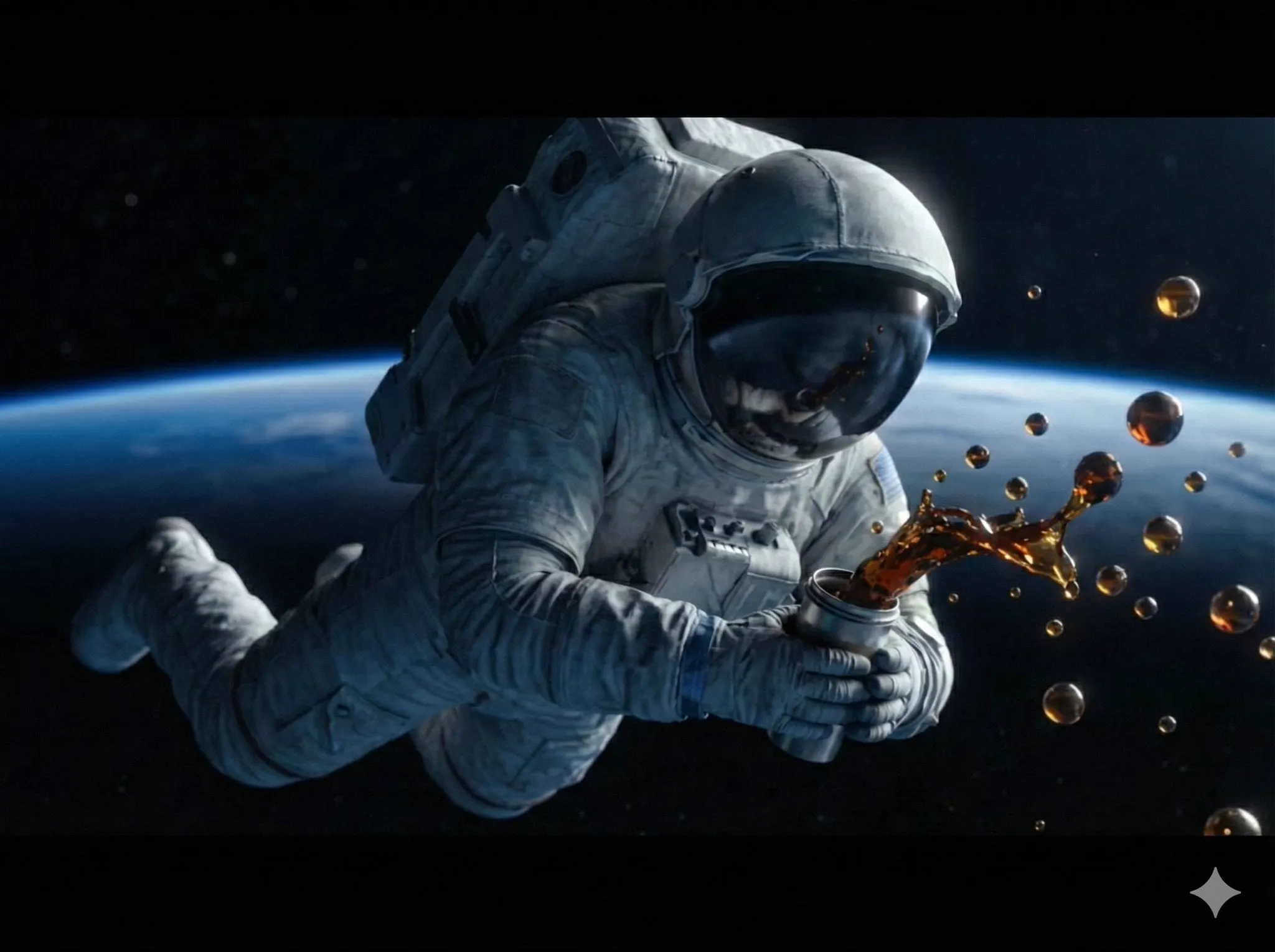
Why Text-to-Video Is Now a Production Pipeline
Text-to-video generation stopped being a novelty the moment it became faster to regenerate a shot than to reshoot it. That shift did not happen because one model solved everything. It happened because the ecosystem fragmented into dozens of specialized systems, each good at a different part of the job, and because workflows emerged that let creators combine them.
The practical consequence is that the hard part of AI video is no longer "can a model render this?" It is "which model should render this, and what does it need to know before it starts?" A prompt that produces a beautiful establishing shot in one system may produce a smear of melted faces in another, not because one is worse but because they were trained on different data with different motion priors.
This guide is about the workflow layer: how to plan, prompt, generate, review, and finish a video using more than one generation model without drowning in browser tabs. It assumes you already have a script or an idea and you want something publishable at the end.
What Actually Differs Between Video Generation Models
Product pages all promise cinematic realism. In practice, models diverge along a handful of measurable axes, and knowing them is what lets you route work intelligently.
Motion realism and physics
Some models understand weight. Cloth falls, hair settles, liquids pour, and objects collide with plausible momentum. Others produce motion that looks correct in a single frame and nonsensical across twenty. If your shot involves anything physical — a fall, a splash, a hand catching an object — motion realism is your primary filter.
Prompt adherence
Adherence is how literally the model follows instructions: subject count, wardrobe color, camera angle, action timing. High-adherence models are boring in a useful way. They give you what you asked for, which matters enormously when you have to match shots in an edit.
Duration and drift
Short clips of three to five seconds tend to be dense and clean. Longer generations drift: identity softens, backgrounds mutate, camera motion slows. Plan for the model's comfortable duration rather than fighting it, then extend the shot with cutaways and inserts.
Style controllability
Some systems accept reference images, style presets, or structural guides like depth maps and pose skeletons. Others are prompt-only. If your project has a defined look, prefer models that accept references. If you are still exploring, prompt-only is faster.
Cost and latency profile
Every model sits somewhere on the speed-versus-fidelity curve. Fast, low-fidelity drafts are for blocking. Slow, high-fidelity renders are for hero shots you will actually keep. Mixing both in one project is the single biggest efficiency gain available to a solo creator.
Building a model shortlist
Pick three models, not thirty. Choose one workhorse for general shots, one specialist for the thing your project leans on most (faces, action, stylized textures, product detail), and one fast draft model. Test the same prompt in all three on day one, then write down what each does well. That note becomes your routing table for the whole project.
Pre-Production: Planning Before You Generate
Generating first and planning later is the most expensive habit in AI video. Ten minutes of planning removes hours of regeneration.
Build a shot list, not a scene list
A scene is "they argue in the kitchen." A shot list is: wide of both characters at the table, over-the-shoulder on A, close-up on B's hands, insert of the spilled coffee. Shots are the unit of generation. Write them as a numbered list with six fields each: shot number, subject, action, camera, duration, and audio note. Fill in all six before you open any tool.
Assign a difficulty score
Rate each shot one to five for how hard it will be to generate. A static portrait is a one. Two people embracing while walking through rain is a five. Difficulty scores tell you where to spend your best model and your iteration time, and where to simplify the storyboard so the sequence still reads.
Write the beat sheet before the dialogue
AI video struggles with lip-synced emotional nuance. If a beat can be carried by a reaction, a gesture, or a cutaway instead of a speech, you have removed the hardest problem in the shot. Keep dialogue for the moments where it truly matters and use voiceover everywhere else.
Design around the model's blind spots
Common weak spots include hands interacting with small objects, text on signs and screens, crowds, mirrored reflections, and rapid camera moves through narrow spaces. If a scene depends on one of these, restructure it. Show the hands in shadow. Blur the sign deliberately. Cut before the crowd fills the frame.
Prompt Architecture That Travels Across Models
Prompts are not poetry. They are specifications. A reusable structure lets you move the same shot between systems with minimal rewriting.
The six-part prompt frame
Use this order for every shot: subject, action, setting, camera, lighting, and style. Write each part in plain language with concrete nouns.
Example: "A woman in her thirties in a rust-colored wool coat, walking slowly toward the camera while looking down at a folded letter, evening city sidewalk after rain, slow dolly-in at eye level, warm streetlight with cool ambient fill, cinematic but naturalistic."
Six parts, no ambiguity, no model-specific syntax. If you paste this into a different system and the result still reads as the same shot, your prompt is portable.
Keep a negative list, not a negative essay
Instead of a long "no" paragraph, maintain a short project-wide list of things you never want: extra fingers, warped text, duplicated limbs, floating objects. Apply it consistently. Long negative lists often cancel out parts of your positive prompt.
Control motion with verbs, not adverbs
"Slowly" does very little. "Dolly-in," "handheld pan left," "static tripod," and "orbit around subject" are instructions the model can act on. Camera language is the most reliable motion control you have.
Reuse a style block verbatim
Write four to six lines describing palette, contrast, grain, lens character, and era. Append it unchanged to every prompt in the project. Consistency across shots comes more from repetition of that block than from any single model's quality.
Consistency: Characters, Scenes, and Style Locks
Consistency is where multi-model workflows earn their keep, and where they fail loudly. A character who changes face between shots destroys the illusion faster than any rendering artifact.
Lock identity with reference frames
Generate or source three to five clean references per main character: front, three-quarter, profile, and full body. Feed these to models that support image conditioning, and reuse the exact same files across every shot featuring that character.
Lock wardrobe and props explicitly
Never let the model infer clothing. State wardrobe in every prompt, in identical wording. If a character carries a red umbrella in shot three, the prompt for shot twelve should still say "carrying a red umbrella."
Lock the environment
Describe recurring locations as a fixed paragraph: architecture, time of day, weather, dominant colors, light direction. When a location changes, change it deliberately and note it, so the audience reads the change as a story beat rather than a continuity error.
When consistency refuses to hold
Route all shots of a single character through one model, even if another model renders the location better. Identity continuity beats background beauty every time. Alternatively, shoot the character in ways that avoid the face — from behind, in silhouette, partially framed — and let the audience fill in the rest.
A Repeatable Multi-Model Workflow, Step by Step
This sequence works for almost any short project.
Step 1: Animatic pass
Generate every shot at the fastest, lowest-resolution setting, one attempt each. Do not polish anything. Assemble the clips in your editor with real timings. You now have an animatic that tells you whether the story works before you have spent real effort on rendering.
Step 2: Fix the story, not the pixels
Watch the animatic three times. Find shots that are confusing, redundant, or boring. Cut, reorder, or simplify them. Roughly a third of shots usually change at this stage. Changing them now costs minutes; changing them after final renders costs hours.
Step 3: Route shots to appropriate models
Group the final shot list by characteristics: high motion, dialogue, establishing, inserts, abstract or stylized. Assign your strongest model to the two or three shots that define the piece and a fast model to everything else. No single model needs to do everything.
Step 4: Render in small batches
Generate two to four variations per shot rather than one. Save files with a naming convention encoding shot number, model, and take, such as s07_modelA_t2. You will forget which take was which within an hour otherwise.
Step 5: Select mercilessly
Choose takes by watching at normal speed, not frame by frame. Artifacts that are obvious when paused are often invisible in motion, and vice versa. A take with a slightly soft face and perfect motion almost always beats a sharp face with jittery movement.
Step 6: Assemble with real editing rules
Cut on action rather than on beats. Trim the first and last half-second of most AI clips, because that is where drift and morphing concentrate. Use cutaways and inserts generously; they hide continuity gaps and give the audience room to breathe.
Step 7: Grade and finish
Outputs from different models rarely match in color, contrast, or grain. Apply one unifying grade across the whole timeline: a base contrast curve, consistent white balance, light grain, and a single sharpening setting. This step does more for perceived production value than upgrading any individual shot.
Audio, Voice, and Finishing
Video without audio feels unfinished regardless of image quality. Build the sound in layers.
Ambience first
Lay a continuous ambience bed — room tone, street noise, wind, rain — across the entire sequence before you touch music. Ambience glues shots together and makes cuts feel intentional.
Foley second
Add spot effects for visible actions: footsteps, a cup being set down, fabric movement. Foley sells the weight and physicality that generated motion often lacks.
Voice and music last
Use synthesized or recorded voiceover, then duck it under ambience and effects. Music goes last and sits low. It guides emotional tempo; it is not there to fill silence. If a viewer notices your music, it is usually too loud.
Match audio to shot length
If a shot is four seconds, write four seconds of dialogue, not five. Do not stretch audio across cuts. If the line needs more room, regenerate the shot slightly longer or trim the line.
Quality Control and Iteration Loops
Treat review as a structured pass with defined criteria rather than a vibe check.
Score every take on five criteria
Rate each take one to five on subject fidelity, motion quality, prompt adherence, artifact level, and usability in the edit. Any take scoring below three on artifact level gets discarded regardless of how good the rest is.
Set an iteration ceiling
Decide in advance that no shot gets more than a fixed number of attempts — five is a reasonable default. If five attempts fail, the shot is wrong, not the model. Rewrite it simpler: fewer subjects, less motion, a tighter frame, a different angle.
Keep a failure log
Write one line for every failed generation describing what went wrong. After twenty entries you will see patterns: a motion type that always breaks, a lighting setup that confuses one model, a phrase that gets ignored. That log becomes your personal model-selection guide.
Common Mistakes and How to Fix Them
Generating at final quality too early. Start low, decide high. Draft quality exists for decisions; final quality exists for delivery.
Overloading a single prompt. One subject, one action, one camera move. If a shot needs three actions, it is three shots.
Asking one model to do everything. Different systems genuinely excel at different things. Specialize.
Ignoring aspect ratio early. Vertical, square, and widescreen compositions fail in different ways. Decide your delivery format before generating and compose for it.
Skipping the animatic. It is the cheapest place to discover that your sequence does not work.
Chasing perfection on a minor shot. Spend iterations where the audience is looking: faces, hands, and the first three seconds.
Assuming a good frame means a good clip. Judge in motion, at speed, at the screen size your audience will actually use.
FAQ
How many shots can one person realistically produce in a day?
With a defined shot list and a draft pass already complete, a solo creator can typically generate, review, and select eight to fifteen short shots in a focused session. Planning and editing usually take longer than generation.
Do I need multiple generation models?
You can finish a project with one, but you will burn extra iterations on shots it handles poorly. Two or three models — one high-fidelity, one fast, one specialist — covers most work.
How do I keep a character consistent across shots?
Use reference images, restate wardrobe and features verbatim in every prompt, and keep the same style block. If consistency still fails, route that character's shots through a single model instead of mixing systems across the sequence.
Is it better to generate longer clips or stitch shorter ones?
Shorter clips are more reliable. Generate the shortest duration that covers the shot, then extend with cutaways and inserts. Longer generations drift in identity and background.
What resolution should I render at?
Render drafts at the lowest setting that lets you judge composition and motion, then re-render selected takes at the highest setting your delivery target needs. Upscaling helps with grain and softness but cannot repair structural errors.
How do I handle dialogue shots?
Prefer reaction shots, cutaways, and voiceover. When someone must speak on camera, keep the shot short, keep the face relatively still, and let sound design carry the performance.
What is the single highest-leverage improvement?
Unifying color, grain, and contrast across all shots in one grade pass. It makes mixed-model footage feel like one production.
