

Why Short-Form Reach Is Mostly a Workflow Problem
Most creators who plateau on short-form video are not under-equipped. They own a decent phone, a ring light, and at least one editing app. What they lack is a repeatable process. They publish in bursts, chase whatever format looked good in someone else's feed last week, then wonder why one clip reached six figures while the next ten barely moved. The gap is rarely talent and rarely luck. It is almost always the absence of a system that consistently produces clips the algorithm can categorise and the audience can finish.
Short-form distribution is a ranking problem solved with creative decisions. Every upload is evaluated through a narrow set of behavioural signals: how many people stop scrolling, how long they stay, whether they rewatch, whether they comment, save, or send the clip to a friend. Your job as a creator is to build a workflow that reliably produces content tuned to those signals without burning you out after three videos.
That is where an AI-assisted pipeline earns its place. Not as a substitute for taste or point of view, but as compression of the tedious stages: idea variants, shot generation, rough assembly, captioning, and version testing. A creator with a clear promise and a working pipeline can produce three publishable clips in an afternoon. A creator without one can spend the same afternoon adjusting a single transition.
This guide covers the whole loop: signal reading, pre-production, generation choices, hook design, retention editing, a full session workflow, common failure modes, and a testing rhythm you can run weekly. Treat it as an operating manual rather than a list of tips. The sections are ordered the way the work actually happens, but each one stands alone if you need to fix a specific weak point in your current process.
Reading the Signals: What Retention Actually Rewards
Before touching a timeline, get precise about what the platform measures. Creators who understand the mechanics make better editing choices than creators who only copy trends, because they can tell the difference between a format that worked and a format that happened to work once.
Completion and Rewatch Behaviour
Completion rate is the most consistent predictor of reach. A twelve-second clip watched twice is a stronger signal than a sixty-second clip abandoned at eight seconds. This is why short-form rewards density: every second has to earn the next one. Rewatches matter even more, because they suggest the clip delivered something worth experiencing again — a visual detail, a punchline, a satisfying loop.
Practical consequence: design clips that end where they began, or end on a beat that makes the opening frame feel unfinished. Loops are not a cheap trick; they are a structural advantage that most creators never deliberately engineer.
The First Ninety Frames
The first second and a half decides whether the rest of the clip exists for most viewers. At standard frame rates that is roughly ninety frames. Inside that window you need a visual change, a text promise, or a spoken hook. Static openings, slow fades, and branded title cards waste the decision window, no matter how much work went into them.
Engagement Quality Over Raw Volume
Comments that continue a conversation, saves that signal future value, and shares into direct messages generally carry more weight than generic reactions. Saves are chronically underrated: a viewer saving a tutorial clip is telling the platform the content has lasting utility, and the platform responds accordingly. Structure clips so there is an obvious reason to save them — a checklist, a sequence, a template, a number worth remembering.
Building the Pre-Production Layer
The creators who post consistently are not more disciplined than everyone else. They have simply removed decisions from the moment of creation, so starting a clip does not require motivation.
The One-Page Brief
Every clip gets a single brief before production: audience assumption, the promise in one sentence, hook type, target duration, and call to action. If the promise cannot be stated in one sentence, the clip is not ready to make. This discipline blocks the classic failure mode of generating footage first and inventing a story around it afterwards.
Shot Lists Written for Generation
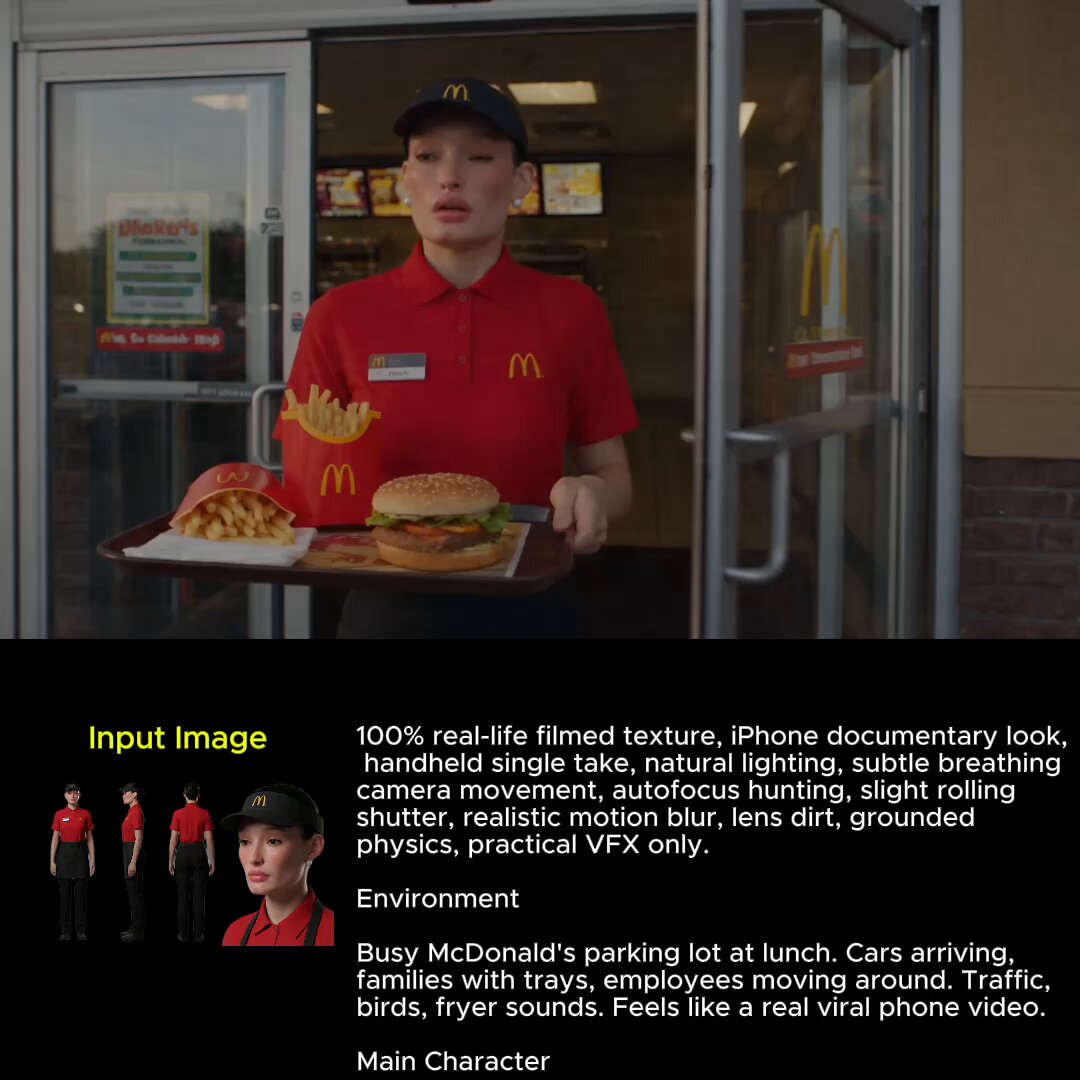
When generative video tools are part of the stack, describe shots the way a storyboard artist would: subject, action, camera behaviour, lighting, environment, duration. Vague prompts produce vague footage, and vague footage cannot be rescued in the edit. A shot list with six to nine clearly described beats gives you an assemblyable sequence even if only half the generations are usable on the first pass.
Asset Hygiene That Compounds
Name files by project, clip number, and take. Keep a folder for reusable elements: character reference images, style frames, sound beds, caption templates, end cards, and a running note of prompts that produced good results. After twenty clips this library becomes your real competitive advantage, because production time per clip falls sharply while quality holds steady.
Audio and Music Preparation
Decide early whether the clip is sound-first or picture-first. Sound-first clips built around a track, an ambient bed, or a voiceover tend to cut faster and feel more native to the platform. Picture-first clips offer stronger visual storytelling but demand more attention to pacing. A practical compromise that keeps both options open: lock the audio bed first, then generate visuals to its rhythm, and keep the raw stems so you can rebalance at the mixing stage.
Choosing the Right Generation Approach Shot by Shot
Not every shot needs the same method. Matching approach to shot type is where most of your quality gains hide, and it is also where beginners lose the most time by using one tool for everything.
Text-to-Video, Image-to-Video, and Hybrid
Text-to-video is best for establishing shots, environments, abstract transitions, and anything where exact identity does not matter. Image-to-video is stronger when a specific composition must hold: a product, a character, a location you have already approved as a still. Hybrid workflows — generate a hero frame, approve it, then animate from it — give the most control and are worth the extra step for any clip with a recurring character or a branded product.
Character and Style Consistency
Consistency is the difference between a series and a pile of unrelated clips. Lock one reference image per character, keep a written style note covering lens, palette, grain, and lighting direction, and reuse that note in every prompt. If a generation drifts, regenerate rather than repair. Fixing faces and hands in post costs more time than a fresh take, and the repaired versions rarely match their neighbours.
When to Use Stock or Real Footage Instead
Generative video is not always the answer. If a shot requires a real human reaction, a specific piece of equipment, or a location that carries documentary weight, shoot it. Mixed pipelines — generated environments plus real close-ups — often outperform fully generated clips because the human element anchors attention while the generated material supplies scale you could never afford to film.
Resolution, Aspect, and Export Settings
Generate at the highest resolution your tools allow, then downscale for the platform. Vertical framing at nine by sixteen is the default, but keep a slightly wider master so you can reframe if a platform changes its interface safe areas. Export at a bitrate high enough that gradients and dark scenes do not band, because compression artefacts are one of the fastest ways to look amateur on a small screen.
Hook Design: Three Patterns Worth Testing
Hooks are not opening lines. They are structural promises. Almost every high-performing short-form clip uses one of three patterns, and knowing which one you are writing makes the rest of the edit obvious.
The Unanswered Question
Open with a statement that creates a gap the viewer wants closed. "This transition took four hours and two seconds to ruin" works because the viewer needs to see the ruin. The gap must close inside the clip, not in the caption, and not in a follow-up post.
The Visual Anomaly
The first frame contains something that should not be there: an impossible camera move, a mismatched scale, a familiar object in the wrong context. This is where generative tools shine, because impossible shots are cheap to produce. The rule is that the anomaly must connect to the payoff, otherwise it reads as a cheap trick and viewers leave feeling tricked.
The Stakes Hook
Open mid-tension: a countdown, a failed attempt, a number getting worse. Stakes hooks retain viewers because the outcome is uncertain and the cost of leaving feels higher than the cost of staying. Keep the stakes concrete. "Three attempts, one left" beats "this was really hard" every time.
Test hooks more aggressively than anything else in the clip. The same body footage with three different openings will teach you more about your audience than a month of polish on a single version. Write the hook before you generate a single frame, and treat it as a creative constraint rather than an afterthought.
Editing for Retention and Loops
The edit is where a promising idea becomes a clip people finish. Four decisions matter more than everything else combined.
Cut on Motion, Not on Beats Alone
Music-synced cuts feel satisfying to the editor and mechanical to the viewer. Cut on motion peaks: the moment a hand crosses frame, a camera move lands, a subject changes direction. You can still align to the track, but let the movement carry the cut. This single change makes generated footage feel considerably more intentional, because generative clips rarely contain clean rhythmic landmarks.
Captions, Contrast, and Safe Zones
Burned-in captions are effectively mandatory. Keep them inside the central safe area so platform interface elements never cover them. Choose one font, one weight, and one highlight colour, then use them consistently across every clip. Contrast matters more than style: if text disappears against a bright background, add a subtle shadow or a semi-transparent plate rather than redesigning everything. Cap the line length so the eye can read a caption in a single glance.
Sound Design in Three Layers
Three layers are usually enough: a music bed, an ambient or foley layer, and a transient layer for emphasis. The transient layer — whooshes, impacts, clicks — is what makes an edit feel intentional rather than assembled. Keep the music low enough that dialogue and captions carry the information, and check the mix on a phone speaker, since that is where most viewers will hear it.
Ending the Loop
The final frame should flow into the first. Practical approaches: end on the same framing you opened with, cut on a movement that reads naturally in reverse, or leave the last beat unresolved so the replay feels like an answer. Watch the clip three times in a row and note whether the seam is obvious. If you notice the join, viewers will too.
A Full Production Session, Step by Step
This is the concrete sequence, designed to fit a focused session of two to three hours and produce two to three publishable clips.
- Scan and select. Spend ten minutes in the feed and in your own comment section. Note three formats and two audio beds that are working, and save only what you can actually execute today.
- Write the briefs. One page per clip: promise, hook type, duration target, call to action.
- Generate hero frames. Produce stills for any shot with a recurring subject. Approve composition before animating anything.
- Generate motion. Convert approved frames into video. Produce two or three takes per shot and keep them all until assembly.
- Assemble a rough cut. Order shots to the audio bed without polishing. Structure first, beauty later.
- Run the retention pass. Watch the rough cut and mark the exact second you would scroll away. Fix that moment, not the entire clip.
- Caption and mix. Add captions, then transients, then set music level. Export.
- Publish with a variant. Two hooks, two thumbnails, one variable at a time.
The Retention Pass in Detail
The retention pass is the highest-leverage step in the workflow. Watch your own clip on a phone, with sound on, standing up. Note the timestamp where your attention dips. That timestamp is your edit list. Common culprits: a shot that runs two beats too long, an unnecessary wide shot after a close-up, a caption that arrives after the viewer has already understood the line, and a music transition that does not match the cut.
Publishing With a Test Variant
Upload two versions of the same clip where possible, changing exactly one element. Log which version held attention longer. Over a month, this habit produces a personal playbook that no general advice column can replicate, because it reflects your specific audience and your specific visual style.
Common Mistakes That Quietly Suppress Reach
Some errors do not kill a clip, they cap it. Those are harder to notice and more expensive over time.
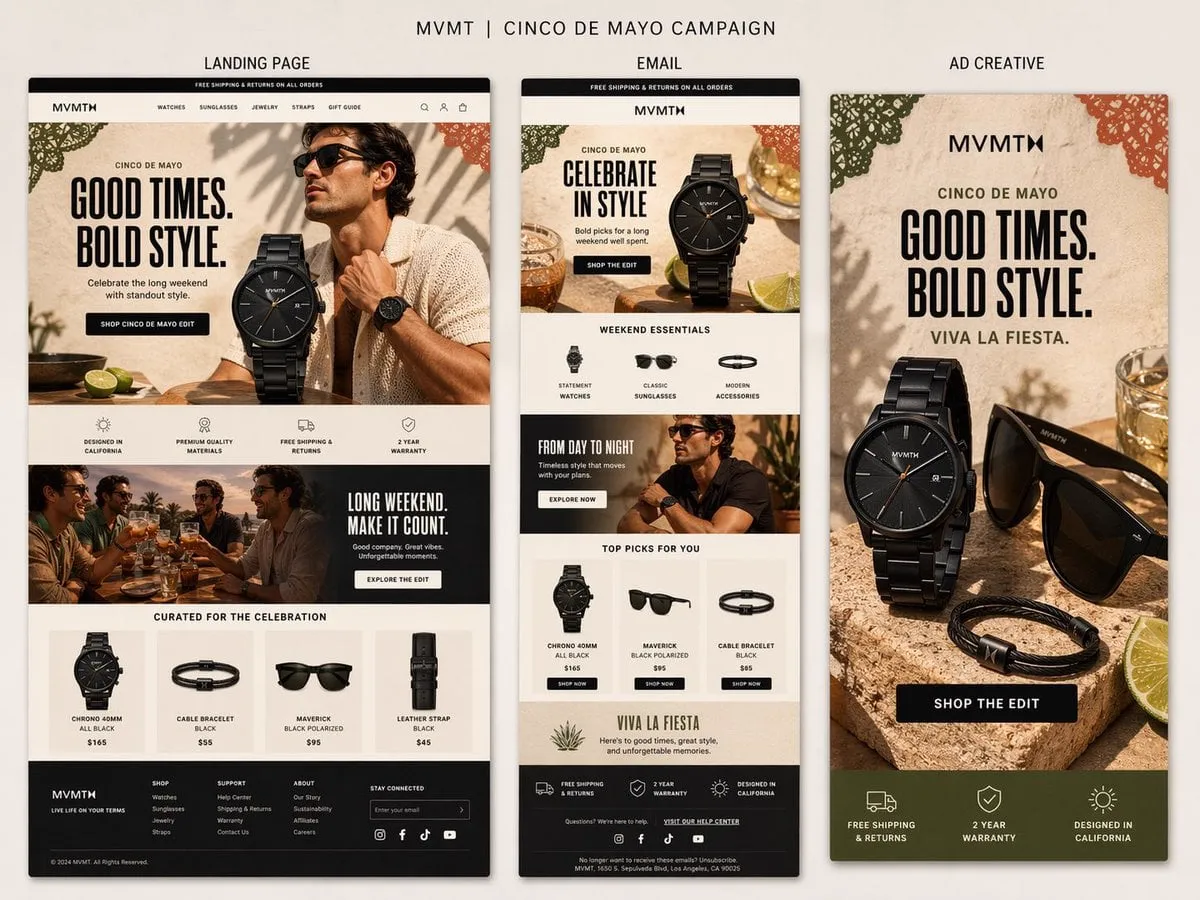
- Mixed visual identity. Every clip looks like it comes from a different account. Fix with a locked style note and a consistent caption template.
- Overproduced openings. A logo animation or slow title card wastes the decision window and signals that the payoff is far away.
- Explaining instead of showing. If a caption merely describes the action on screen, delete one of the two.
- Chasing unrelated trends. A trend that does not serve your promise attracts viewers who will not return for the next clip.
- Publishing without a variant. One version of a clip is a guess, not a test.
- Ignoring the first comment. Pinning a comment that extends the conversation is one of the cheapest engagement wins available.
- Inconsistent cadence. Three clips one week and none the next resets much of your accumulated momentum.
- Over-tooling. Six generation tools and four editors produce decision fatigue, not output. Two generation tools and one editor is usually the right shape.
A Testing Framework You Can Run Weekly
Variables Worth Isolating
Test one of these per cycle: hook type, opening frame, clip duration, caption placement, audio bed, or call to action. Everything else stays constant. If two variables change at once, the result teaches you nothing you can reuse.
Reading Results Without Fooling Yourself
Judge a clip on retention shape and saves, not total views. A clip with a shallow initial dip that flattens out is performing better than a clip with a high peak and a steep cliff. Keep a simple log: date, hook type, duration, average watch proportion, saves, comments, and one sentence on what you would change. After ten entries, patterns appear that no single clip can reveal.
When to Retire a Format
Give a format three genuine attempts. If the retention shape is consistently poor and saves are near zero, retire it. Do not keep resurrecting a format because one outlier performed well; outliers teach you about timing and luck far more often than about format. Protect one experimental slot per week for new ideas and keep the rest of the schedule on proven structure.
FAQ
How long should a short-form video be? As long as it needs to be to close the promise you opened, and not one beat longer. Most informational clips land between fifteen and forty seconds. Entertainment clips can be shorter. Longer works only when retention holds throughout.
Do I need to appear on camera? No. Narrative, screen-based, animated, and generated formats all perform. What matters is that something identifiable repeats so viewers recognise the next clip as yours.
How many clips before I can judge a strategy? Ten to fifteen per format direction, with consistent hooks and duration. Fewer than that and you are reading noise rather than signal.
Should I post the same clip to several platforms? Yes, but re-export without watermarks and adjust captions for each platform's safe areas. Cross-posting with visible marks from another app tends to suppress performance.
What is the fastest way to improve retention? Trim your first two seconds and your last half second, then run a retention pass on the middle. Those three edits fix most weak clips.
Is AI-generated footage penalised? What gets penalised is content that gives viewers no reason to stay. Generated footage that tells a story, holds a consistent look, and loops cleanly performs like any other video.
How do I avoid looking generic when using templates? Change one structural element per clip: the hook pattern, the subject, or the ending. Templates should carry the rhythm, not the personality.
What to Do This Week
Pick one promise, one hook type, and one duration. Produce five clips with the workflow above, and after each one write down the retention shape, the saves, and the single change you would make next time. Then change exactly one variable and repeat the cycle. That loop, not any individual tool, is what turns occasional reach into a dependable channel.
If you take only one habit from this guide, take the retention pass. Watching your own edit with the explicit goal of finding the frame where you would leave is the discipline that separates creators who grow from creators who stay busy. Everything else — generation, captions, sound design, testing, tool selection — sits downstream of that single act of honest review. Build the pipeline around it, keep the style note consistent, and let the weekly log tell you what actually works for your audience.
