
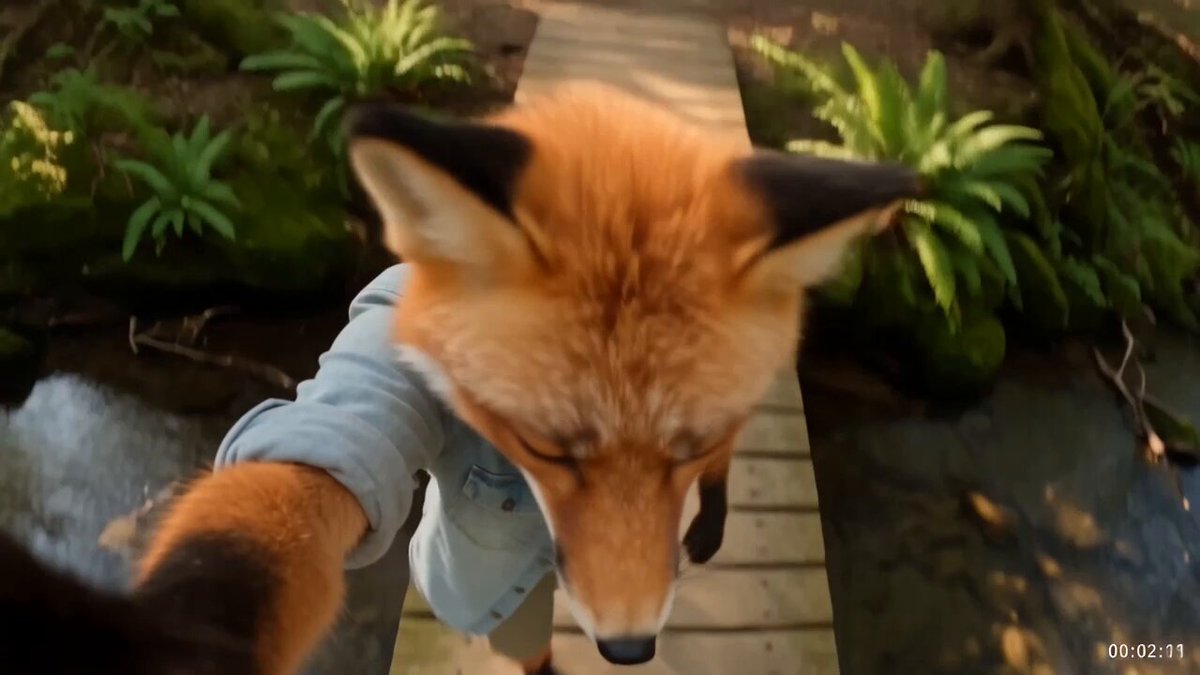

Why Trending Reels Are a Production Problem, Not a Luck Problem
Most creators explain a viral Reel the same way they explain a coin landing on heads: good timing, good mood, a mystery. That explanation is comfortable and useless. The Reels that keep landing on the Explore page are almost always the output of a repeatable system — a system for spotting a format early, producing a variation of it fast, and shipping enough attempts that the feed has something to reward.
AI video tools changed the economics of that system. Tasks that used to require a camera, a location, a cast, and a day of shooting can now be prototyped in minutes. That does not mean the tool generates hits. It means the bottleneck moved. The scarce resource is no longer footage; it is judgment — knowing which trend is still climbing, which hook survives a rewatch, and which generated clip actually looks intentional rather than synthetic.
This guide is a production workflow, not a list of prompts to copy. It covers how the short-video feed decides what to amplify, how to build a trend-responsive pipeline with AI generation, how to keep a series visually coherent, and how to catch the quality problems that make an otherwise good concept feel cheap.
How the Short-Video Feed Decides What to Show
Before optimizing anything, it helps to be precise about what the ranking signals actually reward. Short-video recommendation systems are not judging your artistic merit. They are predicting, with limited information, whether the next viewer will stay, watch again, and send the clip to a friend.
Watch time and completion rate
For a 15-second Reel, completion rate carries enormous weight. A clip that holds 80% of viewers to the end will almost always out-distribute a clip with a higher raw view count but constant early exits. This is why short AI clips often outperform longer ones: there is simply less room for a viewer to leave.
Rewatches and loops
The strongest signal available to any recommendation engine is a rewatch, because it is voluntary and unambiguous. Creators engineer this deliberately with seamless loops — the final frame matches the first frame, so the viewer does not notice the restart. Others hide a small detail in the background that rewards a second viewing.
Sends and shares
A direct send to a friend is a stronger vote than a like. Content that is useful, funny, or instantly relatable gets sent. Spectacular but abstract visuals rarely do. If your AI footage is beautiful and meaningless, it will collect polite likes and no sends.
Early engagement velocity
The first hour matters disproportionately. If your clip is going to travel, it usually shows signs early. This is an argument for publishing at times when your audience is genuinely active, and for having a second variation ready to post while the first is still being tested.
Building a Trend-Responsive AI Video Workflow
The pipeline below is deliberately tool-agnostic. It works whether you are using a dedicated AI video generator, a general-purpose assistant, or a hybrid of both with conventional editing software.
Step 1: Trend intake without doomscrolling
Spend 15 minutes a day, not 90. Build a simple intake ritual:
- Scroll the Reels tab for 10 minutes and screenshot every clip that stops you.
- Note the format, not the topic: jump-cut cooking, before/after transition, talking-head overlay on b-roll, silent text comedy, alternate-history history lesson.
- Flag clips with high comment-to-like ratios. Comments indicate a format that provokes a reaction, which is more durable than a format that merely looks nice.
- Keep a running document sorted by format, with the date you first saw it.
The date column is the most valuable part. A format you first noticed two weeks ago is probably saturated. A format you noticed yesterday is often worth a fast test.
Step 2: Compress the concept into one sentence and one hook
Write the idea as a single sentence a stranger could repeat: "A golden retriever reviews luxury hotels in a deadpan documentary voice." If it takes two sentences, it is two Reels — split them.
Then write the hook, which is what appears in the first two seconds. Effective hooks do one of four things: ask a question, contradict an assumption, show an impossible image, or start mid-action. "Watch this" is not a hook.
Step 3: Generate the core footage
Generate in short beats rather than attempting a single long clip. A 15-second Reel works well as four to six generated shots of two to four seconds each. Short beats give you three advantages: generation is faster and cheaper per attempt, a failed shot is easy to replace without regenerating everything, and editing rhythm improves because you control the cut points.
For each beat, generate three to four variations. Choose on motion quality, not on subject accuracy — you can fix framing in the edit, but you cannot fix a melting hand.
Step 4: Assemble, sound, and caption
Cut in a conventional editor or a capable mobile editor. Add sound early, because music changes which cut points work. Add captions for every spoken line and for any on-screen text; a large share of viewers watch muted.
Step 5: Publish, measure, and version
Publish, then watch retention for the first hour. If viewers drop in the first three seconds, the hook is the problem. If they drop in the middle, the middle beat is the problem. If they finish but do not send, the payoff is the problem. Post a variation with the fix rather than letting the first attempt define the concept.
Choosing the Right AI Tool for Each Job
No single tool is best at everything. Matching the tool to the task is most of the skill.
| Job | Best-fit capability | What to check before committing |
|---|---|---|
| Text-to-video establishing shots | Strong motion coherence | Does motion blur look natural or smeared? |
| Image-to-video animation | Character preservation | Does the face drift across frames? |
| Talking avatar or presenter | Lip-sync accuracy | Do plosives and pauses align? |
| Style transfer on existing footage | Temporal stability | Does the style flicker frame to frame? |
| Music and sound beds | Loopable, low-artifact audio | Is there a click at the loop point? |
| Captions and subtitle styling | Word-level timing | Are line breaks readable on a phone? |
Two practical rules. First, run every candidate tool through the same 20-second test prompt so comparisons are fair. Second, decide early whether your series depends on a consistent character; if it does, favor tools that support reference images, since consistency is harder to retrofit than to plan for.
Prompt Patterns That Produce Scroll-Stopping Footage
Vague prompts produce generic footage, and generic footage is invisible in a feed. Structure prompts around six elements:
- Subject — who or what, described with one distinguishing detail ("an elderly watchmaker with ink-stained fingers").
- Action — what happens during the shot, using a single active verb.
- Camera — shot size and movement: slow push-in, handheld tracking, locked-off wide.
- Lighting — practical sources and mood: warm tungsten practicals, overcast daylight, single hard key.
- Lens and texture — shallow depth of field, slight grain, 35mm feel.
- Duration and continuity note — two seconds, continuous motion, no cuts.
A prompt that reads "an old man in a workshop" gives the model an infinite space of correct answers. A prompt that reads "slow push-in on an elderly watchmaker's hands tightening a tiny screw, warm tungsten work lamp, shallow depth of field, slight film grain, continuous two-second motion" gives it one. Specificity is not decoration; it is the instruction set.
Two traps are worth naming. The first is overloading the prompt with contradictory instructions — asking for both a locked-off wide and a dramatic crash zoom guarantees an average of the two. The second is describing the edit instead of the shot: models generate a single continuous take, so multi-shot instructions should live in your timeline, not in the prompt.
Keeping Characters, Style, and Brand Look Consistent
Consistency is what separates a series from a pile of clips. Three techniques do most of the work.
Reference locking. Use the same reference image or the same character description across every generation in a series, and change as little as possible between generations. Small controlled changes outperform large creative leaps when continuity matters.
A style contract. Write down five rules that every clip must satisfy — color palette, aspect ratio, grain level, caption font, and pacing. Treat them as non-negotiable, even when a single clip would look better without them.
Visual anchors. Recurring props, locations, or a signature transition train viewers to recognize your work in a feed that scrolls in under two seconds. Recognition compounds: a viewer who recognizes the format is more likely to stay.
Sound, Pacing, and the First Three Seconds
Sound is the most commonly neglected part of AI video work, and it is where generated footage most often betrays you. Ambient room tone recorded artificially, or its complete absence, is one of the strongest tells of synthetic production.
Fix it in layers: a music bed, a few diegetic sounds (footsteps, a door, paper), and one accent sound on the payoff moment. Duck the music by two to three decibels under any spoken line. If you use a trending audio, cut your visuals to its existing rhythm rather than asking the audio to follow your edit.
Pacing follows a simple rule: the cut should land slightly earlier than the viewer expects. On a 15-second Reel, aim for five to eight cuts, with the fastest cutting in the middle and a slightly longer final shot so the payoff has room to land.
The first three seconds deserve separate attention. Open on motion or on a face, not on a title card. If a logo appears in the first second, you have spent your most valuable frame on the least interesting information.
Quality Control: The Mistakes That Make AI Video Feel Cheap
Run every clip through the same checklist before it reaches a timeline:
- Hands and teeth. Zoom in. Count fingers. Check for drifting teeth.
- Text and signage. Generated lettering is often subtly wrong. Replace it with real overlays.
- Motion smearing. Pause on fast pans and check for melted frames.
- Physics. Liquids, fabric, and hair are the tell-tale areas.
- Continuity. If two shots share a character, compare clothing, hair, and light direction.
- Audio sync. Watch the final export with the screen dimmed and listen only.
The most common strategic mistake is different: generating one clip and expecting it to carry an entire Reel. Strong Reels are edited, not generated. Generation provides material; the edit provides meaning.
The second most common mistake is overproducing. Heavy visual effects, aggressive motion, and dense sound design fight each other on a five-inch screen. Restraint reads as confidence.
Metrics, Cadence, and Iterating Without Burning Out
Decide your cadence before you start and defend it. Three to five Reels a week is a sustainable rhythm for a solo creator; daily is sustainable only with a batch-production day and a stock of finished clips.
Track four numbers per post, and nothing else:
- Three-second retention — is the hook working?
- Completion rate — is the middle holding?
- Sends per thousand views — is the payoff shareable?
- Follower conversion — is the series building an audience?
When results are flat, change one variable at a time: hook style, length, voice, or payoff type. Changing three things at once teaches you nothing.
Finally, retire formats on a schedule instead of waiting for them to die. A format that peaked three weeks ago is not going to recover. The most valuable habit in short-form production is being willing to abandon something that worked last month.
Frequently Asked Questions
Do AI-generated Reels get suppressed by the algorithm?
There is no evidence that a piece of content is penalized simply for being generated. Content gets suppressed for weak retention and low engagement. Poorly executed synthetic visuals cause early exits, and early exits cost distribution — but the cause is viewer behavior, not a content label.
How long should an AI-made Reel be?
Start at 12 to 18 seconds. Short enough to complete easily, long enough for a hook, a development, and a payoff. Extend only when the retention data supports it.
How many generations should I expect per usable clip?
Plan for three to five attempts per shot if you are aiming for a specific composition, and fewer if you are flexible. Build this into the schedule rather than treating retries as failure.
Can I keep one character across many clips?
Yes, if you plan for it: pick a tool with reference-image support, keep the character description identical between generations, and change only the action and camera. Expect small drift and correct it with the edit rather than chasing perfection.
Do I still need a real camera?
Sometimes. Real footage of hands, products, or faces inserts authenticity that most generators still struggle to fake, and mixing real and generated shots raises the perceived quality of both.
What is the fastest way to test a trend?
Make one 10-second version with minimal sound design. If the concept provokes a reaction, produce the polished version. If it does not, you have lost twenty minutes instead of a day.
What to Do Next
Pick one format you saw this week, write it as a single sentence, and produce a 15-second version with four generated shots. Publish it, note your three-second retention, and post a corrected variation within 48 hours.
That loop — spot, compress, generate, edit, measure, version — is the entire system. The tools will keep changing and the trend of the month will keep rotating, but the loop stays the same, and it is the only part of viral short-form video that is genuinely under your control.
