
Editing video with AI platforms: a practical introduction
Video editing used to be a game of cutting and rearranging footage that already existed. You shot, you logged, you trimmed, you exported. Then generative AI arrived and quietly changed the rules: now you can also create footage that never existed. Text becomes a shot, a still image becomes a moving scene, and a rough idea becomes a finished clip in the time it once took to import your files.
This guide is about using AI platforms to edit video, with Runway ML as the entry point and the wider ecosystem of models, Kling, Sora, and others, as the extended toolbox. The focus is practical: how to set up your workspace, how to move from idea to shot, how to keep characters and styles consistent, and how to finish a video that looks intentional rather than random. You do not need a film degree or a deep learning background. You need a project, a willingness to iterate, and a system for turning experiments into results.
The most important concept to internalize is that AI video editing is not one tool but a workflow. Generation is one stage; selection is another; assembly, sound, and finishing are the rest. Professionals who produce good AI video are not magicians with prompts; they are editors who apply the same discipline to synthetic footage that they would to any other footage.
What AI platforms actually do in an editing workflow
It helps to map AI platforms onto the traditional editing workflow, because the old stages do not disappear; they transform.
The first transformed stage is footage acquisition. Where you once booked a camera and a crew, you now write a prompt or provide a reference image. Text-to-video models turn descriptions into moving images; image-to-video models animate a still. Both give you raw material that would once have required a shoot.
The second transformed stage is variation and exploration. Traditional editing works with a fixed set of takes. AI editing lets you generate variations on demand: different angles, different moods, different styles of the same concept. This is a huge creative advantage, but only if you stay organized, because the number of options explodes quickly.
The third transformed stage is problem-solving. When you need a specific shot you never captured, an AI platform can often generate it. Missing a transition? Generate one. Need a background plate? Generate one. This turns the editor into a director who can call for any shot, subject to the model's capabilities.
The stages that do not change are judgment and assembly. Someone still has to choose the best generation, decide the pacing, and make the sequence work. AI platforms expand what you can make; they do not decide what is worth making. Keep those decisions with a human, and you will consistently outperform teams that let the model choose.
Setting up your workspace and project structure
Before generating anything, set up a project structure that can survive the chaos of dozens of clips and variations. AI workflows generate files fast, and disorganization is the fastest way to waste your budget and your patience.
Create a folder structure that separates stages: one folder for prompts and references, one for raw generations, one for selected takes, one for the edit, and one for final exports. Name files with a system that records the concept, the model, and the version, something like product-hero_runway_v3. When a generation fails or a style turns out wrong, you need to find and delete the whole family quickly.
Keep a prompt log. Every good generation starts from a prompt, and your best prompts are assets. Save the exact wording, the model, the settings, and the result alongside each other. Over time you build a personal library of prompts that reliably produce what you need. This is the AI equivalent of a shot list, and it multiplies your speed on every future project.
Set up your references early. Most models accept a reference image, and a good reference beats a long prompt every time. Collect stills, style frames, character sheets, and location photos before you start generating. The more specific your references, the less the model has to guess, and the fewer generations you will burn on wrong guesses.
Text-to-video and image-to-video: the two fundamental modes
Every AI video platform offers at least two modes, and understanding the difference changes how you plan a project.
Text-to-video takes a description and generates a moving scene from nothing. It is the most magical mode and the least controllable. The model invents the character's face, the lighting, and the camera move from your words, so results vary even with identical prompts. Use text-to-video for exploration, for concepts where the details do not matter yet, and for shots that exist only in your imagination.
Image-to-video takes a still image and animates it. The character is exactly the character in your picture; the location is your location; the camera move happens around a composition you already approved. This is the control mode. It is the workhorse for professional workflows because it reduces the model's freedom precisely where you need predictability.
The practical sequence that most projects follow is: explore with text, lock with images. Generate a few text-based concepts to find the right direction, then create or select a reference image that captures the direction, then animate that image into the shots you need. Each stage uses the mode that fits its goal, and the result is both creative and controlled.
Runway ML in practice: tools and workflow
Runway ML is one of the most complete AI video platforms, and its workflow rewards a structured approach.
Start with the interface orientation. Runway combines generation with editing-oriented tools, which means you can extend a clip, animate a reference, and manage multiple generations in one place. Learn where the generation controls live, how to provide reference images, and how to review outputs without losing track of your history.
For a typical shot, the workflow looks like this. First, define the shot in one sentence: subject, action, camera, and mood. Second, gather references: a character still, a style frame, or a location photo if you have them. Third, generate in small batches and review honestly, keeping only the takes that match the brief. Fourth, take the best generation into the editing stage, extend or refine it if the model allows, and export at the quality the project needs.
The power of Runway shows in projects that need cinematic language. Because the models understand composition and camera moves, a creator can think in shots, close-ups, tracking shots, establishing shots, and the model often delivers the intent rather than a literal illustration of the words. Use that strength: write prompts that describe the shot, not just the content.
The limit to respect is control. Runway produces beautiful results, but it still will not obey a prompt the way a human director obeys a script. Keep the shots simple, validate the output against the brief, and plan for a selection rate: generate several, keep one.
Beyond Runway: Kling, Sora, and the wider model ecosystem
Runway is a strong platform, but no single model covers every need. The wider ecosystem fills the gaps, and a professional workflow often combines several.
Kling is the consistency specialist. When a project needs the same character or product to stay recognizable across many shots, Kling's prompt adherence and reference handling are valuable. It is a strong choice for series content, character-driven stories, and brand assets that must be uniform.
Sora, from OpenAI, is the imagination engine. Its generations show unusually strong understanding of how objects interact and how scenes evolve over time. For complex narratives, cause-and-effect sequences, and ambitious ideas, Sora sets the reference for what is possible, though availability and cost have to be weighed for each project.
Beyond the famous names, the ecosystem includes fast budget models for high-volume social content, stylized models for expressive looks, and specialized image models that feed the video pipeline. The practical approach is to treat the ecosystem as a toolbox and to match each shot to the model best suited to it.
This is where the prompt log pays off again: different models speak different dialects, and a prompt written for one may fail on another. Log what works per model, and build each tool's best practices separately.
Multi-image reference and style consistency
The hardest problem in AI video is consistency: the same character, the same world, the same style across separate generations. Multi-image reference is the most effective answer.
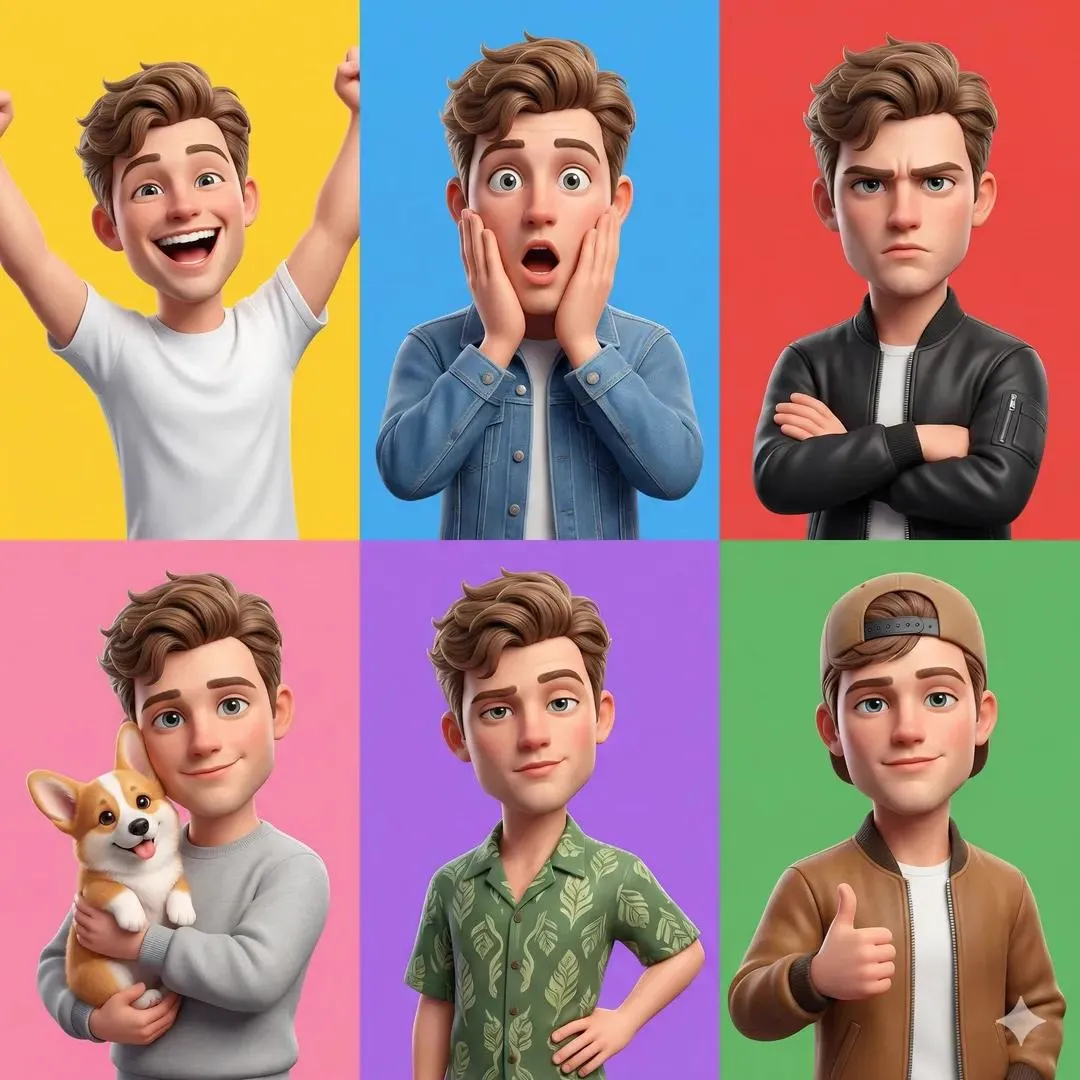
The idea is simple: instead of describing your character or style with words alone, give the model several images that define it. A front view, a side view, a full-body shot, and a close-up teach the model more about identity than any paragraph. Some platforms support multiple reference images directly; where they do not, you can generate from one strong reference and accept the limits.
Build a character sheet before you start production. For a person, that means consistent views of the face, the outfit, and the proportions. For a product, it means clean shots from several angles on neutral backgrounds. For a location, it means reference stills that establish the architecture and the lighting. This sheet is your consistency foundation, and every generation should reference it.
Style consistency works the same way. If your project has a defined look, dark and moody, bright and airy, film grain, anime, collect style frames that capture it and feed them to the model. Text alone cannot hold a style across fifty generations; reference images can.
The remaining drift, when it happens, is a post-production problem. Be prepared to fix faces, unify colors, and swap elements in the edit. Consistent output is the goal, but a practical workflow assumes some cleanup and budgets for it.
Audio tools and finishing the edit
A video is not finished when the last frame renders. It is finished when the sound is right and the piece is assembled with intent.
Start with the edit structure: choose the best takes, arrange them in the right order, and set the pacing with simple cuts before adding anything fancy. AI footage is like any footage; the sequence must work before the polish does.
Voice and narration are now easier than ever. Text-to-speech platforms produce natural voices in many languages and emotional registers, and a consistent narrator voice gives a series a professional identity. Write the script carefully, because a good voice reading a weak script is still weak.
Music completes the experience. AI music generators produce tracks matched to mood and duration, and the best practice is to let the music influence the edit rhythm: cut on beats, build toward the emotional peak, and let the final shot breathe. Licensing is simpler with generated music, which matters for commercial use.
Sound effects and ambience add the final layer of realism. Whooshes on transitions, room tone under dialogue, and subtle design under key moments make the difference between a demo and a finished piece. Work in layers: dialogue first, ambience second, music third, effects last, and check the mix on phone speakers, because that is where your audience will hear it.
Managing cost and resources across your workflow
Generative video consumes real compute, and cost management separates sustainable workflows from experiments that end when the budget runs out.
Plan before you generate. The cheapest generation is the one you do not make, so define the shot, gather references, and write the prompt before spending compute. Vague exploration is fine in small doses; repeated vague generation is a budget leak.
Generate at the minimum quality that answers the question. Use low resolution and short duration for testing and composition checks. Go to full quality only for shots that survived review. This habit alone can cut costs by more than half.
Batch your work. Generating several variations in one session uses the pipeline more efficiently than returning for single shots, and reviewing variations together improves your selection decisions.
Keep a reuse library. Successful prompts, character sheets, style frames, and even finished background plates are reusable assets. The more you reuse, the less you regenerate, and the more your workflow compounds instead of restarting.
Common pitfalls and how to fix them
Every AI video workflow hits the same walls. Naming them saves you the trouble of discovering them the hard way.
Generating without a brief. Without a defined shot, you have no way to judge the output, and you burn generations on luck. Write the brief, then generate.
Judging quality in the generation view. A frame that looks great in preview can fail in motion, and a shaky first pass can be fixed in the edit. Always review in motion and in context before discarding or accepting.
Forgetting the audience's device. Vertical, small-screen content has different needs than cinema: bigger type, tighter framing, cleaner sound. Optimize for where the video will actually be watched.
Skipping the selection discipline. AI generates quickly, so the temptation is to accept the first pass. The professionals select ruthlessly: generate several, choose one, and let the others go. The average quality of your output rises immediately.
Treating the model as a collaborator instead of a tool. Models have no intent, no taste, and no memory of your project. Every decision that matters must come from you. Use the model for what it does well, speed and variety, and keep judgment for yourself.
FAQ
Do I need to know machine learning to use AI video platforms?
No. The models hide all the technical complexity behind a prompt box and a reference upload. What you need is creative judgment: knowing what you want, recognizing quality, and making editorial decisions. Technical understanding helps with troubleshooting, not with daily use.
Which platform should I start with?
Start with one strong generalist platform that includes both text-to-video and image-to-video, learn its workflow deeply, and master the selection and finishing discipline. Add specialized models later, when a specific project reveals a gap you cannot fill with the generalist.
How do I stop characters from changing between shots?
Use multi-image reference: build a character sheet with several consistent views and feed it to the model for every shot. Keep the description of the character identical across prompts. Budget for post-production fixes, because some drift is still normal.
Is AI-generated video good enough for professional work?
For many professional contexts, yes: social content, marketing, internal communications, product visualization, and creative exploration. For broadcast feature work, the raw output is usually not enough; it needs human assembly, sound, and finishing, and often human actors for the core performances.
How do I keep track of dozens of generated clips?
Use a strict naming convention, separate folders per stage, and a prompt log that ties each generation to its settings and result. Treat your generations like a shoot: logged, organized, and reviewable. The discipline costs minutes and saves hours.
What is the single most important habit for better AI video?
Reviewing honestly and selecting ruthlessly. Generate several options, compare them against the brief, and keep only the best. The gap between average teams and good teams in AI video is almost always selection, not generation.
