
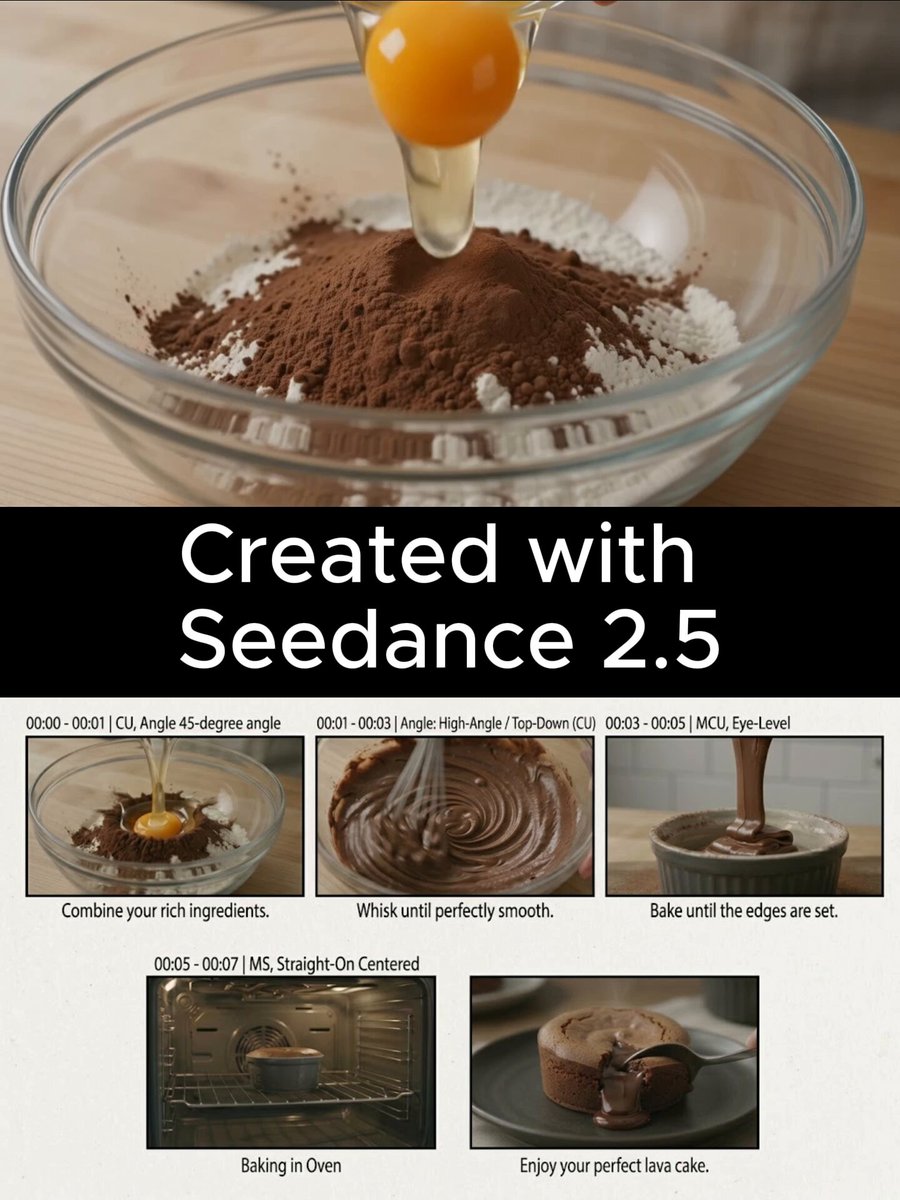
The New Reality of Video Marketing in 2025
Video has stopped being one channel among many. For most teams, it is now the channel. Short-form clips, product demos, brand stories, and ads compete for attention in feeds where the average user scrolls past hundreds of videos a day. The teams winning in 2025 are not the ones with the biggest budgets; they are the ones that can produce more relevant video, faster, and with a consistent visual identity.
That shift is powered by generative AI. A few years ago, producing a professional-looking video required a crew, a studio, and a post-production pipeline. Today, a single marketer with the right tools can move from idea to finished clip in hours. The market has responded accordingly: spending on digital video advertising continues to climb, and AI-generated video has moved from experiment to core infrastructure for sales campaigns.
This guide explains how to use that infrastructure deliberately. You will learn how to choose the right models for different campaign goals, how to keep characters and brand assets consistent across dozens of clips, how to think like a director instead of just a prompt writer, and how to build a repeatable workflow that turns video production into a growth engine rather than a bottleneck.
Why AI Video Became the Engine of Sales Campaigns
Three forces pushed AI video from novelty to necessity.
First, volume. Consumer attention is fragmented across platforms, and each platform rewards frequent posting. A brand that posts once a week is invisible; a brand that posts daily with strong creative is rewarded with reach. Human production simply cannot sustain that cadence for every product, every market, and every campaign. AI tools close the gap.
Second, personalization. Generic ads have diminishing returns. The same 30-second spot shown to everyone ignores what we now know about segmentation: different audiences respond to different angles, different pacing, and different emotional triggers. AI makes it practical to produce variations of the same message at a fraction of the traditional cost.
Third, speed of iteration. In traditional production, a creative test cycle takes weeks. With AI, you can generate several versions of a concept in a single afternoon, put them in front of an audience, read the data, and double down on what works. This test-and-learn loop is the real advantage of AI video, and it compounds over time.
None of this means the human disappears. It means the human moves up the value chain: defining strategy, evaluating output, and making judgment calls that models cannot make.
1. Model Diversity Is the Creative Lever
One of the most important trends of 2025 is that teams no longer rely on a single model. The landscape now offers a wide range of specialized generators, each with different strengths: photorealism, stylization, motion quality, speed, cost, and language handling. Treating them as interchangeable is a mistake. The right approach is to treat the model as a creative decision, just like choosing a lens or a color grade.
1.1 Matching Models to Campaign Goals
Start with the goal, not the tool. A high-end brand film for a launch event needs maximum visual fidelity, careful lighting, and cinematic camera movement. Models known for photorealism and consistent rendering are the right fit here, even if they are slower or more expensive to run.
A social media ad, by contrast, needs speed and novelty more than perfection. The clip will live in a feed for a few seconds, competing with everything around it. Cheaper, faster models that produce bold, stylized output often outperform premium models in this context because they allow more iterations and more creative exploration.
A product demo needs precision: the object must look like the real product, dimensions must read correctly, and the motion must be believable. Here, image-to-video workflows, where you start from a real product photo, usually beat pure text-to-video because the model has a concrete reference to work from.
1.2 Balancing Cost and Quality
Budget discipline matters more as volume grows. Running every experiment on the most expensive model available is wasteful. A practical pattern is a two-tier pipeline: use fast, affordable models for exploration and rough drafts, then reserve premium models for the final assets that will actually be paid to distribute.
This tiering also applies to rendering parameters. Resolution, duration, and motion complexity all affect cost and turnaround time. Define a default profile for each campaign type, and only escalate when a specific asset justifies it.
1.3 The Rise of Asian Models and Cultural Relevance
The model landscape is no longer Western-dominated. Generators from Asia have improved dramatically in prompt adherence, character rendering, and localized aesthetics, and they often handle non-English prompts with more nuance. For teams selling into regional markets, this matters in two ways: output that respects local visual conventions, and prompts that are understood correctly in the local language.
Cultural relevance is not a nice-to-have. A campaign that looks obviously foreign to its target market converts worse, regardless of production quality. Model selection is one of the simplest ways to close that gap.
2. An AI Director Mindset: From Clips to Storytelling
The biggest shift in 2025 is not technical; it is conceptual. Winning teams stopped treating AI video as clip generation and started treating it as directing. That means thinking about shot composition, pacing, narrative structure, and emotional arc before typing a single prompt.
2.1 Automating Director-Level Decisions
Modern platforms increasingly include agentic helpers that act like an assistant director: they can suggest camera angles, break a concept into a shot list, and translate a brief into consistent prompts across a sequence. Used well, these tools compress weeks of pre-production into an afternoon.
The practical value is consistency across a series. A single video is easy. A campaign of thirty clips that feel like one coherent story is hard. An AI director layer helps by enforcing the same visual language, the same character references, and the same pacing rules across every asset in the batch.
2.2 Using Feedback Data to Refine
The best campaigns are iterative. Set up a simple loop: generate, publish, measure, adjust. Pay attention to which hooks retain viewers, which visual styles drive clicks, and which messages convert. Then feed those observations back into the next batch of prompts.
This is where teams with data discipline pull ahead. The AI does not know what your audience likes until you tell it. The team that records what worked and why can compound its creative advantage with every campaign.
3. Consistency at Scale: The Multi-Image Fusion Approach
Ask any marketer who has worked with AI video for more than a few weeks, and they will name the same pain point: consistency. The same character looks different from shot to shot, the product color drifts, the logo warps. This is the single biggest quality barrier between AI video and traditional production.
3.1 Keeping Brand Characters Stable
The solution is reference-based generation. By supplying the model with multiple reference images of the same subject, a character, a product, a location, the generator can anchor its output to those visual details instead of inventing them from text alone. This technique, often called multi-image fusion, dramatically reduces style drift across scenes.
For brand work, the discipline is simple: build a reference library. Shoot or render a few canonical images of your product, your spokesperson, and your key locations. Use those same references in every generation. Over time, this library becomes one of your most valuable marketing assets, because it is what makes hundreds of AI-generated clips feel like one brand.
3.2 Using Specialized Models for High-End Effects
Consistency is not only about characters. It also applies to visual style. Some models excel at specific effects: cinematic depth of field, realistic physics, stylized animation, or product-level photorealism. Combining a base model with a specialist model for particular shots gives you more control than trying to force one model to do everything.
3.3 Managing Compute and Task Queues
At scale, production becomes a logistics problem. Long batches of clips need to be queued, rendered, reviewed, and re-run. Teams that treat this as a pipeline, rather than a series of one-off generations, save enormous amounts of time. Standardize naming, keep a review checklist, and automate re-generation of failed or weak outputs.
4. Personalization at Scale
Personalization is where AI video delivers its clearest return on investment. Instead of one message for everyone, you can create variations tuned to segments: different openings, different proof points, different calls to action, even different languages.
The workflow is straightforward. Define the core message once. Identify the segments that matter. Then generate variations for each segment using the same brand references. The result is a campaign that feels individually tailored while remaining internally consistent.
Start small: two or three variations per campaign. Measure which segments respond to which variant. Expand only where the data justifies it.
Practical Roadmap for Teams
Adopting AI video does not require a big budget or a new department. It requires a sequence of deliberate steps.
First, pick one campaign with a clear metric and run a pilot. Second, build your reference library during the pilot, even if it is rough. Third, document the workflow: which models, which prompts, which review steps. Fourth, standardize the pipeline so other team members can run it without hand-holding. Finally, expand to more campaigns only after the pilot shows measurable results.
Resist the temptation to buy an expensive tool stack before you have a repeatable process. The process is the asset; the tools are interchangeable.
Common Mistakes to Avoid
The most common failure is treating AI video as a magic button: type a prompt, get a perfect ad. Realistic expectations prevent most disappointment. Plan for several rounds of iteration.
The second failure is inconsistency, solved by reference libraries and disciplined workflows.
The third is ignoring the data. If you never measure, you cannot improve. Tie every batch of content to a metric, even a simple one.
The fourth is abandoning human judgment. AI can generate, but it cannot know your customer, your market, or your brand voice. The teams that win are the ones that combine machine speed with human taste.
Choosing Your AI Video Stack
The tool landscape changes quickly, so build a stack around capabilities rather than brand loyalty. At minimum you need four layers: a text-to-video model for idea generation, an image-to-video path for product and character work, a consistency layer built on reference images, and an editing step for final assembly.
For text-to-video, Sora-class models lead on long-form narrative and scene coherence, which suits brand storytelling. Runway Gen-4 excels at character consistency and cinematic camera work for narrative shorts. Kling models combine strong prompt adherence with good physics for action-heavy content. Luma and Pika are practical picks when you need fast iteration and solid motion quality on a budget.
The image-to-video layer is where product marketing happens. Start from real photography whenever possible: a clean product shot, a lifestyle image, a location still. The generator then adds motion while preserving the object's identity. This workflow consistently outperforms pure text generation for anything that must look like the real product.
Finally, keep your editing step deliberately light. You are not rebuilding the video; you are assembling generated clips, adding captions and sound, and polishing the rhythm. The lighter the assembly step, the faster your iteration loop, and speed is the entire point.
FAQ
How much time does AI video actually save?
For teams that build a repeatable workflow, the improvement is usually measured in days, not hours: a concept that took a week of production can often be turned around in a day, with iteration cycles of minutes.
Should we build our own pipeline or use an all-in-one platform?
Start with an all-in-one platform until your volume justifies the complexity of a custom pipeline. The bottleneck in year one is process, not software. Once the workflow is stable and you know which capabilities you actually use, a custom setup can save money at scale.
How do we get buy-in from leadership?
Run a pilot with a clear before-and-after metric: time to produce a campaign, cost per asset, or engagement on published content. Numbers convert better than enthusiasm. One pilot with a measurable result is worth ten presentations.
Do I still need a video editor?
For many campaign formats, no. For polished brand films and complex narratives, yes. The most common setup is AI for generation and a human editor for final assembly, sound, and brand polish.
Can AI video replace traditional production entirely?
Not completely, and it usually should not. Traditional footage remains valuable for authenticity, especially in testimonials and documentary-style content. The strongest strategies blend both.
Which platforms work best for AI video ads?
Short-form platforms reward volume and consistency, which is exactly what AI workflows provide. Test the same creative across several platforms and let the data decide.
Is consistency really achievable?
Yes, with reference-based generation and disciplined workflows. It requires effort upfront, building and maintaining the reference library, but the payoff is campaign-level coherence that audiences can feel.
