
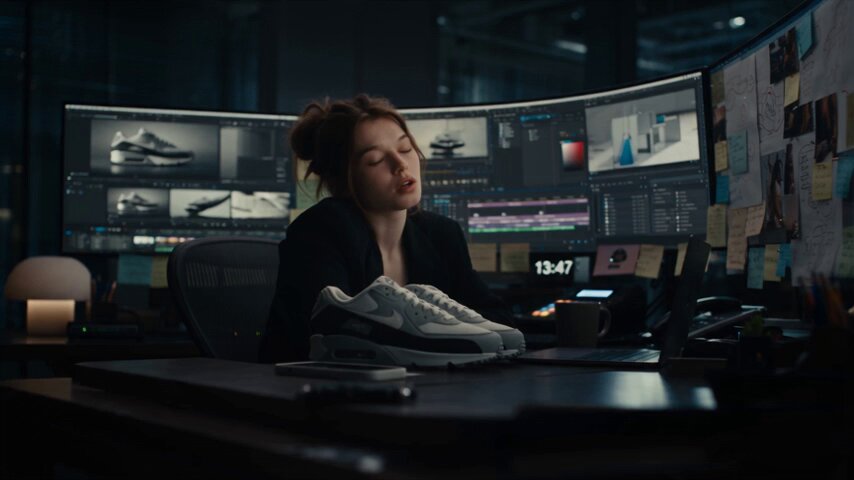

The most expensive problem in AI video production is not generation cost, render time, or model choice. It is drift. A character whose face subtly changes between scenes. A brand color that shifts from clip to clip. An environment that looks like a different place every time it appears. Audiences may not be able to name the problem, but they feel it instantly: the content reads as fake, amateur, or untrustworthy. In a landscape flooded with AI-generated video, visual consistency has become the primary differentiator — the quality that separates content that builds a brand from content that burns it.
This guide explains what causes visual drift, the techniques that eliminate it — reference images, multi-image fusion, style anchors, and disciplined production workflows — and how to build consistency into your pipeline from the first frame to the final export. Whether you produce reels for social media, marketing assets for a brand, or short films, the method is the same.
Why Visual Consistency Is Now a Brand Asset
Content platforms reward recognition. A viewer who can identify your video in half a second — by the colors, the character, the typography, the mood — is a viewer who has started building a relationship with you. Consistency is what makes recognition possible. It turns isolated videos into a body of work, and a body of work is what audiences follow, remember, and trust.
For brands, the stakes are even higher. Every piece of content is a brand touchpoint, and inconsistent visuals quietly erode the equity that advertising budgets spend years building. The same logo with a different color grade in every ad campaign does not look creative; it looks broken. Consistency communicates competence, and competence is the foundation of trust.
The counterintuitive truth is that AI has made consistency both harder and more achievable. Harder, because generative models naturally introduce variation — each generation is a fresh interpretation. More achievable, because the same technology that creates the problem also offers the tools to solve it, at a speed and precision that manual production never allowed.
What Causes Visual Drift
Drift is not random. It has identifiable causes, and understanding them is the first step to controlling them.
Lighting and exposure
Generative models interpret lighting cues loosely. The same character can appear in warm golden light in one scene and cold flat light in another, shifting skin tone, wardrobe color, and mood. Without an explicit lighting directive, every scene is a new guess.
Texture and material consistency
Fabric, skin, metal, and surfaces change character between generations. A leather jacket that looks like matte fabric in one shot and glossy vinyl in the next is a classic drift failure. Textural drift is subtle but powerfully degrades realism.
Geometric and facial variation
Face shape, eye distance, jawline, and hairstyle fluctuate across generations of the same character. These are the changes viewers notice most, because humans are exquisitely sensitive to facial identity.
Color and grade drift
The overall color palette — contrast, saturation, white balance — varies between generations and between models. When clips from different sources are cut together, the grade changes read as editing errors.
Once you can name the drift, you can design against it. The techniques below are exactly that: a design system for AI-generated visuals.
Core Techniques: Reference Images and Multi-Image Fusion
The most reliable tool for consistency is the reference image. Most modern generators accept one or more input images that anchor the output: the character keeps the reference face, the product keeps the reference form, the environment keeps the reference layout. If you want the same character in a new scene, give the model the character, not a description of the character.
Multi-image fusion extends this idea. Instead of one reference, you supply several — the same character from different angles, poses, and lighting conditions — and the tool merges them into a stable identity that persists across scenes and even across different generation models. This is the technique behind production-level character continuity in AI filmmaking, and it is the closest thing to a casting department for generated content.
The practical rule: never describe what you can reference. Build a character sheet of three to five images, keep it in a dedicated folder, and use it in every session involving that character.
Style Anchors and Design Tokens
Beyond characters, you need consistency for the whole visual language. Think of it as a design system for your content, with tokens that never change.
Define your palette
Choose the two or three core colors that define your look, and state them in every prompt. A brand palette is not decoration; it is an anchor that keeps generations aligned.
Lock the wardrobe and props
A recurring character's outfit, accessories, and distinctive props are identity markers. Write them into every prompt for that character and never allow variation in the tokens.
Fix the environment
If your content repeats a location, build reference images for the location and treat it like a character. Environments drift just as faces do, and the fix is identical.
Standardize the grade
Whatever your color-grading approach — a LUT, a preset, a consistent correction — apply it to every clip in post. The grade is the final layer of consistency, and it is the layer that makes mixed-source footage feel like one production.
Build a Visual Blueprint Before Production
Consistency is a planning discipline, not a post-production fix. Before generating anything, produce a visual blueprint:
- Character sheets for every recurring character.
- Environment references for every recurring location.
- A moodboard capturing the overall aesthetic: palette, lighting mood, texture references.
- A one-page style guide stating the tokens: colors, wardrobe, props, grade.
- Example stills from earlier work that the team liked and wants to match.
The blueprint does not need to be long. A page per character and a page for the world is enough. What matters is that it exists and is consulted — in every session, by every person involved. The moment the blueprint stops being referenced is the moment drift begins.
Frame-to-Frame Coherence and Temporal Control
Consistency within a single shot is a different problem from consistency across shots. Within a shot, the issue is temporal coherence: does the face stay the same across the frames of one clip? Across shots, the issue is identity: does the character look the same in the next clip, generated later, perhaps by a different model?
For temporal coherence, choose models known for stable motion, keep shots simple and focused, and avoid crowded scenes with multiple competing movements. When a shot's composition is right but the motion drifts, fix the motion description rather than regenerating blindly.
For cross-shot identity, references are the answer, and the character sheet must travel with the project. This is also where multi-image fusion earns its keep: an identity built from several references survives the transition between models far better than a single image ever does.
A Production Workflow That Enforces Consistency
Consistency survives contact with reality only if the workflow enforces it. Build these habits into your pipeline:
One source of truth for references
Keep all reference images, character sheets, and style guides in one folder per project, with clear names. No one should be searching for "the character image" mid-session.
Prompt templates with locked tokens
Create a prompt template for each recurring element. The template has locked fields — palette, wardrobe, environment, grade — and open fields for the scene-specific action and composition. Locked fields never change; open fields are where the creativity happens.
A consistency checklist before export
Before finalizing a video, run a checklist: characters match their sheets, environments match their references, palette is on-brand, grade is applied, no stray text or artifacts. A five-minute review catches drift that would otherwise ship to the audience.
Version and log
Keep versions of your best prompts and their outputs. When something works, preserve it. When something drifts, record why. Over time, the log becomes the institutional memory of your visual identity.
Consistency Across Different Models
Real pipelines often mix models: one for the hero shot, another for transitions, another for stylized scenes. Mixing models multiplies drift risk, because each model interprets the same reference differently. Mitigate it with three practices. First, feed the same reference set to every model involved — never re-describe the character for a different model. Second, standardize the input: consistent naming, consistent prompt structure, consistent tokens across models. Third, do a consistency pass in post — grade, color correct, and retouch the assembled footage so the seams disappear. The audience should not be able to tell where one model ends and another begins.
Consistency Across a Series: The Compounding Effect
Single-video consistency is table stakes; series consistency is where the value compounds. A series is how audiences build relationships with characters and worlds, and it is how brands turn content into a franchise. The good news: the same discipline that keeps one video consistent scales to a series, if you treat the series as one long production rather than a collection of separate videos.
Start with a series bible: character sheets, environment references, the palette, the grade, the prompt templates — all in one place, versioned like code. Before each new episode, open the bible and confirm the tokens still match the last episode. When a new model or technique appears mid-series, test it against the bible before using it in production; an upgrade that breaks the look is not an upgrade.
The compounding effect is real: episode one teaches you the character; episode three has the audience invested; episode ten has viewers who recognize the world in a split second. That recognition is the most valuable asset AI-assisted production can build, and it is built entirely from consistency discipline.
Budgeting for Consistency Work
Not every pass needs the most expensive generation. The shots that carry the character's face or the brand's identity deserve the premium pass, because that is where drift is most visible. Test frames, transitions, and background plates can use faster, cheaper generation. Budget for the consistency-critical passes first, and treat them as non-negotiable. A cheap generation that drifts costs more than an expensive one that lands — because you will regenerate it, or worse, ship it.
Frequently Asked Questions
Why does my AI character keep changing appearance?
Almost always because the reference discipline is weak: no character sheet, no multi-image fusion, or visual tokens that vary between prompts. Fix the references first; phrasing alone rarely solves identity drift.
Can I keep a character consistent across different AI tools?
Yes, if you feed every tool the same reference set and standardize your prompts. The identity lives in the references, not in the tool. Expect some variance and close the gap in post-production.
How many reference images do I need?
Three to five per character, covering different angles, poses, and lighting, is a solid default. More helps for complex characters; fewer works for simple ones. The key is using the same set every time.
Is visual consistency worth the extra effort for short social videos?
Yes — especially for series and branded content, where recognition compounds. For one-off experimental clips, consistency matters less. Match the discipline to the goal.
What if my footage still drifts after using references?
Run the consistency checklist: check lighting directives, palette tokens, wardrobe, grade, and the model's temporal stability. Change one variable at a time and regenerate. Drift is a solvable engineering problem, not a mystery.
Final Thoughts
Visual consistency is the design system of AI video. It requires the same discipline that brands apply to logos and typography, translated into the language of generation: reference images instead of descriptions, style anchors instead of moods, blueprints instead of hopes. The tools exist today, and they are not expensive. What separates consistent content from drifting content is method — building the character sheets, locking the tokens, running the checklist, and logging the lessons. Do that, and your AI content stops looking like random outputs and starts looking like a body of work. In a flood of generated video, that is the difference between being seen and being scrolled past.
