
The most frustrating moment in AI video production is the one where everything is almost perfect. The lighting is right, the motion is smooth, the style is beautiful, and then the character's face changes between two shots. The hero had brown eyes in scene one and blue in scene two. The jacket's collar shifts. The background color drifts. The audience may not name the problem, but they feel it: the piece does not hold together.
Visual consistency is the single biggest technical challenge in AI-generated content. It is also the difference between footage that looks like a random collection of clips and content that reads as a real production. This article explains why consistency breaks down, how multi-image fusion and related techniques solve it, and how you can build a production workflow that keeps characters, styles, and scenes locked across dozens of generations.
Why AI Models Drift Between Generations
Generation models are stochastic. Every time you run a prompt, the model samples from a distribution of possible outputs. Given the same prompt twice, you will get two different images. Given the same character across different scenes, the model has no memory of the previous generation unless you explicitly provide it. It does not know that the woman in scene one should look identical in scene two, because each generation starts fresh from the prompt.
This is a feature of the technology, not a bug. The randomness is what allows creative variety. But it becomes a production problem the moment you need a series of clips that belong together. Without constraints, style, face, wardrobe, and setting all drift.
The solution is to provide the model with anchors: reference images, keyframes, and style definitions that constrain the output. The more anchors you feed a generation, the less the model has to invent, and the more stable the result.
Character Keyframes: The Heart of Consistency
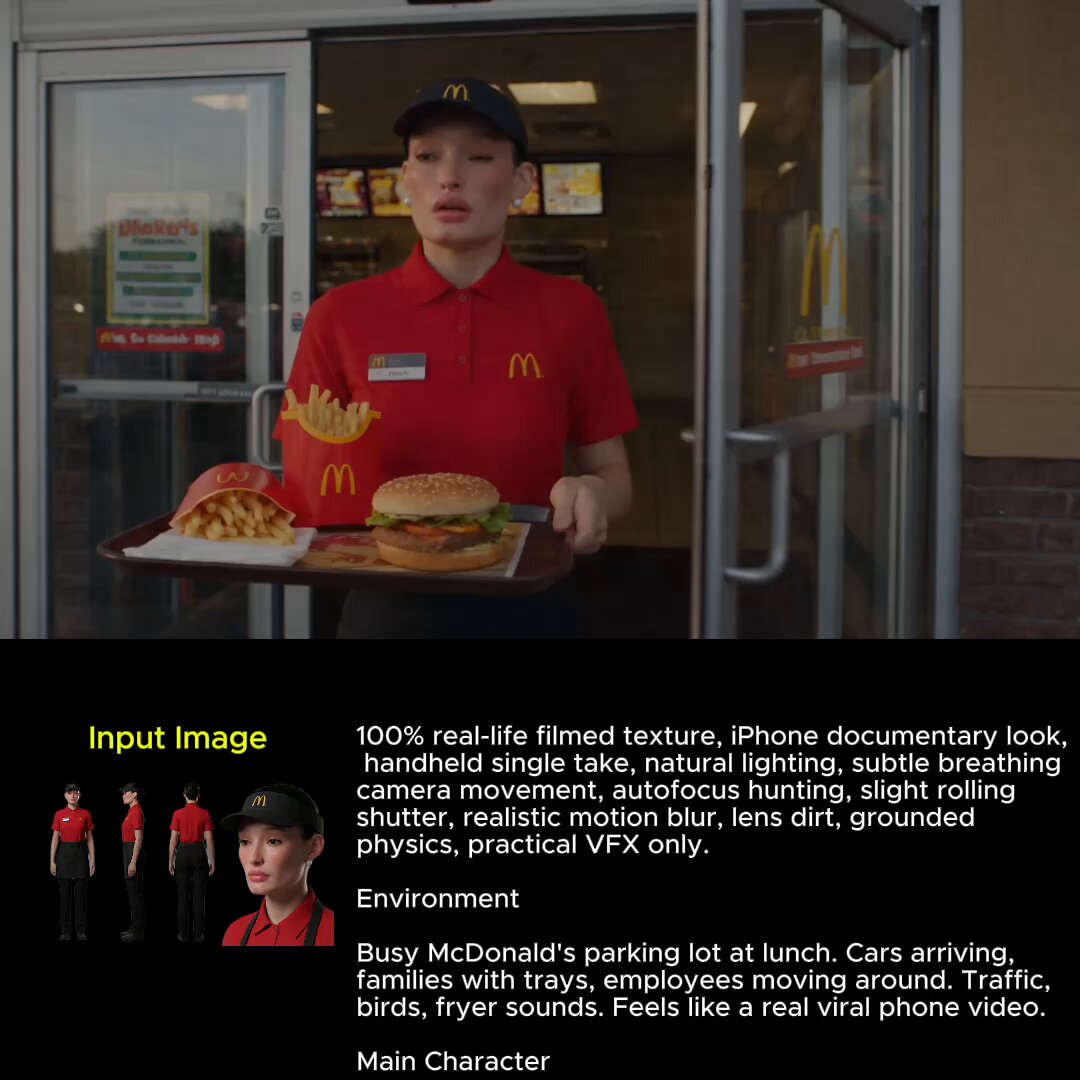
The core technique for stabilizing a character is the keyframe. You define one or more frames that establish exactly what the character looks like: face, hairstyle, wardrobe, body proportions, and even expression. Every subsequent generation uses those frames as inputs, so the model starts from the approved design instead of imagining one.
The process starts with character development. Generate a series of character studies until you have a design you approve. Do not settle for the first attempt; the character is the anchor for every scene to follow. When you have the final design, that image becomes your master reference. Version it, name it clearly, and store it with your project files.
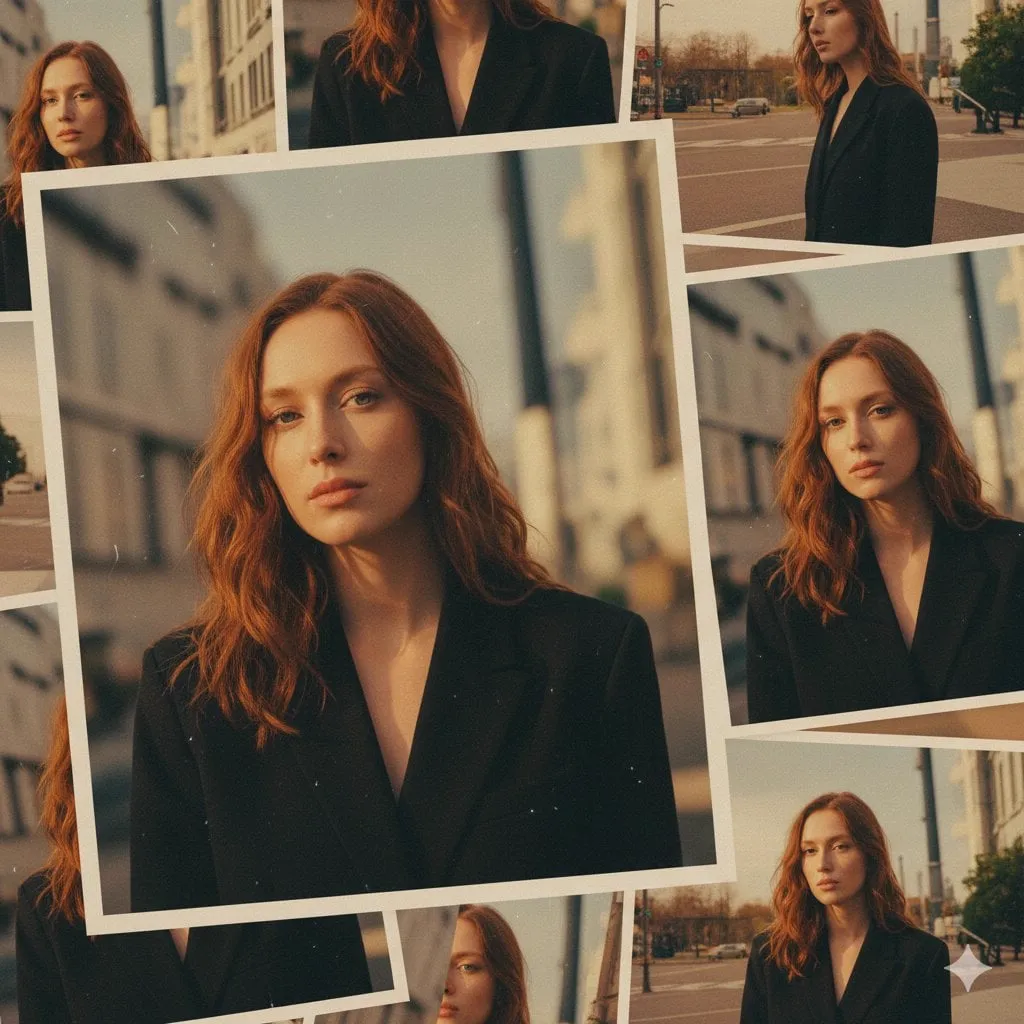
From the master reference, you can generate additional keyframes: the same character in different outfits, different angles, different expressions. Each keyframe is a locked asset. When a scene requires a new pose or costume, you generate from the closest keyframe rather than from scratch. This is exactly how animation studios use model sheets and how film productions use continuity photos.
Multi-Image Fusion: Combining References Into One Stable Output
Multi-image fusion is the technique of feeding multiple reference images into a single generation so the model can combine their information. Instead of a single anchor, you provide several: one for the face, one for the outfit, one for the background style, one for the lighting. The model fuses them into a coherent output that respects all of them.
This matters because a single reference cannot carry everything. A face reference gives you identity but not wardrobe. A style reference gives you look but not character. By fusing several, you solve multiple constraints at once and dramatically reduce drift.
The practical workflow is to build a reference set for each scene, not just each character. The set includes the character keyframe, a wardrobe reference, a lighting reference, and a style reference. You assemble the set before generating, then produce the scene. If the output still drifts, you adjust the weakest reference rather than re-prompting blindly.
Stabilizing Backgrounds and Environments
Characters are not the only things that drift. Backgrounds change between shots: the same room looks different, the same street has different architecture, the same sky has a different color. For narrative content, location consistency matters as much as character consistency.
The technique is the same: create location keyframes. Generate a master establishing shot of the location, approve it, and reuse it as a reference for every scene set in that space. Combined with a lighting reference, this keeps the environment recognizable across cuts.
When a scene needs a new angle of the same location, generate it from the location keyframe. This is analogous to set photography in live action, where the art department keeps continuity records of every set.
Building a Style Bible for the Whole Project
Beyond individual characters and locations, the entire project needs a shared visual language. This is the style bible: a written and visual specification of the look you are aiming for. It includes the color palette, lighting direction, camera language, lens feel, texture vocabulary, and mood.
The style bible serves two functions. First, it keeps your prompts consistent. When every prompt includes the same style descriptors, the output converges toward the same look. Second, it gives you a benchmark for review. When a clip looks wrong, you can check it against the bible and identify exactly which element drifted.
Invest time in the style bible before heavy generation. A half-hour spent defining the look saves hours of regeneration and rework later.
Bridging Different Models in One Project
Real productions do not use one model for everything. They use realism-focused engines for hero shots, stylized engines for character content, and fast engines for filler. The problem is that different models have different visual fingerprints, and mixing them can produce jarring transitions.
The bridge is the reference set. When you switch models, feed the new model the same references and style descriptors. This gives it the same starting point, even if its interpretation differs slightly. You will still see subtle variation, which is why the final color grade matters.
A unified grade is the secret weapon. After assembling all clips, apply the same color correction, contrast curve, and grade across the entire edit. This masks model differences and makes the whole piece feel like one shoot. Editors have used this trick for decades; it works even better when the source footage comes from different generators.
A Reliable Consistency Workflow
Here is the full workflow in practice:
- Develop the character. Generate studies, approve the design, lock the master reference.
- Define the locations. Generate establishing shots, approve them, lock location keyframes.
- Write the style bible. Palette, light, camera language, mood, texture vocabulary.
- Build scene reference sets. Character keyframe plus wardrobe, lighting, and style references per scene.
- Generate from references, not from raw prompts. Every scene starts from its set.
- Review against the bible. Pass or fail each clip on style, identity, and continuity.
- Batch by context. Generate scenes that share references together.
- Regenerate deliberately. When a clip fails, fix the weakest reference, then redo.
- Unify in post. Apply one grade across the edit to mask residual drift.
Cost and Efficiency: Getting More Keepers Per Dollar
Consistency work also saves money. Every regenerated clip costs time and usage, and drift is the biggest cause of wasted generations. When references are solid, the keeper rate climbs sharply. You generate fewer clips per finished scene, which matters at production volume.
The efficiency strategy is to spend on anchors and test on cheap iterations. Invest generation budget in the character development phase, where the reference assets are made. Then iterate scene variations using faster, cheaper settings. Only the final hero shots need the most expensive generation mode.
For teams, the reference assets become reusable company property. A character developed for one campaign can appear in the next, and a location built for one series can serve another. This compounding value is why consistency infrastructure pays off long-term.
What This Means for Studios and Brands
For studios, consistency unlocks serialized content. Web series, branded characters, and recurring campaigns all depend on the audience recognizing the same characters and worlds across episodes. With reliable consistency techniques, AI production can move from one-off clips to ongoing franchises.
For brands, consistency protects identity. A mascot, a spokesperson avatar, or a signature visual style must stay recognizable across every piece of content. The same reference discipline that serves narrative filmmakers applies to brand assets, and the payoff is a cohesive feed instead of a random collage.
Troubleshooting Common Consistency Failures
Even with a disciplined workflow, things go wrong. The value of a system is how quickly you diagnose the failure. Here are the most common problems and their fixes.
If the face changes but the style holds, the character reference is not being weighted strongly enough. Rebuild the reference with a tighter crop on the face, add an angle reference, and restate the character description in every prompt.
If the style changes but the character holds, the style anchors are weak. Strengthen the style reference, add the palette and lighting descriptors to every prompt, and check whether a new model version changed the visual default mid-project.
If the background drifts between shots, you are missing the location anchor. Create a location keyframe and feed it to every scene set in that space, and keep the lighting descriptors consistent.
If colors shift across the whole project, the problem is often the final grade. Log the intended palette in the style bible and apply a unified correction pass in post. Do not fight residual drift clip by clip; fix it globally.
If a clip fails repeatedly no matter what you change, the problem may be the source reference itself. Go back to the character or location development stage and generate a cleaner anchor before burning more generations. The reference is the foundation; when it is weak, everything built on it is weak.
Consistency Across Episodes and Series
The discipline that keeps one video consistent becomes a competitive advantage when you scale to a series. An episodic web series, a branded content franchise, or a long course depends on the audience recognizing characters, worlds, and styles from episode to episode.
The key is to treat the reference library as a living system rather than a per-project folder. Store approved characters, locations, and style guides in a shared structure that the whole team can access. Version every asset, and document what changed and why. When a character evolves across a season, keep the old versions so past episodes can be maintained while new ones use the current design.
Series also change the review bar. In a single video, one drifted clip is a blemish. In a series, a drifted character is a continuity error that audiences will call out in comments. The consistency workflow is what allows the series to exist at all, and the teams that invest in it can produce serialized AI content that actually builds an audience.
Frequently Asked Questions
Why does my character's face change between scenes? Because each generation is stochastic and has no memory. You must provide the same reference image every time and keep prompts consistent.
What is the difference between a keyframe and a reference image? In practice they are the same asset. Keyframe emphasizes the function: a locked frame that anchors subsequent generations.
How many references should I use per scene? Start with two or three: character, style, and lighting. Add more only when a specific element keeps drifting.
Can I fix drift in editing? Partially. A unified color grade masks style drift, but identity drift, a changed face or wardrobe, cannot be fixed in post. Fix it at the source.
Is consistency more important for long content? It matters at any length, but the cost of drift grows with duration and series count. A single viral clip can survive some drift; a ten-episode series cannot.
The Bottom Line
Visual consistency is the discipline that turns AI generation into AI production. It is not a single feature but a set of techniques: character keyframes, multi-image fusion, location anchors, style bibles, and unified post-grading. None of them is magic, and all of them require process. But together they solve the problem that makes most AI video feel amateur: the sense that each clip was made in isolation. When the references are locked and the workflow is followed, audiences stop noticing the technology and start following the story. That is the moment AI video stops being a demo and becomes a deliverable.
