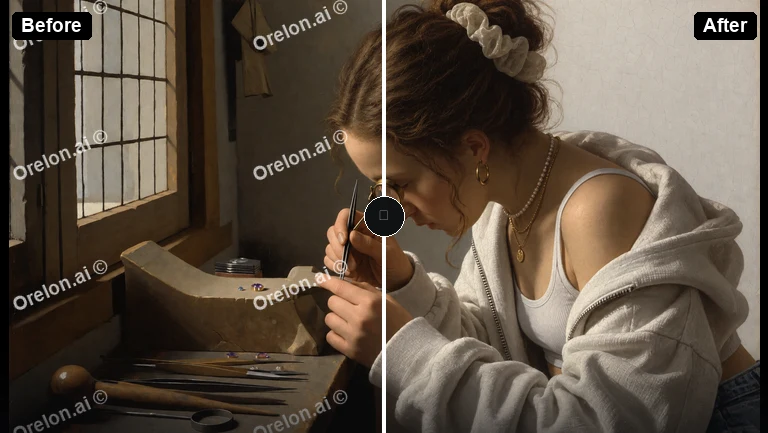
AI art generators are trained on large datasets, and whether this constitutes "stealing" is an active legal and ethical debate. Many artists argue that training on their work without consent or compensation harms their livelihood and dilutes the value of human creativity. Others see AI as a tool that democratizes art creation. The legal status varies by jurisdiction, and ethical use depends on how you create and what you claim ownership of. Focus on original compositions and respect creator rights.
AI Art Generator Stealing Art: Ethics and Copyright
Copyright Symbol Art
Input
A glowing copyright symbol floating above an artist's palette, digital and traditional art tools blending together, symbolic, blue and gold colors
Expected output
A symbolic image of a copyright symbol above an artist's palette representing art ownership
Original Creation Process
Input
An artist working at a desk with both traditional brushes and a digital tablet, creative energy flowing, warm studio lighting, inspirational
Expected output
An inspirational scene of an artist creating with both traditional and digital tools
Ethical AI Concept
Input
A balance scale with a paintbrush on one side and a computer chip on the other, balanced, clean minimalist style, conceptual art
Expected output
A conceptual balance image representing the relationship between traditional art and AI
Understand and create content about AI art ethics, copyright concerns, and artist rights
Understand the Debate
Learn about the key arguments around AI art and copyright through visual exploration and educational content.
Create Original Content
Focus on generating original compositions from scratch rather than copying established artists' styles.
Ethical AI Use
Develop responsible practices for using AI image generation while respecting creator rights and copyright law.
How It Works
1
Describe the desired image.
Describe the desired image.
2
Choose the available generation settings.
Choose the available generation settings.
3
Generate, review, and download a suitable result.
Generate, review, and download a suitable result.
Ethical AI art creation
Describe AI-generated art responsibly and respectfully.
Input Constraints
Do not use prompts that directly copy a living artist's style or name.
Avoid reproducing copyrighted characters, logos, or trademarked content.
Do not claim AI-generated work as wholly original human-created art.
Practical Tips
Create original compositions rather than imitating specific artists.
Describe general art movements and techniques instead of named artists.
Use AI as a tool for inspiration and concept exploration, not replacement.
Privacy
Do not upload personal or sensitive material unless you have permission to use it.
Usage Rights
Confirm that you have the rights needed for the inputs and intended use of the result.
Prompt recipes
Copy a structure, then adjust the subject, lighting, camera, and output details for your own result.
Original abstract composition
Abstract geometric shapes in warm earth tones, overlapping circles and triangles, textured brush strokes, modern and balanced
Describes visual elements without referencing any artist's signature style, creating original abstract art.
Generic landscape study
A peaceful mountain valley with a river, pine trees, soft afternoon light, traditional landscape painting style
Uses general landscape language and a broad style term rather than copying a specific artist's technique.
Art history reference
A still life in the style of Dutch Golden Age painting, fruit and flowers on a table, dramatic chiaroscuro lighting
References a historical art movement (public domain) rather than a contemporary or recent artist's work.
Educational copyright visual
An infographic-style image showing a paintbrush and a computer connected by a question mark, clean and informative, neutral colors
Creates educational content about the AI art debate without copying any artist's work.
Ethical AI concept art
Hands shaking—one human hand, one robotic hand—over a canvas with paint, partnership theme, hopeful and collaborative mood
Visualizes the concept of human-AI collaboration rather than AI replacement, promoting ethical framing.
Best use cases
Match the workflow to the input you have and the result you need before opening the generator.
Use case
Best input
Expected result
Tool
Educational content about AI ethics
Symbolic or conceptual prompt representing the AI art debate without copying artist work
An informative visual that illustrates ethical concerns and can be used in articles or presentations
Text to Image
Original art inspired by movements, not artists
Description of a historical art movement or general technique without naming specific artists
A new artwork that draws on art history while avoiding direct imitation of living creators
Text to Image
Personal creative exploration
Your own unique ideas, colors, and compositions described from scratch
Original artwork that reflects your vision and doesn't infringe on others' rights
Text to Image
Fair-use commentary or critique
Conceptual or illustrative prompt that comments on AI art issues for critical discussion
A visual that supports fair-use commentary on copyright, ethics, or technology
Text to Image
Educational content about AI ethics
Input: Symbolic or conceptual prompt representing the AI art debate without copying artist work
Result: An informative visual that illustrates ethical concerns and can be used in articles or presentations
Tool: Text to Image
Original art inspired by movements, not artists
Input: Description of a historical art movement or general technique without naming specific artists
Result: A new artwork that draws on art history while avoiding direct imitation of living creators
Tool: Text to Image
Personal creative exploration
Input: Your own unique ideas, colors, and compositions described from scratch
Result: Original artwork that reflects your vision and doesn't infringe on others' rights
Tool: Text to Image
Fair-use commentary or critique
Input: Conceptual or illustrative prompt that comments on AI art issues for critical discussion
Result: A visual that supports fair-use commentary on copyright, ethics, or technology
Tool: Text to Image
Limitations to know before generating
The legality of AI-generated art varies by country and is still being decided in courts; no tool can guarantee your use is legal everywhere.
Training data sources are often opaque, so you cannot confirm whether a specific artist's work influenced the output.
Generated images may unintentionally resemble copyrighted work even when you describe original concepts; review before publishing.
Ethical use is subjective; even legal use may harm artists' livelihoods or violate community norms in creative industries.
The tool cannot guarantee that your output is free from copyright claims; independent legal review may be necessary for commercial projects.
Creative Suite: AI Video Generator & AI Image Generator Tools
Power up your creative workflow with our AI-driven tools. Generate stunning videos, create images, and apply custom adjustments - our AI Video Generator and AI Image Generator offer a complete solution for all your creative needs.