

The phone in your pocket now records in 10-bit Log, writes ProRes to an external drive, and runs machine-learning models that would have needed a workstation a few years ago. That shift changes the craft question: it is no longer "can the iPhone handle this shot?" but "which parts of the pipeline should stay on the device and which parts should move to the cloud?"
This guide walks through a practical, repeatable workflow for advanced mobile post-production. It covers AI-assisted visual effects, multi-image blending for character consistency, cinematic finishing, hybrid cloud rendering, and the mistakes that quietly ruin otherwise good footage. Everything here is tool-agnostic: the same logic applies whether you finish in a mobile NLE, a desktop suite, or a browser-based generator.
Why the iPhone Became a Legitimate Post-Production Machine
The hardware floor moved up
Modern iPhone chipsets dedicate silicon to both GPU work and neural inference. In practice that means real-time segmentation, object tracking, and noise reduction happen on the phone instead of on a render farm. Features like ProRes recording, Log gamma, and external SSD capture removed the biggest historical objection: the footage was never broadcast-grade to begin with. Now it is.
Three capabilities matter most for editors:
- 10-bit color depth gives you room to push a grade without banding in skies and skin tones.
- Log encoding preserves highlight and shadow detail, at the cost of looking flat until you apply a conversion LUT.
- Direct-to-SSD recording removes the file-transfer bottleneck and the thermal stress of writing to internal storage.
The catch is thermal. Long 4K ProRes sessions heat the body, and once the phone throttles, frame drops and recording stops follow. Treat your phone like a cinema camera: short takes, cooling breaks between setups, and case removal during long rolls.
What still belongs on a computer
Mobile editing wins on speed and immediacy. It loses on screen real estate, precise audio work, and heavy compositing. A realistic split is: rough cut, AI effects, and social deliverables on the phone; sound design, multi-layer compositing, and final master on a larger machine. Deciding this boundary before you start saves hours of re-exporting.
Building a Mobile-First Editing Workflow That Scales
Ingest and folder discipline
Storage math is unforgiving. A minute of 4K ProRes 422 HQ can exceed five gigabytes, and higher-bitrate variants go well beyond that. Before a shoot day, decide your recording format based on the deliverable, not on vanity. Social vertical cuts rarely need the heaviest codec.
Use a consistent folder structure on the external drive:
ProjectName/
  01_FOOTAGE/
    DAY01_CAM_A/
    DAY01_CAM_B/
  02_AUDIO/
  03_GRAPHICS/
  04_AI_RENDERS/
  05_EXPORTS/
Name clips with date, camera, and take number. When three people touch the same project later, naming is the only coordination mechanism you can trust.
Proxy-first editing
Generate proxies at ingest rather than waiting for playback to stutter. A 1080p proxy of a 4K ProRes source plays smoothly on any modern phone, and the final conform swaps back to the original media automatically. This single step is the difference between a responsive edit and a frustrating one.
Project settings you should lock early
- Timeline resolution and frame rate matched to the majority of your footage.
- Color management set to match the Log profile you shot in, with a conversion LUT applied at the timeline level so every clip starts from the same baseline.
- Audio sample rate at 48 kHz, even if you recorded at 44.1, because mixed rates cause drift over long timelines.
Locking these before you cut prevents the classic late-stage disaster where the grade looks wrong on half the clips and the music slowly slips out of sync.
AI Effects on Mobile: What Works and What Wastes Time
Effects that are genuinely production-ready
Segmentation and masking. Automatic subject isolation is now good enough for talking-head backgrounds, sky replacement, and isolating a presenter for graphic overlays. Expect clean edges on hair roughly 80 percent of the time; the remaining 20 percent needs manual refinement with a brush or a tracked matte.
Object removal by inpainting. Signage, light stands, and stray pedestrians can be erased convincingly when the background behind them is textured. Against flat walls, inpainting smears. Shoot a clean plate when you know removal is coming.
Tracking and stabilization. Planar and point tracking is dependable enough to attach text, logos, or UI elements to a moving surface. Combine it with a mild stabilization pass rather than relying on tracking alone.
Automatic transcription and captions. This is the highest-return AI feature in mobile editing. Accurate captions expand reach, and the time saved versus manual typing is enormous. Always proofread names and technical terms.
Effects that still need supervision
Style transfer, generative relighting, and full AI-generated inserts are impressive but unpredictable. They work best when you treat them as a source of elements to composite, not as a finished shot. Generate, evaluate, and then bring the best result into your NLE as a layer.
A practical AI effects order of operations
- Stabilize and denoise the raw clip.
- Apply segmentation or masking.
- Add AI-generated elements on their own layers.
- Composite, then match color and grain to the plate.
- Add motion blur last so generated elements feel like they were shot on the same camera.
Doing color before compositing means you grade twice. Doing motion blur before transforms means it lands in the wrong place. Order matters more than any single tool.
Multi-Image Blending and Character Consistency
This is where most mobile AI workflows succeed or fall apart. Blending multiple reference images lets you hold a character, product, or location steady across shots, but only if the references are disciplined.
Build a reference sheet, not a reference dump
A useful reference set contains three to five images of the same subject under consistent lighting:
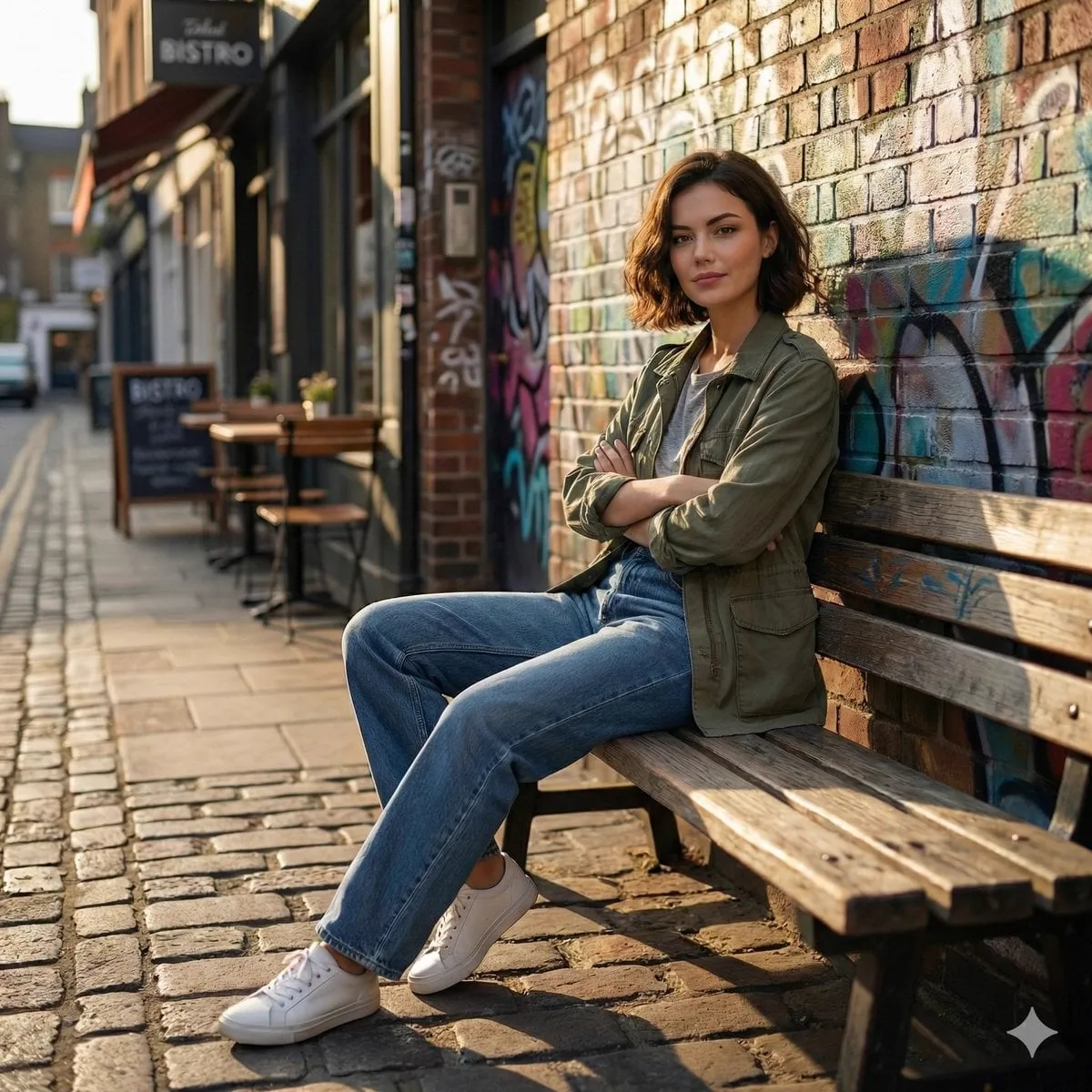
- One straight-on, neutral expression, evenly lit.
- One three-quarter angle showing facial structure.
- One full-body shot establishing wardrobe and proportions.
- One detail shot for distinctive features such as a scar, tattoo, or logo placement.
Avoid mixing hard sunlight with soft indoor light in the same reference set. The model will average the two and produce something that matches neither.
Lock what should not change
Write down the invariants: hair color and length, wardrobe, accessories, lens character, and time of day. Then vary only what the story requires. When you generate a new shot, keep the reference images identical and change one variable at a time. This isolates the cause when something drifts.
Diagnosing identity drift
| Symptom | Likely cause | Fix |
|---|---|---|
| Face changes shape between shots | Mixed lighting in references | Rebuild the reference set under one lighting condition |
| Wardrobe changes color | Conflicting color grading references | Normalize reference images before feeding them in |
| Hands and props deform | Subject too small in frame | Provide a closer detail reference |
| Background bleeds into subject | Weak separation | Use a masked, simplified background plate |
Blending images for scene continuity
When you need a character to appear in a new environment, compose the shot in layers: background plate, character element, foreground occlusion, then atmosphere. Atmos — haze, lens flare, drifting dust — is the cheapest trick for making a composited element feel physically present in the space.
Cinematic Effects Without a Full Post House
Depth, blur, and the illusion of a bigger sensor
Phone footage is deep-focus by nature. Synthetic depth-of-field works when it respects the geometry of the shot: focus on the near eye, let the background fall off gradually, and avoid a hard focus plane that looks like a cutout. Rack focus between two subjects is achievable and immediately reads as "cinematic."
Grain, halation, and lens character
Digital footage can look sterile. A light film grain pass, subtle halation around bright highlights, and a hint of chromatic aberration at the frame edges add organic texture. Keep each effect at low intensity. Stacked at full strength, they read as a filter rather than as photography.
Speed ramps and time manipulation
Optical-flow retiming can turn 60 fps footage into smooth slow motion, but it struggles with fast lateral motion and overlapping subjects. Shoot at a higher frame rate when you know a ramp is coming, and place ramps on beats in the music so the motion feels motivated rather than decorative.
Practical VFX on a phone
Screen replacements, muzzle flashes, energy effects, and particle hits are all feasible. The workflow that holds up: track the surface, composite the element, match black levels, then add light interaction — a flash should brighten nearby skin and walls, not just appear on top of them. Missing light interaction is the single most common giveaway in amateur VFX.
Cloud Rendering and Hybrid Workflows
When to offload
Move a job to cloud or desktop rendering when any of these are true:
- The render exceeds a few minutes of timeline at full resolution.
- The phone is throttling or the battery is below 30 percent.
- The footage needs multi-layer compositing or heavy noise reduction.
- Multiple collaborators need access to the same project file.
Having a separate rendering environment, whether that is a cloud service or a desktop machine, gives you a way to keep editing while a heavy export runs. That parallelism is the real benefit, not raw speed.
Versioning and handoff discipline
Cloud round-trips fail for boring reasons: mismatched LUTs, missing fonts, unlinked media, and two editors saving over each other. Protect yourself with three habits.
- Freeze the look. Export a reference still frame from the approved grade and keep it in the project folder.
- Name versions semantically.
edit_v03_colorlockedbeatsfinal_final2. - Consolidate before uploading. Collect media and fonts into one folder so the render environment sees exactly what you see.
Bandwidth reality
Uploading tens of gigabytes on a home connection takes hours. For long projects, keep source media on a physical drive and upload only proxies plus the project file. The render environment conforms to full-resolution media when it is available locally, or you relink once at the end.
Planning Shots with AI Assistance
Previsualization that actually saves money
AI storyboard and animatic tools let you test a sequence before you shoot it. Use them to answer structural questions: does the scene work better with a slow push or a handheld follow? Is the reveal in the right place? Getting this wrong on set costs a reshoot day; getting it wrong in a storyboard costs twenty minutes.
A camera-movement vocabulary worth reusing
- Push in for realization or intensifying emotion.
- Pull out for isolation or revealing context.
- Lateral tracking to keep a subject moving through the environment.
- Static wide to reset the audience after a dense sequence.
Give an AI planning tool this vocabulary and it can propose coverage, but you still decide which beats deserve emphasis. Generated shot lists are a starting point for discussion, not a substitute for taste.
Shot lists that survive contact with reality
Write each setup with four fields: intent, framing, movement, and estimated duration. When time runs short on set, you can cut the least essential setups without losing the story, because intent is written down. Setups without a stated intent are always the ones you regret shooting.
Common Mistakes and How to Fix Them
- Grading before compositing. You end up double-grading generated elements. Fix: grade once, after the composite is locked.
- Over-processing. Stacked effects, maximum grain, and aggressive sharpening produce a brittle image. Fix: set each effect to half the intensity you first think is right.
- Ignoring audio until the end. Audio problems drive more re-edits than picture problems. Fix: rough in dialogue, music, and room tone the same day you cut picture.
- Inconsistent reference images. Identity drift starts at the reference stage. Fix: rebuild references under one lighting condition.
- Recording everything in the heaviest codec. Storage and thermal limits will interrupt you. Fix: match codec to deliverable.
- No clean plates. Object removal becomes guesswork. Fix: shoot ten seconds of empty background for every setup where removal is likely.
- Skipping the backup. One dropped drive ends the project. Fix: two copies before you format the card.
- Trusting auto-captions blindly. Names, places, and technical terms break. Fix: always proofread before publishing.
Choosing the Right Approach by Project Type
Short-form social video
Prioritize speed: shoot in a standard codec, cut vertically, use automatic captions, apply a consistent LUT, and lean on AI masking for quick background swaps. A disciplined template beats a bespoke edit when you publish daily.
Brand and product films
Consistency is everything. Lock a color pipeline, build reference sets for the product so it looks identical in every shot, and use multi-image blending to place it in multiple environments. Budget time for cloud rendering so the phone stays free for review cycles.
Documentary and event coverage
You cannot control the environment, so lean on stabilization, AI noise reduction, and captions. Shoot generous coverage and accept that heavy VFX is off the table. Reliability beats ambition here.
Music videos and narrative shorts
This is where cinematic effects and speed ramps earn their place. Plan ramps against the track, use generative elements for surreal inserts, and finish the grade with a cohesive grain and halation pass so composite shots sit beside real footage without announcing themselves.
Frequently Asked Questions
Can an iPhone really replace a full editing suite?
For short-form, social, and many brand deliverables, yes. For long-form narrative with heavy sound design and multi-layer compositing, a hybrid approach — mobile for cutting and effects, desktop or cloud for finishing — produces better results in less time.
Why does my AI-generated character keep changing face?
Almost always because the reference images disagree with each other. Rebuild the reference set under one lighting condition, keep wardrobe and hairstyle identical, and change only one variable per generation so you can identify the cause of drift.
How do I stop my phone from overheating during long shoots?
Record to an external drive, remove the case, avoid direct sun, and take short breaks between takes. Lower the codec or frame rate if you are recording continuous long takes rather than planned coverage.
Is synthetic depth of field worth using?
Yes, when it respects the geometry of the shot. Focus on the near eye, keep the falloff gradual, and avoid a hard-edged plane that looks like a cutout. Pair it with a light grain pass so the blur does not read as digital mush.
When should I move a render to the cloud instead of waiting on the phone?
Whenever the export blocks you from continuing to edit. The advantage of a separate rendering environment is parallelism — you keep working while the heavy job finishes elsewhere.
How many reference images do I actually need for multi-image blending?
Three to five well-chosen images beat twenty random ones. Cover a neutral front view, a three-quarter angle, a full body shot, and one detail image for distinctive features.
Do I need to shoot in Log?
Only when you plan a serious grade or need maximum dynamic range in high-contrast scenes. Log footage requires a conversion step and slightly more storage and attention; for quick turnaround work, a well-exposed standard profile is often faster to finish.
What is the single biggest quality upgrade for phone footage?
Light and sound, not resolution. A cheap diffuser and a lavalier microphone will improve perceived production value more than any AI effect, and they make every downstream step easier.
