

Why Most AI Ad Videos Fail Before They Ever Look Bad
Generative video has made it trivially easy to produce footage. It has not made it easy to produce advertising. The gap between a beautiful generated clip and a clip that sells something is where almost every project dies, and it rarely dies because of rendering quality. It dies because the video was built shot-first instead of message-first.
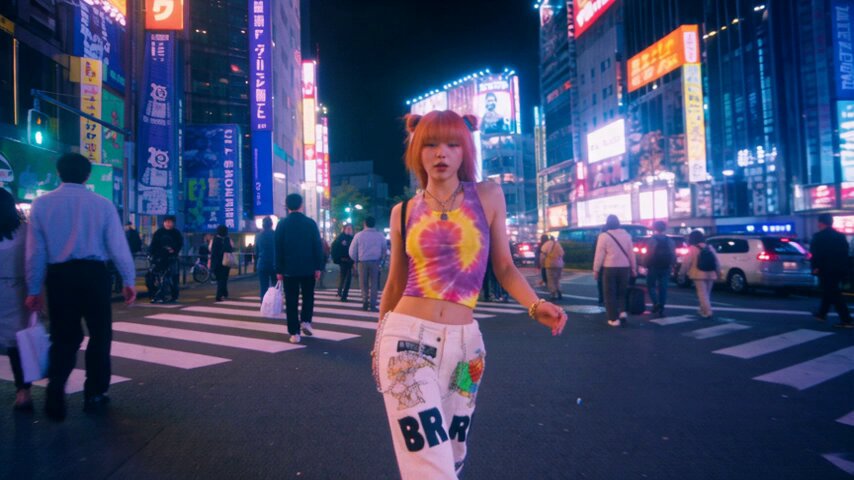
The pattern is predictable. Someone opens a video model, types a lush prompt — neon city, slow-motion coffee pour, drifting camera — gets a gorgeous eight-second loop, then tries to bolt a product and a call to action onto the end. The result looks expensive and converts like a screensaver. The visuals have no job. Nothing in the frame is arguing for the product.
The fix is not a better model. It is a production pipeline that forces decisions in the right order: promise, then structure, then shots, then sound, then edit, then test. This guide walks through that pipeline end to end, using AI generation where it accelerates work and manual craft where it protects the message.
One framing note before we start. Think of AI video tools as a camera crew that never sleeps and never argues, not as an art director. They will execute whatever you describe, including a bad idea, at four in the morning, in perfect 1080p. That is exactly why the planning stages matter more than the generation stage, not less.
The Five-Stage Pipeline That Actually Ships Ads
Every ad video that survives contact with a real audience moves through the same five stages. Skipping any one of them pushes the cost downstream, where it is more expensive to fix.
- Message — one sentence that states what the viewer should believe after watching. If you need a comma and a conjunction, you have two ads.
- Structure — a beat sheet: hook, problem or desire, product moment, proof, call to action. Roughly five to eight beats for a 15–30 second spot.
- Generation — shot list first, prompts second. Image generation for keyframes, video generation for motion, or hybrid approaches where you animate a still.
- Sound — voiceover, music bed, and effects. Sound is what makes generated footage feel intentional rather than assembled.
- Edit and test — pacing, captions, aspect ratio variants, then a disciplined testing loop.
A useful discipline: at each stage, write down the single decision that stage exists to make. Stage one decides the promise. Stage two decides the shape. Stage three decides what the viewer literally sees. Stage four decides how it feels. Stage five decides what you learn. If a stage is producing more than one kind of decision, it is blending into the next one and you are about to redo work.
Time budgets help here. For a 30-second spot, a reasonable split is 20% message and structure, 40% generation and iteration, 25% sound and edit, 15% variants and QA. Most beginners spend 90% on generation and wonder why the result feels hollow.
Stage 1: Turn the Brief Into One Sentence and One Visual Promise
Before anything is generated, compress the brief. Not the marketing brief — that can stay long. Compress it into two lines:
- The belief line: "After watching, the viewer believes that [product] is the fastest way to [outcome] for [specific person]."
- The visual promise: the single image or moment that will be memorable if the viewer forgets everything else.
The visual promise is what separates ads that get screenshotted from ads that get scrolled. It needs to be concrete and slightly strange. "Person drinks coffee" is not a promise. "A barista hands a cup through a car window while the car is already pulling away" is a promise — it encodes speed and convenience without a single word of copy.
Hook architecture: earning the first 1.5 seconds
Short-form feeds are ruthless. The opening needs to create an unresolved loop: something incomplete that the brain wants closed. Reliable hook patterns include:
- Motion into frame — something enters the frame fast and off-center, breaking the symmetry the eye expects.
- Mid-action start — begin halfway through a gesture, as if the camera was already rolling.
- Contradiction — an object in a place it does not belong, which the rest of the ad resolves.
- Direct address with a twist — a face looking straight at the lens, but the sentence is unexpected rather than generic.
Avoid starting on a logo, a wide establishing shot, or a fade-in. All three spend attention without earning any.
Writing the script for muted playback
Assume the viewer has sound off until proven otherwise. That means the script has two parallel tracks: what is said, and what is shown. Write them side by side in a two-column table. Every spoken line should have a visual that carries the same idea independently.
Keep the spoken track short. Ten to fourteen words per beat maximum. Longer sentences force faster delivery, which flattens emotion. If a line cannot survive being read aloud twice without a breath, cut it.
Stage 2: Build a Shot List Before You Generate Anything
A shot list is not bureaucracy; it is the thing that makes AI generation efficient. Each row in the list should contain six fields: shot number, duration in seconds, subject, action, camera behavior, and transition out. Once you have that, prompting becomes mechanical rather than exploratory — and mechanical prompting is what produces a coherent spot instead of a highlight reel.
For a 20-second ad, aim for 8–12 shots. Notice that most are under two seconds. Generated footage tends to reveal its weaknesses the longer it plays, so short shots are both a stylistic choice and a practical one.
Shot types that survive generation well
Some compositions hold up under generation better than others. Favor these:
- Close-ups on a single hand or object — few elements, strong focus, fewer opportunities for anatomical errors.
- Slow push-ins on a static subject — the model only has to move the camera, not the subject.
- Silhouettes and backlight — hides detail while looking deliberate.
- Texture inserts — liquid pouring, fabric moving, steam rising, powder falling. These are forgiving and edit beautifully as connective tissue.
- Wide environmental shots with a single moving figure — reads as cinematic even when details are soft.
Be cautious with crowd scenes, complex hand interactions, mirrored surfaces, and text inside the frame. Those are where artifacts concentrate.
Aspect ratios and safe zones
Generate or crop for the placements you actually run: vertical 9:16 for feeds and stories, square 1:1 for some placements, and 16:9 for pre-roll and site embeds. Design for the vertical master first, because it is the hardest constraint, then adapt outward. Keep faces and key product details inside the middle 60% of the vertical frame so interface overlays and captions do not cover them.
Stage 3: Prompting Video and Image Models for Ad-Ready Footage
Prompting for ads differs from prompting for art. Art rewards novelty; advertising rewards clarity and repeatability. You want prompts that produce the same shot three times in a row with minor variation, not prompts that produce a slot machine.
Anatomy of a reliable shot prompt
Build prompts in a fixed order so you can adjust one variable at a time:
- Subject and wardrobe — specific, plain language. "A woman in a mustard raincoat," not "a stylish person."
- Action in progress — use present continuous and describe a middle state: "reaching for," "turning away from," "setting down."
- Environment and time of day — one location, one light condition.
- Camera behavior — pick one: slow dolly in, static locked-off, handheld follow, gentle orbit. Multiple simultaneous camera moves confuse generation.
- Lens and depth feel — "shallow depth of field," "wide lens close to the subject," "long lens compression."
- Mood and grade — three adjectives maximum. More adjectives dilute rather than refine.
Run three variations of the prompt with only one field changed each time. Save the winners to a personal shot library organized by category: product hero, human moment, texture, environment, transition. After a few projects, you will be assembling ads from a kit rather than starting from a blank page.
Continuity across shots
Generated shots rarely match automatically. Enforce continuity deliberately:
- Reference frames — generate a keyframe image first, then animate it, so lighting and wardrobe stay consistent.
- Locked palette — decide on two dominant colors and one accent, and mention them in every prompt.
- Consistent lens language — if shot three is a long lens, do not cut to a wide-angle close-up unless you want the jump to read as a mistake.
- Same character description, verbatim — copy and paste the character sentence across every prompt that features them.
Handling artifacts the smart way
When a shot has a defect — a hand with six fingers, fabric that melts, a face that shifts — you have three options, in order of cost: shorten the shot so the defect is off-screen, reframe or crop past it, or regenerate. Reframing is the most underused. A two-second insert cropped to the top third of the frame often solves what a dozen regenerations cannot.
Stage 4: Sound Design Is Half the Illusion
Generated footage is usually silent, and silence reads as fake. Sound is what convinces the viewer that the images are real, and it is the cheapest stage to get right.
Voiceover. Match delivery to the promise, not to the product category. A calm, close-mic read signals confidence; a bright, fast read signals energy. Record or generate the voice first, then cut the picture to it. Editing picture to voice produces tighter ads than the reverse, because the pauses land where the speaker actually breathes.
Music. One bed, one emotional arc. Do not stack genres. If the ad has a product moment, place a small musical event — a single note, a filter sweep, a drop in layers — precisely on that frame. That moment does more for memorability than any visual flourish.
Effects. Add three or four diegetic sounds even if they seem obvious: a click, a pour, a door, footsteps. These anchor generated footage in physical reality. Keep them quiet. The goal is texture, not a Foley showcase.
The mix. Voice sits on top, music sits underneath, effects fill gaps. Duck the music by 4–6 dB whenever the voice enters. If the ad works with music only, the message is strong enough. If it works with voice only, the visuals are not pulling their weight.
Stage 5: Edit for Pacing, Then Cut Platform Variants
Editing AI-generated footage is mostly about rhythm and repair. Work in this order: assemble the shot list, then fix duration, then add sound, then polish.
The three-cut rule
For every shot, produce three durations — full, half, and quarter. Then in the timeline, default to the shortest version that still communicates the action. Generated motion tends to lose coherence past the two-second mark, so the shortest version is usually both the sharpest and the best-paced.
Also cut on motion, not on stillness. Trim so that the outgoing shot still has movement in its final frames; the cut will feel invisible rather than announced.
Captions and readability
Most feed viewing happens muted, so captions are not optional. Rules that hold up:
- Two lines maximum at a time, with a maximum of five words per line.
- High contrast: white text with a subtle dark shadow, or a solid block behind the text.
- Keep captions out of the bottom 15% and top 12% of the frame.
- Highlight the single keyword per line rather than coloring everything.
If captions are on, reduce on-screen graphic elements. Text competing with text is the fastest way to look amateur.
A Testing Framework That Produces Real Learning
Most teams test too many variables at once and learn nothing. Structure tests so each round isolates one dimension.
Round one: hooks only. Keep everything after second two identical. Produce four hooks in the same style. This tells you which opening earns attention.
Round two: product moment. Keep the winning hook. Change how the product appears — in hand, in use, in context, as a result. This tells you what the audience needs to see to believe the claim.
Round three: call to action. Keep the winning hook and product moment. Vary the closing line and the closing visual. This tells you what motivates the click or the tap.
Track three metrics at minimum: three-second retention, completion to the end card, and click-through. A high retention ad with a weak click-through has a promise problem. A low retention ad with strong click-through has a hook problem. Diagnose before you iterate.
Keep a written log of each variant and its result. After a dozen tests you will have a set of reusable creative principles specific to your audience — far more valuable than any general best-practice list.
Quality Control Checklist and Common Mistakes
Run this checklist before anything goes live. It catches the majority of embarrassing errors.
Visual checks
- Every shot has a reason to exist; nothing is decorative filler.
- Motion is smooth at the cut points and there is no unintended jump in grade.
- No distorted anatomy, floating objects, or melting textures in the final frames of any shot.
- Character appearance is consistent across all shots featuring them.
- Product details — label, logo placement, color — are correct and legible at the smallest expected screen size.
Message checks
- The belief line is visible in the ad, not just in the brief.
- The value proposition appears on screen in text, verbatim, at least once.
- The call to action appears visually and, if applicable, in audio.
- The ad works muted and works with sound off screen entirely.
Common mistakes worth naming
- Starting with a logo. Viewers have not earned a reason to care yet.
- Over-prompting. Ten adjectives produce mud. Three produce direction.
- Long shots to show off quality. Generated footage rewards brevity.
- Ignoring the mix. A great edit with unbalanced audio still reads as amateur.
- One variant. A single ad is a guess; a set of three is a test.
- No captions. Roughly half the audience never hears your script.
- Testing five variables at once. You will get a winner and no explanation.
- Skipping the visual promise. Without it, the ad has pretty shots and no memory.
FAQ
How long should an AI-generated ad be?
For paid social, 15 seconds is the sweet spot for a complete argument, with a 6-second cutdown for reach objectives and a 30-second version for retargeting where the viewer already knows the product. Produce the 15-second master first.
Can I use generated footage for the entire ad?
Yes, but most strong ads mix generated shots with real product footage or photography. Use generation for environment, mood, texture, and human moments that would be expensive to shoot — and use real footage for the product itself, where accuracy matters most.
How many shots do I need for a 15-second spot?
Six to nine shots, most under two seconds. That gives you enough variety to hold attention without the ad feeling like a trailer.
What is the most common reason an ad fails on retention?
The first 1.5 seconds contain no unresolved loop. If nothing is happening, mid-action, the viewer has no reason to wait for the answer.
Should I write a script or prompt first?
Script first, always. The script defines what each shot must accomplish. Only then do you write prompts to satisfy those requirements, which makes prompting a checklist rather than a gamble.
How do I keep generated characters consistent across shots?
Generate a keyframe image, lock the character description verbatim, reuse it across every prompt, and keep the palette to two colors plus an accent. Reference-based animation is more consistent than text-only prompting.
Do I need a professional editor?
Not necessarily, but you do need someone who cuts on rhythm rather than on shot boundaries, and who can balance a mix. Those two skills matter more than software choice.
How often should I refresh creative?
When frequency rises or retention drops, refresh the hook first. Hooks fatigue faster than body content, and swapping the opening is the cheapest meaningful change you can make.
What should I do when a generated shot has a persistent defect?
Shorten the shot, crop past the defect, or replace the shot with an insert. Regenerate only if the shot is structurally important to the message. Chasing perfection on a two-second transition is a poor use of time.
Where does AI help least in this workflow?
Strategy and message. Models will happily produce footage for a vague promise, and the result will be watchable and forgettable. The belief line, the visual promise, and the test design are still entirely human work — and they are what determine whether the ad performs.
