

When people say they are bad at AI art, they are almost always saying something slightly different from what they mean. They have tried a generator, typed a sentence, and received something generic or unusable back. The real problem is not the software and not the person's taste. It is that a one-line description is rarely enough for a diffusion model to know what the artist actually had in mind.
Prompt engineering is not a secret incantation. It is a skill of translation: taking an idea that lives in your head and turning it into the structured, specific language that a generative model can act on. Once you understand the building blocks, you stop hoping for good images and start building them on purpose.
Why the prompt is the real medium
The image generator is not deciding what the art means; you are. The prompt is the only channel through which you communicate subject, composition, style, and mood. Every detail you omit is a detail the model will fill in using its own default, and defaults are almost always bland.
That explains the phenomenon of everyone producing vaguely similar imagery. Two people can type the same loose phrase and get output that looks like it came from the same creative slush pile, because the model falls back to the same statistical average of everything it has been trained on. The way to stand out is to be unusual and specific about things the average prompt never mentions: the light, the lens, the palette, the medium, the mood, the point of view.
Treat the prompt as a design brief rather than a wish. A designer would never hand an agency a brief that said "make something nice." Neither should you.
The anatomy of a strong prompt
Almost every effective prompt can be broken into a handful of recognisable blocks. Once you name them, you can build and debug them independently.
Subject is where you start. Say clearly what the central object, person, or scene is, and add the attributes that make it this subject and not any other subject: distinctive clothing, a notable feature, an identifying prop.
Setting grounds the subject in a place. A corridor, a rainy street, an abstract void, a cluttered workshop. The setting does a lot of the world-building and should never be left to chance.
Composition and framing control how the eye moves through the image. Are we close and intimate, wide and establishing? Is the subject dead centre, or pushed to the side with negative space? Mentioning the frame directly changes the result enormously.
Lighting is the single most powerful lever for mood that is easiest to ignore. Golden hour, hard noon sun, neon, candlelight, softbox, rim light. These are not decorations; they define whether an image feels warm, tense, dreamy, or clinical.
Medium and style fix the visual language. Photograph versus painting, film still versus digital render, oil on canvas versus vector graphic, the painterly looseness of a certain era versus deep photoreal detail. Naming the medium is how you keep a whimsical idea from defaulting to generic CGI.
Finally, mood and intention carry the emotional payload. Words like "serene," "ominous," "nostalgic," "triumphant" steer the model toward the feeling behind the image rather than just the facts of it.
You do not need all five boxes every time, but the more precise you are across them, the closer the output will land to your intent.
Precision beats adjectives you cannot see
A common beginner habit is stacking adjectives that sound impressive but do not actually move the needle: "stunning, breathtaking, amazing, beautiful." The model does not respond to enthusiasm. It responds to descriptive, visually concrete language.
Instead of "beautiful landscape," write "a wide valley at dawn, low mist over a river, pine forest on the hill, soft cool light, subtle grain of a 35mm photograph." Every one of those phrases tells the model something it can actually render. "Beautiful" tells it almost nothing because everything in its training data has been called beautiful.
Similarly, prefer measurable or observable language over comparative language. "Warm light low to the horizon" is actionable. "Nice lighting" is not. The more your prompt describes things a camera could capture, the more control you keep.
This does not mean the prompt must be dense. Short, precise prompts often outperform long, muddy ones. The goal is signal, not volume.
Use weighting and structure to control emphasis
Once you are comfortable with the basics, the next level of control comes from ordering and weighting. In many tools you can weight parts of a prompt so the model pays more attention to the things that matter most.
Order matters because models generally attend more to text near the beginning of a prompt. If the subject is the star, put it first. If the mood is the whole point, lead with that instead.
Weighting is the more explicit version of the same idea. You can boost a critical element so the model prioritises it, and you can dampen or suppress an element that keeps appearing when you do not want it. This is extremely useful in practice. If a character keeps gaining a prop you did not ask for, weighting a negative instruction can push it out. If a palette keeps drifting off-key, weighting the colour words pulls it back.
The same principle works for negative prompting: explicitly listing what you do not want. If every result renders the subject out of focus or with an unwanted watermark-like texture, naming those in the negative prompt cleans up the output remarkably fast.
Control composition with references and framing
Naming a medium or a cinematic camera term is a cheap and reliable way to steer composition. Words like "close-up," "wide shot," "extreme low angle," "bird's-eye view," "shallow depth of field," and "rule of thirds" all carry real weight with image models because they appear across the training data with clear visual meaning.
For even tighter control, many workflows use a reference image. You supply a starting frame or a style moodboard, and the model generates variations that respect its character, lighting, or colour. This is the closest thing the medium has to handing the model a sketch, and it is invaluable for keeping a series of images consistent.
Good reference practice means keeping the reference simple and legible, and pairing it with a text prompt that reinforces what you want. A noisy, complicated reference can confuse the model more than it helps.
Consistency across a set of images
Once single images work, the next goal is almost always a set: a character at several ages, a product in several scenes, a style across a whole campaign. Consistency is where most pipelines break.
The reliable recipe mirrors what film and game teams already do. Define the character or hero object once, and capture it as a stable reference. Then reuse the same descriptors in every prompt for that project, word for word, so the model is given the same identity each time. Keep the same lighting vocabulary and the same named style across the set.
It also helps to keep your working files organised: references, approved stills, and style notes in one place, and each new prompt built on top of the last approved output. Generate a shot you like, then use it as a seed for the next variation. The set will feel unified because it was built from a single visual lineage rather than eight independent experiments.
Styles, eras, and artists: the fine line between homage and imitation
Referencing a named artist, genre, era, or studio in a prompt is common and can be a powerful shorthand. "A painterly portrait in the style of the old masters" communicates a huge amount of intent in a few words, and it often lands.
That said, there is an important distinction between describing a stylistic lineage and cloning a living artist's identifiable signature. The responsible approach is to describe the qualities you actually want: "loose expressive brushwork, muted earth tones, dramatic chiaroscuro, aged canvas texture." You get the aesthetic language without reducing the exercise to imitation, and you keep your own visual identity in the frame.
Once you have sketched the intent, fill in the five blocks with deliberate language. This is where most of the quality lives, and it is worth slowing down here rather than racing to the generate button.
Reusable prompt patterns worth stealing
Across disciplines, a handful of prompt patterns produce reliably strong results. These are less templates to type word for word and more mental shapes you fill with your own subject and mood.
The establishing moment pattern leads with world and atmosphere, then introduces the subject. It is ideal for concept art, environments, and opening frames where the setting carries the feeling. A prompt shaped this way reads something like "a vast abandoned library at dusk, pale dust motes in a shaft of light, a lone figure at the far end, cool blue palette, painterly." The world comes first, the character second, and the emotion follows from the contrast.
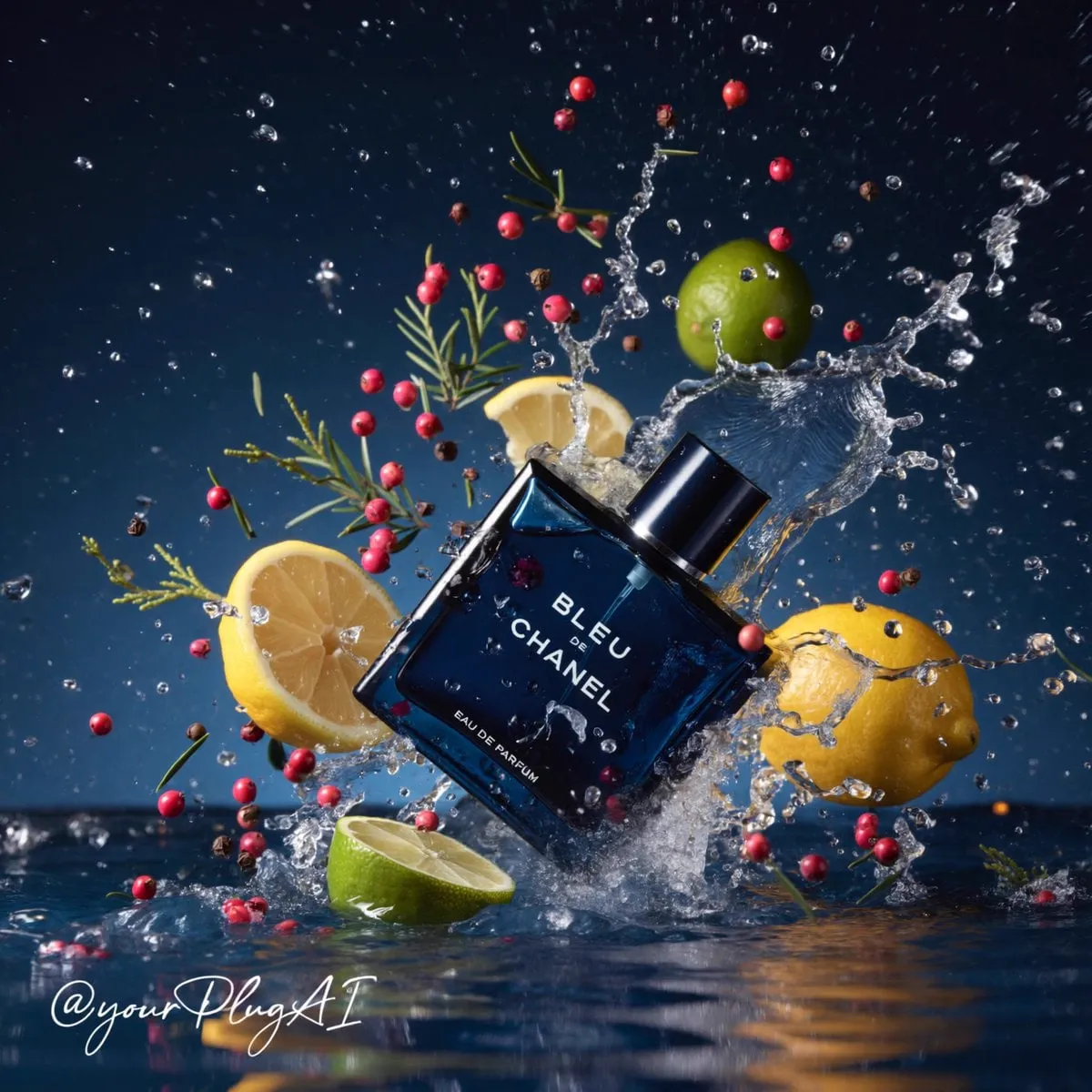
The portrait-of-a-thing pattern works for objects and products. It names the object, grounds it in a setting, and then specifies the lens and light that make it feel real: "a brushed-steel espresso machine on a marble counter, 85mm lens, shallow depth of field, warm morning window light, editorial product photo." This structure is endlessly reusable for product, food, and object work because it separates the thing from the way we photograph it.
The character-in-motion pattern is built for animation and cinematic stills. It fixes the subject and its defining attributes first, then adds a specific action and a camera behaviour. "a parkour athlete mid-leap across two rooftops, grey hoodie, golden-hour backlight, low wide angle, motion blur on the landing." The action and the camera are the two things that make a static image feel alive, and both get named explicitly.
The stylistic-study pattern leans on a medium and an era to carry the mood. "woodcut engraving of a stormy sea, bold black lines, off-white paper, vintage bookplate" uses a few style tokens to do the work of several sentences. This pattern is where referencing schools, periods, and techniques pays off, and it is the fastest route to variety when your subject matter keeps repeating.
Once you have a library of these shapes, you mix rather than start from scratch. The establishing moment shape with the product lens treatment yields something new; the character-in-motion shape with a painterly medium yields something else entirely. Quick variation comes from swapping one block while keeping the rest, which is far more efficient than rewriting a brand-new prompt for every idea.
A workflow that actually produces finished work
Generating one good image is quick. Producing a small body of finished work requires a repeatable process. A simple loop works well for most projects.
Start by sketching the intent in plain words, and draft a prompt from your five blocks. Generate a small batch at a low cost and low resolution to test the direction. Do not refine a single image yet; look at whether the whole batch understands the assignment.
Pick the closest candidate and review it critically against your brief. Which block failed? Subject, setting, light, style, or mood? Fix only that block and regenerate. This targeted debug loop is far faster than rewriting the whole prompt repeatedly.
Once one image lands well, bake your effective choices into a reusable template and run the rest of the set through it, swapping in the subject and setting details for each variation. Finish with a human review against the original intent, then present the approved set rather than a raw dump of every near-miss.
Frequently asked questions
Why do my prompts produce generic images? Because loose, enthusiasm-heavy language maps to the model's statistical average. Replace vague adjectives with concrete, visually descriptive language about subject, setting, light, medium, framing, and mood.
Do longer prompts always give better results? No. Precision matters more than length. A tight, specific prompt almost always beats a long, contradictory, or padded one.
What is weighting and why should I use it? It lets you emphasise or de-emphasise parts of a prompt so the model prioritises what matters and suppresses what does not. It is the fastest fix when one unwanted element keeps appearing.
How do I keep a character consistent across many images? Lock a stable reference image and reuse the same identifying descriptors, lighting vocabulary, and named style verbatim in every prompt. Build each new variation from the last approved shot.
Is it okay to reference a specific artist in my prompt? Describing a style or era is common and effective, but prefer naming the qualities you want rather than imitating a living artist's signature. Prompt for the qualities, not the copy.
How much effort should I spend on negative prompts? Enough to keep your common failure modes out: unwanted props, off-key colours, artefacts, and repetitive textures. Keep them concise and only include things that actually recur.
