
Why AI Holiday Clips Became a Serious Format
Holiday video used to be a once-a-year production problem. A brand booked a shoot in October, rented a fake snow machine, edited for three weeks, and published one hero spot that had to carry the entire season. That model still exists, but it now competes with a much faster alternative: dozens of small, highly targeted clips produced with generative video tools, published daily, and tuned to whatever the audience responds to that week.
The reason is not that audiences suddenly love advertising. It is that short-form feeds reward volume and variation. A single polished commercial has one chance to land. Twenty holiday clips, each exploring a different idea, mood, or character, give you twenty chances to find the one that resonates — and the winning idea can be scaled up into a bigger production later.
Generative video changes the economics of that experimentation. You no longer need a location, a cast, a costume department, or a snow machine to test whether a concept works. You need a clear brief, a consistent visual language, and a repeatable pipeline that turns ideas into finished vertical edits quickly. This guide walks through that pipeline end to end: concepting, character consistency, prompting, sound, editing, and delivery.
Decide the Format Before You Write a Single Prompt
Most disappointing AI holiday clips fail at the brief stage, not the generation stage. Someone types a festive prompt, gets a pretty result, and then tries to figure out what it is for. Work backwards instead.
Vertical shorts versus square cutdowns versus cinematic teasers
A fifteen-second vertical clip is a different creative object from a forty-second widescreen teaser. Vertical shorts live or die on the first 1.5 seconds, need a readable subject at phone size, and should contain exactly one idea. Square cutdowns work well for carousels and feed placements where text overlays matter. Cinematic teasers can afford a slow build, wider compositions, and a music-led structure, but they rarely perform on short-form feeds without being cut down anyway.
A practical approach is to define one primary format and one secondary format per campaign. Generate your master shots at the highest resolution and widest aspect ratio you can, then crop rather than regenerate. Cropping preserves continuity across placements; regenerating almost always introduces small changes in lighting, wardrobe, or facial features that break the illusion of a single production.
Length and pacing rules that keep retention
Short-form holiday content has a simple rhythm that works repeatedly:
- 0–2 seconds: a visual hook with motion — a door opening, snow swirling, a light flicking on.
- 2–5 seconds: context — who is this, where are we, what is the mood.
- 5–12 seconds: the turn — the joke, the reveal, the product, the emotional beat.
- 12–15 seconds: a clean ending frame that invites a rewatch or a tap.
If you are producing a series, keep every episode inside the same rhythm. Familiar pacing is not boring; it is what makes a feed feel like a show instead of a random collection of clips.
Build a Holiday Visual Language You Can Repeat
Consistency is the difference between a campaign and a pile of clips. Before generating anything, write down five constraints and refuse to break them.
Color, light, and texture
Choose a palette and describe it in physical terms rather than abstract ones. "Warm amber practical lights, deep pine green shadows, cool blue night exterior" is usable. "Festive colors" is not. The same applies to texture: brushed metal, frosted glass, wool knit, cracked ice, matte ceramic. Texture words are what stop generations from looking like generic glossy renders.
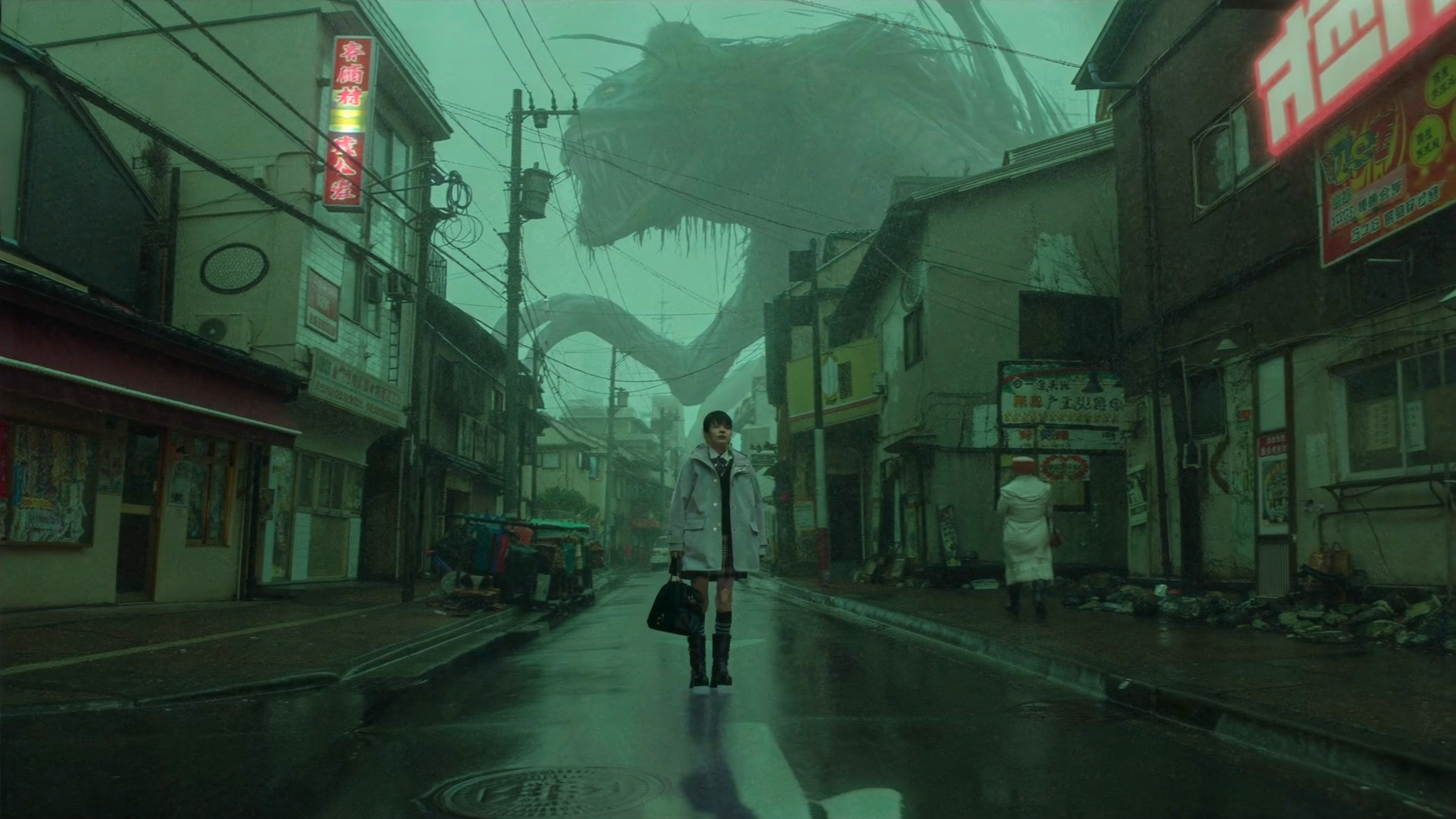
Light is the single strongest tool you have. A holiday clip is usually one of three lighting scenarios: interior warmth against exterior cold (window light, candles, fireplace), magical glow (string lights, bokeh, lens bloom), or cold blue exterior with a single warm focal point (a lit window, a lantern, a red coat). Pick one per clip and commit.
Prompt vocabulary that actually works
Strong holiday prompts read like a shot description, not a wish list. A workable template:
- Shot type and lens: close-up, 35mm, shallow depth of field.
- Subject and action: a person in a knitted sweater pouring cocoa, steam rising.
- Setting: small kitchen, snow visible through the window.
- Light: warm practical lamp behind camera-left, cold blue window fill.
- Motion: slow push-in, gentle handheld drift.
- Mood and grade: nostalgic, slightly grainy, soft highlight roll-off.
Notice what is missing: brand names, adjectives like "beautiful," and stacked superlatives. Those words consume prompt space without changing the output in a predictable direction.
Keeping Characters and Mascots Consistent Across Clips
If your series features the same Santa, elf, host, or brand mascot in every episode, consistency is your hardest technical problem. Faces drift, costumes change color, and a character who looks slightly different in each clip reads as a mistake rather than a style.
Reference-image workflows
Generate or photograph a small character sheet first: a neutral front view, a three-quarter view, a profile, and one expression variation. Treat this sheet as the source of truth. When generating a new shot, feed the closest reference image alongside your prompt and describe the costume in the same words every time — same order, same nouns, same adjectives. Fixed phrasing produces fixed results far more reliably than clever phrasing.
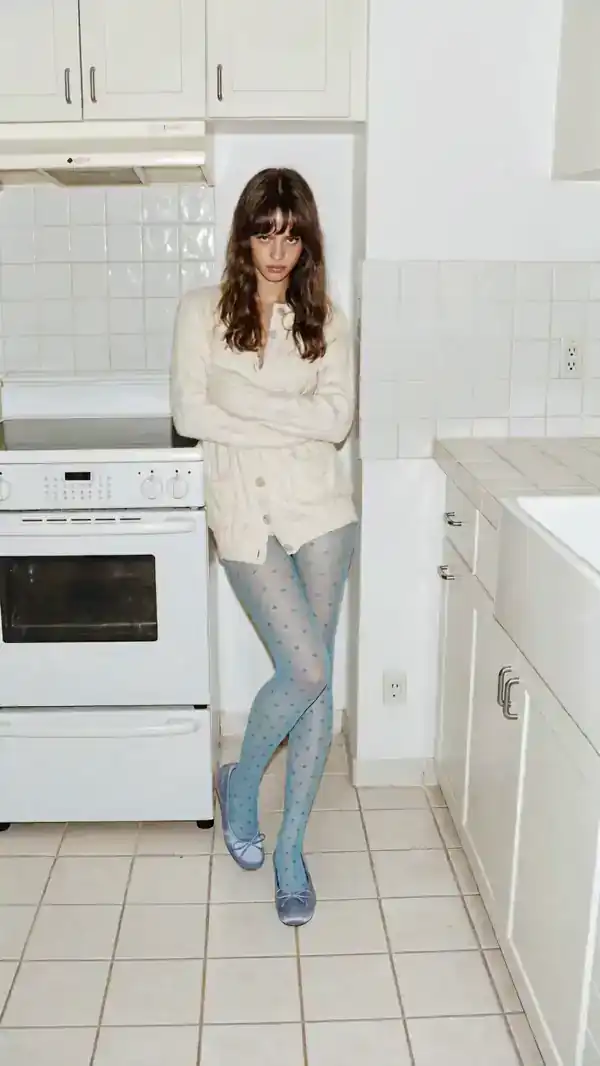
Lock three things and never vary them: hairstyle, outerwear silhouette, and one distinctive accessory. A red scarf, a brass-buttoned coat, or a slightly oversized knit hat gives viewers an anchor even when the lighting changes completely.
What breaks consistency
- Changing the lighting scenario between shots without explaining it in the story.
- Letting the model invent background characters who steal visual attention.
- Switching aspect ratio between shots in the same sequence.
- Regenerating a shot you already like because of one minor flaw — you will rarely get a better version.
- Mixing multiple generation tools within a single character arc without re-testing the character sheet on each one.
Story Ideas That Fill a Short-Form Calendar
You need more ideas than you think. A three-week holiday push at two clips per day is forty-two pieces of content. Here are idea families that scale.
Classic tropes with a twist
Take a familiar holiday image and change one variable. A gift-wrapping assembly line run by robots. A snow globe that contains a summer beach. Santa checking a tablet instead of a list. The twist does the work; you do not need a complicated plot. These clips are cheap to generate, easy to keep on-brand, and highly rewatchable because the audience recognizes the reference immediately.
Product stories told in fifteen seconds
Avoid showing a product sitting still. Give it a job. A mug that warms cold hands after a walk. A blanket that turns a couch into a snow-day refuge. A candle that changes the mood of an entire room in one cut. Structure: problem in the first two seconds, product as the turn, warm final frame with a short line of text.
Making-of and origin stories
Behind-the-scenes formats perform unusually well because they satisfy curiosity. Show the prompts, the rejected takes, the character sheet, the rough cut. A sixty-second behind-the-scenes piece can be cut into four short clips. Audiences reward transparency, and it costs you nothing to show your process.
Personalized greetings at scale
Name-swapped greetings are a strong seasonal format: a generic opening, a personalized middle, and a shared ending. Build the template so the personalized segment is the only thing that changes. Keep it short, keep the swap visually clean, and always provide a generic version for people who do not want personalization.
Series formats with recurring bits
A recurring segment — counting down days, solving a tiny holiday problem, checking in on the same character — builds anticipation. Each episode becomes its own cliffhanger, and viewers who find episode four will go looking for one through three.
Sound Design Is Half the Clip
A visually perfect holiday clip with flat audio feels amateur. Audio is where most AI-generated video projects lose credibility.
Voiceover and lip-sync
If a character speaks, keep lines under eight words per shot. Long monologues expose synchronization errors and force awkward camera holds. Write for rhythm: short sentence, pause, short sentence. Generate the voice first, then animate to match, rather than animating and trying to fit audio afterwards.
When lip-sync is not essential, use narration over the action instead. Narration is more forgiving, easier to re-record, and lets you keep the strongest visuals uncut.
A five-layer audio checklist
- Ambience: room tone, wind, distant traffic, crowd murmur.
- Foley: footsteps in snow, paper tearing, ceramic on wood, liquid pouring.
- Music: one track per series, same energy level across episodes.
- Voice: narration or dialogue, normalized and de-essed.
- Accents: a bell, a whoosh, a page turn — placed on cuts, not randomly.
Mix music low enough that foley and voice stay intelligible on phone speakers. Test the final mix on a phone, not on headphones.
A Repeatable Production Workflow
Once you have a format and a visual language, the pipeline should be boring. Boring pipelines ship.
Step 1 — Brief and constraint sheet
Write one page: format, length, target platform, palette, lighting scenario, characters, and the single idea the clip must communicate. If you cannot state the idea in one sentence, the clip is not ready to produce.
Step 2 — Beat board
Sketch four to six beats as text or thumbnails. Do not skip this. A beat board reveals pacing problems before you have spent time generating footage.
Step 3 — Keyframe generation
Generate still keyframes for each beat before generating motion. Stills are faster to iterate, cheaper to throw away, and easier to compare side by side. Approve the look here, not after animating.
Step 4 — Motion generation
Animate only approved keyframes. Keep camera moves simple: push in, pull out, slow pan, gentle handheld. Complex moves invite warping and morphing artifacts that are hard to hide.
Step 5 — Assembly
Cut on motion, not on stillness. Holiday clips feel sluggish when every cut lands on a static frame. Trim the first and last three frames of every generated shot; generated clips almost always have soft edges.
Step 6 — Grade, sound, and captions
Apply one look to the whole series. Add captions for muted viewing — most short-form viewing happens without sound at least part of the time. Export per-platform aspect ratios from the same master timeline.
Step 7 — Review and archive
Keep a simple log: prompt, reference image used, model, seed, and notes. This is the only reliable way to reproduce a shot you liked six weeks later.
Platform Delivery Details People Forget
Small technical mistakes cost more reach than weak creative. Check these before publishing.
- Safe zones: keep text and faces away from the bottom caption area and the right-side UI stack.
- Loudness: normalize to platform expectations; a quiet vertical clip sounds broken next to a loud one.
- File size: export high-bitrate masters and let each platform transcode.
- First-frame design: the thumbnail is the first frame, so make it readable at small size.
- Captions: burn in or upload separately, but proofread. Automatic captions mangle product names constantly.
- Accessibility: describe key visuals in the caption text for viewers who cannot see the video.
Common Mistakes and How to Fix Them
Overloaded prompts. If your prompt has fifteen clauses, the model will satisfy some and ignore others unpredictably. Split the idea across two shots instead.
Inconsistent grade. Clips generated on different days drift in color temperature. Apply a single adjustment layer or LUT across the entire series in your editor.
Too many characters. Crowds are the fastest way to produce visual mush in generative video. Keep one primary subject and at most one secondary presence.
Motion sickness. Rapid camera movement inside a small vertical frame is uncomfortable. Slow down camera moves by roughly a third compared to what feels right on a desktop monitor.
No ending frame. A clip that stops mid-motion feels broken. Design a deliberate final composition.
Chasing every trend. Holiday content lives for weeks, not days. A cohesive series beats five unrelated experiments.
Choosing Tools Without Locking Yourself In
You will likely use three or four tools: an image generator for keyframes and character sheets, a video generator for motion, an audio tool for voice and music, and an editor for assembly. Optimize for interchangeability. Export and archive your approved keyframes and reference sheets locally so a tool change does not wipe out your character continuity.
When evaluating a video generator for holiday work, test it against your hardest shot type, not its showcase reels. Good tests include: a person's hands interacting with an object, warm light against a cold background, snow or particles in motion, and a slow push-in on a face. Run the same prompt through two or three tools and compare stability across a five-second clip rather than a single frame.
Also consider turnaround and iteration speed. A tool that produces slightly less polished output but lets you run twenty variations in an hour is usually more valuable for holiday campaigns than one that takes twenty minutes per shot.
FAQ
How long does a short holiday clip need to be?
Most perform between eight and twenty seconds. Under six seconds rarely carries a story; over thirty seconds usually belongs on a long-form platform instead.
Can I use AI holiday clips for commercial campaigns?
Usually yes, but check the license terms of every tool in your chain — image generator, video generator, voice tool, and music source — and keep documentation of your prompts and reference assets. Human review before publishing is still essential, especially for faces, hands, and text rendering.
How do I keep a character looking the same in every clip?
Create a character sheet, reuse identical descriptive phrasing, lock one distinctive accessory, and avoid switching tools mid-series without re-testing. Consistency is a process discipline, not a feature.
What is the best way to start a holiday clip?
Start with motion in the first two seconds. An opening door, falling snow, a light switching on, or a hand entering frame all work better than a static establishing shot.
Should I generate vertical or widescreen first?
Generate your master in the widest aspect ratio you need, then crop to vertical. Cropping preserves continuity; regenerating per aspect ratio does not.
How many clips should a holiday campaign include?
Plan for at least three times more finished clips than your publishing schedule requires, so you can drop underperformers without leaving gaps. For a three-week push at two posts per day, produce around fifty clips and publish the strongest forty.
Do I need music made specifically for the clips?
Not necessarily, but you do need consistent energy across the series and a license that covers commercial use. One track per series, reused with variations, reads as intentional branding.
A Final Pre-Publish Checklist
Run every clip through the same short list: one clear idea, motion in the first two seconds, consistent character, consistent grade, intelligible audio on a phone speaker, readable thumbnail frame, captions proofread, safe zones respected, and a deliberate final frame. Then log the prompt and reference assets in your archive.
Holiday content rewards planning far more than it rewards novelty. The teams that produce memorable seasonal work are rarely the ones with the most advanced tool stack — they are the ones with a clear format, a locked visual language, and a pipeline they can run every single day without thinking about it. Build that pipeline once, and next season you start from a template instead of a blank page.
