
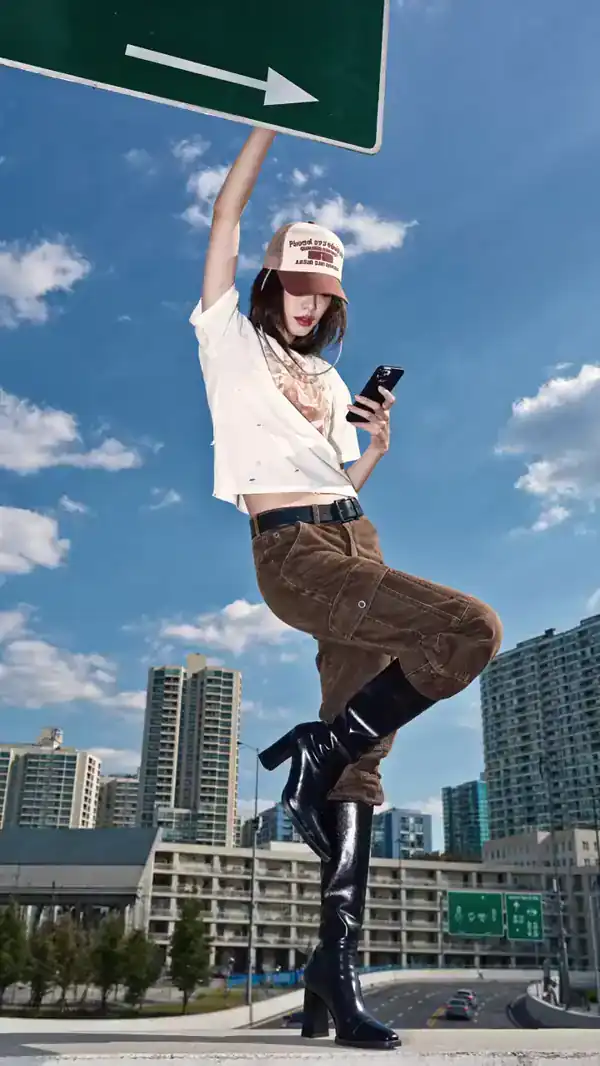
The shift: AI VFX is a pipeline change, not a filter
For decades, a convincing visual effect required a chain of specialists: a plate photographer, a matchmove artist, a rotoscoping team, an FX simulation technical director, a compositor, and a colorist. Generative video collapsed most of that chain into a prompt field and a timeline. That is not a cosmetic upgrade. It changes how shots are budgeted, how scenes are boarded, and how late in production a director can still change their mind.
The practical consequence is that the highest-value skill in AI filmmaking is no longer typing a prompt. It is deciding which part of a shot should be generated, which part should be photographed, and where the two will join. Filmmakers who think in terms of seams — the exact frame, edge, or motion vector where a generated element meets reality — produce work that reads as expensive. Filmmakers who generate entire shots and hope for the best produce work that reads as generated.
A useful mental model: treat generative video as a second unit that can shoot anything, instantly, but only in short bursts and with no memory of yesterday's setup. Your job becomes continuity supervisor, editor, and compositor rolled into one.
This guide is a working manual for that job. It covers what current models actually do well, how to plan a VFX shot list, how to write prompts that behave like camera directions, how to composite generated plates into live-action footage, and how to avoid the failure modes that make AI effects obvious.
What AI video models do well — and where they still fail
Understanding the boundary between reliable and unreliable output is worth more than any prompt trick. The boundary moves every few months, but the shape of it has stayed remarkably stable.
Reliable territory
- Atmosphere and weather. Fog, rain, sand, embers, drifting ash, god rays, heat haze. Models handle particle fields beautifully because there is no rigid geometry to keep consistent.
- Environment plates. Establishing shots, aerials, alien skylines, period streets, interiors that never existed. Anything with a slow or no camera move is close to production-ready.
- Fire, smoke, and energy. Explosions, plasma, magical glows, lightning, and volumetric light all generate convincingly in short durations.
- Transformations and morphs. Metal melting, skin turning to stone, a building dissolving into dust. Generative models are unusually good at continuous material change.
- Crowd and background fill. Filling a stadium, a market, or a battlefield behind your principal actors.
- Stylized inserts. Macro shots, abstract textures, title-sequence material, dream imagery.
Unreliable territory
- Sustained character performance. Identity drift across cuts remains the single biggest problem. A face can hold for three seconds and then quietly become someone else.
- Hands, props, and object interaction. Anything where a character grips, opens, pours, or hands off an object invites artifacts.
- Physics with consequences. A car crash where the damage must match the next shot, a shattered window that must stay shattered, a wound that must persist.
- Precise camera whips and complex parallax. Fast pans and handheld chaos cause geometry to fold in on itself.
- Text, signage, and logos. Expect to replace all of it in post.
- Anything longer than roughly five to eight seconds of coherent action. Even when a model offers longer clips, coherence degrades.
The strategic takeaway: build your scene so the generated material sits inside the reliable territory, then use traditional compositing to bridge the rest.
Your AI VFX stack: the six tool classes you actually need
Most beginners shop for a single miracle model. Professionals assemble a small stack, because each class of tool solves a different problem.
1. Text-to-video
Your concepting engine. Use it to explore lighting, blocking, color, and tone before you commit. Output should be treated as previsualization even when it looks final — you will usually regenerate it with stronger conditioning later.
2. Image-to-video
The workhorse for controlled work. You supply a frame you composed in a 3D package, a photo, or an AI still, and the model animates it. This is how you lock composition, lens, and character likeness before motion is introduced.
3. Video-to-video and style transfer
For restyling photographed footage: adding an ethereal glow, converting day to night, painting a period look over a modern plate. Also the fastest route to matched grain and color when you need generated elements to belong to a photographic shot.
4. Keyframe and interpolation tools
Start-frame plus end-frame control. Essential for transformations, for matching a cut, and for forcing a specific camera move over a defined duration.
5. Matte, roto, and inpainting tools
Segmentation models that isolate a subject, object-removal tools that clean a plate, and generative fill that paints new content into a masked region. This class is what makes integration possible.
6. Restoration and finishing
Upscaling, frame interpolation, deflicker, denoise, and sharpening. Generated footage often arrives at a lower resolution and slightly unstable; this layer converts it into something you can cut against a cinema camera.
On top of these, you need a conventional NLE and a compositor: DaVinci Resolve, Premiere Pro, After Effects, Fusion, or Nuke. AI does not replace the timeline. It feeds it.
Pre-production: the VFX shot list, the style bible, and prompt architecture
AI productions fail most often in pre-production, not in generation. Three artifacts prevent that.
The VFX shot list
Write one row per shot with these columns: shot number, duration, plate required, generated element, integration method, audio, and risk. The risk column is the one people skip. Mark any shot that requires identity continuity, object interaction, or a camera move longer than five seconds as high risk, then design a fallback: split it into two shots, cut away to a reaction, or cover it with practical smoke.
The style bible
Generated shots drift in look because the model has no memory of your intent. Fix this with a written style bible you paste into every prompt. It should specify:
- Aspect ratio and resolution
- Focal length range and depth-of-field behavior
- Color palette with two or three reference colors
- Lighting logic: key direction, contrast ratio, practical sources
- Grain and texture character
- Camera behavior: locked, dolly, crane, handheld
Prompt architecture
Treat prompts as shot descriptions written for a cinematographer, not for a search engine. A dependable order is:
- Subject and wardrobe
- Action in one sentence, present tense
- Camera: angle, movement, lens, speed
- Lighting and time of day
- Atmosphere and particle detail
- Film character: grain, halation, anamorphic flare, stock emulation
- Continuity anchors you will reuse across the sequence
Example for a destruction insert:
Wide low-angle shot of a concrete parking structure collapsing inward,
chunks of rebar and dust rolling toward camera, slow push-in,
35mm anamorphic lens, harsh overcast daylight, heavy airborne dust,
fine film grain, muted teal and concrete grey palette,
locked horizon, no camera shake
Keep a plain negative list too: no text, no watermarks, no extra limbs, no morphing faces, no lens changes mid-shot. Save your best prompts as reusable templates with the style bible baked in.
A worked workflow: from brief to final master in seven passes
Here is a repeatable sequence for a two-minute action sequence with eight VFX shots.
Pass 1 — Board and previsualize broadly
Generate thirty to fifty short clips quickly, one per idea. Do not chase quality. You are searching for blocking and light. Cheap and fast beats precise and slow at this stage.
Pass 2 — Lock composition with stills
For each chosen idea, create a still frame that represents the exact first frame you want. Compose it properly: rule of thirds, headroom, horizon placement. A good first frame does more for output quality than any prompt adjective.
Pass 3 — Animate from the locked frame
Use image-to-video with the still as the start frame. Keep motion modest and specific. One camera move, one action. If the model adds a second idea, discard and regenerate — layering actions in one generation is where artifacts begin.
Pass 4 — Generate coverage variants
For every shot, produce three to five takes with different seeds. Select on two criteria only: does the motion serve the cut, and does anything break? Do not fall in love with beautiful footage you cannot use.
Pass 5 — Repair the seams
Use inpainting to remove unwanted objects, roto to isolate elements that need to sit over live-action, and video-to-video passes to harmonize grain and color. This is the pass that separates student work from professional work.
Pass 6 — Composite and stabilize
Track your live-action plate, place the generated element, then match:
- Motion blur: match shutter angle. Generated footage usually has too little.
- Grain: apply a unified grain pass over the whole composite, never per element.
- Lens distortion: subtle barrel or anamorphic squeeze must match the plate.
- Edges: feather and light-wrap every matte. Hard edges are the giveaway.
Pass 7 — Grade and sound
Apply one show LUT across live-action and generated shots so they share a color identity. Then build sound: low-frequency impacts, debris tails, cloth movement, room tone. A mediocre shot with excellent sound reads as intentional; a beautiful shot with library music and no foley reads as amateur.
Shot recipes for common cinematic effects
Explosion behind a running actor
Photograph the actor on a clean plate with a locked-off or slow-dolly camera. Generate the explosion separately as an element on a black background with a matching light direction. Composite it behind, then add a warm flash pass on the actor that lasts four to six frames. The flash is what sells it — without it, the explosion looks pasted on.
Energy blast from a character's hands
Generate a short clip of the effect only, camera locked, then hand-track it to the actor. Add an interactive light pass on the actor's face and costume. Add lens flare only where the flare would physically originate. Keep the effect duration under one second; longer reads as a screensaver.
Character transformation
Use a start frame of the human and an end frame of the transformed state, then interpolate. Generate at the shortest duration the cut allows, and cut on the change. Transformations work best when partly hidden — behind smoke, a whip pan, or a foreground pass.
Alien environment plate
Generate the environment with a slow lateral camera move. Avoid characters in the plate. Add actors or vehicles later as separate elements so you control their identity and scale. This alone fixes most continuity problems in world-building sequences.
Weather over live action
Generate the weather on a black or neutral background at the correct focal length, then screen or add-blend it over the plate. Rain, snow, and embers composite easily this way and give enormous production value per minute of work.
Set extension
Photograph a partial set. Generate a wider version, then matte the new areas into the plate. Keep the transition edge in a dark or low-detail region, and match perspective lines before you match color.
Control, continuity, and camera language
Three technical habits make AI sequences look directed rather than generated.
Lock identity with reference frames
Always start a character shot from a composed still, not a text prompt. Reuse the same still across all shots in a scene so the face, wardrobe, and color grade stay stable. When you must generate new angles, generate them from the same reference image plus an explicit angle instruction.
Control motion with camera vocabulary
The model responds better to a small set of clear terms than to poetic description. Useful motion words: locked-off, slow push-in, dolly left, crane down, orbit right, tilt up, parallax foreground, rack focus, handheld micro-shake. Combine no more than two per shot.
Protect the cut
The edit is where continuity is decided. If two shots of the same character do not match perfectly, place a cutaway, a reaction shot, an insert, or a foreground wipe between them. Audiences forgive discontinuity across a cut far more readily than within a shot. Never hold longer than you need.
Keep a continuity ledger as well: seeds, reference frames, prompt templates, and model versions for every approved shot. When you return three weeks later to add a shot, the ledger is the difference between a twenty-minute fix and a full regeneration.
Decision criteria: when AI, when practical, when classical VFX
| Situation | Best approach |
|---|---|
| Atmospheric, environmental, or abstract element | Generate it |
| Hero character performance with dialogue | Photograph it |
| Set extension with strong parallax | Classical 3D plus generated texture |
| Short destruction insert | Generate it |
| Object interaction with continuity demands | Photograph or simulate |
| Crowd fill and background life | Generate it |
| Hero prop, logo, or text | Photograph or design it |
Common mistakes worth naming explicitly: generating whole scenes instead of elements; ignoring sound design; upscaling before compositing; grading each generated shot individually; holding generated shots two seconds too long; using ten adjectives where one camera term would do; and forgetting that the audience notices movement and sound long before they notice render quality.
Sound, grade, and delivery
AI VFX sequences live or die in the final ten percent of work. Build a layered sound pass: sub-bass impact, mid debris tail, high-frequency detail, and room tone that changes when the visual environment changes. Add a short riser before big effects — two to four seconds, not eight.
For the grade, apply your show LUT to the entire timeline, then make small per-shot corrections. Match black levels first, then skin tones, then highlights. Export a compressed review copy and watch it on a phone with the sound off; if the sequence still reads, your shots are cut well. Then watch it on the largest screen you have with sound on to catch matte edges and grain mismatch.
Deliver at the highest resolution your finishing pipeline supports, and keep a clean, ungrainy master for future re-grades. Archive your plates, prompt templates, and seeds alongside the final render.
Frequently asked questions
How long should an AI-generated shot be?
Aim for two to four seconds unless the shot is a pure environment plate. Short shots cut better, hide artifacts, and keep the audience's eye moving. If a generated clip is beautiful but only holds up for six seconds, cut at four.
Can AI VFX replace a compositor?
No. It replaces some simulation and rendering work. Compositing — tracking, matting, matching grain, integrating light — is still required, and it is now the main skill gap in AI filmmaking. Learn the fundamentals of compositing and your AI work will improve more than any new model release will manage.
Why do my generated faces change between shots?
Because the model has no persistent identity. Fix it with reference-image conditioning, a shared style bible, and editing choices that place cuts where continuity is weakest. Locking a character still and reusing it across every shot in a scene solves most of the problem.
Do I need 3D software?
Not always, but it helps enormously for camera moves, set extensions, and blocking. Even a rough 3D previz gives you a start frame with correct perspective, which is the single largest quality lever available.
How do I make generated footage match my camera footage?
The order matters: match perspective, then motion blur, then grain, then color. Apply grain and color across the entire composite rather than to individual layers. Adding a subtle, unified amount of lens character over both sources hides more mismatch than precise per-element correction.
What is the fastest way to improve?
Shoot something real, even a thirty-second scene with one actor and one location, and integrate three generated elements into it. The constraint of matching reality teaches more about light, scale, and motion than any amount of isolated generation.
The bottom line
Cinematic AI effects are not a model problem anymore; they are a workflow problem. Plan shots around the reliable strengths of current tools, lock composition with stills, generate elements rather than whole scenes, repair seams with compositing, and finish with real sound design and a unified grade. Do that consistently and the audience stops asking how it was made — which is the only standard that has ever mattered in visual effects.
