
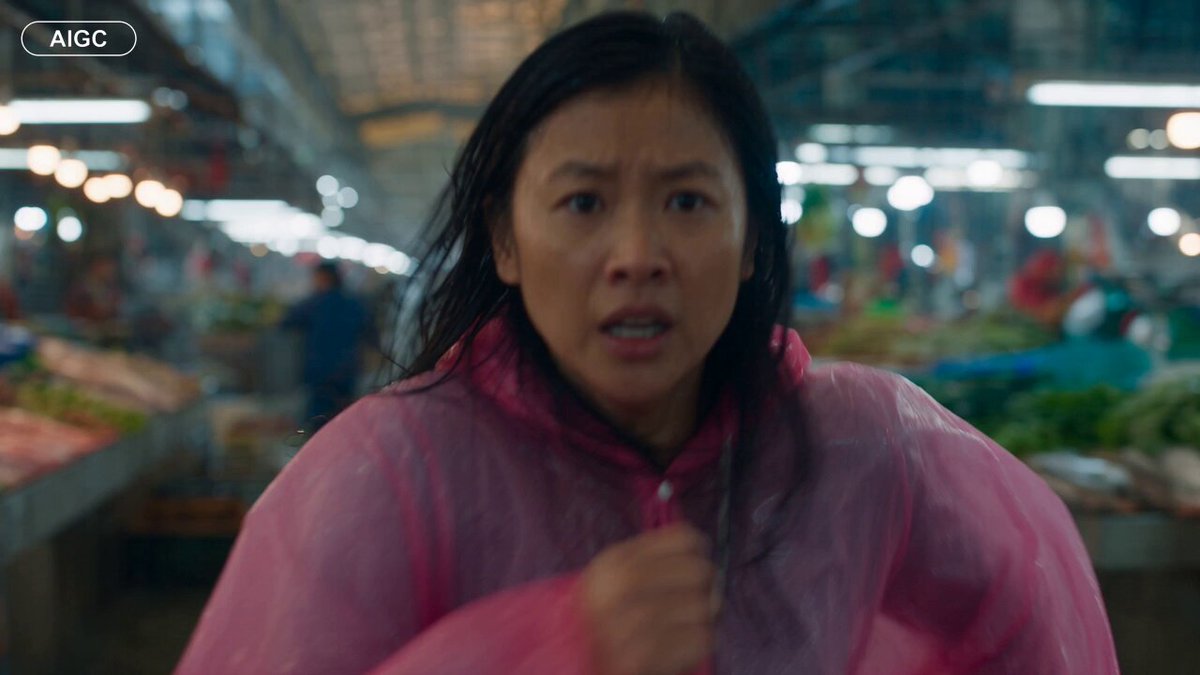


AI video generation has grown from a novelty into a legitimate production tool, and nowhere is that shift more visible than in stylized action content. Creators are now building complete fight sequences — choreographed, camera-directed, and fully sound-designed — without a crew, a stunt team, or a studio. The hard part is no longer access; it is control. Generic text-to-video output still looks like a demo reel. Cinematic output looks like a choice. This guide walks through a practical, end-to-end workflow: choosing the right generation model for each shot, planning choreography before you generate, keeping characters consistent across cuts, designing layered fight sound effects, and syncing everything with frame-level accuracy.
What Actually Makes AI Video Look Cinematic
Cinematic quality is often described as a look, but it is really a set of behaviors. A shot feels filmic when four things hold together:
- Temporal coherence. Characters, props, and lighting stay stable from frame to frame instead of flickering or morphing.
- Believable motion. Weight, momentum, and contact read as physical. A punch lands because the body rotates into it, not because two sprites overlap.
- Camera intent. The lens behaves like an operator made a decision: a push-in for tension, a whip pan for impact, a locked-off wide to show geography.
- Sound that matches picture. Every visible impact has an audible consequence, and ambience stays continuous across cuts.
Most AI video criticism targets the first two — morphing limbs, melting faces, objects that pass through each other. But the fourth point is the most commonly neglected, and it is the one audiences feel most. A visually imperfect fight scene with tight, layered sound reads as stylish; a flawless render with silence or mismatched hits reads as broken. Treat generation, editing, and sound design as one pipeline rather than three separate hobbies, and your output will jump a quality tier immediately.
Choose the Right Generation Tool for Each Shot
No single model excels at everything. Professional-leaning creators increasingly work with a small toolkit and assign shots to the model that handles them best. When evaluating options such as Runway, Kling, Luma Dream Machine, Pika, Hailuo, Google Veo, or PixVerse, score each against these criteria:
- Motion fidelity. How well does it handle fast, complex body movement? Test with a spinning kick or a fall, not a static portrait.
- Control features. Image-to-video input, first-and-last frame keyframes, camera path controls, and motion strength sliders matter more than raw resolution.
- Shot length and stitching. Longer clips reduce seam work, but shorter generations are often more stable. Know which trade-off a model makes.
- Upscaling and cleanup. Built-in upscale or de-noise saves a step; otherwise plan for Topaz Video AI or a Resolve-based pass.
- Commercial terms. Read the license for the tier you actually use. Watermarks and usage restrictions vary widely.
A practical split for a fight scene: use one model with strong image-to-video for hero shots of your character, a model known for fluid physics for impact moments, and a slower, high-fidelity model for establishing wides where motion is minimal. Generating everything in one tool is convenient; generating the right shot in the right tool is cinematic.
Plan the Fight Scene Like a Director Before Generating
Generation is expensive in time and patience, so front-load the directing work. Start with a beat sheet: write the fight as a rhythm of exchanges — attack, counter, reversal, reset — and decide what each beat means. Is the hero losing ground? Does the environment become a weapon? Choreography meaning beats choreography complexity.
Next, build a shot list of roughly eight to twelve shots for a thirty-to-forty-five-second scene. For each shot, note three things:
- Framing — wide, medium, close-up, or insert.
- Camera behavior — static, handheld drift, push-in, whip pan, or slow-motion ramp.
- The single action the shot must communicate. If you cannot describe the action in one sentence, the prompt will not survive generation either.
Then rough out storyboard stills with an image generator such as Midjourney, Flux, or Stable Diffusion before touching video at all. These stills serve three purposes: they validate your character design, they become image-to-video inputs for consistent shots, and they let you test edit rhythm in a slideshow with placeholder sound. Fixing a cut in a slideshow takes seconds; fixing it after video generation takes a regeneration. Directors who skip this step almost always burn their budget on shots the edit never needed.
Lock Character and Environment Consistency Across Cuts
The jump cut where your fighter's jacket changes color is what betrays AI footage instantly. Consistency needs a system:
- Anchor on a reference image. Produce one clean, well-lit character still and reuse it as the image-to-video input for every shot that shows the character clearly. Regenerate the reference until you love it, then stop changing it.
- Freeze a prompt block. Keep a fixed description — wardrobe, hair, build, palette, lighting phrase — and append only the action and camera parts per shot. Rewriting the full prompt per generation is the fastest route to drift.
- Reuse seeds where supported. Some tools let you pin a seed or use a consistency feature; treat it as an additional anchor, not a guarantee.
- Train or fine-tune for recurring characters. If a character appears across many videos, a lightweight fine-tune or character-reference feature (offered in several image and video tools) buys far more stability than prompt engineering alone.
- Simplify what does not matter. Busy backgrounds, reflective surfaces, and intricate patterns give the model more surface area to hallucinate. A restrained palette reads as stylization rather than limitation.
For environment continuity, generate a clean background plate and reuse it in compositing, or keep wides so similar in lighting that cut-to-cut differences read as intentional coverage.
Generate Believable Combat Motion
Fight motion is the hardest test for any video model because it demands simultaneous body articulation, contact, and camera movement. Structure prompts as: subject + specific action verb + intensity + camera move + style tag. Compare:
- Weak: two fighters fighting
- Strong: a hooded fighter throws a fast right hook, the opponent ducks and counters with a rising elbow, handheld camera pushes in, shallow depth of field, gritty urban night
A few field-tested tactics:
- Generate slow, speed it up in the edit. Models handle slow motion far better than fast motion. Generate at half speed, then retime in the editor with optical flow (Twixtor, Resolve speed ramps) to recover punch without morphing.
- Use keyframes to control outcomes. First-and-last-frame conditioning lets you dictate where a move starts and ends; the model fills the middle. This is the single best trick for choreographed exchanges.
- Generate takes, not shots. Roll three to five variations of every key action and pick on contact quality. Editors do this with stunt footage; the economics are identical.
- Hide weaknesses with coverage. Inserts — a fist tightening, feet pivoting on gravel, dust kicked up on impact — mask body morphing in wides and add rhythm to the edit.
- Convey weight in post. Add a two-to-four-frame hold or micro speed-ramp on the contact frame plus a low-frequency thump in sound. Perceived impact is mostly an editing and audio effect, not a generation effect.
Build Fight Sound Effects in Layers
A punch is never one sound. Real fight sound design stacks several elements, and AI audio generation now lets you synthesize each layer on demand using tools like ElevenLabs sound effects, Stable Audio, or a hybrid mix with traditional libraries such as Freesound or Soundly. Work in these layers:
- Impacts. The transient crack of contact. Generate several variants of body hits and surface hits (concrete, wood, metal) so you never repeat the same sound twice in a row.
- Whooshes. The air movement before impact. Placed two to four frames ahead of the hit, whooshes create anticipation that sells the strike.
- Body and cloth. Movement rustle, grunts, breath — the human texture that makes choreography feel performed rather than rendered.
- Debris and environment. Glass, gravel, wood splinters, debris settling after a big slam. This layer is what makes impacts feel heavy.
- Ambience. A continuous bed — rain, distant traffic, a crowd — that runs under the whole scene so cuts do not feel sterile.
- Score. Music timed to the fight's beat structure, ducked under impacts.
A workable punch recipe: a sharp high-frequency crack, a 60–100 Hz thump, a cloth rustle, a short whoosh into the hit, and a debris tail. Render four or five versions of each layer, then vary combinations per strike. Repetition is the number-one tell of amateur fight sound; variation is a five-minute fix with an AI generator on hand.
Sync Audio and Picture with Frame Accuracy
The final craft step is alignment, and it belongs in a timeline, not in the generator. Lock your picture first — final cuts, final retimes — then move to sound in a DAW or in the Fairlight or Audition page of your editor:
- Spot cues at cut points. Impacts land on the cut frame. Whooshes start two to four frames early. Reaction grunts land a beat after contact.
- Nudge, do not stretch, for small errors. Moving an impact by one or two frames fixes most perceived lag. AI-generated SFX often carry a few hundred milliseconds of silence at the head; trim it visually against the waveform.
- Time-stretch only tails. Debris and ambience tails stretch gracefully; transients do not. If a hit's crack lands wrong, swap in a different variant instead of warping it.
- Duck music under hits. Automate a one-to-two-decibel dip on the score at each impact so effects punch through. Sidechain compression makes this automatic.
- Balance and measure. Keep ambience well under effects, and master the mix near web loudness norms (around -14 LUFS for most platforms) so nothing gets squashed on upload.
- Export stems. Keep dialogue, effects, ambience, and music on separate stems for future revisions and platform-specific mixes.
Do a final pass watching the scene muted, then again with your eyes closed. If the scene still works in both states — readable action, clear sound — the sync is right.
Finish with a Filmic Grade and Polish
Small finishing moves unify footage that came from three different models:
- One LUT or grade across all shots. A shared contrast curve and palette does more for cohesion than any prompt phrase.
- Subtle grain. A light film grain layer smooths AI over-sharpness and hides residual flicker between frames.
- Letterboxing with intent. A 2.35:1 crop adds scope, but only if every shot is composed for it.
- Speed ramps on key impacts. A brief slow-down into contact and snap back out is the most reliable action-genre move in the book.
- Gentle sharpening and vignette. Applied after upscale, on the final export, never per-shot.
Review the export on a phone, a laptop, and a large screen before publishing. AI artifacts and mix imbalances show up differently at each size, and most viewers will only ever see the smallest one.
Common Mistakes and How to Fix Them
- Generating long, unbroken sequences. Long clips multiply morphing risk. Fix: short shots, tight coverage, editorial rhythm.
- Overloaded prompts. Stacking six actions into one prompt produces mush. Fix: one action per generation, stitched in the edit.
- Treating sound as an afterthought. Placeholder audio until the last hour always ships flat. Fix: design sound in parallel with the edit, starting from the beat sheet.
- Reusing the same impact sound. Fix: render five variants per effect type and rotate.
- No weight on hits. Fix: micro hold or ramp on the contact frame plus a low-frequency layer in the mix.
- Ignoring licenses. Commercial usage terms differ per tool and per plan. Fix: confirm rights for the tier you pay for before publishing client work.
- Perfectionism per shot. A scene is judged as a sequence. A 90-percent shot in the right place beats a 99-percent shot that stalls the rhythm.
Frequently Asked Questions
Can AI video keep a character consistent across many shots?
Yes, with a system: one locked reference image fed into image-to-video, a frozen prompt block, fixed wardrobe and lighting, and — for recurring characters — a fine-tune or character-reference feature. Consistency is a pipeline habit, not a prompt trick.
Which tool is best for fight choreography?
There is no single best tool. Use a physics-strong model for impact moments, an image-to-video model for character hero shots, and a high-fidelity model for wides. Re-test tools every few months; the leader for motion changes frequently.
Do I need a DAW for sound design?
Not strictly. Editors like DaVinci Resolve and Premiere Pro handle layered SFX, ducking, and loudness metering well. A DAW such as Reaper helps once you want sidechain automation, stem routing, or heavy time-stretching.
Can AI generate a complete soundtrack?
AI can generate music beds and individual effects convincingly, but full auto-synced soundtracks still need human alignment. Generate the ingredients with AI; place them with editorial judgment.
How long can AI shots usefully be?
Plan on two to six seconds of usable footage per generation even when clips run longer. Build the scene from short shots; it also matches how action sequences are actually edited.
Is AI-generated footage safe for commercial use?
It depends on each platform's terms and your subscription tier, and rules keep evolving. Verify the license for every tool in your chain — generation, audio, and upscaler — and keep records of which asset came from which service.
Cinematic AI video is not about finding one magic generator. It is about directing: planning beats, assigning shots to the right tools, anchoring consistency, and finishing picture and sound as one piece. Creators who adopt this workflow turn out fight scenes that hold up next to traditionally produced shorts — and they do it in days, not months. Start with one ten-second exchange, run it through the full pipeline including sound, and you will learn more than a hundred single-clip experiments ever will.
