

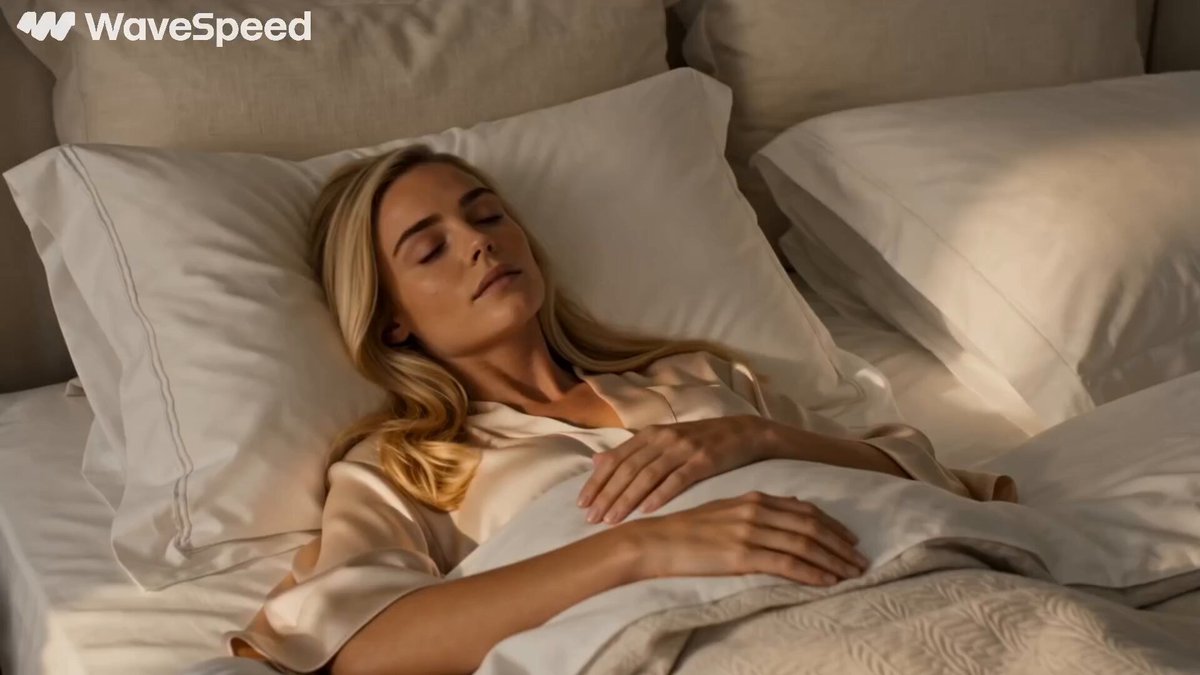
Why Generative Video Became a Cinematography Conversation
Cinematography has always been a negotiation between intention and constraint. A director imagines a shot; the cinematographer translates that imagination through lenses, lighting units, grip equipment, schedule pressure, and weather. Generative video does not remove that negotiation. It relocates it. Instead of asking whether a location can be secured before sunset, a team now asks whether a model can hold a face, a wardrobe, and a horizon line steady across twelve seconds of motion. That sounds like a small change. In practice it reshuffles the weekly calendar of an entire production.
The models driving this shift are no longer demos. Text-to-video and image-to-video systems such as Sora, Kling, Veo, Runway's Gen-series, Luma Dream Machine, Pika, Hailuo, and open-weight options like Wan and Stable Video Diffusion can produce shots with believable motion, plausible physics, and recognizable camera language. Image-to-video in particular has become the workhorse of narrative work, because it lets a filmmaker lock composition first, using a storyboard render, a concept frame, or a photograph, and then animate from that anchor.
What matters on set and in the edit bay is not a leaderboard position. It is the vocabulary a model responds to, the stability it can maintain over a sequence, and the amount of human intervention required to reach a usable take. A tool that produces one gorgeous clip in twenty attempts is a novelty. A tool that produces ten controlled variations of the same shot is a production asset. Most of the practical skill in AI-assisted cinematography is learning to tell those two situations apart quickly, and then building a pipeline that rewards the second one.
The AI-Assisted Production Pipeline, Stage by Stage
Development and previsualization
Previsualization is where generative video pays for itself fastest. Instead of pitching with still boards alone, a director can deliver an animatic where camera moves, pacing, and blocking are already legible. The workflow is straightforward: generate or illustrate a keyframe per beat, animate each keyframe with a short, restrained motion prompt, and cut the results to the temp score. Keep the clips short. Three to six seconds is usually enough to communicate intent and far easier to keep consistent.
The failure mode here is over-designing. Previs is a communication tool, not a final render. If a producer starts debating skin texture in a previs pass, the sequence has drifted from its purpose.
Principal photography, hybrid and virtual
Very few narrative projects are fully generated end to end. The realistic model is hybrid: practical plates for hero performance and key emotional beats, generated or augmented material for establishing shots, crowd extension, impossible geography, period detail, and dangerous stunt coverage. A generated establishing shot costs a fraction of a unit move to a remote location, and if it is intercut with real footage at the right moment, audiences accept it without friction.
Post-production and finishing
Post is where generated footage stops being a curiosity and becomes a shot. The discipline is the same as with any VFX plate: conform, color match, add grain, match motion blur, and build a consistent grade across the sequence. Generated clips often arrive with slightly plastic midtones and an overly clean noise floor. Adding a shared grain plate, a subtle halation pass, and a lens-specific distortion layer does more to sell a shot than another round of regeneration.
Choosing the Right Model for the Shot You Need
Model selection is a craft decision, not a brand loyalty decision. Different systems excel at different problems, and the fastest way to waste a day is to force a dialogue-heavy model to handle a wide landscape pan.
Text-to-video versus image-to-video versus video-to-video
- Text-to-video is best for exploration: establishing shots, moods, abstract transitions, and sequence ideas you have not yet designed shot by shot.
- Image-to-video is best for control: locked compositions, character continuity, product shots, and any beat where framing has already been approved.
- Video-to-video is best for iteration: restyling plates, changing time of day, adjusting wardrobe, or extending an existing shot without re-shooting it.
Decision criteria that actually matter
- Motion coherence: does the model keep limbs, hair, and fabric behaving physically across the full clip, or does it degrade after three seconds?
- Camera vocabulary: does it understand a dolly-in, a crane rise, a handheld drift, an anamorphic flare cue?
- Reference fidelity: how closely does it honor a supplied face, outfit, or location image?
- Aspect and resolution: native wide-format support saves a destructive crop later.
- Iteration cost: how many attempts before a usable take, and how long is each attempt?
- Native audio: some models now return synchronized sound, which can save a full foley pass on certain shots.
A practical habit is to keep a small model-testing slate. Every time a new system appears, run the same five shots through it: a medium close-up with dialogue-adjacent micro-expression, a slow push-in, a walking wide, a hand interacting with an object, and a night exterior with practical lights. The results tell you more about production fit than any announcement post.
Prompting Like a Cinematographer, Not a Search Engine
The single biggest quality jump available to any team is writing prompts in the language of the camera department rather than the language of a search bar.
Describe the shot, then the story
Lead with format and framing: "35mm anamorphic, medium close-up, shallow depth of field, subject slightly off-center." Then add the camera behavior: "slow dolly left, subtle handheld float." Then lighting: "motivated practical lamp camera-left, warm key, cool ambient fill from window." Then action and duration. Story context goes last, and briefly, because most models weight the earliest tokens most heavily.
Use real lighting and lens vocabulary
Terms such as key, fill, rim, bounce, negative fill, hard light, soft box, golden hour backlight, tungsten practical, and moonlight blue all carry meaning. So do lens descriptors: wide angle, macro, telephoto compression, split diopter, anamorphic bokeh. These words do measurably change output, and they also align your team's language with a DP's instincts.
Constrain motion instead of describing it endlessly
Motion is where most clips break. Rather than stacking adjectives, specify one dominant movement and one secondary micro-movement. "Slow push in, slight handheld sway" outperforms a paragraph of swirling camera instructions. If a generator has a motion-strength or camera-control parameter, keep it low for dialogue and medium for action.
Write negative instructions deliberately
Explicit exclusions reduce cleanup. Common ones worth stating: no text overlays, no watermark, no warped hands, no face morphing, no sudden cuts, no lens flare, no additional characters entering frame. Reusing a consistent negative block across a project keeps the look coherent.
Build a reusable prompt template
A template turns prompting from improvisation into a repeatable craft. A workable order is: format and lens, framing, subject and wardrobe, action beat, lighting, camera move, mood, duration, negative list. Save templates per project so every artist on the team produces footage that cuts together.
Solving the Hardest Problem: Consistency Across Shots
Consistency is what separates a demo reel from a film. Audiences forgive imperfect physics far more readily than they forgive a face that changes between cuts.
Character consistency
Start from a locked reference: a clean, evenly lit image of the character with neutral expression, front-facing and in wardrobe. Generate a small set of turnaround angles from it. Then for each shot, feed the closest turnaround as the reference image and keep the wardrobe description identical, word for word, in every prompt. If a model supports multi-reference conditioning, supply both face and costume references rather than relying on text alone.
Location consistency
Build a location bible the same way you would for a real shoot: one wide master, two medium angles, one detail texture. Use the wide master as the reference for any generated shot in that space, and lock time of day and weather language. The most common continuity error in generated sequences is not the architecture; it is the light direction changing between shots.
Wardrobe, props, and continuity tracking
Keep a simple continuity sheet: shot number, wardrobe state, prop state, hair state, time of day, emotional beat. Generated footage makes it dangerously easy to produce beautiful shots that cannot be cut together because a jacket changed color or a prop switched hands. A spreadsheet is unglamorous and it will save your edit.
The three-shot rule
At minimum, every generated sequence needs a master, a medium, and a close-up that all read as the same world. If those three match, you can build almost anything around them. If they do not, no amount of additional coverage will fix the sequence.
Sound, Editing, and Making Generated Footage Feel Real
Generated picture without a sound design plan reads as artificial almost instantly. The ear is more sensitive to missing room tone than the eye is to imperfect skin texture.
Lay in ambience first: room tone, distant traffic, wind bed, HVAC hum. Then add spot effects that match visible action, and place dialogue or ADR before music. Music covers a remarkable amount of visual imperfection, which is why it should be added last; using it as a crutch early hides problems you later need to fix.
Editing strategy matters too. Generated clips often have a slightly unresolved first and last half-second where motion settles. Trim into the motion rather than letting clips run full length, and use cutaways at 12 to 20 frames to cover transitions that would otherwise expose instability. Match cuts, whip pans, and foreground wipes are your friends because they give the audience's eye something to track.
Color is the final unification layer. Apply one show LUT or grade to practical and generated material alike, and normalize black levels. A shared grade, shared grain, and a shared aspect ratio do more for believability than upgrading a model.
Team Roles, Budgets, and What Actually Changes on a Production
AI video does not eliminate crew. It redistributes emphasis. On an AI-augmented production you typically see a smaller physical unit, a larger previs and look-development group, and a post team that now includes a generation artist whose job is closest to a hybrid of compositor and camera operator.
Budget shifts roughly like this: location, travel, and permit costs fall; iteration, storage, and review time rise. Schedule risk moves from weather and availability to model behavior and consistency drift. The producer's new critical question is not "can we afford this shot" but "how many attempts does this shot take, and who reviews them."
That review bottleneck is real. Without a clear approval chain, teams generate hundreds of clips no one owns, and the edit becomes an archaeology project. Assign one person as visual continuity owner with final say on look, and one person who owns the shot list. Two clear roles prevent most waste.
Legal, Ethical, and Craft Considerations
Three areas deserve attention before you build a generated sequence into a commercial deliverable.
Likeness and consent. Do not prompt for a recognizable performer's face, voice, or signature look without documented permission. Even an "in the style of a person" prompt is a risk in advertising and broadcast contexts.
Rights in training and output. Understand the terms of the specific tool you use, particularly around commercial use and indemnification. Keep a record of which model and which version produced each shot; delivery specifications increasingly ask for this.
Disclosure. Audiences generally accept generated imagery as a technique, but they dislike feeling deceived. Where a shot could be mistaken for documentary evidence of a real event or real person, disclose it.
On the craft side, the ethical question is simpler than it looks: would you be comfortable explaining this shot to the crew that would have shot it practically? If yes, you are using a tool. If no, you are papering over something.
Common Mistakes and How to Avoid Them
- Chasing resolution instead of stability. A stable 1080p sequence cuts better than a shimmering 4K one.
- Writing prompts like search queries. Short keyword strings produce generic imagery; structured shot descriptions produce usable coverage.
- Generating before designing. Lock the shot list first. Generation is expensive exploration if you have not decided what you need.
- Ignoring the first frame. Starting from a strong, approved reference image improves everything downstream.
- Never testing the edit. Cut as you generate. Problems invisible in isolation become obvious against a neighboring shot.
- Over-relying on one model. Different shots need different strengths; keeping two or three systems in rotation is normal practice.
- Skipping sound. Picture locked without room tone and spot effects will feel unfinished no matter how good the render is.
- No continuity owner. Without one, wardrobe, light direction, and time of day drift quietly across shots.
A Practical Pilot Plan You Can Run in a Week
If you want to evaluate whether an AI-assisted workflow suits your production, run a contained pilot instead of debating it. Choose a single 60-second scene with three characters, two locations, and one camera movement you consider difficult.
Days one and two: write the shot list, generate or illustrate one keyframe per shot, and build a locked reference set for each character and location. Days three and four: animate each keyframe using a consistent prompt template and the three-shot rule; cap yourself at a fixed number of attempts per shot so you learn where the ceiling is. Day five: cut the sequence to temp sound, add ambience and spot effects, apply a single grade, and screen it for someone who did not work on it.
The feedback you get will tell you more than any benchmark. You will learn your real iteration rate, the shots your chosen models cannot do, and the exact points in your pipeline where human review is indispensable. That knowledge transfers directly to scheduling a larger project.
FAQ
Can AI video replace a cinematographer?
No. It changes what a cinematographer spends time on. Framing, light logic, lens choice, and continuity judgment are still human decisions; a model executes a description, it does not have taste.
Which type of shot works best with generative video?
Establishing shots, transitions, inserts, dream or memory sequences, crowd and environment extension, and any shot where the camera move is simple and the subject motion is controlled. Complex hand interaction and long sustained dialogue remain the hardest.
How long should a generated clip be?
For most narrative work, three to eight seconds. Shorter clips are easier to keep consistent, easier to trim into, and easier to cut around.
Do I need a powerful workstation?
For hosted models, no. For local open-weight models, a strong GPU with generous video memory helps considerably, but the practical bottleneck is usually iteration time and review, not raw hardware.
How do I keep a character looking the same across many shots?
Lock a neutral reference image, generate turnarounds, reuse identical wardrobe wording in every prompt, and supply image references rather than relying on text descriptions alone.
Should generated shots be graded differently?
They should be graded together with practical footage. One shared grade, grain, and aspect ratio is the fastest route to believability.
Is AI-generated footage acceptable in broadcast and advertising?
Increasingly yes, provided you have commercial rights to the tool's output, avoid unauthorized likeness, and disclose where a viewer might reasonably mistake generated imagery for documentation of a real event.
What is the biggest beginner mistake?
Generating before designing. A clear shot list and a locked reference set turn generation from a slot machine into a production process.
Where This Leaves the Craft
The camera department has survived every previous technical rupture, from sound to color to digital capture, by absorbing new tools into an existing discipline. Generative video is following the same pattern. The teams getting the best results are not the ones with the longest list of tools; they are the ones who brought a shot list, a continuity sheet, and a sound plan to a technology that rewards preparation.
Start with one scene. Design it, reference it, generate it, cut it, and listen to it. If the sequence holds together, you have a workflow. If it does not, you now know exactly which part of the craft needs your attention next.
