
A prompt box is not a director. That distinction explains most of the frustration people hit when they first try to make narrative video with generative models. You can type a beautiful paragraph describing a rainy street at dusk, get a gorgeous eight-second clip, and still end up with something that feels like a screensaver rather than a scene. The camera has no intention. The character changes face between cuts. Nothing builds.
Modern video models are now good enough that rendering quality is rarely the limiting factor. Direction is. Someone has to decide what each shot is for, where the camera sits, what the character wears, how the light shifts between scene two and scene seven, and how this clip will cut against the next one. An AI director assistant exists to carry that load: it reads a screenplay and returns a structured, prompt-ready production plan instead of a pile of disconnected clips. This guide walks through that workflow end to end, including the parts that still require a human.
What an AI Director Assistant Actually Does
It helps to separate the marketing language from the mechanics. A director assistant is not a single model; it is a coordination layer that sits between your script and whatever generation tools you use. In practice it performs four jobs.
Script comprehension. It parses your screenplay into scenes, beats, characters, locations, and implied time of day. Good versions flag contradictions, like a character who enters a room in scene four without ever leaving it in scene three.
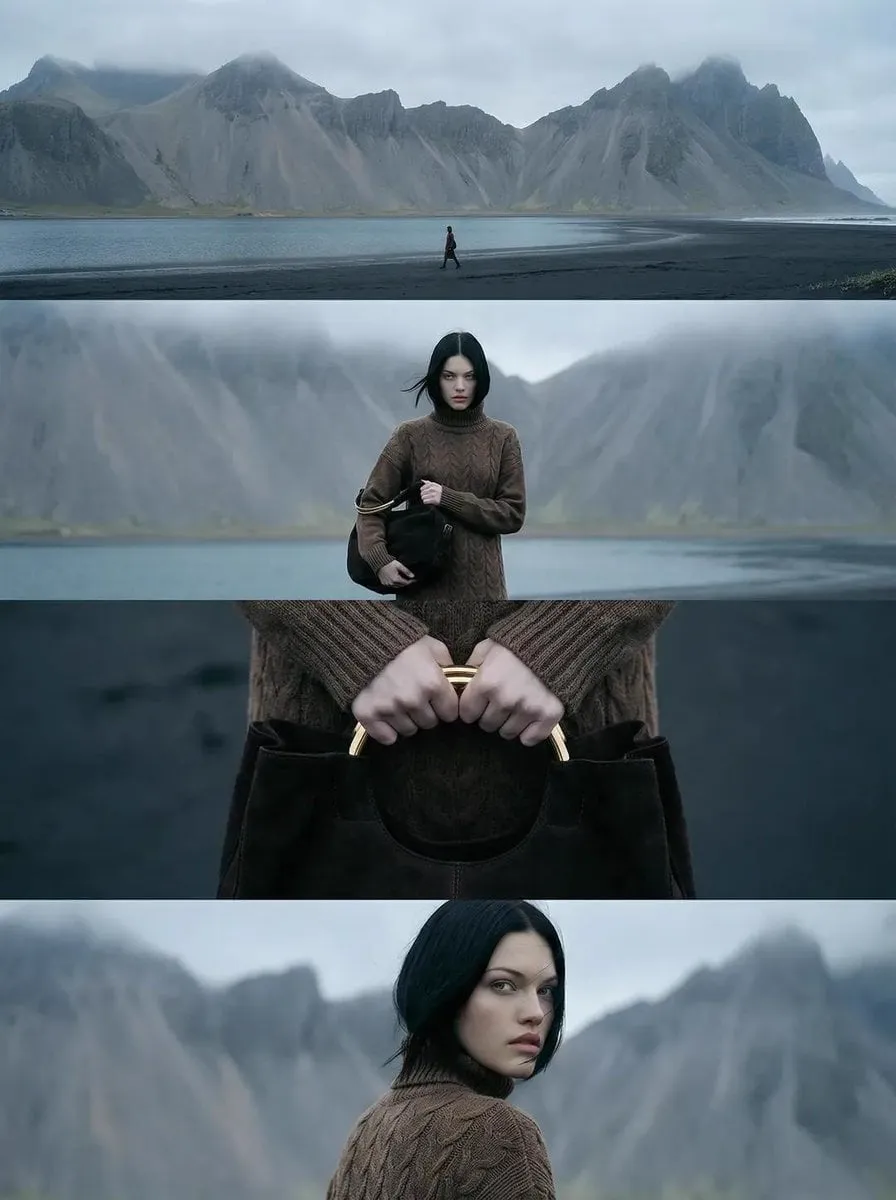
Coverage planning. It proposes a shot list: wide establishing shot, two-shot, over-the-shoulder, close-up on the reveal, insert of the object. This is the part that separates professional-looking output from random clips, because cuts are what create the sensation of filmmaking.
Translation into generation parameters. It converts directorial intent into the inputs a video model understands: subject description, action, camera movement, lens feel, lighting direction, pacing, duration, aspect ratio.
Continuity tracking. It maintains a running ledger of visual facts — wardrobe, hair, props, color palette, location geography — so that shot twelve still matches shot one.
If a tool only does the first job, you have a summarizer. If it does all four and remembers state across sessions, you have something worth building a workflow around.
The Script-to-Screen Pipeline, Step by Step
Stage 1 — Lock premise, tone, and runtime
Everything downstream inherits from three decisions: what the story is about, how it should feel, and how long it is. Give the assistant a logline, a genre, two or three tonal references described in plain words ("handheld, natural light, muted greens, documentary intimacy"), and a hard runtime. A three-minute runtime means roughly 35 to 55 shots depending on your cutting rhythm. Knowing that number early prevents you from over-planning a 90-second teaser and under-planning a five-minute short.
Write the tone references as descriptions rather than titles. "Gritty 1970s New York crime drama" is weaker than "high-contrast sodium-vapor streetlights, wet asphalt reflections, handheld medium shots, warm skin against cold background." The second version gives the model usable nouns.
Stage 2 — Build a beat sheet, then a scene breakdown
Ask for the story as beats before you ask for shots. A beat sheet is 8 to 16 statements that describe what changes in each unit of story: the character wants something, tries, fails, adjusts. When the beat sheet is weak, the shot list will be decorative and the final video will feel empty no matter how good the clips look.
Then convert beats into scenes with a fixed schema. A useful schema includes: scene number, location, time of day, characters present, dramatic function in one line, estimated duration, and emotional temperature. Keeping the same schema across every scene means you can sort, filter, and regenerate one field without rebuilding everything.
Stage 3 — Plan coverage with intent
This is where most AI video projects fail. A shot list generated without dramatic purpose produces coverage that reads as a slideshow. Instead, force the assistant to justify each shot. A workable prompt: "For each beat, propose three to six shots. For every shot, state the story reason the camera is where it is, and what the audience learns that they did not know before."
You will get a list that looks like this in miniature:
- Scene 2, beat 3 — She realizes the key is missing. Shot: tight close-up on her hand hovering over an empty hook, slight push in. Reason: the audience must feel the absence before she verbalizes it.
- Scene 2, beat 3 — Shot: reverse wide from the hallway showing her small in the frame. Reason: isolation, and a geography reminder before we move to the next room.
That justification column is also your editing guide. When a shot has no reason, cut it.
Stage 4 — Look development and storyboard frames
Before generating motion, generate stills. Static frames are cheap to iterate and they expose problems fast: the character looks wrong, the palette is muddy, the framing has no negative space for the title. Most director assistants will produce a shot-by-shot description you can feed into an image model, then into a video model once you like the still.
Keep a small reference set — three to five approved frames — and treat them as the visual constitution for the project. Re-describe them in text every time you need consistency; do not rely on the tool remembering unless it explicitly does.
Stage 5 — Generate, assemble, and re-shoot virtually
Generate the shortest clips that carry the beat, usually four to eight seconds. Assemble a rough cut immediately, even with placeholder audio. Assembly reveals rhythm problems that individual clips hide: two consecutive slow pushes feel sluggish, three close-ups in a row feel claustrophobic, a wide after a wide kills momentum.
Then iterate selectively. Regenerate only the shots that fail in context. This is the practical advantage of a structured pipeline — you know exactly which line of your shot table produced the bad clip, so you can change one variable rather than re-rolling everything.
Prompting a Director Agent: Habits That Change Output
Give constraints, not adjectives. "Warm lighting" is vague. "Single practical lamp at frame left, warm 2700K, face half in shadow" is directable.
Demand alternatives at different scales. Ask for a minimal version using six shots and a fuller version using twenty. Comparing the two teaches you where the story actually lives.
Request structured output. Ask for a table with columns for scene, shot, duration, camera, subject, action, lighting, and continuity notes. Structured output is reusable; prose is not.
Isolate variables when iterating. Change camera movement or lighting, never both, or you will not know what fixed the shot.
Cap the assistant's ambition. Ask it to flag anything that cannot be shot with your available assets — one location, two actors, no crowd, no vehicles. Constraints produce creativity faster than freedom does.
Keep a continuity bible. Even a simple running document with character descriptions, wardrobe, props, and palette saves hours later.
Keeping Visual Continuity Across Scenes
Continuity is the hardest unsolved problem in AI video, and the workflow answer is redundancy: describe the same thing the same way every time. Build a small continuity bible with fixed phrasing.
- Character sheet. Age range, build, hair length and texture, wardrobe with exact colors, distinguishing features. Reuse the same sentences verbatim in every prompt.
- Location geography. Where the door is, where the window is, which side of the room the light comes from. If you change these between shots, viewers feel disorientation without knowing why.
- Lens language per act. Decide that act one is wide and static, act two is handheld and closer, act three is locked-off and tight. Consistency in lens language reads as style even when faces drift slightly.
- Palette drift control. Pick two dominant colors and one accent for the whole piece and name them in every prompt.
- Reference frames. When the tool supports image-conditioned generation, always start from an approved still rather than pure text.
Expect some drift anyway. Plan cuts that hide it: cut on motion, cut to a reaction, or cut away to an insert. Editing is the cheapest continuity tool you own.
Choosing Your Pipeline: AI-Native, Hybrid, or Traditional
| Situation | Best fit | Why |
|---|---|---|
| Explainer, mood piece, or social teaser | AI-native, director assistant for planning | Fast iteration, no continuity burden across long dialogue |
| Narrative short with recurring characters | Hybrid: AI shots plus real plates or consistent character references | Reduces face drift while keeping cost low |
| Dialogue-heavy scene work | Traditional capture, AI for previsualization | Performance nuance still favors actors |
| Client work with fixed brand assets | Hybrid with locked reference frames | Brand consistency matters more than novelty |
A useful rule: the more a scene depends on performance, the less you should generate it. The more it depends on atmosphere, scale, or impossible imagery, the more generation pays off.
Common Mistakes and How to Fix Them
Mistake: generating before planning. Fix by refusing to open a video model until you have a shot table with reasons attached.
Mistake: writing prompts as poetry. Fix by converting every adjective into something visible: a color, an angle, a distance, a movement.
Mistake: making every shot beautiful. Fix by assigning each shot a job. If a shot exists only to look good, it is a liability in the edit.
Mistake: ignoring audio. Dialogue, room tone, and music change how images read. Plan sound at the same time as shots, not after.
Mistake: endless re-rolling. Fix by setting a two-attempt limit per shot and moving on. Assembly will tell you which failures matter.
Mistake: no version control. Fix by keeping dated shot tables and prompt sets. When a later scene breaks, you will want the exact framing that worked earlier.
A Worked Example: 90-Second Teaser in a Day
Suppose you have a two-hander about a locksmith who realizes the house she is opening belongs to her estranged brother. Ninety seconds, roughly 24 shots.
The morning is planning. Lock the logline and tone: cramped interiors, overcast daylight, cool greys with a single warm lamp motif. Build a nine-beat sheet: arrival, hesitation, picking the lock, entering, noticing a photograph, recognition, denial, the brother's voice off-screen, choice. Convert to scenes with fixed schema. Ask for coverage with reasons. Approve 24 shots and write the continuity bible: protagonist mid-thirties, shoulder-length dark hair, olive canvas jacket, brass tool roll; hallway with door at frame right, window at frame left, lamp on a side table.
Afternoon is look development. Generate stills for the six most important shots, approve three as anchors, then generate motion in four-second and six-second segments. Keep two takes per shot maximum.
Late afternoon is assembly. Rough cut with temp music, then replace the six worst shots. The final pass is sound: room tone, lock clicks, footsteps, one held musical note under the recognition beat.
The result is not a feature. It is a coherent piece with a visual logic, made in a day, and — crucially — every shot can be explained.
Where Different Tools Fit
You will usually combine four categories. Script and planning assistants handle beat sheets, shot tables, and continuity ledgers. Image generators produce storyboard frames and reference stills. Video generators handle motion, and different models suit different things: some are stronger at camera control, others at human motion, others at stylized environments. Editors such as DaVinci Resolve or Premiere assemble and grade, and audio tools handle cleanup and music beds.
Choose the video model per shot type rather than per project. A model with excellent camera language may be wrong for a subtle facial reaction. Testing each candidate model on one representative shot before committing is a thirty-minute investment that saves days.
Frequently Asked Questions
Do I still need to write a real screenplay? Yes, at least in outline form. The assistant amplifies structure; it does not invent dramatic logic from nothing. A beat sheet is the minimum.
Can an AI director assistant replace a director? No. It handles planning, translation, and memory. Judgment about performance, rhythm, and meaning remains human, and that judgment is what makes a piece watchable.
How many shots should a one-minute video have? Anywhere from 12 to 30 for narrative work. Fewer, slower shots feel contemplative; more, shorter shots feel urgent and social-media native.
Why do my characters change appearance between clips? Because text-only prompts describe archetypes, not individuals. Use fixed phrasing, approved reference frames, and minimal wardrobe changes across scenes.
Is it worth making a storyboard if I can generate video directly? Almost always. Stills are faster to reject, and rejecting early is the cheapest decision in the whole pipeline.
How do I keep a project from spiraling? Set per-shot attempt limits, freeze the shot table after approval, and only revisit shots that fail in the edit.
Key Takeaways
Direction, not rendering, is the current bottleneck in AI video. An AI director assistant bridges the gap between a screenplay and generation-ready shots by parsing story, planning coverage, translating intent into prompts, and tracking continuity.
The workflow that consistently works is unglamorous: lock premise and runtime, build beats before shots, justify every camera placement, develop look through stills, assemble early, and regenerate selectively. Add a continuity bible, constrain the model to your actual assets, and cap your re-rolls.
Do that, and the jump in perceived quality will not come from a better model. It will come from the fact that someone — or something — was finally directing.
