

Why a Still Photo Is the Best Raw Material for Short Video
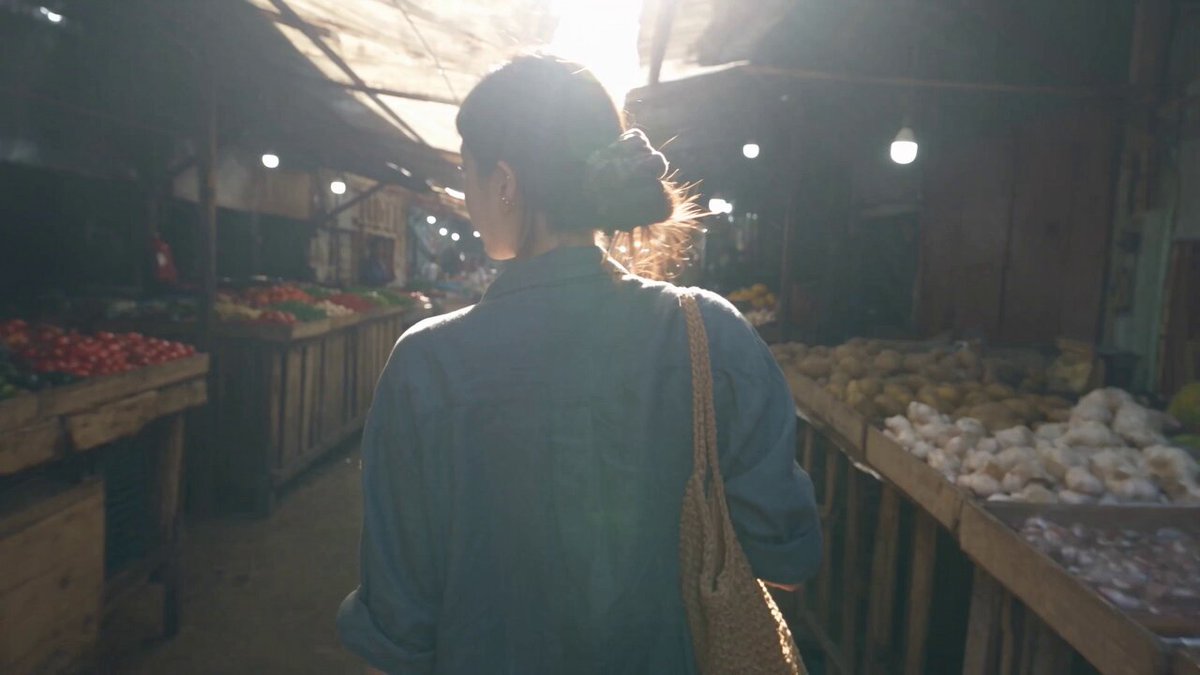
Ask ten creators where their short-form videos come from and most describe a scramble: shoot something, anything, then try to rescue it in the edit. Meanwhile their camera roll holds hundreds of images that already did the hard part. A still photo has a locked composition, deliberate lighting, a chosen subject, and a mood. What it lacks is time. Image-to-video generation adds time, and that is a far easier problem to solve than fixing a weak frame after the fact.
Short-form feeds are unforgiving about the opening moment. A clip that starts on a strong, well-composed still begins with an advantage no amount of editing can manufacture. Vertical 9:16 platforms reward clear subjects, high contrast, and readable text at small sizes, and all three of those properties can be judged from a still before you spend a single second of render time.
The practical upside is volume. One careful photo session, or one well-built set of generated stills, can become twenty or thirty distinct clips, each with a different camera move, pace, and caption. That is how small teams compete with studios: not by generating more raw material, but by reusing good raw material in more directions.
How Image-to-Video Generation Actually Works
It helps to know what the model is doing, because it explains both the magic and the failures.
What the model sees
A diffusion or transformer video model receives your still as a conditioning frame, plus a text prompt describing motion. It then predicts a sequence of frames that stay faithful to the input while evolving over time. The still acts as an anchor: the closer your prompt stays to what is visibly plausible in that image, the more stable the result.
Motion inference versus motion control
There are two broad behaviors. Motion inference lets the model decide how things should move based on the scene — hair drifts, steam rises, a coat sways. Motion control lets you specify the camera and subject choreography explicitly — slow dolly in, subject turns to camera, handheld follow. Inference gives you natural results and less predictability. Control gives you predictability and a higher chance of visible artifacts if you ask for something the frame cannot support.
Aspect ratio, duration, and resolution reality checks
Most vertical clips work best generated at a native 9:16 or cropped from a wider frame with room to spare. Short shots of two to five seconds read as intentional; longer single shots often expose drift. If you need eight seconds, generate two four-second shots from the same still and cut between them with a change of angle or scale. That edit hides imperfection and adds rhythm at the same time.
Choosing Your Route: Four Ways to Animate a Still
Not every project needs the same approach. Match the route to the job.
Route 1 — Single still, text-driven motion
Best for: product shots, landscapes, portraits, quote cards, atmospheric b-roll. You supply one image and a motion prompt. Fast, cheap in time, and ideal for high-volume output. Weakness: hard to build a narrative with a single subject doing something specific.
Route 2 — First frame plus last frame
Best for: reveals, transformations, before-and-after content, opening titles. You provide a starting image and an ending image, and the model interpolates the journey. This is the most controllable route for storytelling because you decide the punchline visually. If you cannot source a convincing final frame, generate one from the first with a still-image editor first, then animate.
Route 3 — Character sheet plus shot list
Best for: series content, recurring hosts, mascots, brand characters. You build a reference set of the same person or character from several angles, lock the description in text, and reuse it across many shots. Consistency becomes a production system rather than a lucky accident.
Route 4 — Hybrid edit
Best for: anything longer than fifteen seconds. Animate three or four key stills, then cut them together with real footage, screen recordings, text cards, and motion graphics. The generated shots become accents instead of the whole meal, which is usually what makes a clip feel professional rather than synthetic.
| Route | Control | Speed | Best use |
|---|---|---|---|
| Single still | Low | Fastest | B-roll, product, mood |
| First and last frame | High | Medium | Reveals, transformations |
| Character sheet | Medium | Slow setup, fast after | Series and recurring hosts |
| Hybrid edit | Highest | Slowest | Explainer and narrative clips |
The Five-Step Production Workflow
This is the loop that keeps quality stable when you are producing regularly.
Step 1 — Build an asset folder before you prompt
Collect every still you might animate into one folder, then cull hard. Keep images that are sharp, well lit, and uncluttered. Reject anything with motion blur, heavy noise, extreme compression, or faces smaller than a thumbnail. If a subject occupies less than roughly a fifth of the frame, the model has very little to animate convincingly.
Name files so you can find them later: subject_action_angle_aspect. A file called host_leaning_window_34_9x16 tells you everything. A file called IMG_4471 tells you nothing three weeks from now.
Step 2 — Write motion prompts with a fixed scaffold
Use the same sentence skeleton every time so your results stay comparable:
- Subject: who or what is on screen.
- Action: the single most important movement.
- Camera: static, push in, pull out, pan, tilt, orbit, handheld.
- Environment: what else moves — light, fabric, smoke, rain, traffic.
- Style: lens feel, film grain, color treatment.
- Constraints: keep face consistent, no extra limbs, no text artifacts.
One motion idea per shot. If you want a subject to turn and the camera to push in, generate two shots. Stacked motion requests are the single biggest cause of warping.
Step 3 — Generate in batches and grade against criteria
Produce three to five variations of the same shot rather than one. Set acceptance criteria before you look, so you judge consistently rather than falling for the flashiest result.
Good criteria look like this: the face keeps its identity across all frames; hands remain structurally correct; the background does not melt or gain objects; there is no flicker or pulsing; the motion completes within the shot length; and the crop still works in 9:16.
Score each variation pass or fail. Keep the first pass. Do not talk yourself into a failed shot because you like the lighting.
Step 4 — Sound, pacing, and captions
Silent video is a missed opportunity. Build a simple audio bed: one music track, one ambience layer, and two or three designed sounds such as a whoosh at the cut, a click on the text reveal, or a subtle riser before the payoff. Keep music under the voice and ambience under the music.
Pacing matters more than shot beauty. Aim for a cut every two to three seconds in vertical short-form. If a generated shot drifts at second four, cut at second three and the drift disappears.
Captions are non-negotiable. Most viewers watch muted first. Burn in short caption lines of three to five words, positioned so they do not collide with platform interface elements.
Step 5 — Package for the platform
Export 1080x1920 at a high bitrate, then check the first frame as a thumbnail. That single frame decides whether anyone sees the clip at all, so choose the frame where the subject is clearest and the composition is tightest. Write a hook line that describes the payoff, not the process, and keep the on-screen text small enough to read on a phone.
Prompt Patterns That Survive Contact With Reality
Generic prompts produce generic motion. Specific ones produce footage you can actually cut.
A weak prompt says: make this image move, cinematic. The model has no idea which part of the frame matters.
A strong prompt for a portrait might read: subject keeps eye contact, subtle head turn to the right, slow push in, hair moves gently, window light flickers slightly, shallow depth of field, natural film grain, keep facial features stable, no additional people.
For a product still: bottle stays centered, slow orbit from left to right, condensation drips down the glass, background bokeh drifts, cool studio lighting, glossy reflections, no text distortion.
For a landscape: static wide shot, clouds drift left to right, grass sways in a light breeze, warm golden light deepens, distant birds cross the frame, tripod stability, no camera shake.
Notice what all three have in common: one dominant motion, one camera instruction, small environmental details, and an explicit constraint. That pattern is portable across almost any image-to-video tool, which means your prompt library stays useful even when the tools change.
Consistency Without a Studio
Character consistency is the hardest part of series work, and it is a documentation problem more than a technical one.
First, lock the description. Write a paragraph describing your subject precisely — age range, hair, wardrobe, accessories, distinguishing marks — and paste it into every prompt unchanged. Paraphrasing introduces drift.
Second, build a reference set. Gather six to ten images of the same subject: front, three-quarter, profile, wide, close, different lighting. Consistency tools that accept multiple references will hold identity far better with this material than with a single portrait.
Third, fix the world. If the background changes every shot, viewers forgive it. If the jacket changes colour every shot, they do not. Keep wardrobe and key props identical across a series.
Fourth, apply one grade to everything. A single colour treatment applied to all clips makes individually imperfect shots feel like one project. Consistency of finish often reads as consistency of quality.
Troubleshooting the Most Common Failure Modes
Faces morph or swap identity. Usually caused by motion that exceeds what the source image supports, or by a low-resolution source. Crop tighter on the face, reduce motion, and generate shorter shots.
Hands bend incorrectly. Hands are the classic weak point. Hide them in the composition, place them in pockets, or use a still where hands are out of frame. If they must be visible, keep them static.
The background melts or grows objects. Reduce prompt complexity, remove vague environment words, and specify a static camera instead of a moving one.
Flicker and pulsing. A sign of too much requested change per frame. Lower motion intensity, shorten the clip, and avoid prompts that imply rapid lighting shifts.
Everything moves at once. Choose one hero motion. If the subject moves, keep the camera static. If the camera moves, keep the subject calm.
Results look plastic and over-smooth. Add grain, reduce sharpening, and avoid prompts that push for perfection. Slight imperfection reads as photographic.
The clip feels dead despite movement. The problem is usually sound and cut rhythm, not the image. Add designed audio and shorten the shot.
A Pre-Publish Quality Checklist
Run this every time, in order:
- First frame works as a still thumbnail.
- Subject identity is stable from start to finish.
- No unintended objects, text, or limbs appear.
- Motion completes before the cut.
- Audio balances: voice loudest, music under it, effects punctuating.
- Captions are legible, accurate, and clear of interface areas.
- The clip makes sense with sound off.
- Aspect ratio and safe areas are correct for the target platform.
- The hook appears in the first two seconds.
- There is one clear reason to share it: a surprise, a laugh, a useful tip, or a beautiful moment.
Point ten is the one that matters most. Animation is not a reason to share. A payoff is.
Distribution and the First 48 Hours
Publish consistently rather than perfectly. The first two days of performance tell you which hook, thumbnail frame, and subject type your audience responds to. Track three numbers only: how many people watched past the first three seconds, how many watched to the end, and how many shared it. Everything else is noise at small scale.
Then iterate on the winner. Re-cut the best performer with a different opening frame, a different caption, and a different music bed. Repurposing a proven clip beats producing a fresh one from scratch, and it costs a fraction of the effort.
Batch your production so a single session yields a week of posts. Generate on one day, edit on the next, schedule on the third. Splitting creative work from production work keeps decisions sharper than doing everything in one exhausted sprint.
FAQ
Which still images animate best?
Sharp, well-lit images with one clear subject and simple backgrounds. Portrait or slightly wide compositions with some negative space give the model room to move without cropping the subject out of frame.
How long should each generated shot be?
Two to four seconds for most short-form content. Generate longer only when the movement is genuinely interesting throughout.
Do I need video editing experience?
You need basic cutting, captioning, and audio mixing skills. Those are learnable in an afternoon, and they matter more to the final result than the generation settings you choose.
Can I mix generated shots with real footage?
Yes, and you probably should. Alternating animated stills with live clips, screen recordings, or text cards makes the whole piece feel more deliberate and less repetitive.
How do I keep a series looking consistent?
Lock your subject description, reuse the same reference images, keep wardrobe and props fixed, and apply one colour grade to every clip.
What is the biggest beginner mistake?
Asking one shot to do too much. One motion, one camera idea, one short clip. Complexity is what produces artifacts.
How many variations should I generate per shot?
Three to five. Fewer and you accept a mediocre result by default. More and you start over-thinking instead of publishing.
Should I write captions before or after generating?
Before. If you cannot summarise the payoff in one sentence, the clip probably does not have one yet.
Make the Still the Star
The most reliable way to produce shareable short video is not to chase ever more elaborate generation. It is to start with images that already work as images, add exactly one believable movement, cut fast, add sound, and give the viewer a reason to send the clip to someone else. Stills are abundant, cheap to iterate on, and easy to judge before you invest time — which makes them the most efficient raw material in short-form video. Build your asset library, lock your prompt scaffold, generate in small batches, and let the edit do the heavy lifting. The tools will keep changing; that workflow will keep working.
