
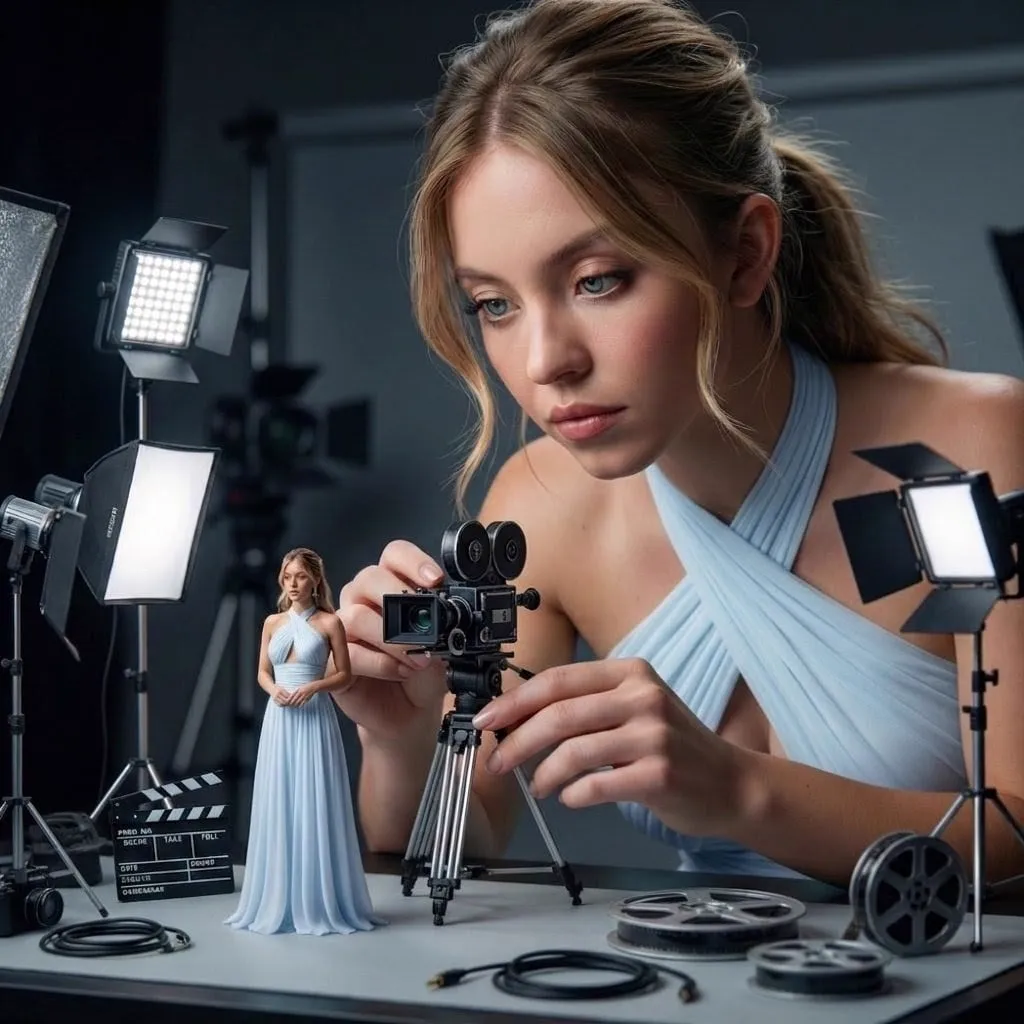
Why AI video is now a baseline marketing capability
Short-form video stopped being a channel choice and became the default format for paid social, organic reach, landing pages, and even sales decks. The practical consequence is that the bottleneck moved. Producing one beautiful video is not the hard part anymore; producing thirty variations of it fast enough to test hooks, offers, and creative angles is where most teams stall.
That is the gap AI video tooling actually closes. It does not remove the need for strategy, positioning, or craft. It removes the friction between having an idea and having something watchable to put in front of an audience. A team that previously needed three weeks and a location shoot to test a concept can now test five concepts in a week and keep the two that perform.
Three shifts make this work:
- Iteration is cheap, judgment is expensive. Generation is fast, so the scarce resource becomes your ability to decide which cut is good. Teams that skip the review layer end up with more mediocre assets, not more results.
- Consistency is now an engineering problem. The hardest part of AI-assisted video is not generating a shot; it is generating the same product, person, or location across twenty shots so the final edit feels like one film.
- The edit still determines quality. Most disappointing AI videos fail in pacing, sound, and text treatment, not in the rendered pixels.
This guide lays out a repeatable production model for marketing teams: how to script, how to plan shots, how to keep visuals coherent, how to finish and quality-check, and how to measure whether any of it earned its place in the calendar.
The four-layer production model
Treat AI video like any other production pipeline with gates. Skipping a gate is the single most common reason a project spirals.
Layer 1: Offer and concept
Before any prompt, write one sentence: who sees this, what they should believe afterward, and what action they take. If that sentence cannot be written, generation will only produce attractive noise. At this layer, decide the format too — vertical 15-second hook-led ad, 30-second product story, or 60-second explainer.
Layer 2: Script
Scripts for AI-assisted video should be shorter and more concrete than traditional ad copy. Abstract claims ("transform your workflow") are hard to visualize; concrete actions ("upload a file, get a draft in ninety seconds") give the generator something to render.
Layer 3: Shot plan and asset preparation
This is where the project is won. Build a shot list with one row per shot: shot number, duration, description, camera movement, subject, location, lighting mood, on-screen text, audio, and the reference assets attached to it.
Layer 4: Assembly, finish, and QA
Generation output is raw material. Every shot gets trimmed, color-matched, stabilized if needed, and placed against sound. Then it goes through a fixed QA checklist before it reaches an ad account.
A useful gate rule: nothing moves to the next layer until a specific person signs off. Ambiguous ownership is what turns a two-day project into a two-week one.
Scripting for AI-assisted marketing video
Start with the hook, not the introduction
You have roughly two seconds of goodwill. Hooks that consistently work fall into a few families:
- Problem statement: show the friction directly — a messy spreadsheet, a slow checkout, a cluttered inbox.
- Contrarian claim: "Most teams measure the wrong thing in the first week."
- Visual surprise: an unexpected camera move, a transformation, or a scale reveal that earns attention before the copy lands.
Write three hooks for every ad and generate all three as separate 6-second opens. Test them, then keep the winner.
Structure the body in three beats
A reliable structure for 15–30 seconds:
- Tension (0–5s): the problem, shown not narrated.
- Turn (5–18s): the product or service doing the specific thing that resolves it.
- Proof (18–25s): a number, a before/after, a customer sentence, or a demo moment.
Write to a word budget
Conversational voiceover lands at roughly 2.2 to 2.6 words per second. Budget accordingly:
| Target length | Voiceover words | Shot count |
|---|---|---|
| 15 seconds | 30–38 | 4–6 |
| 30 seconds | 65–78 | 8–12 |
| 60 seconds | 130–155 | 15–22 |
If your script exceeds the budget, cut the adjectives before cutting the proof. Proof is what converts.
Write direction into the script
Add bracketed notes for the parts a generator or editor needs to know: [slow push in], [hands only, no face], [text appears bottom-left]. These notes become your shot list almost verbatim and save an entire revision cycle.
Building a shot list that keeps visuals consistent
Visual inconsistency reads as amateur faster than any single bad frame. Build a brand continuity kit once, then reuse it across campaigns.
Create a character sheet
If a person appears in more than two shots, define them precisely: age range, hair, wardrobe colors, accessories, and three to five reference images from different angles. Lock the wardrobe. A character who changes jacket between shots breaks the illusion instantly, even if the face is perfect.
When you generate, use multi-reference conditioning where the tool supports it — feeding three or four consistent images of the same subject produces far more stable results than a single reference or a long text description.
Lock product and packaging assets
Generated product shots should be treated as backgrounds and environments first. The actual product — packaging, label typography, logo placement, color values — is best composited from real photography or brand-supplied renders. AI generation is excellent at kitchen counters, studio lighting, and lifestyle context; it is unreliable at reproducing your exact label text.
Define a lens and lighting language
Pick two or three camera settings and stick to them for the whole spot:
- Hero product: 50–85mm feel, shallow depth of field, soft key light from the left.
- Lifestyle: 35mm feel, natural light, slightly handheld.
- Detail: macro, high contrast, top-down.
Write these into the shot list. Mixed lens languages in a 20-second ad feel like stock footage stitched together.
Keep a location bible
If a scene happens in an office, nail down desk color, window position, and wall art in one reference frame, then reuse that frame as an input for every shot in that location. Small continuity anchors — a plant, a lamp, a specific mug — do a surprising amount of work in making separate generations feel like one scene.
Shot list columns that matter
| Column | Why it matters |
|---|---|
| Shot ID | Keeps filenames and feedback threads aligned |
| Duration | Prevents the edit from ballooning past the platform limit |
| Movement | Push, pan, orbit, static — drives the pacing rhythm |
| Reference assets | The actual inputs, listed by filename |
| On-screen text | Caught before generation instead of during edit |
| Audio cue | VO line, SFX, or music beat marker |
Matching the generation approach to each shot type
Not every shot deserves the same method. Choosing deliberately cuts both cost and risk.
Photoreal product shots
Start from a still image, then add motion. Image-to-video gives you control of composition and lighting before spending time on motion, and it keeps the product shape stable. Reserve pure text-to-video for environments where nothing needs to be exact.
People and lifestyle scenes
Use reference-conditioned generation with a locked character sheet. Keep shots short — two to four seconds — because longer generations are where faces drift and hands misbehave. If a shot needs six seconds of a person, generate two clips and cut between them.
Screen recordings and demos
Never generate these. Capture real screen recordings and composite them into AI-generated environments (a laptop on a desk, a phone held in a hand). This gives you accurate UI plus a cinematic frame.
Testimonials and expert voice
Real footage of real customers outperforms synthetic humans in almost every trust-sensitive context. Use AI for B-roll, transitions, and visual metaphor around the real footage, not as a replacement for it.
Decision criteria at a glance
- Fidelity requirement high? Composite real assets.
- Motion complexity high? Break into shorter clips.
- Turnaround measured in hours? Favor image-to-video with a strong still.
- Brand and legal risk high? Keep people, claims, and product visuals under human control.
A hybrid production — real product photography, AI-generated environments and transitions, human voiceover — consistently outperforms a fully generated spot.
Voice, music, and sound design
Audio is where AI marketing video most often falls apart, and it is the cheapest thing to fix.
Choosing between synthetic and human voiceover
Synthetic voice is appropriate for high-volume testing, localization, and internal or explainer content. Human voice is appropriate for brand-level campaigns and anything emotionally weighted. A practical middle path: test with synthetic voice, then re-record the winners with a human. You keep the testing velocity and the final quality.
When writing for synthetic voice, add direction: mark pauses, mark emphasized words, and keep sentences under fourteen words. Long subordinate clauses expose every artifact.
Music selection
Pick music before you finalize the edit. A beat map changes cut placement more than any visual decision. For short-form ads, look for tracks with a clear drop in the first three seconds and a consistent rhythm section; it makes trimming painless.
Sound effects and texture
Layered sound effects — whooshes on transitions, a soft click on UI actions, ambient room tone under dialogue — do more for perceived production value than additional visual polish. Add room tone under every scene so cuts do not create silence gaps.
Loudness targets
Deliver social video around -14 LUFS integrated with peaks under -1 dBTP. Platform normalization punishes quiet mixes by turning up noise, and loud mixes get compressed into mush.
Editing, pacing, and multi-format delivery
Cut rhythm
For 15–30 second ads, hold shots between 1.2 and 3 seconds. Aim for a cut on a beat or a VO syllable. If a shot is beautiful but drags, cut it — rhythm beats beauty in short-form.
The first-frame rule
Design your first frame as a thumbnail. It should communicate subject and mood with no sound. Never open on a logo, a slow fade, or a title card.
Captions
Burn captions in for platforms where sound-off viewing dominates, and ship an SRT alongside. Keep captions inside the platform safe zones (roughly the middle 80% vertically) so UI elements do not cover them.
Versioning across aspect ratios
Deliver 9:16 first, then 4:5, 1:1, and 16:9. Do not simply crop: reframe per shot. Vertical crops of a wide two-person shot usually lose the product, so plan compositions that survive reframing.
File naming
Use a consistent scheme: campaign_concept_hook_version_aspect_duration. It sounds trivial until you are searching for the winning cut three weeks later.
Quality assurance and common mistakes
Pre-publish QA checklist
Run every asset through the same list:
- Hands and fingers — check every frame where hands appear.
- Text rendering — any generated text, signage, or labels replaced with real typography.
- Lip sync — with the final audio, not a proxy track.
- Product accuracy — packaging, color, logo, and claims match approved assets.
- Claim substantiation — every number and superlative has documentation.
- Captions — spelling, timing, line breaks, safe zones.
- Audio — loudness, no clipping, no silence gaps.
- First three seconds — does the hook land without sound?
- End frame — clear CTA, legible on a phone at arm's length.
- Rights — music, voices, and any source footage cleared.
Mistakes that quietly kill results
- Depending on a single generation tool for everything. Different tools suit different shot types. Build a small, tested stack rather than one universal answer.
- Generating people for testimonials. It reads as fake and damages trust more than a plain product shot would.
- Long single-take generations. Anything above five seconds invites drift; cut instead.
- Ignoring the audio pass. The most common cause of "this looks cheap" feedback.
- No brand system. Without locked colors, type, and motion rules, twenty ads look like twenty vendors made them.
- Testing visuals but not hooks. Hooks move performance far more than pixel quality in most paid social accounts.
- Skipping legal review. Synthetic voices, likenesses, and generated claims all carry compliance obligations.
Distribution, measurement, and iteration
Ship in batches, not one-offs. A practical cadence: three hooks × two body variations = six assets per concept, launched together, judged after a fixed spend or impression threshold.
Metrics worth watching in order:
- Thumbstop / three-second hold rate — the health of your hook.
- Completion rate — the health of your pacing.
- Click-through rate — the health of your CTA and offer framing.
- Cost per acquisition or per qualified lead — the health of the whole thing.
When something wins, do not stop. Generate three sibling variations of the winning hook and body while it is still performing, and keep the losing hooks on file — audiences fatigue, and a hook that failed in one placement often works in another.
Keep a simple creative log: concept, hook type, aspect ratio, launch date, spend, results, and one sentence of interpretation. After ten entries it becomes the most useful document your marketing team owns, because it tells you what your specific audience responds to instead of what generic best-practice advice claims.
FAQ
How long does a typical AI-assisted marketing video take?
A 15–30 second spot with a prepared script and shot list usually moves from brief to first cut in one to three working days. The review and revision loop is typically longer than generation itself.
Do I still need a video editor?
Yes, for anything beyond throwaway tests. Editing, sound, and typography are where AI output becomes a finished ad. Many lean teams use an editor part-time rather than adding a full role.
How many reference images does a consistent character need?
Three to five clear images from different angles, with identical wardrobe and lighting, gives noticeably more stable results than one. Consistency compounds: each additional approved frame becomes a reusable input.
Can AI video replace a product shoot?
For environments, B-roll, transitions, and concept testing, largely yes. For packaging fidelity and hero product accuracy, no — composite real photography wherever the label must be exact.
What is the best way to start if we have no video experience?
Pick one campaign, one audience, and one hook. Produce three 15-second variations with synthetic voiceover and stock music. Learn the pipeline end to end before scaling volume.
How do we handle legal and compliance risk?
Standardize a short internal policy: approved voice and likeness usage, no generated testimonials, documented substantiation for every claim, and a rights check for music and source footage. Review it once per quarter.
Should we localize using synthetic voice?
For testing new markets, synthetic voice is fast and cost-effective. Once a market shows real return, re-record with native speakers — pronunciation and cultural nuance influence conversion more than most teams expect.
How do we avoid every ad looking the same?
Vary the structure, not just the visuals: change the hook family, the proof type, and the aspect ratio. Keep colors, type, and motion rules constant so variation stays on-brand rather than scattered.
What is the biggest mistake teams make?
Treating generation as the finish line. The teams that win treat generation as raw material and invest their attention in hooks, sound, and the edit — the layers where audiences actually decide whether to keep watching.
