
The New Era of Short Film Production
The journey from a written script to a fully realized cinematic scene used to require a village: screenwriters, storyboard artists, location scouts, actors, camera crews, and editors. Today, that village can be condensed into a creative director working alongside a suite of generative AI models. The shift is not incremental — it is a fundamental change in how stories get told. Generative AI has moved far beyond producing static images; it now handles temporal coherence, understands narrative context, and produces video sequences that feel intentional rather than accidental.
For independent filmmakers, content creators, and storytellers, this opens a door that was previously locked by budget constraints and technical barriers. You no longer need a production budget to visualize a chase scene through a neon-lit city or a quiet dialogue on a windswept cliff. You need a clear vision, a well-structured prompt, and the right combination of AI tools for each shot.
This article explores how to leverage a diverse library of AI video models to create short films that feel cohesive, emotionally resonant, and visually striking. We will cover the technology foundations, model selection strategies, character consistency techniques, and a complete production workflow you can adapt to your own projects.
Why Model Diversity Defines Quality
A common mistake among newcomers is assuming that one AI model can handle every aspect of a short film. In reality, the best results come from matching specific models to specific tasks. Some models excel at photorealistic human faces; others are better at stylized animation, cultural aesthetics, or rapid iteration. The breadth of available models is not a gimmick — it is the foundation of quality.
Photorealistic Generators
Models optimized for photorealism are your go-to for dialogue-heavy scenes, close-ups, and anything that needs to look like it was captured on a physical camera. They handle skin texture, lighting falloff, and subtle facial expressions with impressive fidelity. Use these for emotional beats where the audience needs to connect with a character's face. A tear rolling down a cheek, a nervous smile, a furrowed brow — these micro-expressions sell the story.
Stylized and Cultural Specialists
Other models are fine-tuned for specific aesthetics: anime, watercolor, noir, or cultural visual traditions. If your short film is set in a particular region or draws on a specific artistic heritage, choosing a specialist model can dramatically reduce the amount of post-processing needed. For example, a model trained on East Asian architectural motifs and color palettes will produce more authentic results for a story set in those environments than a general-purpose model that needs heavy prompting to avoid Western-centric defaults.
Efficient and Experimental Models
Not every shot needs to be a masterpiece of rendering. Fast, efficient models are invaluable for previz, storyboarding, and testing shot compositions before committing to high-fidelity generation. Experimental models, meanwhile, can produce unexpected visual textures that become a film's signature style. Treat them as creative collaborators, not just tools.
Building Character Consistency Across Scenes
One of the hardest problems in AI filmmaking is maintaining a character's identity from one shot to the next. A model might generate a convincing protagonist in scene one, then produce a completely different face in scene two. Audiences may not articulate it, but they feel the inconsistency, and it breaks immersion.
Reference-Based Fusion
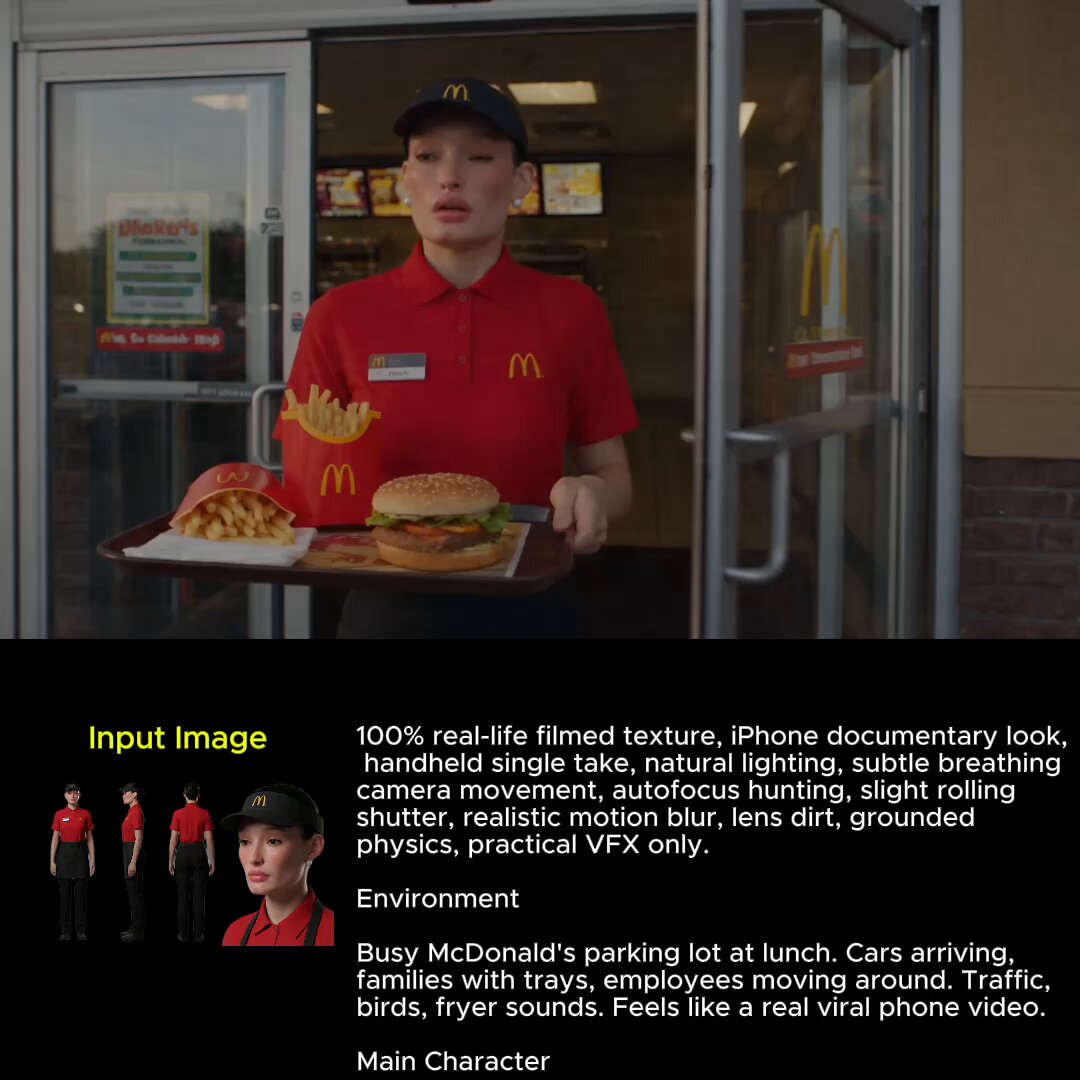
The most reliable approach is reference-based fusion. You create a small set of high-quality reference images of your character — front view, profile, three-quarter view, different lighting conditions — and feed these into the generation process for every scene. The model uses them as anchors, blending the reference identity with the new pose, expression, and environment.
Prompt Discipline
Descriptive consistency matters just as much as visual references. Build a character sheet with fixed descriptors: age range, hair color and style, eye color, distinguishing features, clothing, and accessories. Copy these descriptors verbatim into every prompt. Avoid synonyms or rephrasing; small wording changes can cause the model to drift.
Shot Grouping
Batch similar shots together. If your character appears in five scenes, generate all five in one session with the same reference set and prompt structure. This reduces the chance of style drift between sessions. Think of it like a film shoot: you block and shoot all scenes in a location on the same day to maintain lighting continuity. Do the same with AI generation.
The Director's Role in an AI Workflow
In a traditional production, the director interprets the script, guides performances, and makes thousands of creative decisions. In an AI workflow, the director's role shifts but does not diminish. You become a curator of prompts, a judge of outputs, and the keeper of narrative coherence.
The most valuable skill is knowing when to accept a generation and when to re-roll. AI models are probabilistic; the same prompt can yield wildly different results. A director's eye is what separates a random collection of clips from a film with a point of view. You must evaluate each output against the story's emotional arc, not just its technical polish.
Another key responsibility is pacing. AI generation makes it easy to produce beautiful shots, but beauty without rhythm is just a slideshow. Map out your edit before you generate. Know which shots are establishing, which are reaction, which are transition. Generate with editorial intent, not just visual ambition.
A Practical Workflow: From Script to Screen
Let's walk through a concrete workflow for a three-minute short film. This is the same structure you can apply to any project, regardless of genre.
Step 1: Script and Shot List
Write your script in standard format, then break it into a shot list. Each shot should have a clear purpose: establish location, reveal character, advance action, or provide emotional punctuation. A three-minute film might have 30 to 50 shots. Resist the urge to generate full scenes; work shot by shot.
Step 2: Storyboard with Fast Models
Use a fast, lower-fidelity model to generate rough storyboard frames for every shot. This is your previz. Arrange them in order and watch the sequence. Does the story read visually? Are there gaps in spatial logic? Fix these problems now, before you invest time in high-fidelity generation.
Step 3: Character and Style References
Create your character reference set. Generate 10 to 20 images of each main character in different poses and lighting conditions. Select the five strongest and use them as your canonical reference. Simultaneously, generate a style reference — a single image that captures the color palette, lighting mood, and texture you want for the entire film.
Step 4: High-Fidelity Generation
Now generate each shot using your chosen high-fidelity model. Feed in character references and the style reference. Generate multiple variations per shot — at least three to five — and select the best. Keep a spreadsheet tracking which model, prompt, and reference set produced each approved shot.
Step 5: Assembly and Editing
Import your selected clips into an editor. Cut for pacing, add sound design, music, and any dialogue. AI-generated dialogue can be synthesized with voice models, or you can record your own. Sound is half the experience; do not neglect it. A mediocre visual with great sound feels more professional than the reverse.
Step 6: Color and Polish
Even the best AI-generated clips benefit from a final grade. Use color correction to unify the look across scenes, especially if you used multiple models. Add film grain, subtle vignette, or other texture to tie the visuals together.
Matching Models to Cinematic Moments
Not all shots are equal. Some require precise control; others benefit from creative serendipity. Here is a decision framework:
- Dialogue and close-ups: Prioritize models with strong facial fidelity and expression range. These shots carry emotional weight, so technical quality matters most here.
- Action and motion: Choose models with robust temporal coherence. Fast movement often causes artifacts in weaker models. Test with a short clip before committing.
- Establishing shots and landscapes: Stylized models can shine here. A painterly or somewhat abstract establishing shot can set a mood more effectively than strict realism.
- Transitions and inserts: Use efficient models. These shots are brief and functional; save your rendering time for hero shots.
- Experimental sequences: Dream sequences, flashbacks, or montages are opportunities to use experimental models. The audience expects a shift in visual language, so you have permission to get weird.
Scaling Production Without Losing Cohesion
As your film grows in complexity, so does the risk of fragmentation. Different models, different sessions, different days — all of these introduce variance. Cohesion is something you must actively maintain.
Centralize Your Assets
Keep all character references, style references, and approved prompts in a single organized workspace. Name files consistently. Version your prompts. If a shot needs to be regenerated six months later, you should be able to reproduce the exact conditions.
Use a Consistent Prompt Template
Develop a prompt structure that you use for every generation. For example: [Character descriptors] + [Action] + [Environment] + [Camera angle and movement] + [Lighting and mood] + [Style reference]. Consistency in structure leads to consistency in output.
Review in Context
Never evaluate a shot in isolation. Place it in the timeline next to the shots that come before and after. A shot that looks stunning on its own might clash with its neighbors. Context is the only true test.
Common Pitfalls and How to Avoid Them
Even experienced creators run into predictable problems. Knowing them in advance saves hours of frustration.
Over-Reliance on a Single Model
Using one model for everything seems efficient but usually leads to a monotonous visual style. Different scenes have different needs. Embrace model diversity.
Ignoring Audio
AI video generation gets all the attention, but audio is what makes a film feel real. Poor sound design will undermine even the most beautiful visuals. Invest time in music selection, foley, and dialogue mixing.
Insufficient Reference Material
Generating with only a text prompt and no visual references is like asking an actor to perform without a script. References anchor the model and improve consistency. Always provide them when possible.
Chasing Perfection on Every Shot
Not every shot needs to be a masterpiece. Some shots are connective tissue. Spending hours perfecting a two-second transition is a poor use of time. Allocate your effort where the audience's attention will be.
Neglecting Narrative
The tools are exciting, but the story is what matters. A visually stunning film with no narrative arc will be forgotten. Start with a strong script and let the technology serve the story, not the other way around.
The Future of AI-Assisted Filmmaking
We are still in the early chapters of this revolution. Models are improving rapidly, and the gap between AI-generated and traditionally shot footage is narrowing. But the fundamental principles of filmmaking remain unchanged: story, character, emotion, and rhythm.
The creators who will thrive are not those who master every model, but those who understand how to use these tools in service of a compelling narrative. The technology is accessible; the vision is what sets you apart.
As you experiment, remember that constraints breed creativity. The limitations of current models can push you toward more inventive solutions. A workaround becomes a stylistic choice. An artifact becomes a motif. This is how new visual languages are born.
Frequently Asked Questions
How long does it take to produce a three-minute AI short film?
It depends on your experience and the complexity of the shots. A focused creator can previz and generate the core footage in a few days, with editing and sound adding another few days. Expect the first project to take significantly longer as you learn the tools.
Can I use AI-generated video for commercial projects?
Licensing varies by model and platform. Always check the terms of service for each tool you use. Many models allow commercial use, but some restrict it or require attribution. When in doubt, consult the specific license.
Do I need a powerful computer?
Most cloud-based AI video tools run on remote servers, so a standard laptop with a stable internet connection is sufficient. Local models, however, may require a capable GPU and significant RAM.
How do I maintain character consistency across many shots?
Use reference images, fixed prompt descriptors, and batch generation. Create a character sheet and treat it as law. The more constraints you provide, the more consistent the output.
What is the biggest mistake beginners make?
Neglecting the edit. Many beginners generate beautiful clips but struggle to assemble them into a coherent narrative. Learn basic editing principles, or collaborate with an editor, before diving into generation.
Final Thoughts
The path from text to epic scenes is now open to anyone with a story to tell. The tools are powerful, the models are diverse, and the only real limit is your creativity and willingness to iterate. Start small, focus on story, and let each project teach you something new. The AI short film revolution is not about replacing filmmakers — it is about giving more people the ability to become one.
