
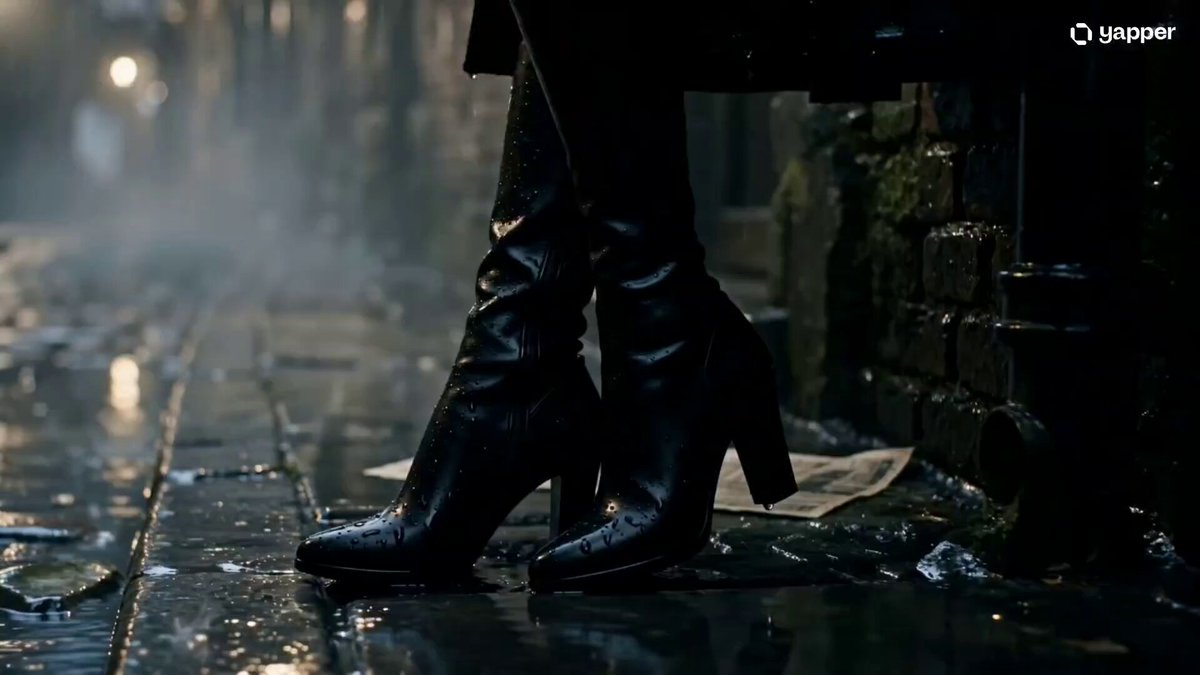
Why short films are the perfect training ground for AI video
A short film is the cheapest education a director can get. You learn structure, coverage, rhythm, and how an audience actually behaves when the lights go down — all in a format short enough that you can finish it, watch it with strangers, and start again. Generative video has collapsed the cost of producing a single shot, which means the bottleneck has moved. It is no longer the camera, the crew, or the location. It is preproduction: story, shot design, continuity, and the discipline to know what you are making before you make it.
Most people who start with AI video begin in the wrong place. They open a text-to-video tool, type something evocative, and get a beautiful six-second clip with no relationship to anything else. Ten of those clips do not make a film. They make a mood board that moves.
The workflow in this guide is built around the opposite instinct: treat the generator as a camera you have to schedule, not a slot machine you pull. You will plan a story that fits the runtime, build a style bible, translate cinematography into prompt language, design shots deliberately, manage continuity, then assemble in an edit where pacing — not generation quality — decides whether the film works.
Everything here is tool-agnostic. The same approach works in Runway, Kling, Luma, Pika, Veo, Sora, or whatever replaces them next season. Tools change monthly; the craft does not.
Story first: narrative structures that survive a short runtime
A two-minute film cannot carry a feature-length plot. The most common failure in AI short films is a story with three ideas competing for ninety seconds. Pick one idea, one character, one turn.
Compress the three-act structure
Think of the beats as percentages rather than pages. Roughly the first quarter establishes character and world. The middle half escalates pressure and reveals what the character actually wants. The final quarter forces a decision and shows the consequence.
For a 90-second film, that is about 22 seconds of setup, 45 seconds of escalation, and 23 seconds of resolution. It sounds mechanical, but it forces you to cut anything that is not load-bearing. If a scene does not change the character's situation, it is not a scene — it is footage.
Design one emotional turn
Audiences forgive simple plots. They do not forgive flat ones. Decide on the single emotional pivot before you write a line of dialogue or a prompt: trust becomes suspicion, hope becomes resignation, fear becomes resolve. Every shot should either set up that turn or pay it off.
A useful test: can you describe the film in one sentence containing the word "but"? "A courier delivers a package across a dead city, but discovers the recipient died years ago and has been waiting for a reply." That sentence is a film. "A courier walks through a dead city" is a screensaver.
Write the script, then the shot list
Resist the temptation to "write" by generating clips and hoping a story emerges. Write a real script — even a sparse one with no dialogue — then break it into shots. A shot list is a promise you make to your editor.
A practical shot list for an AI short includes, per shot: purpose in the story, subject and action, framing (wide/medium/close), camera behavior, lighting mood, duration in seconds, and continuity notes (wardrobe, props, time of day). That last column becomes your best friend later.
Prefer visual storytelling over dialogue
Text-to-video models still struggle with lip-sync, and dialogue forces you into a specific edit rhythm. Silent or near-silent shorts let you control timing entirely and lean on music and sound design — which are far more reliable than generated speech. If you need narration, record it yourself or generate a clean voice track separately and cut visuals to it.
Build a style bible before you generate a single frame
The difference between a student film and a film is consistency. Before generating anything, write a one-page style bible with four elements:
Palette. Name three to five colors and their relationships. "Desaturated teal shadows, sodium-orange practical lights, bone-white highlights" is workable. "Cinematic" is not.
Lens and texture. Choose a look: clean digital, 16mm grain, anamorphic flare, shallow-depth portraiture. Then repeat that phrase in every prompt so the model keeps returning to it.
Lighting logic. Where does light come from in this world? Practical lamps, overcast sky, single hard key? Naming a source prevents the model from inventing cheerful studio lighting in the middle of a night scene.
Character sheet. For each character, write a fixed description: age range, build, hair, wardrobe, distinguishing feature. Generate a still reference image and keep it beside you. Consistency across shots is mostly a paperwork problem.
This page is the single highest-leverage document in the whole process. When a shot looks wrong, you do not debug the model — you check whether your prompt drifted from the bible.
Prompting like a cinematographer, not a search engine
A prompt is not a description. It is a set of instructions to a camera operator who has never met you.
Use a five-part grammar
Structure every prompt as: subject, action, camera, light, mood. For example: "A woman in a wet wool coat, walking away from a burning car, medium shot on a 40mm lens at eye level, hard side light with deep shadows, cold and resigned." That sentence gives the model an anchor, a verb, a technical frame, a lighting diagram, and an emotional target.
Order matters
Most models weight early tokens more heavily. Put the subject and framing first; put stylistic flourishes last. If you lead with "dreamy ethereal cinematic masterpiece," the model will prioritize atmosphere over the person you actually need on screen.
Learn the vocabulary that changes images
A handful of terms do measurable work: lens length (wide, normal, telephoto), camera height (low angle, eye level, overhead), shot size (extreme wide, medium close-up, insert), depth of field (shallow, deep, focus on foreground), and lighting quality (hard, soft, motivated, practical, backlit, silhouette). Build your own list of phrases that reliably produce results and reuse them. Consistency beats cleverness.
Constrain with negatives and fixed seeds
Where the tool supports it, lock a seed so re-rolls stay in the same visual family, and use negative prompts to exclude drift: no text overlays, no extra fingers, no lens warping, no sudden day-for-night shift. If the tool lacks negative prompts, move exclusions into the positive prompt as "no text in frame, single subject."
Generate takes, not shots
Treat generation like a film set: shoot several takes per shot with small variations — slightly different angles, energy levels, or timing. Edit from takes. This is how you avoid the uncanny feeling of a film assembled from one perfect clip per beat.
Shot design: composition, lensing, and coverage
Good AI films look directed because the shots are chosen, not because the pixels are pretty.
Composition rules that survive generation
Text-to-video models are decent at centering a subject and poor at complex staging. That is actually an advantage: strong, simple compositions read well. Place your subject off-center along a third line, give them looking room in the direction of their gaze, and keep the background uncluttered. When a shot needs to feel oppressive, fill the frame with architecture; when it needs to feel lonely, give the subject a small figure against a large space.
Lens language as emotional grammar
Wide lenses exaggerate space and isolate a small figure — useful for vulnerability. Normal lenses feel observational and honest, which is why they carry dialogue and reaction shots. Telephoto compression flattens the world and creates intimacy or surveillance, depending on context. Decide the lens before the prompt, not after the render.
Plan coverage, not a slideshow
A common AI-film tic is a sequence of unrelated beautiful wide shots. Build coverage instead: an establishing wide, a medium that carries the action, a close-up that reveals the emotional beat, and an insert (hands, object, clock) that gives the editor something to cut to. Once you have a wide, a medium, and a close of the same moment, you can build rhythm in the edit instead of simply cutting between ideas.
Respect screen direction
If a character moves left to right, keep them moving left to right across the sequence, and keep the camera on one side of the action. Jumping sides disorients the viewer instantly, and it is one of the most common reasons AI shorts feel like a compilation rather than a scene. When you must cross the line, insert a neutral shot — straight-on or an insert — to reset the audience.
Lighting and color scripting
Lighting is the cheapest way to signal professionalism. It is also the easiest thing to ignore when you are generating clip by clip.
Write a color script: a simple list mapping each beat of your story to a lighting condition and palette. Early scenes might be flat, gray, overcast — low contrast, no shadows. The escalation could shift to hard directional light with amber practicals. The resolution might return to soft light but warmer, implying change. Because the audience reads color shifts subconsciously, a color script gives a three-minute film the emotional arc of a longer one.
Practically, keep two or three lighting phrases that you reuse across shots in the same scene: "soft window light from the left," "single overhead fluorescent, green cast," "backlit haze, sun low behind subject." Repeating phrases is not lazy — it is how continuity is manufactured in a system that has no memory.
Also decide on contrast level early. High-contrast, low-key imagery hides generation artifacts in shadow and creates mood fast. Flat, high-key lighting exposes every inconsistency in skin texture and background detail. Beginner AI films often look flat precisely because the generator defaults to even, shadowless light.
Camera movement: when motion helps and when it destroys a shot
Movement is where AI video is least reliable. Generated dolly moves drift, pans introduce warping, and a busy camera hides whatever the actor is doing.
The most useful principle: move the camera only when the move means something. A slow push-in on a face increases tension and intimacy. A pull-back reveals context and often works as an ending. A handheld-style drift suggests documentary immediacy. A locked-off shot implies control, and it is far easier to cut because the frame is stable.
For practical work, describe motion in plain, modest terms: "slow push in," "gentle handheld drift," "static tripod shot." Avoid complex choreography like crane arcs around a moving subject; the model will either ignore it or warp the geometry. If a shot needs real motion, generate it in shorter segments and cut between them, using the edit to imply a continuous move.
A good rule for a first short: one moving shot per scene, and everything else locked off or nearly locked off. It looks intentional, and it saves enormous time on re-rolls.
Continuity: the hardest problem in AI filmmaking
Nothing breaks the illusion faster than a coat that changes color between cuts, or a character whose face ages two decades across a conversation. Continuity is a production management problem, and it must be solved before the edit.
Use stills as anchors. Generate a reference image for each character and each key location, then feed it into the video tool wherever image-to-video or reference conditioning is supported. When a tool has no reference feature, keep prompts nearly identical for every shot of the same character and accept that some shots must be re-rolled until they match.
Keep a continuity log with a row per shot: time of day, weather, wardrobe, props in hand, screen direction, and lens. Check the log before writing each prompt, not after watching the render. Ten seconds of checking prevents an hour of regeneration.
Where a mismatch is unavoidable, hide it in the edit. Cut from a wide to a close-up rather than from medium to medium. Use an insert of an object, a reaction shot, or a cutaway to a different angle. Audiences accept discontinuity across a strong cut much more readily than within a matched pair of shots.
Finally, do not ask the same shot to do two jobs. A shot that moves, changes costume, and delivers an emotional beat will fail. Split it.
Assembly: editing, sound design, and pacing
Your film is not finished when the last clip renders. It is finished when the cut works.
Import everything into a real editor — DaVinci Resolve, Premiere Pro, Final Cut, or CapCut if you want speed — and build a rough cut with no effects at all. Get the story working first. Most AI shorts feel long because they linger on beautiful footage; trim every clip until the cut feels slightly too fast, then add two frames back.
Sound is where amateur AI films lose audiences. Add three layers: a music bed that follows the emotional arc, ambient room tone for every location (even a dead-silent room needs low-level noise so cuts do not pop), and specific sound effects tied to on-screen action — footsteps, cloth movement, a door. Sound effects sell the reality of a shot far more effectively than resolution does.
Then grade everything toward your color script. A single gentle grade — matching contrast and color temperature across shots — will do more for perceived production value than regenerating anything. Add a light grain pass if your shots feel too clean and inconsistent; a little texture hides small differences in rendering style.
Export at a standard aspect ratio and bitrate, watch the whole thing on a phone with the sound on, and cut again. The phone test is brutal and honest.
Troubleshooting and FAQ
Why do my characters look different in every shot? Almost always a reference problem, not a model problem. Build a character sheet, lock a fixed description, use image references where available, and re-roll until the match is close enough. For minor drift, cut wider instead of closer.
My shots look beautiful but the film feels empty. What is missing? Structure and coverage. Beautiful frames are not a story. Go back to the beat breakdown, confirm each shot has a job, and add the medium and close-up coverage you skipped.
Should I generate long clips or short ones? Short. Generate 4–8 second segments and build longer takes in the edit. Long generations drift, mutate detail, and give you less control over pacing.
Is dialogue worth attempting? Only if it is the point of the film. For most shorts, narration, intertitles, or pure visual storytelling will produce a stronger result with far less re-rolling.
How many takes should I generate per shot? Three to five is a reasonable default. Better to have options than a perfect single clip you cannot cut around.
What is the fastest way to improve? Finish something. A rough two-minute film that exists teaches more than ten polished sixty-second tests that never reach an edit. Set a deadline, ship it, note what failed, and start the next one with a better shot list and a tighter style bible.
