
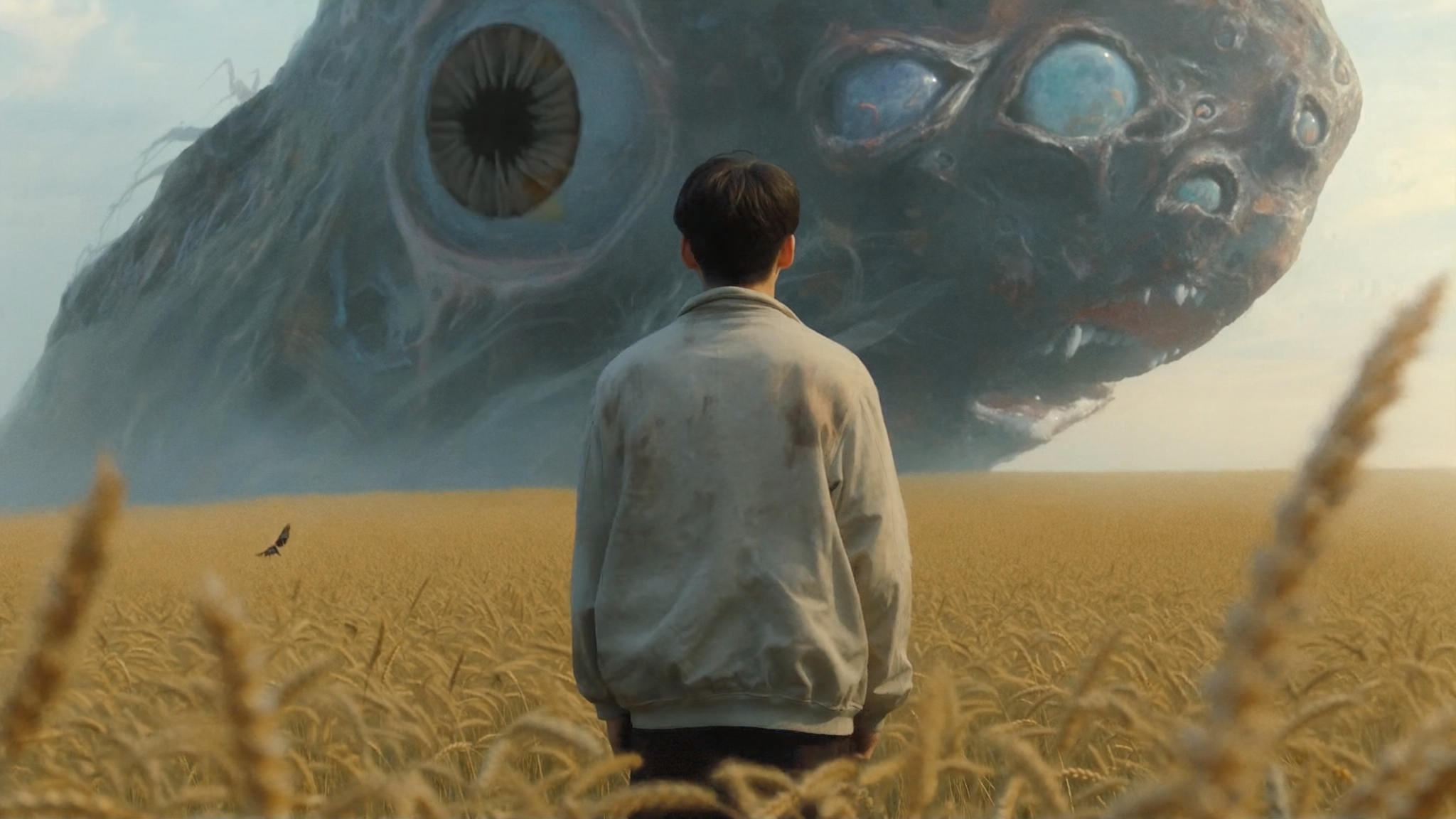



Short-form video has always rewarded volume and iteration. The more hooks you test, the faster you learn what your audience actually watches. What changed is the cost of testing. Generative video tools collapsed the distance between "I have an idea" and "I have a clip ready to publish," so a single creator can now iterate at a pace that used to require a small production crew.
This is a workflow-first guide to producing short vertical video with AI. It walks through the full pipeline, the decision points where projects succeed or fail, and the habits that separate clips people finish from clips people scroll past. No hype, no tool worship — just a repeatable system you can adapt to whichever generation models you prefer.
Why short-form AI video changed the production math
Three shifts matter, and they compound.
Iteration became cheap. When a new shot costs a few minutes of prompting instead of a shoot day, you stop protecting your first idea and start testing five. That changes creative behavior more than any single model upgrade. Creators who treat generation as a sketchpad — rough, fast, disposable — consistently outperform creators who treat every prompt as a final render.
The bottleneck moved. Generation is no longer the hard part. Consistency, pacing, sound design, and hook writing are. Most weak AI clips are not weak because the pixels look artificial. They are weak because nothing happens in the first two seconds, or because the voice sounds like a navigation system reading a novel, or because the scene changes before the viewer understands what they are looking at.
Distribution rewards frequency and format fit. Algorithmic feeds favor accounts that publish regularly and match expectations: vertical frame, tight runtime, readable captions, and a payoff before the ten-second mark. A polished clip that arrives once a month loses to a decent clip that arrives four times a week, because the feedback loop is the actual asset.
The practical consequence: your advantage is a system, not a tool. Tools get replaced every few months. A tight workflow survives model swaps, editor changes, and platform shifts.
The end-to-end workflow: from idea to published clip
Treat production as six stages with hard boundaries. Skipping stages is the most common reason AI video projects stall halfway through generation.
Stage 1: Hook and concept
Start with the promise of the clip, not the visuals. Write the first line of the caption and the first spoken sentence before you generate anything. If you cannot state the payoff in one sentence, no amount of visual polish will rescue the video.
A few hook shapes that work reliably:
- The counterintuitive claim: state something the viewer believes is false, then prove it in eight seconds.
- The before-and-after reveal: show the ugly starting point immediately, hold the transformation for the middle.
- The rapid list: three to five items, each with its own visual, delivered at a clip.
- The "watch this happen" loop: one continuous process the viewer cannot predict the end of.
Decide the format here too: talking head with generated b-roll, pure generated narrative, product demonstration, or a visual loop with narration. Format determines almost every downstream choice, including which generation route you should use.
Stage 2: Script and shot list
Short-form scripts are structural, not literary. Aim for 60 to 90 spoken words per 30 seconds, and cut every sentence that does not advance the promise. Write for the ear: short clauses, concrete nouns, no throat-clearing.
Then convert the script into a shot list. Each row should contain five things:
- Subject and action
- Camera behavior (static, push in, orbit, handheld)
- Approximate duration
- Which generation route you will use
- Any continuity details that must not change between shots
The shot list is what makes AI video manageable. Prompting without one produces beautiful, disconnected fragments. Prompting with one produces a sequence — and sequences are what get watched to the end.
Stage 3: Generation
Batch by scene, not by whim. Generate three to four takes per shot and keep a consistent naming convention, such as project_scene03_take02. You will thank yourself during editing, when you need to find the one take where the hands behaved.
Accept imperfection at the frame level. A slightly soft detail is invisible at phone scale; a missing subject is not. Fix problems by regenerating the clip, not by scrubbing individual frames.
Stage 4: Assembly and pacing
Cut to the rhythm of the narration, not to a grid. Fast informational content usually lives at 1.5 to 3 seconds per shot. Narrative or atmospheric content can hold 4 to 6 seconds. If a shot feels even slightly long, it is.
Trim the first and last few frames of generated clips when the motion ramps awkwardly. Prefer hard cuts over dissolves — short-form viewers read dissolves as dead air. Use a match cut or a whip pan when you need a transition that keeps energy up.
Stage 5: Sound and captions
Sound is half of perceived quality and the most neglected layer in AI video. Build four tracks: primary voice, music bed, ambience or room tone, and accents such as impacts and whooshes. Duck the music roughly 18 to 22 decibels under the voice so dialogue stays intelligible on phone speakers.
Captions are not optional. A large share of viewers watch muted, especially on public transport and in offices. Use two to four words per line, high-contrast text with an outline, and position them inside the safe zone — roughly the middle 70 percent of the vertical frame.
Stage 6: Publish and variant testing
Export two to four variants that differ only in the hook and the first frame. Keep everything else identical so you can attribute performance to a single variable. Publish one per time slot, then read the three-second retention number rather than the vanity metrics.
Choosing your generation path
Four routes cover almost all short-form work. Choosing well saves more time than any prompt trick.
Text-to-video
Fastest from concept to footage, least control. Best for environments, abstract imagery, establishing shots, weather, effects, and anything without a recurring character. Describe subject, action, camera, lighting, and mood in that order and keep prompts under about 80 words.
Image-to-video
This is the workhorse for consistency. Generate or photograph a still you genuinely love, then animate it. Because the composition is already locked, the model only has to solve motion, which dramatically reduces surprises. Make this your default for any project with a recurring person, product, or location.
Video-to-video and restyling
Useful for stylization, cleanup, upscaling, frame interpolation, and turning live footage into an illustrated or rendered look. It is also the least predictable route, so use it on short inserts rather than whole sequences.
Hybrid pipelines
Most professional short-form AI work is hybrid: stills from an image model, animated with image-to-video, intercut with live footage or screen captures, sweetened with synthetic or recorded audio, captioned and assembled in a conventional editor. Hybrid pipelines are more robust because you always have a fallback when a generative shot refuses to cooperate.
| Goal | Recommended route | Why |
|---|---|---|
| Recurring character across many clips | Image-to-video with a locked reference | Composition control beats prompting luck |
| Establishing shots and b-roll | Text-to-video | Fast, cheap to discard, easy to vary |
| Product or UI demonstration | Screen capture plus light restyling | Accuracy matters more than spectacle |
| Stylized transformation | Video-to-video | Motion is preserved while the look changes |
| Tight deadline, single idea | Text-to-video only | Fewest moving parts |
Consistency: the hardest problem in AI video
Consistency is what turns individual clips into a recognizable channel. It has three layers, and each needs its own method.
Character consistency
- Build a reference sheet with three to five canonical images: front, three-quarter, profile, full body, and one expressive close-up.
- Reuse the same seed or reference image every time, and change one variable per generation.
- Describe characters with five to seven fixed attributes — approximate age, hair, wardrobe, silhouette, one distinguishing detail — and paste that description verbatim into every prompt.
- Resist wardrobe changes mid-sequence unless the script calls for them. Outfit continuity is the easiest consistency cue for viewers to spot.
- For long-running series, a small trained character adapter is worth the setup time.
Environment and prop consistency
Create location bibles: same lighting direction, same palette, same textures, same signature object. Keep a single style string and reuse it word for word. If a location will appear again in a later video, archive the original reference keyframe and its prompt so you can rebuild it months later without guessing.
Style consistency
Apply one finishing grade — contrast curve, saturation, grain, and color temperature — across every clip you publish. This single habit does more for perceived production value than upgrading models, because a uniform look reads as intentional authorship.
Keyframes, camera language, and visual control
Keyframe conditioning is the closest thing AI video has to directing. When a model supports first-frame and last-frame input, you gain two enormous advantages: you can force a shot to start exactly where the previous one ended, and you can define the destination of a movement rather than hoping for it.
Use it for:
- Match cuts between a wide and a close-up of the same subject
- Continuous camera moves that must land on a specific composition
- Loops where the final frame must match the opening frame
- Reveals where the last frame carries the punchline
Camera language matters just as much. Short-form video has no room for ambiguous framing, so choose one dominant camera behavior per shot and say it plainly: slow push in, slow orbit, handheld follow, crane up, locked off. Avoid stacking three movements into one prompt; models resolve competing motion instructions by producing mush.
A reliable prompt order is: subject and action, camera, lighting and lens, mood and palette. Add negative guidance only where a specific failure keeps recurring, such as extra fingers or on-screen text. And give every shot a motion budget — exactly one thing should move in a way the viewer notices.
Sound, voice, and captions
Audio is where amateur AI video reveals itself fastest. Work in layers and mix deliberately:
- Voice. Pick one synthetic voice and keep it for the whole series, or clone your own for authenticity. Vary pacing by splitting sentences into separate generation passes; monotone delivery is usually a pacing problem, not a voice problem.
- Music. Choose a track with a clear rhythmic entry point so you can align your first cut to the beat. Keep the mix simple: one bed, no competing melodies.
- Ambience and foley. A room tone under dialogue and a soft impact on every hard cut makes the edit feel intentional rather than assembled.
- Captions. Burned-in text with an outline, two to four words per line, matching the rhythm of speech. Avoid auto-caption defaults; they misplace punctuation and split words badly.
Normalize loudness before export. Platforms typically want integrated loudness around -14 LUFS with peaks no higher than -1 dB, and clips that are quiet relative to competitors get scrolled past in the first second.
Quality control: a pre-publish checklist
Run the same twelve checks every time. It takes two minutes and prevents most embarrassing publishes.
- Does the first frame read clearly at thumbnail size?
- Is the first spoken sentence intelligible in the first two seconds?
- Are faces, hands, and text free of visible artifacts in every shot?
- Is the aspect ratio correct and are captions inside the safe zone?
- Are captions synced to within a quarter second of speech?
- Is the character's wardrobe and hair identical across shots?
- Does any shot exceed four seconds without new information?
- Is the voice louder than the music on a phone speaker?
- Is loudness normalized and are peaks controlled?
- Does the last frame give a reason to rewatch or follow?
- Are there no watermarks, stray logos, or leftover UI elements?
- Is the export file named and archived for the next video in the series?
Common mistakes that hurt retention
Generating before writing. Beautiful footage with no argument is the most common failure in AI video. Write the hook first.
Model roulette. Switching generation tools mid-project resets your consistency baseline and forces you to relearn quirks. Finish the project on the tools you started with.
Overlong establishing shots. If the audience already understands where they are, cut. Three seconds of scenery is a luxury; one second is usually enough.
Contradictory prompts. "Wide close-up," "static tracking shot," and similar conflicts force models to average opposite instructions. Pick one.
Ignoring audio until the end. Sound decisions change pacing decisions, so build the voice track early and cut against it.
Publishing the first take. Three takes per shot is the minimum. The third is almost always better than the first.
No series thinking. One-off clips accumulate views; series accumulate audience. Recurring formats, characters, and visual signatures compound.
Scaling a repeatable production system
Once the workflow is stable, the goal becomes throughput without quality drift. Five habits carry most of the weight.
Design series, not videos. A recurring format with a fixed structure — same opening beat, same visual signature, same runtime band — lets you produce faster and lets viewers recognize you instantly.
Batch by stage. Write five scripts in one session, generate all footage in another, then edit in a single block. Context switching is the hidden cost in creative work; batching removes most of it.
Maintain an asset library. Keep character sheets, location references, style strings, saved prompts, and an approved music set in one organized folder. Your library becomes more valuable than any individual clip.
Template the project file. Build a master edit file with your caption styles, audio chain, loudness targets, and export presets already configured. Every new video starts at 70 percent complete.
Close the metrics loop weekly. Track three-second retention, average watch percentage, completion rate, and shares. Retire formats that underperform after three attempts; double down on the one that consistently holds viewers past the midpoint.
FAQ
Do I need editing experience to make AI short videos?
Not initially, but basic editing literacy pays off fast. Understanding pacing, audio levels, and caption timing matters more than advanced compositing. A simple editor with a good audio chain will outperform a complex one used badly.
How long should an AI-generated short video be?
Most informational short-form works best between 15 and 40 seconds. Narrative clips can run 45 to 60 seconds if the story earns it. Let retention data, not preference, decide where you land.
Is text-to-video or image-to-video better for beginners?
Image-to-video is more forgiving. You can iterate on a still until it is exactly right, then animate it. Text-to-video is faster for disposable b-roll but frustrating when you need a specific composition.
How do I avoid the telltale "AI look"?
Five fixes cover most cases: lock a consistent grade, add grain and slight lens imperfection, keep one dominant motion per shot, cut faster, and layer real sound design. The unnatural feeling usually comes from over-smooth motion and silent, glidey shots.
How many takes should I generate per shot?
Three to four. Fewer and you settle for compromise; more and you spend your time triaging instead of editing. If four takes all fail, the prompt is wrong, not the model.
Should I disclose that a video is AI-generated?
Follow the disclosure rules of the platforms you publish on and the expectations of your audience. In most categories, being transparent about process costs you nothing and protects you if rules change. Where synthetic voices impersonate real people or events, disclosure is not optional.
What is the single highest-leverage improvement I can make?
Rewrite your first two seconds. Across almost every short-form account, improving the hook moves retention more than upgrading generation quality, editing style, or music selection.
