

Why short-form video needs a production system
Short-form video is the most competitive surface in social media, and the rules are unforgiving. A viewer decides in roughly one second whether to keep watching, and most platforms read an early swipe as a signal to slow distribution. Every clip competes on two fronts at once: the strength of its opening promise and the smoothness of everything that follows. Production value helps, but it rarely rescues a clip with a weak first two seconds.
Generative video changes the economics of that competition. Shots that once required a camera crew, a location, a model, and a lighting setup can now be produced as variations in a single afternoon. The catch is that cheap shots make cheap mistakes easy to repeat at scale. Without a structured workflow, teams end up with a folder of attractive clips that do not connect, do not carry a message, and do not survive a caption-free viewing.
A workflow solves three problems at once. It makes output consistent enough to schedule, it makes review fast enough to catch bad generations before they reach an editor, and it makes performance analysis meaningful because you change one variable at a time instead of rebuilding everything from scratch.
The goal of this guide is not to sell a tool. It is to describe a repeatable pipeline you can run with whatever generators you already have access to, and to show where human judgement still decides whether a clip succeeds.
What generative video handles well versus poorly
Mismatched expectations are the single biggest source of wasted time in AI video production. Being precise about capability saves hours every week.
Strengths worth building around
- B-roll and atmosphere. Abstract textures, cityscapes, product-adjacent environments, weather, light play, and movement-heavy inserts are cheap to generate and easy to cut around.
- Style consistency. Once you have a look — color grade, lens feel, palette, grain — you can reproduce it across dozens of clips so a series feels intentional rather than accidental.
- Volume and iteration. Ten variations of the same shot with different camera moves cost almost nothing compared with reshooting on location.
- Localization and reformatting. Resizing, re-framing, and adapting one concept for multiple placements is largely mechanical work.
- Pre-visualization. Boards and animatics that explain a creative direction to stakeholders before anyone books a studio.
Limits you should design around
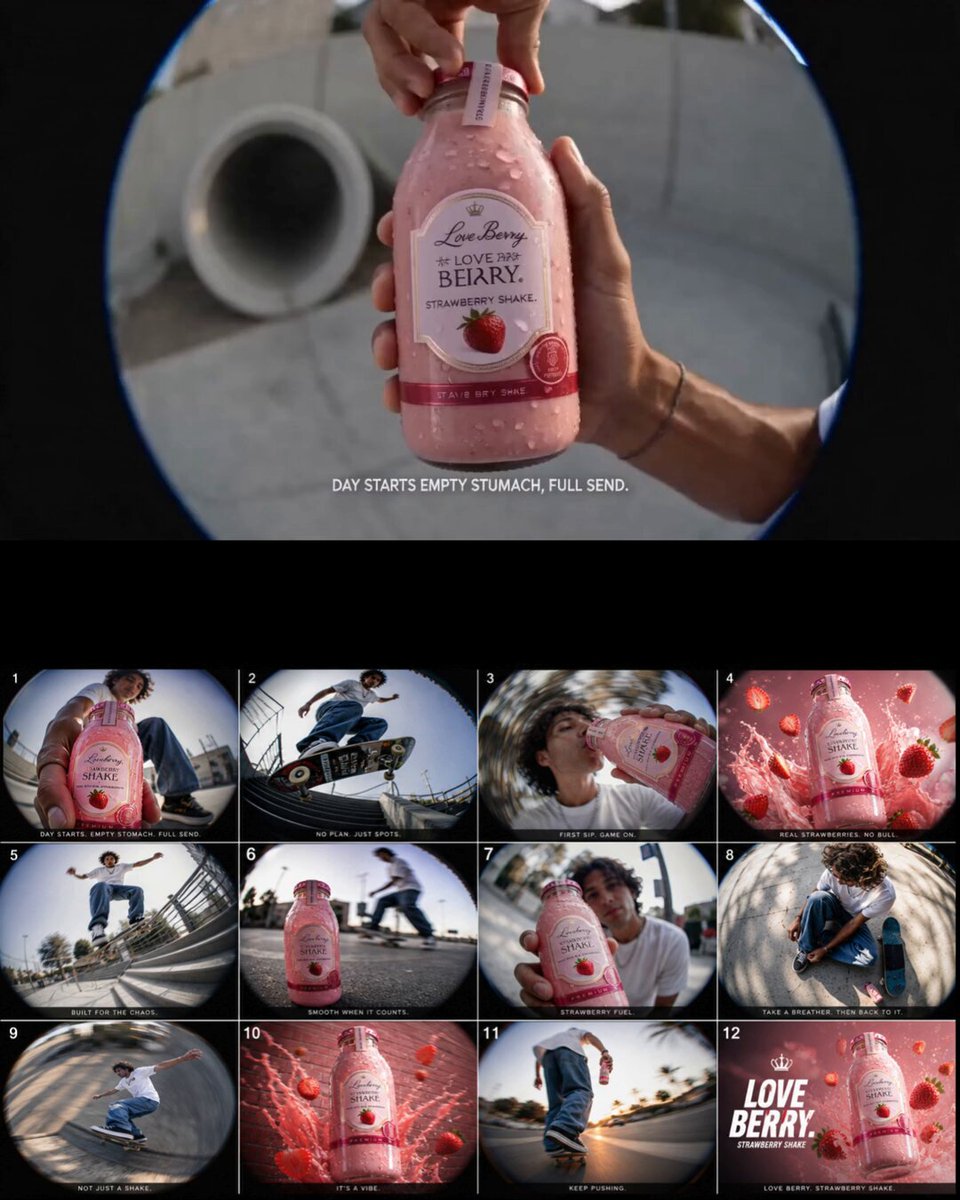
- Precise brand assets. Logos, packaging text, and product labels drift across frames. Generate the environment, then composite the real asset in an editor.
- Hands, tools, and fine manipulation. Models still produce the occasional impossible finger or melting object. Keep these shots short, cut away quickly, or shoot them practically.
- Long continuous narrative. Character consistency degrades across many shots. Treat each shot as its own unit and connect them in editing rather than asking one generation to carry a story.
- Legally sensitive claims. Anything resembling a testimonial, a medical claim, or a before-and-after should come from a documented source, not a generator.
- Readable on-screen text. Generate the plate, then add typography in post. This also makes translation trivial.
A practical rule follows from this list: generate the background, the mood, and the motion; build the message with editing, typography, and sound.
Brief before prompt: the one-page planning sheet
The most common failure mode is opening a generation tool before deciding what the video is for. A one-page brief prevents that.
The one-sentence promise
Write a single sentence describing what the viewer gets. "This clip shows how to fold a travel jacket into a pouch in eight seconds" is a promise. "Brand awareness video" is not. If you cannot write the sentence, the video is not ready to produce.
Platform constraints
Decide these before generation, because they change framing:
- Aspect ratio and safe areas, especially where captions and interface elements sit.
- Expected viewing condition — mostly muted, mostly mobile, occasionally with sound.
- Duration target: 15, 30, or 45 seconds, with a hard maximum.
- Whether the clip must work as a seamless loop.
Success criteria
Choose one primary metric and one guardrail. Example: primary is three-second retention, guardrail is profile visits. Deciding this in advance stops the argument later about whether a clip "worked" or simply felt good in the review meeting.
Assets and access
List what must be real: the product itself, a location, a person on camera, a legal disclaimer. Everything else is a candidate for generation. This split determines your shot list more than any creative preference.
Hooks and beats: writing for the first two seconds
The hook
A hook is not a slogan. It is a visual or verbal event that creates a question. Effective patterns include:
- A result shown before the process: "Here is the finished cake — now the four-minute version."
- A contradiction: "Stop cleaning your cast iron with soap" — then the correction.
- A number with stakes: "Three settings that quietly drain your battery."
- Motion and change inside the frame: something enters, breaks, or transforms.
Keep the hook under two seconds and make sure it reads without sound. If the first frame is a static logo, you have spent your most valuable second on the least interesting content.
Beat structure
For a 30-second clip, a reliable skeleton is:
- Hook (0–2s): the question.
- Context (2–6s): why it matters, stated plainly.
- Development (6–20s): two or three concrete steps, each with its own micro-payoff.
- Payoff (20–26s): the result, shown clearly.
- Close (26–30s): one instruction or one open loop for the next clip.
Every beat should stand alone visually. If a beat only makes sense while someone is talking, add an on-screen element that carries the same information.
Scripting for captions
Write the script in short lines that can become captions. Lines of six to eight words are readable at speed; lines of fifteen are not. Mark which words will be emphasized. Good caption rhythm does most of the work of "editing energy" in clips that lack camera movement, and it costs nothing compared with regeneration.
Testing hooks before you generate
Write three hook lines, read them aloud, and keep the one that makes a listener ask a follow-up question. That thirty-second test is cheaper than producing three full clips.
Building a shot list and writing prompts that survive editing
A shot list converts language into images. Each row should contain: shot number, duration, description, camera behavior, subject action, lighting, and the prompt draft.
Practical shot vocabulary
Most short clips are built from a small set:
- Establishing insert (1–2s): sets place and tone.
- Detail macro (1–2s): texture, material, or mechanism.
- Action shot (2–4s): a hand, a pour, a step, a click.
- Reaction shot (1–2s): a human signal of outcome.
- Transition element (0.5–1s): a wipe, a pass-by, a light change.
- Result shot (2–3s): the payoff image.
Rotate these deliberately. A clip built only from result shots feels static; a clip built only from action shots feels busy and tiring.
Continuity anchors
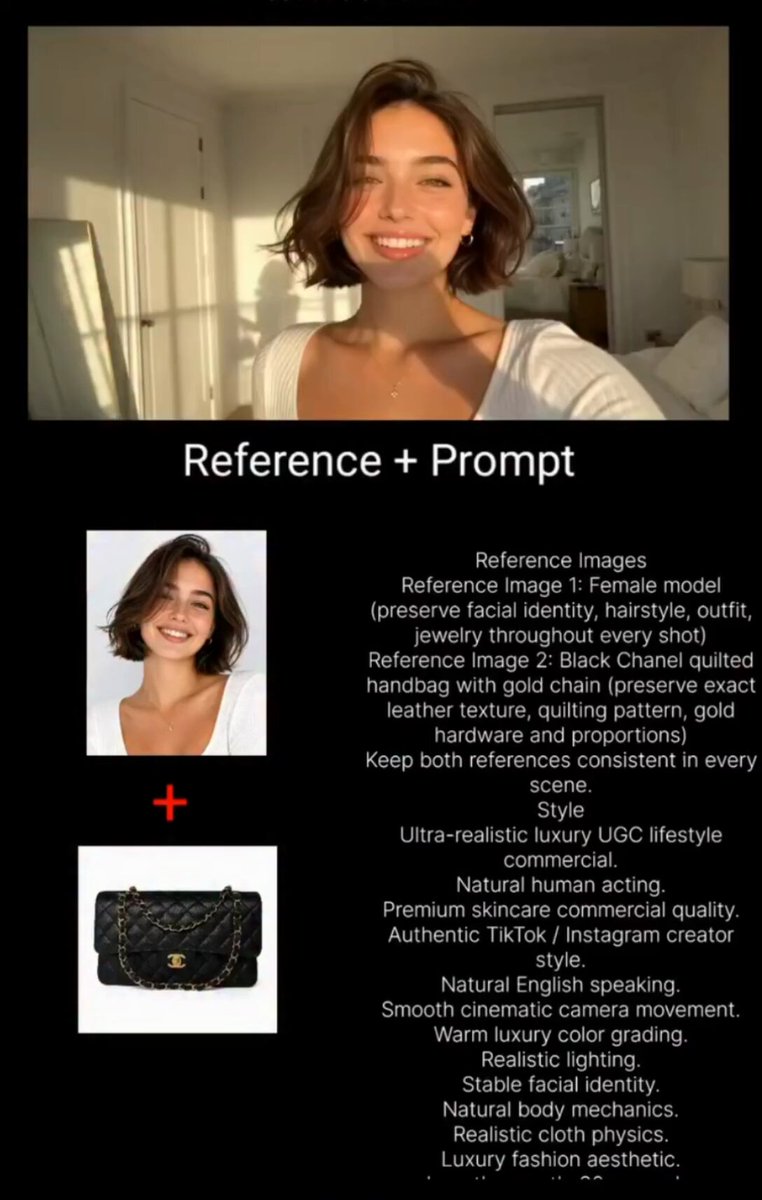
When several generated shots need to feel like one scene, fix a small set of anchors and repeat them verbatim in every prompt: wardrobe description, color palette, lens and depth of field, time of day, and surface materials. Consistency comes from repeating constraints, not from hoping a model remembers your earlier prompt.
Writing prompts that survive editing
A workable prompt order is: subject, action, environment, camera, lighting, style, then exclusions. Keep exclusions short and specific — text overlays, extra limbs, watermarks, unwanted lens flares. Long negative lists tend to confuse output more than they help.
Generate at least three variations per shot and choose the one that cuts best, not the one that looks best alone. A shot that is technically beautiful but breaks the pacing of its neighbours is still the wrong shot. Also name your files the moment you export them, using a scheme like campaign_shot03_v2, or you will lose the winning take inside an hour.
A worked example: a 30-second product teaser
Suppose the brief promises: "See how one small device replaces three chargers in a travel bag." The shot list might look like this.
- Shot 1 (1.5s): Overhead of a cluttered bag, cables tangled. Prompt for a warm, slightly grainy overhead plate with soft window light. Purpose: establish the problem.
- Shot 2 (2s): Close macro of one clean device dropping into an open palm. Motion in frame creates the hook payoff.
- Shot 3 (3s): A hand sweeps the three old chargers off the table. Keep it fast; hands are a weak point, so mask with motion blur and cut on the exit.
- Shot 4 (4s): Device plugged into a laptop in a café environment. Establishing insert plus action, no dialogue needed.
- Shot 5 (3s): Checklist overlay showing three devices replaced. Added in the editor as typography, not generated.
- Shot 6 (2.5s): Payoff: the device in a small pouch, bag zipped, held for a beat so the viewer can read the final frame.
Notice what is generated and what is not. The close-up of the real product would be filmed or supplied as a still and animated, because fidelity matters when a viewer might recognise the item. Everything atmospheric is generated, which is where the time savings actually come from. Total generation work: roughly eight prompt runs, twenty minutes of selection, and a thirty-minute edit, versus a half-day shoot for the same result.
Now change one variable. If the primary metric is three-second retention and the opening overhead shot underperforms, replace shot 1 with a hand tearing open the tangled cable mess. Everything else stays. That is how a system turns a guess into a measurement.
Routing each shot to the right tool
Rather than chasing a single best model, route each shot to the tool whose strengths match the requirement. Compare candidates on:
- Motion realism — how believable is movement under physics?
- Character and object consistency — does the same person or product stay recognisable?
- Text and graphic fidelity — can it hold a label or sign, even briefly?
- Duration and aspect ratio — does it deliver the length and frame you need natively?
- Style range — cinematic, illustrative, documentary, animated?
- Iteration speed — how quickly can you see a result and try again?
- Cost predictability — can you forecast spend per finished minute of video?
- Rights and usage terms — commercial use, training-data concerns, output ownership.
A simple routing habit: use cinematic generators such as Veo, Sora, or Kling for hero shots; fast lightweight generators such as Pika, Luma, or PixVerse for inserts and transitions; image-to-video for anything that must match an existing asset; and traditional editing or practical shooting for hands, text, and precise products. Midjourney-style image generation plus image-to-video is often the most controllable path when a shot must match a specific composition.
Do not fight a model's weakness when a different tool handles it in a single pass. If your pipeline depends on one model for everything, you will spend your time working around limitations instead of publishing. Keep a short internal note of which tool produced which shot, both for rights tracking and for troubleshooting when a style drifts.
Editing, sound design, and captions
Cutting rhythm
Short-form rewards pace, but not chaos. A useful default is a cut every 1.5 to 2.5 seconds during development, with a slightly longer hold on the payoff so the viewer can actually read it. Cut on motion whenever possible; motion hides the seam and keeps attention forward.
Sound design
Three layers, at minimum:
- A music bed with a clear beat so cuts can land on it.
- Ambience or foley that sells generated footage as real.
- Voiceover or dialogue, if the concept needs explanation.
Generated footage often has no natural sound, and silence reads as artificial faster than any visual artefact. Adding a soft room tone under a kitchen shot does more for believability than another hour of regeneration. If you use synthetic voice, keep sentences short, slow the delivery slightly, and avoid overly clean diction that sounds like a broadcast advert.
Captions and readability
Keep captions inside the safe area, use a high-contrast font with a subtle shadow or plate, and cap at two lines. Never let captions cover the subject's face or the product. If you plan to run the clip in multiple markets, generate the visual plate without baked-in text and add typography per language in the editor.
Assembly order that avoids rework
Lock picture first, then captions, then sound, then colour. Reversing this order means rebuilding captions every time a shot changes length, which is the most common source of last-minute panic before publishing.
Publishing, testing, and the first-hour loop
Post variations, not duplicates
Prepare two to four variants that differ in one meaningful dimension: the hook, the thumbnail frame, or the close. Hold everything else constant. Testing three hooks teaches you more than testing three completely different videos.
First-hour behaviour
The first hour sets the tone for distribution. Practical actions: reply to early comments with a question, pin a comment that adds context, and check retention at the two-second and midpoint marks. If two-second retention is weak, the hook is the problem. If it drops at the midpoint, the development beat is too slow.
Cadence over perfection
A sustainable publishing rhythm beats occasional masterpieces, because both the algorithm and your audience reward familiarity. Batch the work: write five scripts in one sitting, generate all shots in another, edit in a third. Context switching is what kills consistency.
Seven mistakes that quietly ruin AI short video
- Generating before briefing. Produces beautiful clips with no message. Fix: one sentence, one metric, one format before you open a tool.
- Over-long prompts. Dense prompts reduce control rather than increase it. Fix: subject, action, camera, light, style, exclusions.
- Ignoring sound. Silent generated clips feel artificial. Fix: budget an hour for audio on every clip.
- Baked-in typography. Makes localization and revision expensive. Fix: separate plates and typography layers.
- Single-take thinking. Asking one generation to carry an entire narrative. Fix: short shots, strong cuts.
- No variation set. Publishing the first acceptable output. Fix: three options per shot, chosen in sequence.
- No archive discipline. Without naming conventions and notes, you cannot find the shot that worked last month. Fix: a folder per campaign, one folder per shot, and a notes file listing prompts that succeeded.
Quality control checklist before publishing
Run this list on the smallest screen you support, with the sound off, then again with headphones.
- Does the first frame communicate the topic without sound?
- Is the promise from the brief visible within two seconds?
- Are there any impossible objects, warped hands, or drifting logos?
- Does captioned text fit within safe areas at the smallest supported size?
- Is the audio mixed so that voice is intelligible on a phone speaker?
- Does the last frame give a reason to watch again or follow?
- Is the use of any realistic person, brand, or location cleared for this use?
- Is there exactly one clear call to action?
Anything that fails should be fixed or cut. A 20-second clip with no weak shot outperforms a 30-second clip with one bad beat, because the weak beat is usually where viewers leave.
FAQ
How long should an AI-generated short video be?
Most concepts work best between 15 and 45 seconds, with the sweet spot around 25 to 35 seconds for explanatory content. Entertainment formats can be shorter; tutorials often need more. Let the beat structure decide, not a round number.
Can generated clips be used commercially?
That depends on the specific tool's terms and your jurisdiction. Check the usage rights of every model you use, keep a record of which tool produced which shot, and avoid generating recognisable people, trademarks, or protected characters.
Do I still need an editor and a camera?
Yes, in most serious workflows. Generation covers B-roll, atmosphere, and variation. Editing, typography, sound mixing, and the occasional practical shot remain human work that viewers notice when it is missing.
How do I keep characters consistent across shots?
Fix wardrobe, palette, lens, and lighting descriptions, reuse the same reference image where the tool supports it, keep shots short, and connect them with cuts rather than long continuous takes. A consistent character is usually a consistent description, not a smarter model.
How many variations should I generate per shot?
Three is a reasonable default; five for hero shots. Compare them in sequence, not individually, and pick the one that preserves pacing.
What should I measure first?
Three-second retention, then completion rate. Everything else — saves, shares, follows — depends on those two numbers.
Is it worth building a template system?
Yes. A reusable shot list, caption style, and prompt skeleton turns each new video into an assembly task rather than a research project. Teams that template their format ship four times as often with the same headcount.
How do I handle a clip that performs badly?
Change exactly one variable on the next attempt — hook, thumbnail, or close — and note what changed. Two or three disciplined iterations usually reveal whether the problem was the concept or the execution.
Bringing it together
The teams that get the most from generative video are not the ones with the largest tool collection. They are the ones with a clear promise, a disciplined shot list, a routing rule for choosing tools, and a review checklist that catches the failures viewers actually notice. Build that system once, keep notes on what worked, and every new clip becomes faster to make and easier to judge on evidence rather than taste.
