

Why AI Video Ads Win Attention — and Where They Fail
Short-form video is the default commercial language of the modern internet. Feeds autoplay, sound is optional, and the first second decides whether anything else you made will ever be seen. Generative video tools have collapsed the cost of producing that first second — and the ten seconds after it — from a five-figure production budget to an afternoon of iteration. That is why small teams now ship video ads in the same week they write them, and why large teams can produce dozens of localized variants instead of three.
But most AI-generated ads still fail, and they fail in predictable ways. They look expensive and say nothing. They open on a beautiful drone shot with no offer. The character's jacket changes color between shots. A hand dissolves into the product. The music is generic, the captions are missing, and the call to action appears for half a second at the very end.
The fix is not a better model. It is a production workflow that treats generation as a camera and editing as the language. This guide walks through that workflow end to end: briefing, scripting, model selection per shot, prompting for control, assembly, quality control, and testing. Everything here is tool-agnostic, so you can apply it whether you are working with one generator or a rotating stack.
Start With the Offer, Not the Model
Before you open a single generation tool, write a one-page brief. The brief is what keeps a beautiful shot from becoming a beautiful waste of money. A workable brief contains eight fields:
- Audience — who sees this, on which platform, in what frame of mind
- Single promise — the one sentence a viewer should remember
- Proof — the demonstration, number, or visual that makes the promise believable
- Emotional angle — thrill, relief, curiosity, status, belonging
- Call to action — install, buy, book a demo, subscribe, visit a store
- Constraints — aspect ratio, duration, brand colors, logo safe area, legal text
- Assets — product renders, logos, fonts, existing footage, spokesperson footage
- Success metric — hook rate, click-through rate, cost per acquisition, brand recall
Here is how that plays out in practice. A mobile action game with parry-based combat should not open on a menu screen. It should open mid-parry, with the clang of steel and a slow-motion counter. A skincare brand should not open on a lab. It should open on skin, texture, and a single before-and-after transition that takes less than two seconds. An enterprise tool should open on the specific moment of pain the product removes — a spreadsheet breaking, a queue stalling, a manual approval loop — not on a logo animation.
Write the promise as a sentence and tape it above your monitor. Every shot you generate either serves that sentence or gets cut. This single rule eliminates more wasted generation than any prompt trick.
Scripting for the First Three Seconds
Platforms measure attention in seconds, and the first three are the audition. Build your script backwards from the hook, then fill in the middle.
Duration planning. Spoken narration runs roughly 2.5 words per second. That means a 15-second spot holds about 35 spoken words, a 30-second spot about 70, and a 60-second spot about 145. If your script needs more words than that, you are writing a different ad.
Hook patterns that reliably work:
- Mid-action open — start in the middle of the most interesting moment, with no setup
- Contradiction — show the opposite of what the viewer expects from your category
- Visual impossibility — one image that cannot exist, resolved by the product
- Direct address — a face, a question, eye contact within the first 12 frames
- Pattern interrupt — an unexpected sound, cut, or color after two seconds of calm
A 15-second spot has room for four beats. Here is a concrete beat sheet for the action game brief:
| Time | Beat | Visual | Audio |
|---|---|---|---|
| 0:00–0:03 | Hook | Slow-motion parry, sparks, camera whip | Metal clang, sub-bass hit |
| 0:03–0:08 | Build | Two more parries, faster cuts, enemy close-up | Percussion builds |
| 0:08–0:12 | Proof | Player wins the exchange, UI hints at rewards | Music peak, satisfying chime |
| 0:12–0:15 | CTA | Logo, store badge, one line of text | Music resolves |
A 30-second version adds a character moment and a progression beat. A 60-second version adds a second environment and a testimonial-style voiceover. Notice that no beat requires a long generated clip. The longest shot in that table is five seconds, and most are under three.
Write the script with the visuals already implied. Phrases like "close-up," "whip pan," "overhead," and "slow push-in" become prompt language later, and they prevent the most common scripting mistake: writing lines that no camera can cover.
Choosing the Right Generation Model Per Shot
Model choice is a per-shot decision, not a per-project one. The right question is never "which tool is best" but "what does this specific shot need." Four needs cover most commercial work: fidelity, consistency, motion realism, and iteration speed.
Cinematic establishing shots and hero product moments
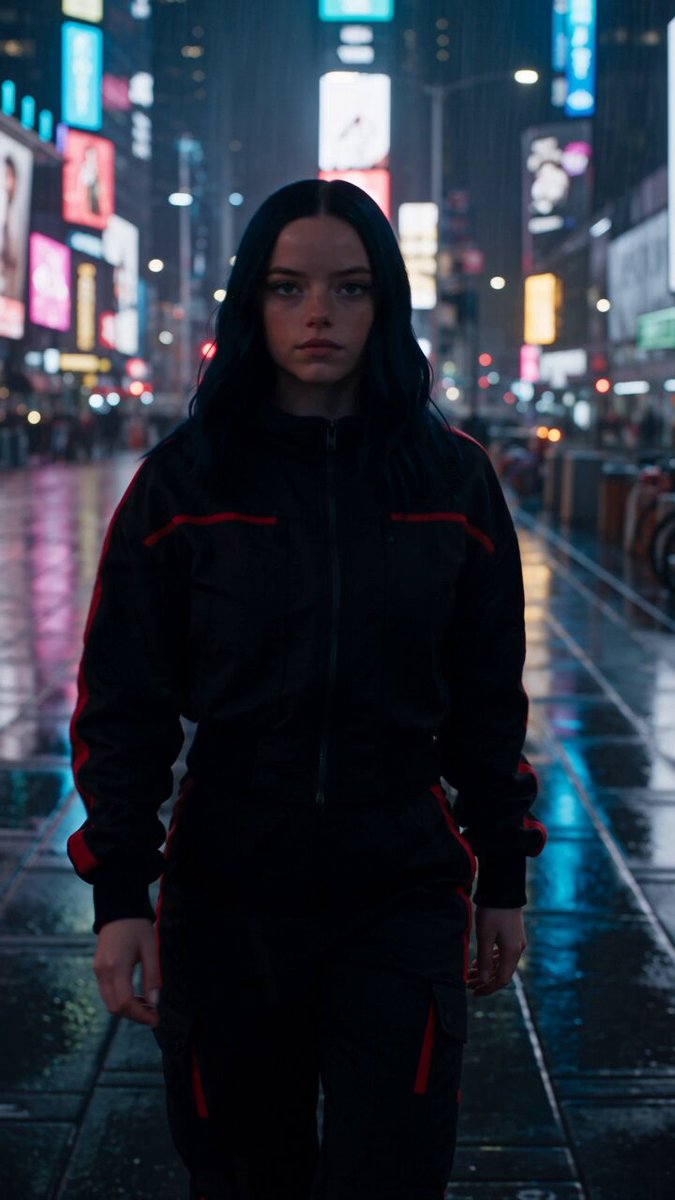
When a shot has to look expensive — a city at dusk, a product rotating in light, a landscape reveal — prioritize image fidelity and physics coherence. High-fidelity image-to-video models and strong text-to-image generators for keyframe creation are the right pairing here. Generate the still first, judge it as a photograph, then animate. Stills are cheap to iterate and easy to compare side by side; video is not.
Character consistency and human motion
Any ad with a recurring person needs a model family that handles reference conditioning well. Look for features that accept a reference image of the face or full body and preserve identity across shots. Kling and Runway are common choices in this category, and both reward careful reference selection: a clean, evenly lit, front-facing reference beats a dramatic three-quarter shot every time.
Human motion quality matters just as much. Running, fighting, dancing, and hand gestures are where cheap generations fall apart. If your spot depends on physical performance, budget your best model for those two or three seconds and use cheaper generation everywhere else.
Fast iteration and cost-efficient drafts
Drafting is a distinct phase. Use fast, inexpensive model families — MiniMax Hailuo and Luma Ray are frequently used for this — to test composition, pacing, and camera movement at low resolution. Approve the motion, then regenerate the approved shot at final quality. Teams that skip drafting burn their budget on shots they later cut.
| Shot need | What matters most | Typical choice |
|---|---|---|
| Hero product, landscape, establishing | Fidelity, lighting, physics | High-fidelity video model with image conditioning |
| Recurring character | Identity consistency, motion | Reference-conditioned models (Kling, Runway) |
| Rapid prototyping | Speed, low cost | Lightweight models (Hailuo, Luma Ray) |
| Static keyframe creation | Composition control | Strong text-to-image models (Flux-class) |
Model availability, limits, and strengths change quickly, so treat this table as a decision framework rather than a fixed list. Re-audit your stack every quarter against the four needs above.
Prompting for Control: Keyframes, References, and Motion
A prompt is a shot description, not a wish. The most reliable commercial prompts follow a fixed order: subject, action, environment, camera, lighting, style, pacing, exclusions.
A reusable template:
[Subject with specific details] performs [single action] in [environment with time of day and weather]. Camera: [movement and lens]. Lighting: [direction, quality, color temperature]. Style: [film reference, color grade, texture]. Pacing: [slow, energetic, single continuous motion]. Avoid: [text, watermarks, extra limbs, distorted faces, scene cuts].
Two habits dramatically improve output. First, keep one action per shot. "Walks in, sits down, opens the laptop, and smiles" is four shots pretending to be one, and models will blend them into mush. Second, name the camera explicitly. "Slow dolly-in, 35mm, shallow depth of field" produces a different and more controllable result than "cinematic."
Keyframes and multi-reference conditioning
The single biggest quality upgrade for ads is generating your own keyframes instead of letting the video model invent the opening frame. Generate a still that matches your storyboard exactly, then use image-to-video with that still as the first frame. When a model supports multiple reference images, use them deliberately: one for the subject, one for the environment, one for the visual style. Keep each reference simple and cleanly lit, because the model averages what it sees.
Camera and motion vocabulary worth reusing
Build a personal glossary and reuse it across every project. Terms that translate well include: slow push-in, pull-back reveal, orbit left, crane rise, handheld follow, whip pan, rack focus, top-down descent, and locked-off tripod. Terms that translate poorly include "epic," "dynamic," and "cool" — they are opinions, not instructions.
Reducing artifacts before they appear
Some artifacts are preventable at the prompt stage. Keep generated shots under five seconds, avoid on-screen text inside the generation (add text in the edit instead), avoid crowds and complex hand interactions, avoid reflective surfaces with moving reflections, and never ask a model to change a character's clothing mid-shot.
The Shot List and Production Pipeline
With a script and a model map, build the shot list. A 30-second ad usually contains 12 to 20 shots; a 15-second ad contains 8 to 12. Each row in the shot list should capture: shot number, description, duration, model family, reference assets, prompt, and status.
Pre-production
Lock the script before generating anything. Assemble an animatic — even a crude one using stills and a music track — and watch it end to end. Most pacing problems are visible at this stage and cost nothing to fix. Only after the animatic works should you generate motion.
The generation loop
For each shot, follow the same loop:
- Generate three to five still keyframe options and pick one
- Run three video variations from that keyframe at draft quality
- Score them against three criteria: does it read in one second, is motion believable, does it match the surrounding shots
- Regenerate the winner at final quality
- Log the prompt, seed, and settings for reuse
That logging step is what makes iteration possible later. If a client asks for the same ad in a different color palette, you rebuild in an hour instead of a week.
Naming and versioning
Adopt a naming convention on day one: brand_campaign_shot03_v2_final.mp4. Version control prevents the classic disaster of editing the wrong file, and it makes handoff to an editor or localization team trivial.
Editing, Sound, and the Final Polish
Generation produces clips; editing produces ads. This is where amateur AI work and professional AI work diverge most sharply.
Cut rhythm. Commercial short-form rarely holds a shot longer than two seconds outside the opening hook and the closing card. Cut on motion, on beat, or on a sound effect. If a generated clip is weak in its middle but strong at the start, trim it rather than regenerate it.
Unify the look. Because mixed model families produce slightly different color, contrast, and grain, apply a light grade across the whole timeline: consistent white balance, a shared contrast curve, and a subtle grain or film texture pass. Thirty seconds of grading is often the difference between "AI video" and "video."
Sound design. Layer three levels: music bed, sound effects, and voiceover or captions. Every cut deserves a sound. A whoosh, a click, a riser, or a sub-bass hit makes an artificial cut feel intentional. Keep dialogue and voiceover intelligible, and target standard loudness for your platform rather than pushing levels.
Captions and text. Assume sound-off viewing. Burn in captions, keep them inside platform safe areas, and limit each card to six or seven words. Text added in the edit is crisp; text generated inside a video model is usually not.
Aspect ratios. Produce vertical first, then adapt. Vertical 9:16 for short-form feeds, 1:1 for some placements, 16:9 for web, YouTube, and presentations. When adapting, reframe rather than crop blindly — a vertical shot often needs a wider keyframe, which you can regenerate cheaply from the same stills.
Quality Control and Common Mistakes
Run every final cut through a structured review before it leaves your machine.
Visual QA checklist:
- Faces: eyes aligned, teeth natural, no identity drift between shots
- Hands: correct finger count, no melting or merging with objects
- Physics: correct weight, believable impact, no sliding feet
- Text and logos: sharp, correctly spelled, inside safe areas
- Continuity: wardrobe, props, lighting direction, and time of day consistent
- Motion: no strobing, no sudden speed changes, no frame-level warping
- Brand: colors, fonts, and tone match the guidelines
Audio QA checklist:
- Voiceover intelligible without headphones
- Captions accurate and synced within a few frames
- Music ducked under dialogue
- No clipped peaks, no abrupt endings
Mistakes that cost the most:
- Overloading one prompt. Four actions in one shot produce four broken actions. Split them.
- Skipping the keyframe. Letting the model invent the composition means losing control of the brand frame.
- Treating the first good clip as final. Generate options; the first output is a starting point, not a decision.
- Ignoring audio until the end. Music and sound effects change the edit, not the other way around.
- Generating long clips. Ten-second generations drift, morph, and lose coherence. Short clips cut better.
- No CTA card. The final two seconds should be static, legible, and unmistakable.
- No version control. You will want the earlier version.
Testing, Distribution, and Iteration
An ad is a hypothesis. Treat distribution as a test, not a launch.
Build a variant matrix. At minimum, test three hooks against one body and one CTA. If your budget allows, test two CTAs against the winning hook. Keep everything else constant so the result is readable.
Measure the right numbers. Hook rate (three-second views divided by impressions) tells you whether the opening works. Hold rate tells you whether the middle earns attention. Click-through rate and conversion rate tell you whether the offer lands. Cost per acquisition tells you whether any of it is worth scaling. Diagnose in that order — a weak hook cannot be fixed by a better CTA card.
Respect platform context. Vertical-first feeds reward native pacing and on-screen text. Web placements tolerate longer setups. Presentations and sales decks reward clarity over speed. Generate once at the highest quality you can afford, then re-edit for each context rather than regenerating from scratch.
Iterate on a schedule. Review performance weekly, promote winning hooks into new variants, and retire anything below your baseline after a defined number of impressions. Keep a library of approved shots — parries, product turns, reaction faces, transitions — so future ads start from proven components rather than a blank prompt.
FAQ
How long should an AI-generated video ad be?
Start at 15 seconds for paid social and test a 30-second cut when you have a story worth telling. Most brand messages fit comfortably in 15 seconds; most product explanations do not. Let the offer decide.
Do I need video editing skills to make this work?
You need basic editing skills, and they matter more than generation skills. Cutting to a beat, trimming a weak shot, adding captions, and grading for consistency are learnable in a weekend and will improve your output more than any prompt technique.
How do I keep a character consistent across shots?
Generate a clean, evenly lit reference image first. Use reference-conditioned models, keep wardrobe and lighting identical, describe the character identically in every prompt, and avoid shots that force the model to reinvent the face. When consistency still slips, lean on cuts and inserts instead of continuous performance.
Can AI-generated ads run on broadcast or paid placements with strict policies?
Often yes, but requirements vary by platform and region. Disclose synthetic media where required, avoid imitating real people without permission, keep brand claims substantiated, and check each platform's current advertising policy before you spend.
How many variations should I generate per shot?
Three video variations from a single approved keyframe is a practical minimum. Going beyond five usually means your keyframe or prompt is the problem, not the number of attempts.
What kills AI ad quality fastest?
Weak sound design and inconsistent color. Viewers forgive an imperfect frame; they do not forgive silence and a timeline that shifts look from shot to shot.
How do I control costs without lowering quality?
Draft at low resolution, approve motion before fidelity, keep shots short, generate keyframes as stills first, and reserve your most capable model for the two or three hero moments. Most of a commercial's runtime does not need maximum fidelity.
Can I reuse generated shots across campaigns?
Yes, and you should. Build a shot library organized by function — hooks, transitions, product moments, reactions — and remix it. Reuse is where AI production turns into genuine speed advantage.
