

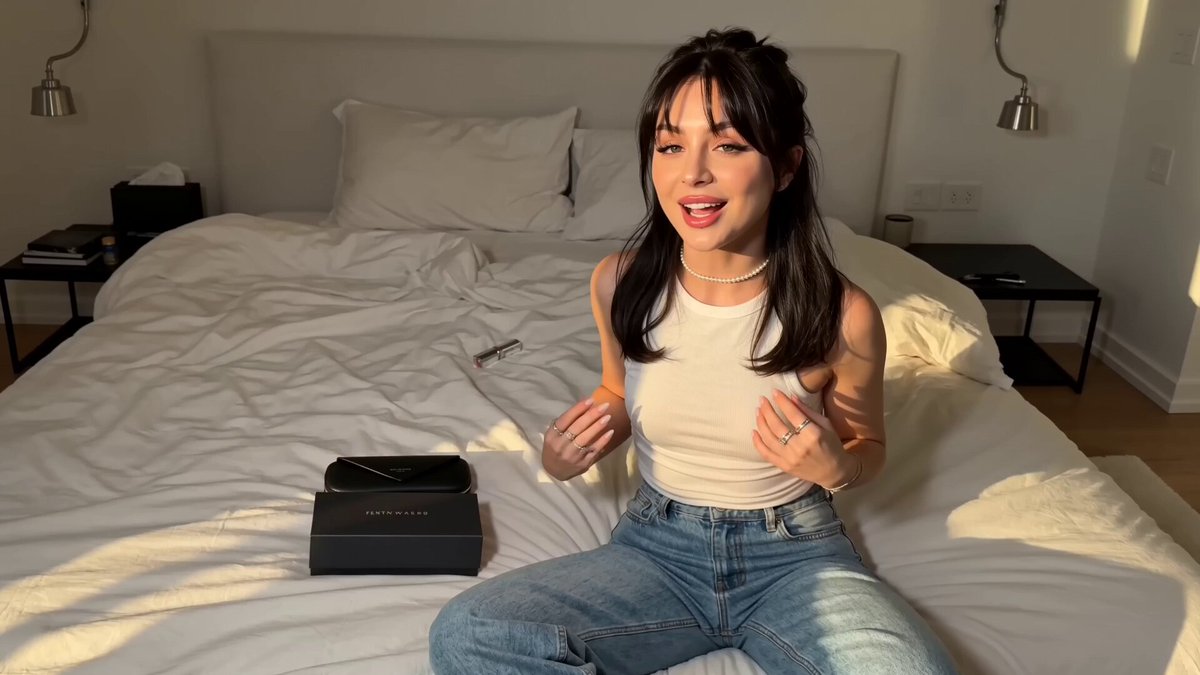
The shift from commissioning video to directing it
Not long ago, producing a paid social video meant a brief, an approval chain, a shoot day, and a two-to-four-week wait. That pipeline still exists, but it now competes with something much faster: a marketer, a laptop, and a set of generative models that can produce a watchable eight-second clip before the coffee gets cold.
The practical consequence is that the bottleneck moved. It is no longer "can we make a video?" It is "can we make enough distinct, on-brand, attention-holding videos to find the one that works?" Creative volume—not production polish—is what wins on short-form feeds. Feeds reward novelty and punish sameness, which means the winning team is usually the one testing twenty hooks in the time a competitor tests two.
That does not mean craft stopped mattering. It means craft migrated. Instead of lighting a set, you are choosing a shot, controlling motion, pacing the cut, and deciding which generated take earns a second of someone's attention. The job description changed from producer to director, and directors need a method.
This guide walks the whole chain: choosing models, writing hooks, generating footage, assembling it, keeping it brand-safe, and reading the results. It is written for performance marketers, in-house creative teams, and small agencies who need a workflow that survives contact with a real deadline.
What an AI video ad stack actually looks like
A functioning stack has four layers, and most teams underinvest in three of them.
Layer 1: Generation models
This is where images and clips come from. Modern text-to-video and image-to-video models differ enormously in what they are good at. Some produce cinematic camera movement and realistic physics but struggle with precise text and branding. Others are excellent at stylized animation, product turntables, or anime-adjacent looks. Some are fast and cheap enough to use as a sketchpad; others are slow and expensive but deliver a final-quality hero shot.
You rarely need one model. You need a shortlist you understand.
Layer 2: Assembly and finishing
Generated clips are raw material, not ads. You still need trimming, speed ramping, transitions, text overlays, captions, and format adaptation. A capable consumer editor handles 90% of this. What matters is that your editor can export multiple aspect ratios quickly, since a vertical cut-down of a square asset is not the same creative.
Layer 3: Audio
Sound is the most undervalued layer in AI ad production. A mediocre visual with excellent sound design outperforms a beautiful visual with a generic music bed. That means voiceover or dialogue, a music track that matches the emotional temperature, and at least a few designed sound effects (whooshes, clicks, impacts) placed on cuts.
Layer 4: Testing and feedback
If you cannot tell which hook, which opening frame, and which call to action performed best, you are not running a system—you are running a lottery. Attribution does not need to be sophisticated. It needs to exist.
How to choose a generation model for a specific concept
Model selection is a decision with criteria, not a matter of loyalty. Score candidates against these dimensions.
- Prompt adherence. Can it follow a multi-clause prompt, or does it drop the second half? Test with prompts containing a subject, an action, a camera move, and a lighting condition.
- Motion quality. Look for warping hands, melting faces, drifting backgrounds, and objects that change shape between frames. Some models hide this well at small sizes and fall apart on a large screen.
- Shot length. Many models cap out at five seconds. If your ad concept depends on a single continuous ten-second take, you need a model that supports it or a plan to stitch.
- Style consistency. If a campaign needs the same character across five clips, prioritize models with image conditioning, reference inputs, or character consistency features.
- Aspect ratio support. Native vertical output beats cropped widescreen output almost every time.
- Iteration speed. A model that takes ninety seconds per clip and lets you run twenty variations is often more valuable than a slower model that produces one polished shot.
- Licensing and commercial terms. Read them before the campaign ships, not after.
A useful practice: keep a small internal scorecard and update it monthly. Models improve fast, and yesterday's leaderboard is not today's.
A repeatable workflow from brief to first cut
The following process assumes a single 15-to-30 second vertical ad with three to five shots. It scales to longer formats with more shots and more passes.
Step 1: Write the hook before the script
The first 1.5 seconds decide the ad. Open a document and write ten hooks as single sentences. Do not write a script first and then extract a hook from it—that is how you end up with a 40-second build-up and no payoff.
Useful hook patterns include: a visual contradiction (something impossible happening calmly), a direct problem statement shown rather than said, a number or claim stated on screen, a raw first-person line, or a pattern interrupt (unexpected sound, fast zoom, abrupt cut from black).
Then write the body as three beats and the call to action as one line. Total script: under 60 spoken words for a 20-second ad. Read it aloud with a timer.
Step 2: Build a shot list with reference images
Each row of your shot list should specify: shot number, duration, subject, action, camera movement, lighting, aspect ratio, and the emotion the shot must carry. Add a reference frame—either a generated still or a real photograph—so that whoever or whatever generates the clip has a visual anchor.
Generate stills first. Image-to-video consistently beats text-to-video for brand work because you approve the composition before spending time on motion.
Step 3: Generate in passes, not in one go
Pass one is exploration: many short, low-stakes renders to find composition and motion. Pass two is refinement: regenerate winners with tighter prompts, more steps, or stronger references. Pass three is finishing: only the shots that survived both passes get upscaled or extended.
A common failure is generating dozens of final-quality clips in search of a concept. Do the concept search cheaply.
Step 4: Assemble, sound-design, caption
Cut to a scratch music track. Get the rhythm right before you fall in love with any single shot. Then layer in voiceover, replace the scratch track, and add three to six sound effects placed precisely on cuts and reveals.
Captions are not optional. A large share of feed viewing happens muted, and burned-in or platform-native captions keep the message intact. Keep lines under six words and place them away from the platform's UI zones.
Step 5: Produce variants on purpose
Variants should isolate variables. If you change the hook, the music, and the CTA at once, you learn nothing. Build a matrix: three hooks × two opening frames × two CTAs is twelve assets—enough to learn something, small enough to ship.
Control levers that separate usable clips from throwaway ones
Once you are generating regularly, these levers do most of the heavy lifting.
Camera language. Specify the move: slow dolly in, handheld follow, static locked-off, orbit, crane up. Models respond well to concrete camera instructions and poorly to vague ones like "dynamic."
Shot length discipline. Shorter clips cut together better. Two- to three-second cuts read as energetic; four- to six-second shots read as premium and calm. Choose the rhythm intentionally.
Reference consistency. Keep a folder of approved character, product, and environment references. Reusing the same reference image across shots is the simplest way to keep a campaign visually coherent.
Negative control. If the model offers negative prompts or exclusions, use them for recurring artifacts—extra fingers, floating text, garbled signage, unwanted lens flares.
Post-generation stabilization. A subtle crop, a slight zoom, or a one-frame speed adjustment can rescue a clip with minor drift. Do not throw away work for a fixable flaw.
Deliberate imperfection. Slight grain, a handheld wobble, or an unpolished cut can make AI-generated footage feel more native to a social feed than glossy output. Polished can read as an ad and get skipped.
Brand consistency and legal guardrails
Three risks deserve a standing checklist.
Likeness and IP. Do not generate recognizable real people, trademarked characters, or protected logos without rights. Review model terms for how generated assets may be used commercially.
Claims and substantiation. An AI-generated visual can imply a claim you cannot support—before-and-after transformations, impossible performance, medical or financial outcomes. Route scripts through whoever owns compliance before generation, not after.
Brand system drift. Set locked values for color, typography, product appearance, and tone of voice. Then audit every exported asset against them. AI generation has a strong tendency to wander toward whatever looks good in isolation rather than what looks like you.
A practical safeguard: create a one-page creative spec with approved palette, font, logo placement rules, and three prohibited visual tropes. Attach it to every brief.
Testing: what to measure and how to read it
Vanity metrics will mislead you here. Prioritize:
- Hook retention. The percentage of viewers still watching at three seconds. This is where most ads live or die.
- Hold rate. Watch time as a share of video length. A 15-second ad with strong hold beats a 30-second ad with weak hold in most placements.
- Completion rate. Useful for longer formats and for judging whether your payoff lands.
- Cost per result. Whatever your conversion event is, this is the only number that connects creative quality to business outcome.
- Comment sentiment. Feed comments surface whether the visual read as intended or as uncanny.
Run tests long enough to escape the noise floor. A few thousand impressions per variant is usually the minimum before conclusions are meaningful, and much more if your conversion rate is low.
When a variant wins, ask why before scaling it. Winners are often accidental—a hook that worked because of a specific music cue, not because of the script. Document the mechanism so you can repeat it deliberately.
Mistakes that quietly ruin AI ad performance
- Starting with the tool instead of the message. Beautiful generation with no insight produces expensive wallpaper.
- Uniform pacing. Every shot at four seconds flattens the edit. Vary rhythm to match emotion.
- Overlong intros. If the product appears at second eight, you have already lost most of the audience.
- Text baked into generated footage. Models mangle words. Add typography in the editor where you control kerning and legibility.
- Ignoring the mute-first reality. No captions, no message.
- Generating at final quality too early. Slows you down and narrows exploration.
- One-and-done creative. Feeds fatigue creative faster than most teams refresh it.
- No aspect ratio plan. A single master file cropped four ways looks lazy in three of them.
- Skipping sound design. Generic music is the default and the default does not convert.
- No record of what worked. Without a creative log, you relearn the same lessons every month.
Scaling: when to add people, tools, or volume
Scaling creative is not the same as producing more. It is producing more of what works, faster, without losing consistency.
At low volume—a handful of ads per week—one person can own the entire pipeline. The constraint is attention span, not tooling.
At medium volume—dozens of variants per week—split roles. One person owns concept and scripts, one owns generation and assembly, one owns testing and reporting. Shared reference libraries and a locked creative spec become essential.
At high volume—hundreds of assets per month—you need templating. Build modular components: a set of approved hooks, a set of approved body beats, a set of approved CTAs, and a set of approved visual treatments. Then recombine. Modularity is how you get variety without losing brand recognition.
Track two numbers throughout: time from brief to first exported asset, and performance per creative hour invested. If the first is dropping and the second is flat, you have a tooling win, not a results win. If the second is rising, you have a system.
FAQ
Do I need a video editor if I am using generative models?
Yes. Generation gives you clips; editing gives you an ad. Trimming, pacing, typography, sound, and captions are all editorial decisions that no prompt replaces.
How many shots should a 20-second ad have?
Usually five to nine. Fewer feels slow; more feels like a montage without a message. Anchor the structure with a hook, three or four body beats, and a clear call to action.
Is AI-generated footage obviously AI?
It can be, especially with faces, hands, and text. Mitigate it by generating stills first, checking frames at full size, keeping shots short, adding grain, and hiding problem areas with cuts, crops, or overlays.
What should I test first?
The hook. It has the largest effect on retention and the fastest feedback loop. Test CTAs second, and visual style third.
How often should creative be refreshed?
Sooner than most teams expect. Watch frequency and hook retention weekly; when retention drops, refresh the opening before you rebuild the whole ad.
Can one person run this workflow?
Yes, at low volume, with a locked process. The realistic ceiling for one person is roughly one to three new concepts per day including variants, assuming scripts and references are pre-approved.
Next steps
Pick one product and one audience. Write ten hooks, generate stills for the best three, animate them, cut a single 20-second ad, and caption it. Ship it against a control. Then build the next twelve variants as a proper test matrix.
Keep a running creative log with the hook, the visual treatment, the CTA, and the outcome. Within a month you will have something no model can give you: a private, tested playbook of what your audience actually responds to.
