
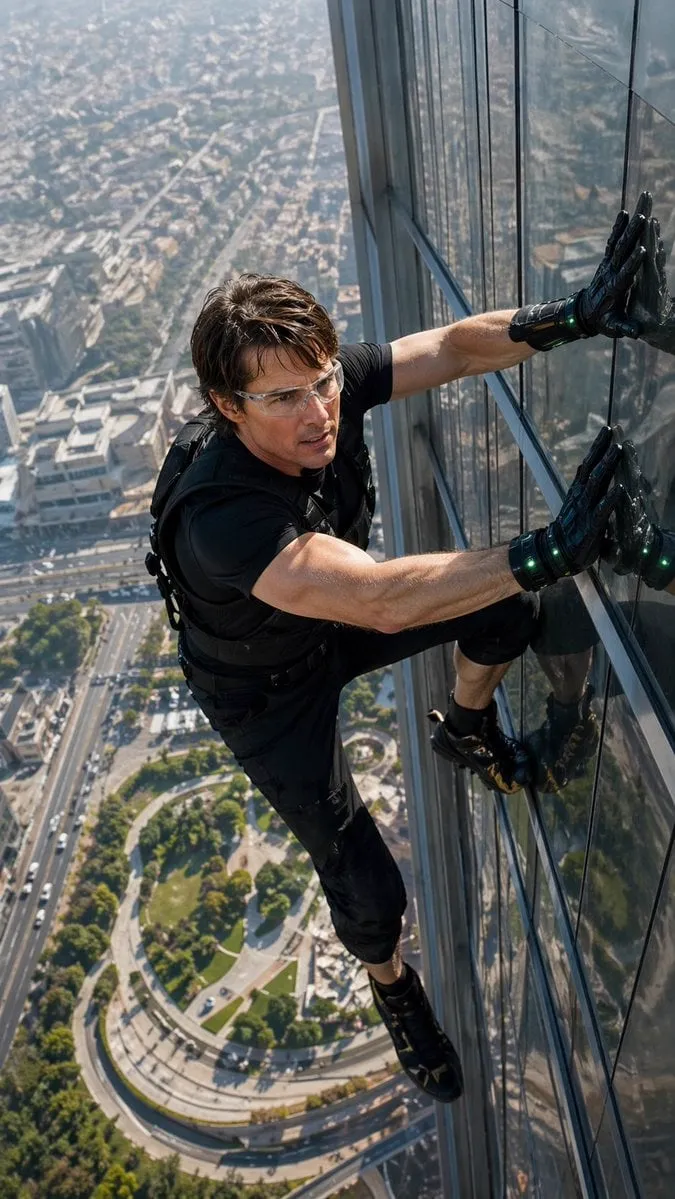
Why AI Video Advertising Became Standard Practice
Audience expectations shifted first. Feeds are dominated by short vertical video, sound-off autoplay, and a scroll speed that gives a brand roughly two seconds to earn attention. Producing enough variety to survive that environment with traditional shoots is expensive and slow: one concept often costs a full crew day and yields a single cut in two formats. Generative video changes the arithmetic. A team can draft ten distinct hooks in an afternoon, review them in a shared document, and only commit production budget to the concepts that show early traction.
The second driver is platform-level delivery. Most ad networks now select creative automatically, which means the limiting factor is no longer placement strategy but the raw supply of distinct angles. Algorithms reward variety. If you feed a campaign fifteen genuinely different openings, the system finds the winner faster than any human media buyer working from a spreadsheet.
The third driver is iteration speed. A conventional campaign cycle runs on weeks. A generative workflow runs on hours, which means creative decisions can be informed by live performance data rather than by opinions in a review meeting. That shift is what turns AI video from a novelty into an operating capability.
The Production Pipeline at a Glance
A reliable AI video ad pipeline has six stages. Skipping any of them is the most common reason teams produce attractive clips that never convert.
Stage 1: Brief and Concept Grid
Start with a one-page creative brief that states the audience, the single promise, the proof, and the desired action. Then build a concept grid: rows for hooks, columns for formats. A five-by-three grid gives you fifteen testable ideas before anyone opens a generation tool.
Stage 2: Script and Shot List
Write the ad as a series of shots, not as a paragraph of copy. A twenty-second ad typically needs five to seven shots. Label each one with a duration, a subject, a camera behavior, and a lighting mood. This document becomes your prompt source, and it is also what you hand to a human editor later.
Stage 3: Generation
Generate each shot independently. Short clips of three to six seconds are easier to control, easier to regenerate, and cheaper to replace than one long continuous take.
Stage 4: Selection and Assembly
Assemble a rough cut in an editor, then judge it with the sound off first. If the story does not read silently, the visuals are carrying the wrong load.
Stage 5: Voice, Music, and Mix
Add narration, music, and sound design. Audio is where most AI-first ads feel cheap, so treat this stage as seriously as the visuals.
Stage 6: Variant Export and Testing
Export each concept in the aspect ratios you actually buy, then release them as separate ad units rather than as one video with multiple placements.
Treat this pipeline as a loop, not a line. Every testing cycle feeds insights back into the concept grid.
Prompting for Ad-Ready Footage
Generic prompts produce generic footage. The fix is a structured prompt with five slots, used the same way every time:
- Subject and action: who or what, doing precisely what, in one sentence.
- Environment: location, time of day, weather, and background activity.
- Camera: lens feel, height, movement, and framing distance.
- Light: source, direction, contrast, and color temperature.
- Style and format: film stock, render style, aspect ratio, and frame rate.
A weak prompt reads: a woman drinking coffee in a cafe, cinematic. A strong prompt reads: a woman in her thirties lifts a ceramic cup and pauses before the first sip, seated at a window table in a small cafe, morning light entering from the left at a low angle, handheld medium close-up at chest height with a slow push in, warm highlights with cool shadows, shallow depth of field, vertical 9:16 framing.
The difference is specificity of behavior. Generated video handles motion best when the action has a clear beginning and end. Describe a completed micro-action rather than an ongoing state.
Handling Negative Instructions
Instead of asking for what you do not want, replace it. If you do not want lens flare, specify soft directional light. If you do not want a busy background, specify an empty wall. Positive replacement is more predictable than negation because most models reason forward, not backward.
Version Your Prompts
Keep every prompt in a spreadsheet alongside its output link and a score. After fifty generations you will have a private dataset of what works for your brand. That dataset is more valuable than any single clip.
Keeping Brand Identity Consistent Across Generated Clips
Brand consistency in AI video is not about a logo. It is about a repeatable visual and verbal signature that survives across dozens of generated shots.
Define a Visual DNA Document
Write down five to eight fixed parameters: primary and secondary colors expressed as hex values, a preferred lighting direction, a preferred lens family, a wardrobe palette, an environment palette, and a motion signature such as always slow or always handheld. Anyone generating footage for the brand starts from this page.
Reuse Reference Frames
Most modern video tools accept a reference image alongside a text prompt. Create three to five approved reference frames per campaign and pass them into every generation request. This single habit reduces rejected footage more than any prompt rewrite.
Lock the Verbal Signature
Decide on a sentence length, a tone, and a small set of recurring phrases. Reusing the same opening construction across ads builds recognition even when the visuals differ.
Audit in a Contact Sheet
Once a month, export one frame from every ad you shipped and view them as a grid. Inconsistencies that are invisible clip by clip become obvious in a contact sheet. This is the fastest brand-safety review you can run.
Editing, Voice, and Sound: Where AI Stops and Craft Begins
Generation produces raw material. Editing produces meaning.
The First Two Seconds
Your opening frame decides most of your performance. Test hooks that start mid-action rather than with a logo or a wide establishing shot. Consider opening on a face, a hand, or a texture.
Cut on Motion
Cut on movement rather than on stillness. When a hand lifts, a head turns, or a camera pushes, the eye follows the cut automatically. Still frames demand hard cuts that feel abrupt in short-form.
Narration
Synthetic voice has improved dramatically, but it still benefits from three adjustments: slower pacing than feels natural, deliberate pauses at sentence boundaries, and a slightly reduced dynamic range. If the voice sounds rushed, the ad feels cheap regardless of image quality.
Music and Sound Design
Add at least three layers: a music bed, an ambient layer that matches the environment, and one or two accent sounds tied to on-screen action. Accents synchronize the viewer's attention with your edit points. If your ad uses dialogue or narration, consider a subtle duck in the music under each spoken phrase.
Captions and On-Screen Text
Most viewers watch without sound on the first pass. Burn in captions and set the key message as on-screen text within the first four seconds. Keep on-screen text in the safe zone so platform interface elements do not cover it.
Personalization at Scale Without Breaking the Brand
Personalization fails when it means rewriting everything. A better approach is modularity: build one master ad with swappable blocks.
Build Swap Blocks
Define three to five interchangeable openings, two mid-section proof blocks, and three closings. From a single shoot, or a single generation session, you can assemble dozens of combinations. Each combination is a distinct ad unit that platforms can test independently.
Vary the Context, Not the Claim
The promise should remain constant while the context changes. Show the same product in a kitchen, a workshop, and an airport lounge, and let the audience segment choose. Changing the claim mid-campaign confuses attribution and makes the results unreadable.
Localize Deliberately
When adapting for a new market, revisit environment, wardrobe, currency displays, and humor. Machine translation of a script is only the first step; the visuals often need to change more than the words.
Respect Frequency
Personalized variants can exhaust an audience quickly. Cap how many variants of the same idea a single user can see, and refresh the opening shots on a regular cadence.
A Testing Framework for Finding Winners Fast
Testing AI video ads is a design problem, not a media-buying problem.
Test One Variable Per Wave
Run waves where only one element changes: hook, product shot, voice, or offer. If four things change at once, you learn nothing from a winner.
Score on Three Metrics
Use a hook rate that captures attention in the first three seconds, a completion rate that measures whether the middle holds, and a conversion rate that measures whether the ending works. A video can win on one and lose on the others, and each failure points to a different fix.
Kill Fast, Scale Faster
Set a decision threshold before launch. If a variant misses it after a defined spend level, retire it. If a variant beats it clearly, duplicate it with a new opening rather than a new concept, since you already know the body works.
Keep a Creative Ledger
Log every variant, its score, and one sentence on why you think it performed that way. After a few months the ledger becomes an internal playbook that is specific to your product and audience.
Cost, Time, and Quality Trade-offs
AI video reduces cost per concept, not cost per result. That distinction matters when you plan budgets.
Where the Savings Are Real
Concept development, hook variation, localization drafts, and storyboard visualization all get cheaper and faster. A team can explore twenty directions where it previously explored three.
Where Costs Persist
Strategy, editing, sound design, and measurement still require skilled humans. Cutting those roles to fund more generation is a common and expensive mistake, because the marginal value of an additional clip drops sharply once editing quality falls.
A Simple Allocation Rule
If your production budget is limited, spend roughly half on generation and iteration, a third on editing and audio finishing, and the remainder on measurement and reporting. Teams that spend almost everything on generation typically produce a large library of unused footage.
Common Mistakes and How to Avoid Them
Prompting for mood instead of behavior. Vague mood descriptions produce beautiful, static footage. Describe what happens, not how it feels.
Generating long clips. Long generations accumulate artifacts and reduce control. Build from short shots.
Skipping the sound-off review. If the ad only works with audio, it will underperform on most placements.
Using one aspect ratio everywhere. Reframe intentionally for each placement rather than cropping a vertical cut from a horizontal master.
Ignoring continuity. Watch a full sequence before approving it. Small jumps in wardrobe, lighting direction, or lens feel break immersion faster than any single low-quality frame.
Shipping without captions. This is the single easiest performance loss to prevent.
Treating the first version as final. The first generation is a draft, not a deliverable. Plan for three rounds of refinement before approval.
Measuring Performance and Closing the Loop
Measurement should answer a specific question: which creative element caused the result?
Tag Everything
Name files with a consistent pattern that encodes concept, hook, format, and version. If your file names are inconsistent, your reporting will be too.
Separate Creative from Media Effects
When a campaign performs well, check whether the lift came from a new audience, a new placement, or a new hook. Creative insight only exists if you isolate it.
Watch Retention Curve Shape
The shape of your retention curve is diagnostic. A steep drop in the first three seconds means the hook failed. A plateau followed by a sharp drop at second twelve means the middle promised something the ending did not deliver. A flat curve with a weak conversion rate means the ad was pleasant but not persuasive.
Feed Insights Backward
Every reporting cycle should end with a written change to your brief template or concept grid. If nothing in your process changes, you are collecting data rather than learning from it.
Frequently Asked Questions
How long should an AI-generated ad be?
Start with fifteen to twenty seconds for direct response and six to ten seconds for awareness placements. Short formats tolerate weaker middles, which makes them ideal for rapid hook testing.
Can AI video replace live-action shoots entirely?
For many product categories, yes, particularly for abstract concepts, environments, and scenario illustration. For products where authenticity is the selling point, such as food, textiles, or human services, live-action b-roll usually outperforms generated footage. The strongest results come from combining both.
How do I keep a consistent look across many clips?
Lock a small visual DNA document, pass the same reference frames into every generation request, and review a monthly contact sheet of shipped frames to catch drift.
What is the biggest quality problem in AI video ads?
Inconsistency between shots rather than any single poor frame. Viewers forgive a soft image but notice immediately when a room changes shape or a subject's clothing shifts.
How many variants should I test per concept?
Start with four to six variants per wave, changing only one element each. More than that slows learning because each variant receives too little delivery to reach a decision threshold.
Do I need a video editor if I use generative tools?
You need editing judgment more than ever. Generation creates raw material; timing, pacing, sound, and captions are what make it persuasive. Whether that judgment sits in a dedicated editor or a capable generalist matters less than whether it is applied.
How do I handle legal and disclosure requirements?
Follow the advertising rules of every market you buy in, keep documentation of how each asset was produced, and secure clear rights for any reference imagery or voice likeness you use. When in doubt, disclose synthetic elements rather than risk a platform penalty.
What is a realistic timeline from brief to first test?
A focused team can move from brief to a live test in three to five working days: one day for the concept grid and script, one to two days for generation and selection, one day for editing and audio, and one day for export and launch setup.
Bringing the Workflow Together
The advantage of AI video advertising is not that it removes work. It is that it relocates effort from logistics to judgment. You no longer spend most of your time arranging a shoot; you spend it deciding which twenty ideas are worth making and which three are worth scaling.
Build the pipeline once, document your visual DNA, keep a creative ledger, and treat every campaign as a structured experiment. Teams that do this consistently outperform teams with better tools and no process, because in a channel where creative supply is the bottleneck, the team that learns fastest wins.
