
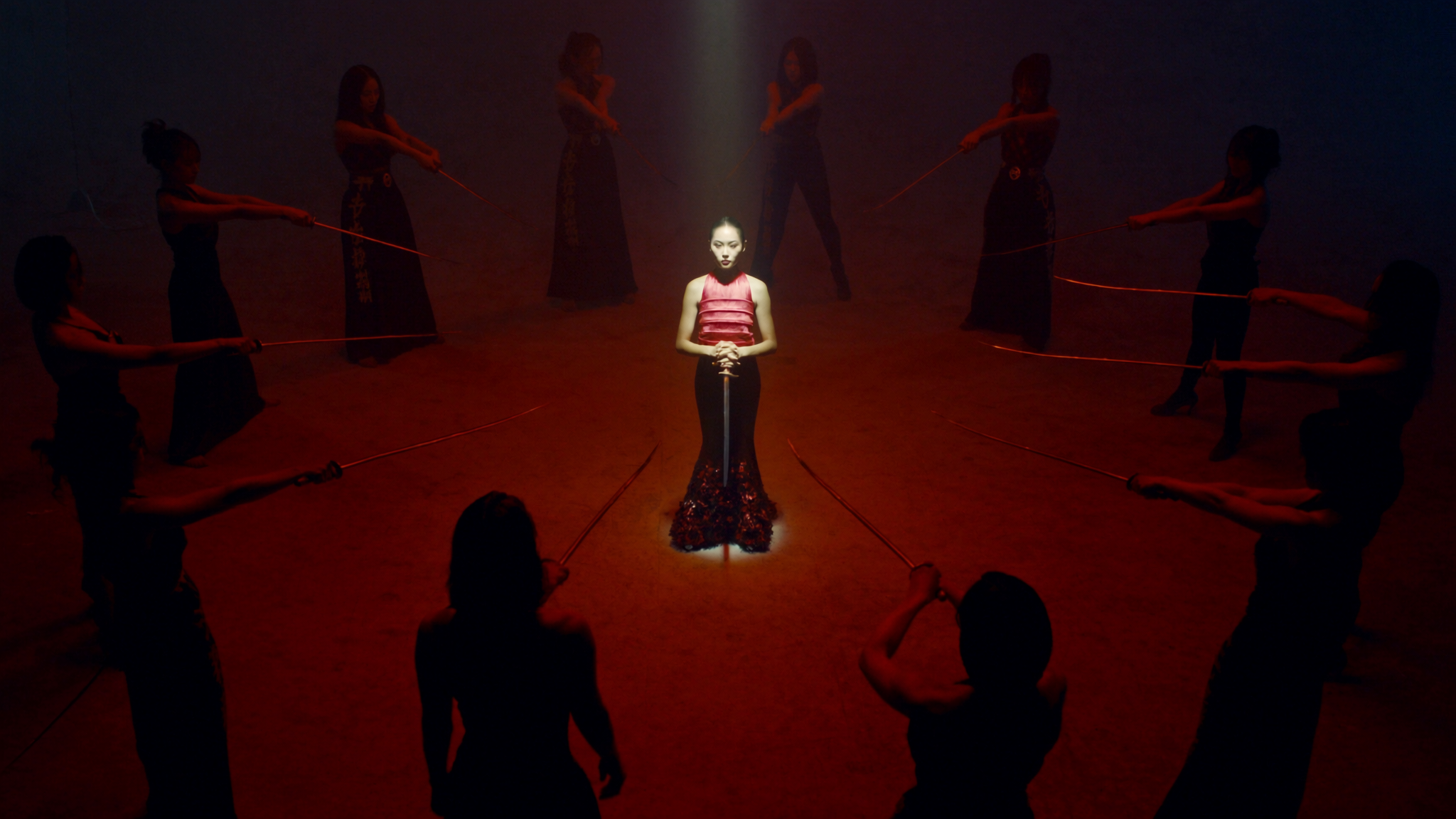

Why Ad Video Production Timelines Collapsed
For decades, a premium ad spot followed a predictable path: brief, treatment, casting, location scouting, shoot days, edit, color, sound, delivery. That process produced some of the most memorable marketing ever made. It also meant a single concept consumed weeks of coordination before anyone learned whether the idea actually connected with an audience.
Two shifts broke that model open. First, attention inside social feeds compressed. Viewers decide within the first second or two whether to keep watching, and platforms reward the creative that earns that moment. Second, distribution fragmented. A brand that once delivered one spot to a handful of channels now needs vertical and horizontal crops, multiple opening hooks, subtitled and clean versions, and placement-specific edits.
Generative video tools changed the economics of meeting that demand. Instead of one expensive asset, teams can produce a family of assets, test them cheaply, and reinvest in whatever performs. The point is not to replace craft. It is to move craft earlier, to the stage where decisions are still cheap to change.
There is also a scheduling reality that rarely gets discussed. Traditional shoots are hostage to calendars: talent availability, weather, permits, studio bookings, and the availability of a director who is in demand. A slip of two days in pre-production can push delivery by a month. Generative pipelines remove most of those dependencies, which means the bottleneck moves from logistics to judgment. That is a better problem to have, but it is still a problem. Teams that treat generation as a magic button discover that a weak proposition generates twenty weak variations just as fast as it generates one.
AI-Assisted vs Traditional Production: An Honest Comparison
The useful question is not which approach is better in the abstract, but which is better for this specific ad, at this stage, with this budget. A side-by-side look makes the trade-offs obvious.
Speed and iteration volume
A traditional live-action spot commonly takes six to twelve weeks from approved script to delivered master, and reshoots are painful because they require reassembling a crew. An AI-assisted pipeline can produce a first watchable draft in days and a revised draft in hours. The greater advantage is not raw speed but volume: twenty hook variants instead of two, which turns creative into a measurable experiment rather than a bet.
The hidden benefit of volume is learning velocity. When you can see twenty openings in a week, you build an internal library of what resonates with your audience: which problem framing stops the scroll, which visual surprise reads instantly on a small screen, which claim needs proof attached to it. That library compounds. A single expensive spot teaches you almost nothing because you only see one outcome.
Cost structure and budget allocation
Traditional budgets are dominated by people and logistics: crew, talent, permits, travel, insurance, studio time, and post-production hours. AI-assisted budgets shift toward strategy, shot design, editing, sound, and media spend. Generation itself is often the smallest line item, which surprises teams the first time they plan a campaign this way.
A useful way to think about it: traditional production front-loads cost into capturing footage, while generative production front-loads cost into deciding what footage to capture. If your team has strong strategists and editors but no production capacity, the generative route removes the biggest structural blocker. If your team has a seasoned production crew and a compressed timeline, the traditional route may still be faster for a single hero asset.
Personalization and variant volume
Localization into multiple languages, regional product differences, seasonal overlays, and audience-specific openings are all expensive under traditional production and routine under an AI-assisted pipeline. That matters because a single universal ad rarely performs as well as five targeted versions of the same idea. Generating separate openings for a first-time buyer and a returning customer costs almost the same as generating one, and the difference in conversion is usually visible within days.
Where traditional production still wins
Human performance nuance, complex physical action, hero food and product shots that depend on precise lighting, regulated claims that require documented footage, and brand films built on real people and places. Generative video is weakest exactly where small artifacts destroy believability, so keep a hybrid mindset rather than a binary one. Nothing about a generative pipeline requires you to abandon a camera when the camera is the right tool.
A quick decision table
Use generative pipelines when you need many variants, fast localization, stylized or animated worlds, tight budgets, or rapid concept validation. Use live-action when the ad depends on a specific human face, a real location, tactile product detail, or a performance that a general audience would immediately recognize. Use a hybrid when you want the best of both: a shot live-action anchor combined with generated backgrounds, generated transitions, and generated variations of the same core scene.
Message Architecture Comes Before Generation
Ads fail more often from an unclear message than from weak visuals. Before touching any tool, define four things on a single page: the one proposition, the one proof point, the call to action, and the constraints. The constraints list is where most teams underinvest, and it is the list that saves the most time later. Write down aspect ratios, target durations, tone boundaries, legal limits on claims, mandatory product details, logo clear space, and the pricing or offer language that must appear exactly as legal approved it.
Then write hooks before you write scripts. Most of the performance lives in the opening two seconds, so the hook is not an introduction, it is the product. Useful patterns include problem-first framing, visual surprise, a direct question, a before-and-after reveal, a confession-style line, and a claim followed immediately by proof. Aim for fifteen to twenty-five hooks, then build short scripts around the strongest four or five.
A practical test for a hook: read it aloud and ask whether a stranger would understand what category of problem this ad solves in under two seconds. If the answer requires explanation, the hook is not finished. Rewrite until it is blunt.
Finally, decide the emotional register before generation. Funny, urgent, calm, luxurious, and technical registers each require different pacing, different music, and different shot duration. Choosing the register late forces expensive re-edits, because tone is carried by sound and rhythm far more than by the images alone.
The End-to-End Production Workflow
A repeatable pipeline beats ad-hoc experimentation. The sequence below works for performance campaigns, brand awareness spots, and product launches alike.
Step 1: Lock the message architecture
Convert the single-page brief into a shot-level outline. Each shot gets one job: establish the problem, show the product, prove the claim, handle the objection, or deliver the call to action. If a shot has two jobs, split it. A four-shot outline for a fifteen-second vertical ad is usually enough: hook, context, proof, action.
Step 2: Build keyframes and reference sets
Design still keyframes before animating anything. Stills are cheap to revise and they lock the look: character, wardrobe, product geometry, palette, lighting direction, and framing. Keep a reference folder per campaign so every generated shot inherits the same visual DNA. Name files with the campaign, shot number, and take number so anyone can find a replacement frame months later.
Step 3: Generate with explicit camera and consistency instructions
Use reference conditioning, keyframe interpolation, and explicit camera-move language so shots connect instead of drifting. Keep individual shots short, typically three to five seconds, and generate several takes per shot rather than accepting the first output. Archive the prompt, the seed if the tool exposes one, the reference images, and the chosen take together. That archive is what makes a shot rebuildable six weeks later when someone asks for a small change.
Useful camera language includes slow push in, slow pull out, handheld follow, locked-off tripod, orbit left, and tilt up. Vague prompts like dramatic camera movement produce drift, which is the single most common cause of shots that cannot be cut together.
Step 4: Assemble on a conventional timeline
Edit in a normal editing application rather than trying to finish inside a generative tool. Timelines give you precise control over rhythm, and rhythm is what makes an ad feel professionally made. Cut to a beat, keep the first three shots under two seconds each, and place the product reveal where attention is still rising rather than after it peaks.
Step 5: Design sound and captions
Add sound design, because perceived production quality is driven more by audio than most teams expect: room tone, impact hits, subtle music beds, and clean voiceover. Burn in captions or provide accurate subtitle files, and normalize loudness so the ad does not feel quieter than the content around it. If the voiceover is generated, vary sentence length deliberately; uniform pacing is the clearest tell that a script was not meant to be spoken.
Step 6: Test, measure, and remix
Launch hook variants at a modest budget and judge them by hook rate or hold rate first, then click-through and conversion cost. Promote winners into fuller edits. Treat every losing variant as documentation: write down why it likely failed so the next round of hooks improves. Two or three rounds of this cycle usually produces a creative that outperforms anything produced in a single big-budget attempt.
Keeping Visual Consistency Across a Campaign
Viewers forgive imperfect realism far more readily than inconsistency. If a character's jacket changes color between shots, or the product label shifts shape, the ad reads as fake even when each frame looks good in isolation. Consistency is a system, not a lucky prompt.
Practical habits that keep a campaign coherent:
- Maintain a character sheet with front, three-quarter, and profile references, plus wardrobe notes.
- Lock a palette and a single lighting logic, then reuse the same descriptive language in every prompt.
- Apply one grading pass or lookup table across all shots so generated footage and any live-action inserts share a look.
- Preserve product geometry by using real photography as the reference for any frame where the product appears.
- Reserve protected space for logos, price points, and legal text, then composite those elements in post rather than generating them.
- Keep a shot list with the exact model, settings, and references used for each approved take.
Pre-launch quality control
Run every ad through the same checklist before it spends a single unit of budget.
- Faces, hands, teeth, and eyes at full-screen zoom, frame by frame.
- Any on-screen text or numbers, since generated typography is the most common giveaway.
- Physics: weight, contact with surfaces, shadows, and reflections.
- Product accuracy, including label spelling and every visible claim.
- Safe areas for captions, interface overlays, and platform controls.
- Audio balance between voice, music, and effects, checked on a phone speaker.
- Caption accuracy and timing, plus a fully legible silent version.
- A clear, single call to action visible for at least two seconds.
- A final playback at quarter speed to catch flicker and frame-level artifacts.
Choosing Tools Without Locking Yourself In
Model quality changes quickly, so evaluate tools on capability rather than brand loyalty. The criteria that matter most are output resolution and clip length, consistency controls such as reference conditioning and keyframe support, commercial usage terms and how they treat generated likenesses, automation or API access for batch work, export codecs and bitrate, and how easily reviewed versions move between stakeholders without emailing large files back and forth.
A resilient setup usually keeps two layers: a fast concepting layer for rough idea tests, and a finishing layer for hero shots. Keep prompts, references, and project files in a shared archive with naming conventions that survive personnel changes. If a tool disappears tomorrow, your campaign assets should still be reconstructable from that archive.
Two additional criteria are easy to overlook. First, tooling fit: does the tool export to the formats and frame rates your editors already use, or does it force a workflow change that slows everyone down? Second, review workflow: can a client or legal reviewer leave timestamped comments without a paid seat? These factors matter more to total cost than the per-render price.
Distribution, Testing, and Measurement
Design for the feed rather than cropping a landscape edit at the end. Plan vertical framing from the start, treat the first frame as a thumbnail, and assume sound is off for most viewers in the first pass. Deliver multiple durations: a short hook-led cut, a full story cut, and a retargeting cut that leads with objection handling.
On the measurement side, report at the creative level, not just the campaign level. Track hook rate, hold rate, click-through, and conversion cost per variant, and watch for fatigue signals such as rising frequency paired with falling hold rate. Refresh the weakest variants on a schedule instead of waiting for a campaign to collapse.
A simple testing discipline keeps results interpretable. Change one variable per round: hooks in round one, pacing in round two, visual treatment in round three, call to action in round four. Teams that change everything at once get a winner they cannot explain and therefore cannot repeat.
Documentation matters here too. Keep a one-line summary of every tested variant and its result in a shared sheet. Within a quarter that sheet becomes the most valuable creative document the team owns, because it replaces opinion with observed behavior.
Common Mistakes That Sink AI-Made Ads
The most frequent failures are structural, not technical:
- Cramming three ideas into one short ad instead of one idea expressed three ways.
- Chasing photorealism when a distinctive visual style would be more memorable and easier to keep consistent.
- Skipping sound design and shipping a silent-feeling edit.
- Generating long continuous shots that lose coherence halfway through.
- Testing too many variables at once, so no result is attributable to anything.
- Using generic, stock-like imagery that carries no brand signature.
- Letting the ad run beyond the point where attention naturally drops.
- Generating on-screen text instead of compositing it in post.
- Ignoring legal review until the final cut, when changes are most expensive.
- Treating a strong first render as finished work rather than a draft for the edit.
Each of these mistakes has a cheap fix if it is caught early, and an expensive fix if it is caught at delivery. That asymmetry is the strongest argument for reviewing at the keyframe stage rather than the final render stage.
Budgeting, Team Roles, and Scaling a Hybrid Pipeline
A tiered model keeps costs sane while preserving quality. Use fast generative concepting to validate messages and hooks. Move validated concepts into a hybrid tier where generated backgrounds, product photography, and a small live-action shoot combine. Reserve fully traditional production for brand films, flagship launches, and anything where human performance is the entire point.
Plan the calendar around testing cycles rather than shoot dates. Most teams need one concept sprint, one production sprint, and an ongoing optimization rhythm. Reuse assets aggressively: a strong shot can serve as a hook, a background, a retargeting frame, and a static image across different placements. Document what each asset cost to produce so future planning is grounded in real numbers rather than estimates.
Roles shift rather than disappear. Strategists, editors, sound designers, and motion artists become more valuable because output volume rises. The specialist skill moves from operating a camera to directing a system: writing precise instructions, judging takes, and maintaining consistency across many assets. Editors become the most important people in the pipeline, because a mediocre generated shot can be rescued by a great cut, while a beautiful shot cannot be rescued by a bad one.
For teams just starting, a useful first project is deliberately small: one product, one proposition, five hooks, and a single fifteen-second vertical edit. Complete the loop from brief to measured result before expanding scope. The lessons from one finished cycle are worth more than a dozen half-built experiments.
FAQ
How long does an AI-assisted ad take to produce?
A simple hook-led vertical ad can go from brief to first testable version in a few days. More elaborate edits with consistent characters, voiceover, and sound design usually take one to three weeks depending on the number of variants. The variable that stretches timelines is not generation, it is review cycles.
Do I still need a script and a storyboard?
Yes, and they matter more, not less. Generation is fast enough that weak thinking becomes the bottleneck, so a clear proposition and a deliberate shot plan save far more time than prompt tinkering ever will. A storyboard also gives reviewers something concrete to approve before expensive work begins.
Will viewers notice that the footage is generated?
Sometimes, especially on close-up human faces and any on-screen text. Distraction is the fix: strong hooks, purposeful sound design, fast pacing, and consistent styling make the audience care about the message rather than the frame. Stylized treatments age better than attempted realism because they never invite a realism comparison.
Should I replace my production team?
No. Rework the roles. Strategists, editors, sound designers, and motion artists become more valuable because output volume rises. The specialist skill shifts from operating a camera to directing a system of tools, references, and review loops.
How many variants should I test?
Start with three to five hooks against one body edit so the result is interpretable. Once a winning message is confirmed, expand into variations of pacing, visual treatment, and call to action. Resist the urge to test twenty hooks with no budget to reach significance.
What is the biggest predictor of success?
Message clarity in the first two seconds. Production polish helps retention, but a confusing or slow opening will sink even the most beautifully rendered ad.
How do I handle legal review efficiently?
Bring reviewers in at the keyframe and script stage, with the constraint list attached. Approving a static frame and a line of copy takes minutes; approving a finished render with sound and motion takes far longer and invites subjective feedback that has nothing to do with compliance.
Can the same shot be reused across placements?
Yes, and it should be. A single strong three-second shot can open a vertical ad, sit behind a static headline, act as a retargeting frame, and serve as a thumbnail. Reuse lowers effective cost per asset and increases the chance that audiences recognize your visual signature across placements.
What should I measure first?
Hook rate, then hold rate, then click-through, then conversion cost. Optimizing for conversion cost before the opening seconds work is like tuning a car engine while the wheels are missing. Fix attention first, then efficiency.
When should I choose live-action instead?
When the ad depends on a recognizable face, a real physical location, delicate product texture, tactile demonstration, or a performance that carries the entire message. In those cases, generated footage can still support the edit as backgrounds, transitions, or variant endings.
