

Why Ecommerce Video Starts With Design, Not AI
Most teams approach AI video backwards. They open a generation tool, type a prompt, and hope the output looks like something they can publish. The result is usually a beautiful clip that has nothing to do with the product, the brand, or the campaign. Then they generate thirty more, pick the least bad one, and wonder why the conversion rate did not move.
The teams that get consistent results do the opposite. They treat AI video as the last mile of a design process, not the first step of a marketing experiment. Before a single frame is generated, they have already decided what the brand looks like, how products are framed, what lighting temperature they use, which camera moves feel native to the category, and what the first three seconds must accomplish.
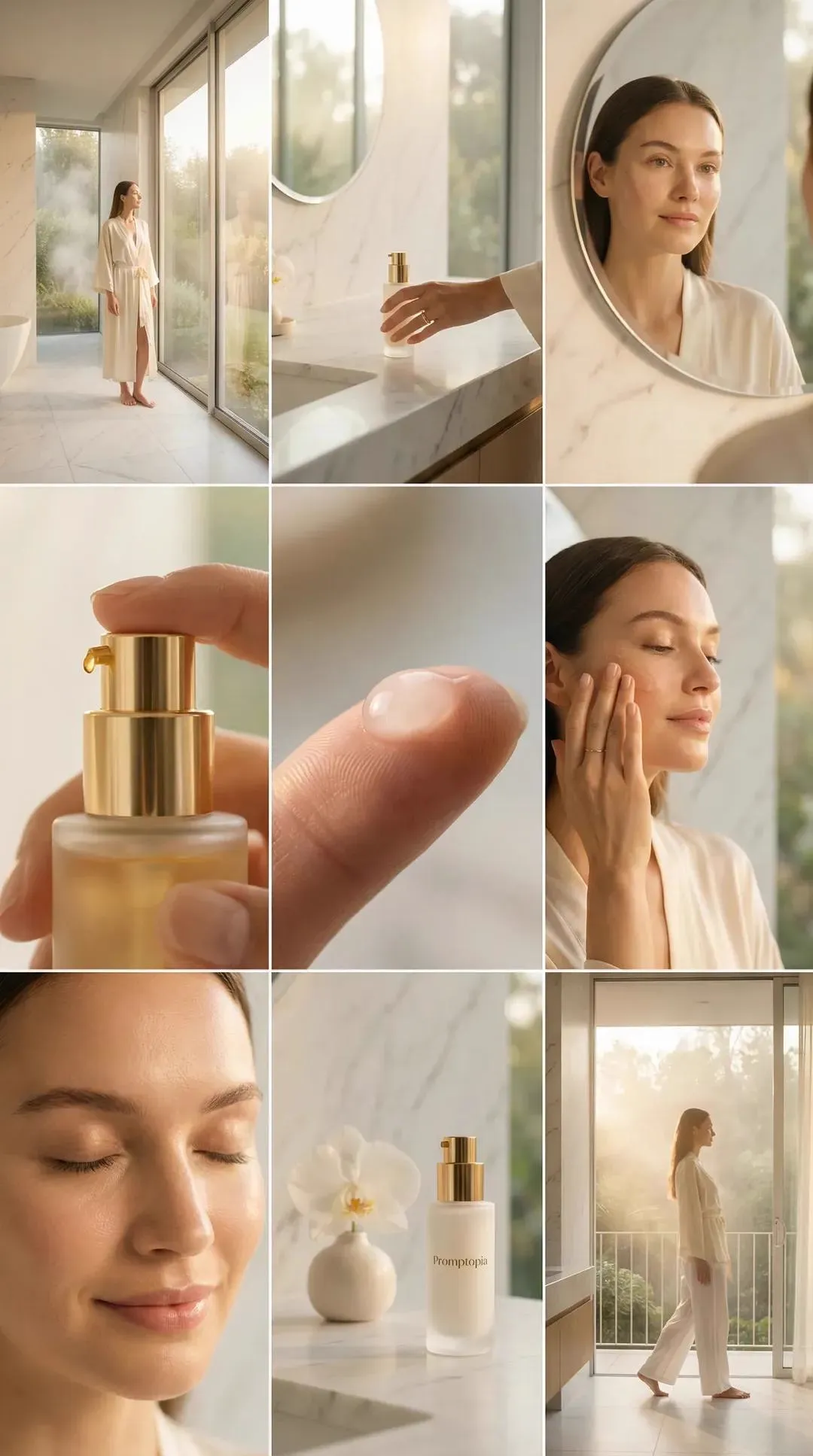
That distinction matters more in ecommerce than almost anywhere else. A fashion brand selling knitwear needs texture detail and movement; a skincare brand needs macro shots, liquid behavior, and clean negative space; a home appliance brand needs product-in-context shots that communicate scale. Generic AI video cannot serve all three with the same prompt template.
This guide walks through a full production workflow: building the visual foundation, preparing assets, choosing a generation approach, maintaining consistency, running quality control, adapting outputs per platform, and iterating based on performance. It is written for designers, content marketers, and small ecommerce teams who need repeatable output rather than one-off lucky generations.
The Visual Foundation: What to Lock Down Before Generating Anything
Before you touch a generative tool, produce a one-page visual specification. It takes an afternoon and saves weeks of rework.
Define the brand's visual grammar
Write down the non-negotiables:
- Palette: primary, secondary, and accent colors with hex codes, plus acceptable background tones.
- Typography: which fonts appear on screen, at what weight, and how they animate in.
- Composition rules: where the product sits in frame, how much headroom, whether the frame is centered or rule-of-thirds.
- Lighting: soft diffused daylight, hard studio strobe, warm tungsten interior, or cool overcast.
- Motion language: slow dolly pushes, handheld micro-shake, locked-off tripod, or fast whip transitions.
A skincare brand might specify "soft north-facing window light, 85mm equivalent compression, centered product, no camera shake, 4-second holds." That sentence alone eliminates half the wrong generations.
Write a shot list before a prompt list
Prompts are cheap; shot lists are strategic. A shot list defines what the video must accomplish in sequence:
- Hook: a motion detail or unexpected angle in the first 1.5 seconds.
- Context: the product in a real setting or in a hand.
- Proof: texture, mechanism, or result detail.
- Offer: price, bundle, or call to action.
Each slot then gets its own generation approach. A hook might be a 2-second macro push-in; the proof shot might be a slow orbit; the offer shot is often a static graphic composite rather than a generated scene.
Decide what must never be generated
Some elements should be photographed, not synthesized: the actual product label, legible packaging text, regulatory claims, and any human face representing the brand. Generate the environment, the light, and the motion around those fixed elements. This hybrid approach is the single biggest quality upgrade available to most teams.
Preparing Product and Lifestyle Assets for AI Video
Generation quality is capped by input quality. If your source images are low resolution, inconsistently lit, or shot against cluttered backgrounds, no model will rescue them.
Build a clean, standardized source library
For each SKU, collect:
- A cutout on transparent background at 2000px or larger.
- Two to three lifestyle images with consistent lighting direction.
- One detail macro showing material or texture.
- One scale reference image with a human hand or known object.
Name files with a predictable convention such as sku-color-angle-v2.png. When you are juggling 60 SKUs across 4 campaigns, naming discipline is what keeps the pipeline from collapsing.
Normalize lighting and color before generation
Run every input through a basic color pass: neutralize white balance, match exposure across the set, and apply the same subtle grading curve. This is not about making the images pretty. It is about reducing variance so that the generation model has less to guess. When inputs share a lighting signature, outputs share it too.
Prepare masks where text matters
If the product carries readable branding, create a mask or overlay layer in advance. You will composite the real label back on top of the generated frame during editing. Trying to get a diffusion model to render a specific Korean, Japanese, or Latin wordmark correctly is a losing game; plan for the composite from the start.
Choosing a Generation Method That Fits Your Catalog
There is no single best model, only the right method for the job. Four approaches cover most ecommerce needs.
Text-to-video for mood and backgrounds
Text-to-video is strongest for atmosphere: fog, sunlight through a window, water ripples, fabric movement in wind. Use it for establishing shots and transition plates, not for hero product moments where accuracy matters.
Image-to-video for product accuracy
Image-to-video animates a still you already trust. This is the workhorse method for ecommerce. You feed in a well-lit product photo, describe the camera move and the environment change, and keep the product itself stable. The key is a restrained prompt: describe motion and light, not a redesign.
Multi-image fusion for character and scene consistency
When a campaign needs the same model, the same kitchen, or the same product across five clips, single-image workflows drift. Fusing several reference images into one generation — a face reference, a wardrobe reference, a location reference, and a product reference — locks in the details that usually wander between shots. This is the method that turns a set of clips into a coherent campaign.
Hybrid editing for anything with copy or numbers
Anything with a legible price, a discount percentage, a size chart, or a legal disclaimer should be composed in an editor, not generated. Keep a graphic layer template with your typography and animation presets, and drop it onto generated footage.
Practical selection criteria
When deciding per shot, ask:
- Does the product's exact appearance matter? If yes, use image-to-video or fusion.
- Does the shot need a specific person repeated? If yes, use fusion with a face reference.
- Is the shot purely atmospheric? Then text-to-video is fastest and cheapest.
- Does the shot contain text or numbers? Then it belongs in the editor.
The Consistency Playbook for Products, People, and Settings
Inconsistency is the tell that separates amateur AI video from professional work. Three layers need protection.
Product consistency
Keep one canonical reference image per SKU and reuse it across every generation. Never let a model "reinterpret" the product silhouette. If a generation changes the shape slightly, discard it rather than fixing it in post. A subtle shape drift across a campaign reads as sloppiness to returning customers.
Character consistency
If you use talent, establish a character sheet: front, three-quarter, and profile views, plus a wardrobe reference. Then hold the seed and reference set constant across clips. Small changes in hairstyle or jawline between shots destroy the illusion faster than any rendering artifact.
Environment consistency
Temperature, wall color, and window direction should match across a series. Write these into your visual spec as fixed values — "5600K daylight, warm oak floor, window camera-left" — and include them in every prompt. Environment continuity is what makes a set of clips feel like one shoot rather than five unrelated generations.
A Repeatable Production Workflow, Step by Step
Here is the pipeline that scales from ten SKUs to a thousand.
Step 1: Campaign brief and shot list
Define objective, platform, aspect ratios, runtime, and the four-beat structure. Output: a one-page brief and a numbered shot list.
Step 2: Asset audit
Check that every SKU in scope has a cutout, two lifestyle frames, a macro, and a scale reference. Flag gaps and shoot or source them before generation begins.
Step 3: Reference assembly
For each shot, collect the exact references needed: product, environment, character, style. Store them in a folder named after the shot number so nothing gets mixed up.
Step 4: First-pass generation
Generate three to five variants per shot at draft resolution. Do not chase perfection here; you are looking for one variant with the right motion and the right framing.
Step 5: Selection and upscale
Pick the winner, upscale it, and check for artifacts at full resolution. Reject any clip with warped geometry, melting edges, or unstable micro-detail.
Step 6: Composite and grade
In the editor, add the real product label, typography, logo, price overlays, and legal copy. Apply a consistent grade so all clips share the same contrast curve and color temperature.
Step 7: Sound design
Add ambient texture, a subtle whoosh on transitions, and music that matches the brand's tempo. Sound is what makes generated footage feel intentional rather than synthetic.
Step 8: Export variants and archive
Export each aspect ratio and caption style. Archive the project file with references so the next campaign can reuse the exact same environment in three months.
Aim for a two-day cycle per campaign once the pipeline is running: one day for generation and selection, one day for compositing and export.
Quality Control: The Pre-Publish Checklist
Run this checklist before anything goes live.
- Product fidelity: does the item match the real SKU in shape, color, and proportion?
- Text integrity: is every character of brand text, price, and disclaimer crisp and correctly spelled?
- Motion realism: does anything float, slide, or morph in a way physical objects cannot?
- Hands and faces: check finger count, eye direction, and teeth. These are still the most common failure points.
- Frame one: does the video communicate the product within the first second, even on mute?
- Safe zones: is critical content clear of platform UI overlays at the top and bottom?
- Caption legibility: does the caption contrast survive on a bright background?
- Brand consistency: does the color and typography match the current brand guide?
Anything that fails gets rejected, not "fixed later." A single distorted product image in a paid campaign costs more in trust than the clip cost to make.
Format Variants, Localization, and Platform Fit
One master edit should feed every channel. Build the timeline so it can be re-framed, not re-created.
Aspect ratios and safe areas
Plan for vertical 9:16, square 1:1, and horizontal 16:9. Keep the product inside a central safe box so vertical crops do not cut it off. Generate at the widest aspect ratio you need and crop inward, never the reverse.
Runtime versions
Cut a 6-second hook-only version, a 15-second full narrative, and a 30-second product-detail version from the same footage. Platforms reward different lengths, and re-editing is far cheaper than re-generating.
Localization
If you sell across markets, design the graphic layer so text is a separate, replaceable component. Localize the on-screen copy, the caption track, and the voiceover script — not the generated footage. Product shots travel across languages unchanged.
Platform-specific tuning
Social feeds reward a fast first frame and strong motion in the opening second. Marketplace listings reward clarity and product legibility over cinematic flair. A brand site can afford a slow, atmospheric open. Same footage, three different edits.
Common Mistakes That Break AI Ecommerce Video
Six failures show up again and again.
Over-prompting. Long, poetic prompts produce unpredictable results. Describe camera, light, and motion. Nothing else.
Skipping the reference folder. When nobody knows which reference image produced which clip, reproducing a successful shot is impossible. Version everything.
Generating text. Legible copy should always be composited. Generated words are the fastest way to look unprofessional.
Chasing one perfect clip. Better to produce five consistent good clips than one masterpiece and four mismatched ones. Campaigns are systems.
Ignoring audio. Silent AI video reads as a demo. Sound design converts it into an ad.
No iteration loop. If you never compare click-through and watch-time across variants, you are guessing. Track performance per hook style and per shot type, and let the data shape the next brief.
Measuring Impact, Iterating, and FAQ
What to measure
Track three-second view rate, average watch time, click-through rate, and add-to-cart rate by creative variant. Tag each export with the hook style, shot type, and generation method so you can attribute performance to production choices. After four to six weeks you will know which camera move and which opening frame your audience actually responds to.
How to run a useful test
Change one variable at a time: same product, same offer, different hook. Run long enough to gather meaningful volume, then retire the losing pattern instead of tweaking it endlessly. The goal is a library of proven creative patterns, not a single winning ad.
Frequently asked questions
How many variants should I generate per shot? Three to five at draft quality. Fewer and you settle; more and you burn time on marginal gains.
Do I need a dedicated GPU workstation? Not necessarily. Cloud generation handles most workloads, but local rendering helps for high-volume batch work and for keeping unreleased product imagery private.
Can AI video replace a full product shoot? No. It replaces expensive reshoots, seasonal variations, and background changes. Core hero photography still benefits from a real camera and real lighting.
How do I keep a character consistent across many clips? Use a character sheet, lock a seed, reuse the same reference set, and generate the full set in one session before changing any parameters.
What resolution should I generate at? Generate the highest reasonable draft resolution, upscale the selected clip, then export per platform. Never upscale a clip you have not inspected at full size.
How do I handle products with reflective or transparent materials? These are the hardest cases. Use photographed hero frames, generate only the surrounding environment and lighting, and composite. Glass and chrome rarely survive full synthesis intact.
Is it worth building an internal template library? Yes. Once you have five proven hooks, three environment presets, and a graphic overlay kit, new campaigns become assembly work rather than invention.
The through-line is simple: design first, generate second, composite third, measure always. Teams that follow that order produce ecommerce video that looks intentional, scales across a catalog, and improves with every campaign instead of resetting from zero.
