

From Stylized Filters to Photorealism: The New Generation of AI Video Editors
A few years ago, "AI video" usually meant short, wobbly clips with dreamy filters, strange morphing, and faces that flickered from frame to frame. That era is over. In 2025 the field has crossed a critical threshold: the gap between concept and finished footage has almost closed. Editors now routinely produce long sequences with consistent characters, controlled lighting, seamless transitions, and images so clean they can pass for real footage.
This shift changes not just what tools can do, but how creators need to think. Understanding the arc from "airbrush effects" to "photorealism" is the single most useful mental model for choosing tools and building a reliable video workflow today. Here is how the field got here, what the current landscape actually looks like, and how to pick the right approach for your next project.
The Short History: How Video Generation Stopped Being a Party Trick
For years, AI video generation followed a simple pattern. You fed in a prompt, and the model returned a clip that was impressive for its novelty but rarely usable in production. The main problems were predictable: short durations, morphing faces, physics that did not hold up, and an overall "dreamlike" softness that read as obviously artificial.
The breakthrough came when the focus shifted from making video at all to making video controllable. Instead of pure text-to-video guesswork, modern pipelines introduced reference images, character identity management, multi-image fusion, and fine-grained prompt control. Model makers also moved toward larger context windows, allowing generators to hold a coherent style across many frames and even across multiple cuts.
The result is that "photorealism" stopped being a marketing word and became a practical target. Clip- and sequence-level tools can now preserve a distinctive look, keep a character recognizable from shot to shot, and integrate smoothly with live footage. That does not mean every tool nails every task, but it does mean the bottleneck is no longer raw capability, navigation and control.
The Role of Generative Architectures
Under the hood, today's high-quality output comes from increasingly advanced generative architectures. Text-to-video models, image-to-video models, and hybrid pipelines all draw on diffusion-based approaches improved with temporal attention and stronger conditioning layers.
What the creator actually notices is the difference in control. Some models excel at turning a single reference image into a moving scene. Others are built around a sequence of keyframes and can preserve an object's identity across them. A few combine both, letting you lock a character in one frame and carry that identity forward through dozens of generated moments.
When you compare tools, do not get lost in benchmark scores. Set up the exact scenario you will actually produce, whether that is a talking-head clip, a stylized product shot, or an action scene, and evaluate outputs for the two things that matter most: consistency and controllability.
A More Honest Definition of Photorealism
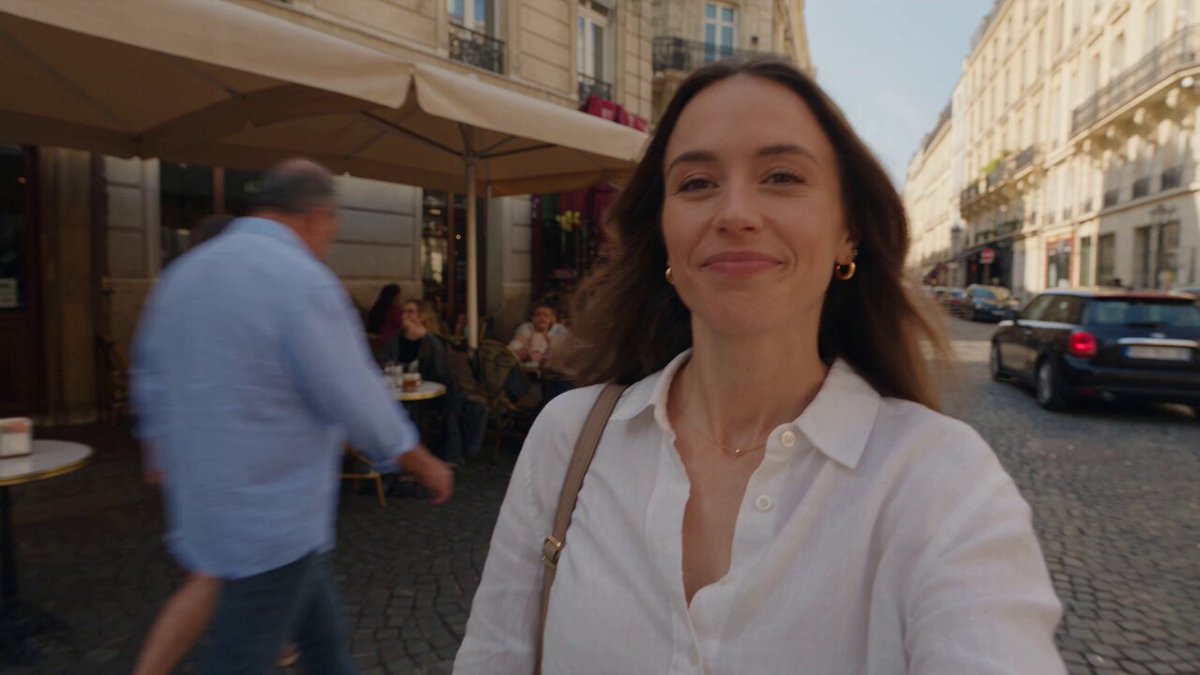
It is worth being careful about what "photorealistic" means in practical terms. A 10-second clip of a mountain landscape can look nearly indistinguishable from real footage even with relatively simple generation. A video of a human face doing something specific, speaking, turning, reacting, is a far harder bar.
So when reviewers say a model "goes from stylized to photorealistic," they are usually describing a spectrum of tasks, not a single switch. The same tool may give you gorgeous, stylized results on abstract subjects and struggle with hands on a close-up. Plan your projects around the difficulty of the subject rather than assuming one model will handle everything equally well.
The Real Challenge: Keeping Characters and Scenes Consistent
Consistency is the quiet hero of modern AI video editing, and it is the reason advanced workflows lean on multi-image fusion and reference-based generation rather than prompt-only prompting.
Prompt-only generation is like asking a new illustrator each second to draw the same character from a verbal description; every frame is a fresh guess. Reference-based generation, by contrast, treats the character as a persistent identity. You upload the character's look from several angles and moods, the system builds a reusable "identity profile," and every subsequent frame renders that same person.
This is the difference between a montage of vaguely related clips and a coherent short film. If you are building branded content, a series, or anything with recurring people or places, reference-based workflows should be your default. The extra setup time pays for itself many times over because you no longer have to fix drifting faces or inconsistent outfits shot by shot.
From Prompt to Cinematography
Modern tools also move control beyond the prompt itself and toward cinematic parameters. You are no longer limited to describing a scene in words. You can specify camera movement, lens feel, depth of field, lighting direction, and pacing. Some editors expose shot-level controls that let you choreograph a sequence with the precision of a director working on set.
The useful mindset shift is to treat the AI editor as a collaborator that understands basic cinematography rather than a magic box. The better you articulate angle, motion, and mood, the closer the output gets to work you would be proud to ship.
Managing a Portfolio of Models
Because no single model is best at everything, serious workflows rely on a portfolio of specialized generators rather than one do-everything tool. The practical skill is knowing which model to reach for depending on the task.
For stylized, painterly, or artistic looks, models trained on highly curated art tend to outperform generic video generators. For realism, flagship text-and-video architectures shine. For Japanese-style or heavily stylized content, image-focused models paired with a video motion pass often give the cleanest results.
The strategy is to build a small playbook: this tool for character work, that one for wide landscapes, another for transition-heavy edits. Over time you develop instincts about which combinations produce the least friction, and you stop fighting individual models' weaknesses.
Stylized Looks and Their Strengths
Let us start with the stylized end of the spectrum, where AI video has matured earliest. Stylized generators are excellent when the goal is a recognizable, distinctive look rather than literal realism. Anime, watercolor, comic-book, 3D render, and painterly outputs are all routinely achievable with strong fidelity.
These tools are forgiving. When faces morph slightly or physics bend a little, stylized output hides it better than photorealistic output would. That makes stylized generation the easiest entry point for beginners and a fast path to polished-looking brand content with a distinct personality.
The Photorealistic Frontier
At the realistic end, the stakes are higher and the rewards bigger. Photorealistic generation can serve product visualization, architectural walkthroughs, narrative filmmaking test shots, and marketing content that needs to feel grounded.
The current flagships in this space are impressive: long sequences with stable lighting, reflective surfaces that behave, and human faces that consistently hold identity across cuts. But photorealism rewards effort. You need good reference material, careful prompt engineering, and often a post-pass to clean up artifacts. Approach realistic work as a craft rather than a shortcut, and you will get dependable, repeatable quality.
Building a Dependable AI Video Workflow
Given this landscape, how should you actually set up your editing process? The same principles apply whether you are a solo creator, a marketer, or a filmmaker.
First, prototype before you commit. Test a few frames of your subject at the target style before generating a full sequence. Second, lock your references early, characters, environments, key props, and reuse them across every shot. Third, choose models by matching their demonstrated strengths to your subject difficulty, not by picking the highest score. Fourth, and easiest to forget, budget for iterations. A clean output frequently requires two or three passes through prompt refinement.
- Prototype first with low-resolution test frames to validate style and identity.
- Lock references for characters and settings before starting production.
- Match the model to the task difficulty rather than to general rankings.
- Plan for iterations and leave time to refine prompts and re-run frames.
- Keep a per-project playbook so the next project reuses what worked.
Handling Transitions Without Breaking the Spell
One of the highest-impact editing steps is the transition between shots. Inconsistent transitions are what make AI video feel chopped together. The good news is that modern tools can smooth the move: carrying a subject's identity across a cut, matching lighting between scenes, or morphing one style into another.
A useful technique is to generate a shared anchor frame at the end of one shot and the start of the next, ensuring the two share a common visual baseline before you stitch them. This dramatically reduces the jarring "jump" that marks lower-quality output.
Audio and Pacing for a Finished Feel
Video is half audio, and AI editing workflows increasingly fold in music, ambience, and even generated voiceovers. Pacing also matters: a sequence of cuts that respects rhythm feels intentional, while arbitrary transitions feel accidental. Pairing AI-generated footage with appropriately matched sound and editing to the music elevates the whole piece far beyond the sum of its clips.
Picking Your Starting Point
If you are new to this, start with one dedicated tool and its default output rather than trying to assemble a portfolio immediately. Run a small pilot project with a clear goal, one that requires a repeated character or environment. Learn the reference workflow first, because that is where the biggest quality gains live. Then, once you are comfortable, expand outward to a second tool that covers a weakness of the first.
If you already produce video regularly, audit your current output for the two failure points: character drift and transition jank. Introduce reference-based generation for recurring subjects and shared anchor frames for cuts. These two changes often produce a visible jump in quality with minimal disruption to an existing process.
Frequently Asked Questions
Do I need advanced technical skills to use these tools?
Not really. Modern editors handle most of the hard parts behind the scenes. The skills that matter are visual judgment, prompt clarity, and the patience to iterate. Understanding cinematographic basics helps, but it is not a prerequisite.
How important are reference images versus prompts?
For consistency, reference images are far more important. A character defined by images will stay recognizable; a character defined only by words is re-guessed in every frame. Use references for anything that repeats.
Can AI video editors replace traditional editing software?
Not yet, and they do not need to. In most workflows AI generates footage and handles visual continuity, while a traditional editing timeline is still the best place for cutting, layering, color, and final assembly. The two complement each other.
What is the fastest way to make my AI footage look professional?
Focus on two things: keep your characters and scenes consistent with references, and make transitions clean by anchoring shots to a shared frame. Pairing these with fitting audio usually produces the biggest perceived-quality jump.
Common Mistakes That Undermine AI Video
It helps to know what goes wrong most often, so your workflow avoids the usual traps.
- Skipping references for recurring subjects. Prompt-only generation re-guesses every frame, which is the fastest route to identity drift. If a person, product, or place appears more than once, define it with reference images.
- Treating the first output as final. Clean video usually requires two or three iterations. Budget for retries instead of expecting a perfect first pass, and you will stop being disappointed.
- Overloading one model with every task. No single generator is best for motion, realism, and style all at once. Match the model to the job and keep a small portfolio of complements.
- Forgetting that sound is half the product. A gorgeous visual sequence with muddy audio reads as amateur. Plan music, ambience, and pacing alongside the visuals from the start.
- Editing as an afterthought. The timeline still matters. Cut to rhythm, anchor transitions to shared frames, and finish with a color and audio pass rather than shipping raw generated clips.
The Takeaway
AI video has evolved from a novelty into a serious editing discipline. The journey from stylized airbrush effects to photorealistic control is really a journey of increasing control: over identity, style, motion, and pacing. The tools available now can carry a consistent character through a whole short film, match a distinctive aesthetic, and produce footage that sits comfortably next to real-world captures.
None of it removes the need for judgment. You still choose references, define the look, decide what matters, and steer iteration after iteration. What AI video editors remove is the brute-force drudgery: the redrawing of faces, the rebuilding of scenes, the endless manual retouching. That frees you to spend your energy where it changes the outcome most, on the story, the style, and the sequence that makes your work worth watching.
