

Why AI Video Engines Stopped Being a Novelty
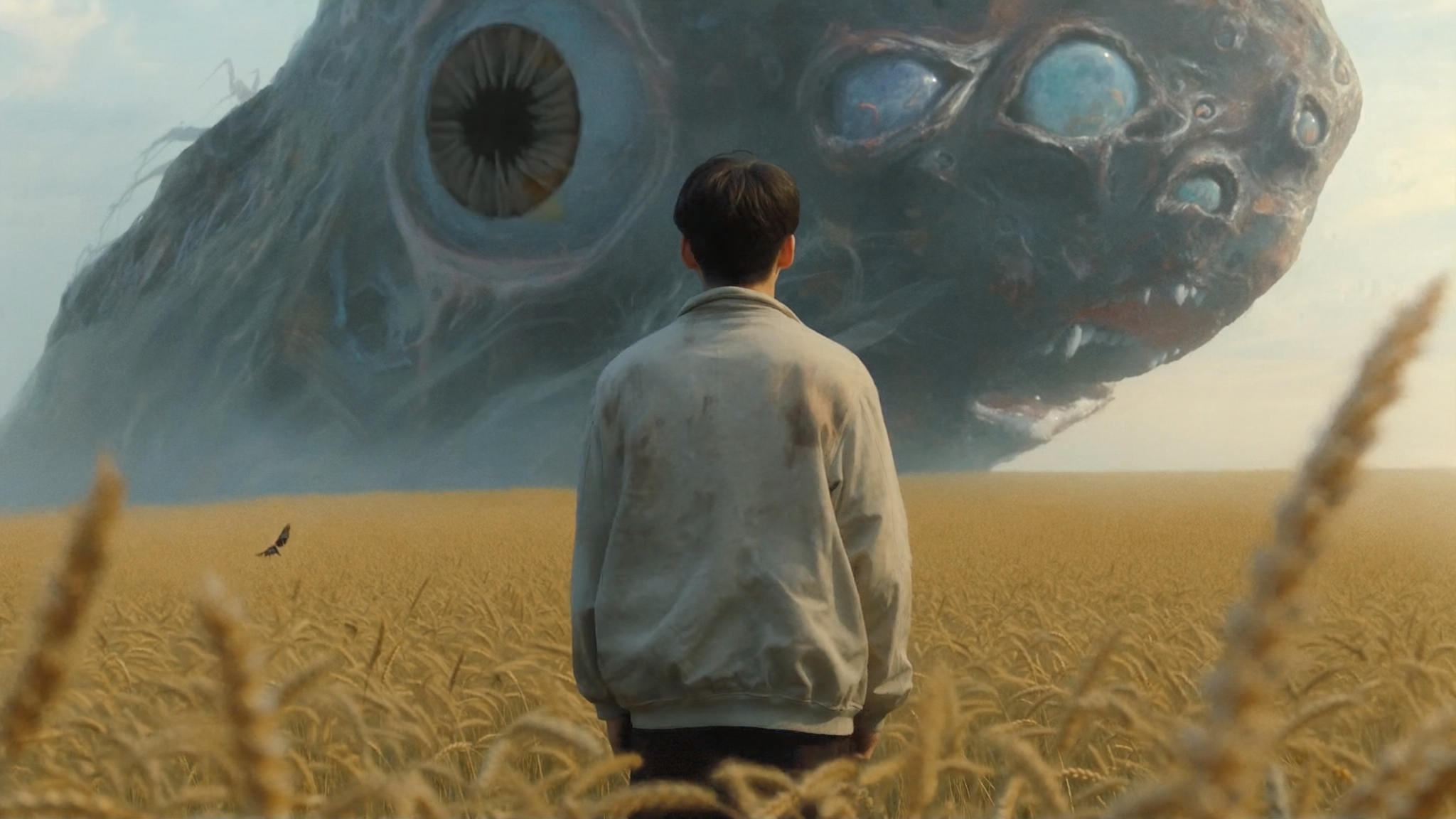
A few years ago, asking a model to render a moving image from a sentence produced something between a dream and a glitch. Motion smeared. Faces melted between frames. Anything longer than four seconds collapsed into abstraction. Today the same request can produce a shot with consistent lighting, believable camera movement, and a subject that holds its shape for the full clip.
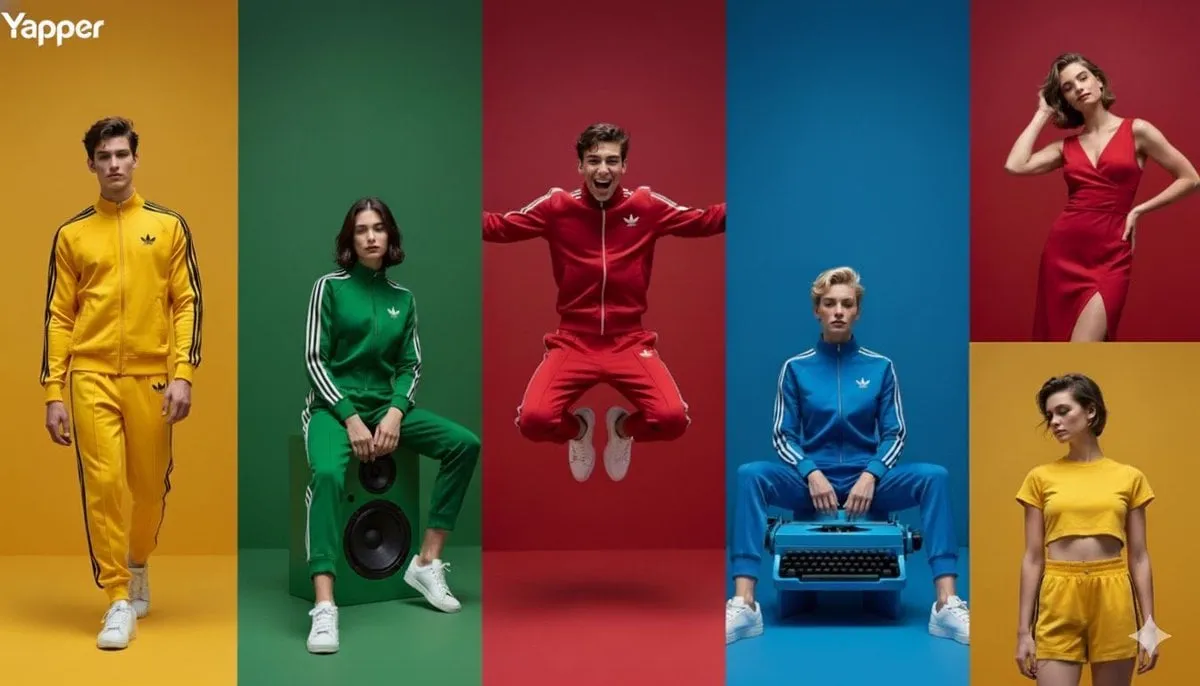
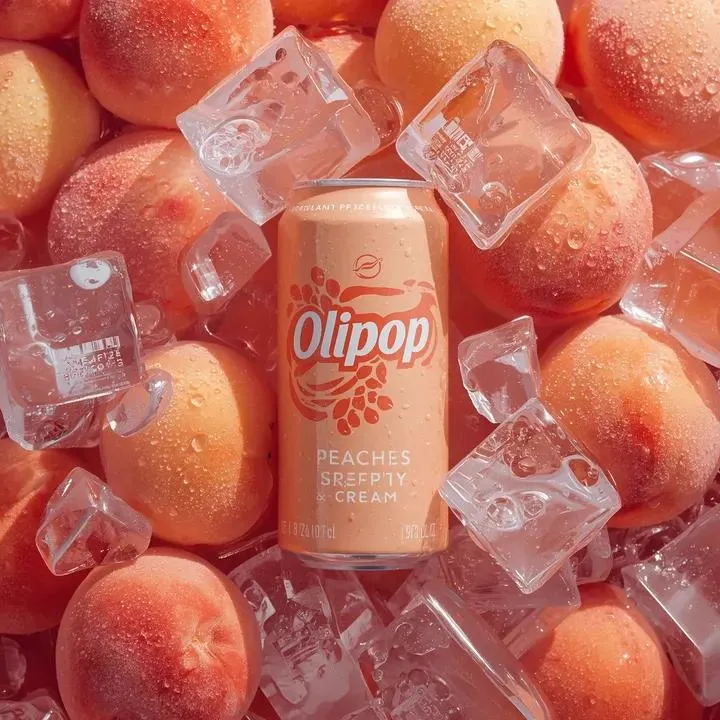
The change is not cosmetic. It rewrites the economics of previsualization, social content, and short-form advertising. A two-person studio can now produce a dozen concept clips in an afternoon instead of renting a camera package for a week. A marketing team can test five visual directions before lunch. A solo creator can build a title sequence without ever leaving a browser tab.
What has not changed is the gap between engines. Runway, Sora, and the rest of the field are not interchangeable. Each has a personality shaped by its training data, its architecture, and the way its interface nudges you to work. Picking the wrong engine for a job costs hours, not minutes, because you often only discover the mismatch after watching the rendered output.
This guide walks through how these engines actually behave, where each one shines, and how to build a workflow that survives contact with real deadlines.
How AI Video Generation Actually Works
Understanding the machinery at a high level changes how you prompt. You do not need to read research papers, but you do need a mental model of why certain requests fail.
From diffusion frames to temporal consistency
Early video models were essentially image generators run in sequence. Each frame looked fine on its own, but nothing forced frame two to remember what frame one had established. Hair color drifted, background extras multiplied, and a jacket could change cut mid-shot. Modern engines add a temporal layer: attention mechanisms that compare neighboring frames and penalize inconsistency, plus motion priors learned from enormous libraries of real footage.
The practical consequence is that these systems are far better at keeping a subject stable than at choreographing complex interactions. A woman walking through rain is now routine. A woman shaking hands with a second character while a dog crosses in front is still a coin flip.
Why prompt adherence and realism pull against each other
There is a real tension inside every video model. Reward realism and you get footage that looks plausible but ignores your specifics. Reward literal prompt following and you get stiff, literal, slightly uncanny results.
Different engines sit in different places on that spectrum. One may render a stunning, cinematic result that only partly matches your description. Another may follow your description precisely while looking like a stock commercial. Knowing which trade-off you can tolerate for a given shot is more useful than any leaderboard.
Resolution, duration, and the quality cliff
Most engines look excellent at short durations and degrade as clips extend. The cliff usually appears when the model has to sustain a scene it cannot fully remember. You can often spot the exact second it happens: the camera drifts, the lighting resets, the subject's face softens.
The professional habit here is to treat short clips as the building block, not the limitation. Generate five seconds of perfection rather than fifteen seconds of drift, then stitch in the edit.
The Main Engines and What Each One Is Best At
Runway
Runway is the most tool-shaped of the group. It behaves like a production suite rather than a single model: text-to-video, image-to-video, motion brushes, inpainting, style transfer, and a slate of camera controls that map onto vocabulary a filmmaker already knows.
Its strength is control. You can point at a region of a frame and say "move this," not just describe a scene. That makes it unusually good for client work where revisions are inevitable, and for compositing tasks where the AI output needs to sit next to real footage.
The trade-off is that the ceiling on raw photorealism is lower than the most cinematic competitors, and results from the same prompt can vary more between attempts.
Sora
Sora's reputation rests on two things: physical plausibility and longer coherent shots. Objects have weight. Water behaves like water. A camera move feels like a camera move rather than a digital pan pasted onto a still.
It excels at establishing shots, sweeping landscapes, and anything where the audience should feel present in a space rather than admire a product. It is also strong at rendering text and signage, which historically broke every model in embarrassing ways.
The friction is control. Getting a precise, repeatable result out of a highly expressive engine often means generating several takes and selecting, rather than dialing in parameters until the frame obeys.
Veo, Kling, Luma, Pika, and the rest of the field
The field is wider than two names. Veo is competitive on realism and native audio, with strong prompt following. Kling has earned attention for character motion and short-form dynamics. Luma leans into smooth, dreamy camera movement and approachable workflows. Pika targets speed and playful stylistic effects. Open-weight options keep improving for teams with strict data requirements.
The right way to read this list is as a toolkit, not a ranking. Most working professionals route different shots to different engines inside the same project.
Head-to-Head: The Criteria That Actually Matter
Temporal consistency
The question to ask is simple: if I generate the same shot three times, does the result stay recognizable? High consistency means fewer wasted iterations. Low consistency means you are effectively gambling and cherry-picking.
Test this with a shot containing a distinctive element — a red scarf, a scar, a specific logo. If the element warps or wanders across takes, budget extra render cycles for that engine.
Camera language
Filmmakers think in dolly, crane, push-in, rack focus, and handheld. Engines differ dramatically in how much of that vocabulary they honor. Some respond well to "slow push-in, shallow depth of field, 35mm lens." Others produce a generic glide regardless.
A quick calibration test: generate the same subject with three camera phrases and see whether the outputs are meaningfully different. If they are not, stop wasting prompt tokens on cinematography.
Physics, hands, and text
These three are the traditional weak spots and still separate engines cleanly. Hands interacting with objects remain the hardest test. Text on signs, packaging, and screens is improving fast but still unreliable in motion. Liquids, cloth, and smoke reveal whether the model has learned physical priors or only visual patterns.
Audio and lip sync
Native audio generation has moved from afterthought to feature. Some engines produce ambient sound and dialogue tied to the visual output, which removes a whole post-production step for talking-head content. Others expect you to bring your own audio track.
If your project is dialogue-driven, treat native lip sync as a hard requirement rather than a bonus. Matching a generated mouth to a separately recorded voice track is still an unpleasant manual job.
Iteration speed and access model
Speed matters less for a hero shot and enormously for a fifty-shot campaign. When evaluating, measure end-to-end time: prompt, queue, render, download, review. A slower engine that nails the first take often beats a fast one that needs six attempts.
Access models also shape your workflow. Some tools are oriented toward interactive experimentation in a browser, others toward API-driven batch generation inside a pipeline.
A Practical Workflow: Script to Finished Cut
Write the shot list before you write a single prompt
The most common failure mode is opening a text box and typing a mood. Instead, decompose your idea into shots the way a storyboard artist would. For each shot, define subject, action, setting, camera, lighting, and duration. One line per shot, plain language.
This list becomes your production schedule and your prompt scaffolding at the same time. It also surfaces shots that no engine will handle well, so you can plan a practical alternative early.
Build a small reference kit
Most engines accept a reference image or a first frame. Collecting ten to twenty stills that establish the look — palette, wardrobe, lens character, environment — pays off immediately in consistency across a sequence.
Reference images also solve the hardest problem in AI video: continuity between shots. Locking the same character portrait as the starting frame across multiple clips is the fastest way to make a sequence feel like one film.
Prompt one variable at a time
When results disappoint, resist the urge to rewrite everything. Change one element — the camera move, the lighting, the wardrobe — and regenerate. Otherwise you learn nothing about which phrase caused the improvement.
A workable prompt order for the first pass is: subject, action, environment, camera, light, style, duration. Then trim the clauses that the engine visibly ignores. Most engines respond to five to eight meaningful clauses; beyond that, extra words dilute the signal.
Extend rather than regenerate
If the first four seconds are good and the fifth is not, extend from the good segment rather than rerolling the entire clip. Extension tools preserve momentum and continuity that a fresh generation will not.
When extension is not available, generate overlapping clips and cut on movement — a turn, a hand pass, a camera whip — so the seam disappears. Editors have hidden worse.
Finish in the edit
The last ten percent of quality comes from post. Color grade the whole sequence as one piece so shots from different engines match. Add grain, subtle motion blur, or a light film emulation to unify render artifacts. Layer sound design: room tone under everything, a music bed, and a few tactile effects.
AI footage often lacks high-frequency detail. A gentle sharpening pass and a grain layer do more for perceived quality than another round of generation.
Prompt Patterns Worth Reusing
The locked-off beauty shot. "Static medium shot, subject centered, soft window light from camera left, shallow depth of field, minimal movement, ambient room tone." Useful for product and dialogue coverage where drift is fatal.
The motivated push-in. "Slow dolly push toward subject, 50mm lens, natural perspective, background slightly out of focus, warm practical lighting." Reads as intentional rather than generated.
The environment establish. "Wide aerial, slow forward drift, overcast light, volumetric haze, distant city skyline, no people in frame." Empty frames are where these models look most convincing.
The controlled action. "Subject walks left to right through frame, steady handheld follow, subject stays in the right third, natural motion blur." One action, one direction, one camera behavior.
The stylistic anchor. Naming a concrete reference — a film stock, a lens, a lighting setup — works better than adjectives like cinematic or beautiful.
Mistakes That Cost the Most Time
Overloading a single prompt. Cramming a full scene, two characters, dialogue, and a complex camera move into one generation guarantees a mediocre result. Split it.
Chasing perfect realism in every shot. Stylized footage hides artifacts better and often fits a brand more distinctively. Realism is a choice, not the default goal.
Ignoring the first frame. Supplying a strong starting image is the single highest-leverage change most people can make to their output quality.
Regenerating the whole clip to fix four seconds. Extend, trim, or patch. Do not start over.
Forgetting continuity. Track wardrobe, props, time of day, and light direction in a small document. The audience notices inconsistency even when they cannot name it.
Skipping rights and disclosure checks. Confirm the license terms for your output, check whether your platform requires AI disclosure, and keep your source references clean for commercial work.
How to Choose Between Engines
Run through these questions in order. They resolve most decisions faster than a feature matrix.
- Is the shot character-driven or environment-driven? Character work favors engines with strong motion control; environments favor engines with strong physical and cinematic rendering.
- Do I need precise camera control? If yes, prioritize tools with explicit motion and camera parameters over pure text prompting.
- Will there be revisions? Client work rewards controllable, region-editable tools over sheer beauty.
- Do I need audio? Native dialogue and effects generation changes the entire post pipeline.
- How many shots total? Volume pushes you toward speed, batch tools, and stable consistency rather than peak quality per shot.
- What are my data constraints? Regulated industries may need private or self-hosted options.
A sensible default for many projects is a two-engine stack: one for expressive hero shots and one for controllable, fast coverage. Learning two tools deeply beats sampling eight.
Frequently Asked Questions
Can one engine do an entire project? Sometimes, but mixing produces better results. Use one engine for establishing shots, another for character coverage, and unify in the edit.
How long should a generated clip be? Four to eight seconds is the sweet spot for reliability. Anything longer should be assembled from multiple generations.
Do these models understand film terminology? Broadly, yes — lens length, depth of field, camera moves, and lighting direction are widely recognized. Keep the vocabulary standard rather than poetic.
Why does my subject's face change between clips? Without a shared reference image, the model re-invents the character each run. Anchor every clip to the same portrait or first frame.
Is generated footage good enough for broadcast? For some formats, at some resolutions, with an experienced colorist. Test on a real display at final resolution before committing.
How do I keep a consistent style across a series? Build a style block: three to five fixed phrases describing palette, lens, lighting, and grain. Append it to every prompt in the series.
What about sound? Either choose an engine with native audio generation or plan a conventional sound design pass. Cutting against a music bed you choose yourself often gives the most control.
Where This Is Heading
The trajectory is clear: longer coherent shots, tighter control over specific regions and frames, and closer integration with editing timelines. The most useful skill is not memorizing which engine leads today, but developing the judgment to decompose a scene, test cheaply, and finish carefully.
Engines will keep leapfrogging each other. The workflow — shot list, references, one variable at a time, extend instead of reroll, finish in the edit — stays stable. Learn that, and swapping the engine underneath becomes a minor adjustment rather than a new craft.
