
Why a Single Photo Is Now Enough to Start a Video
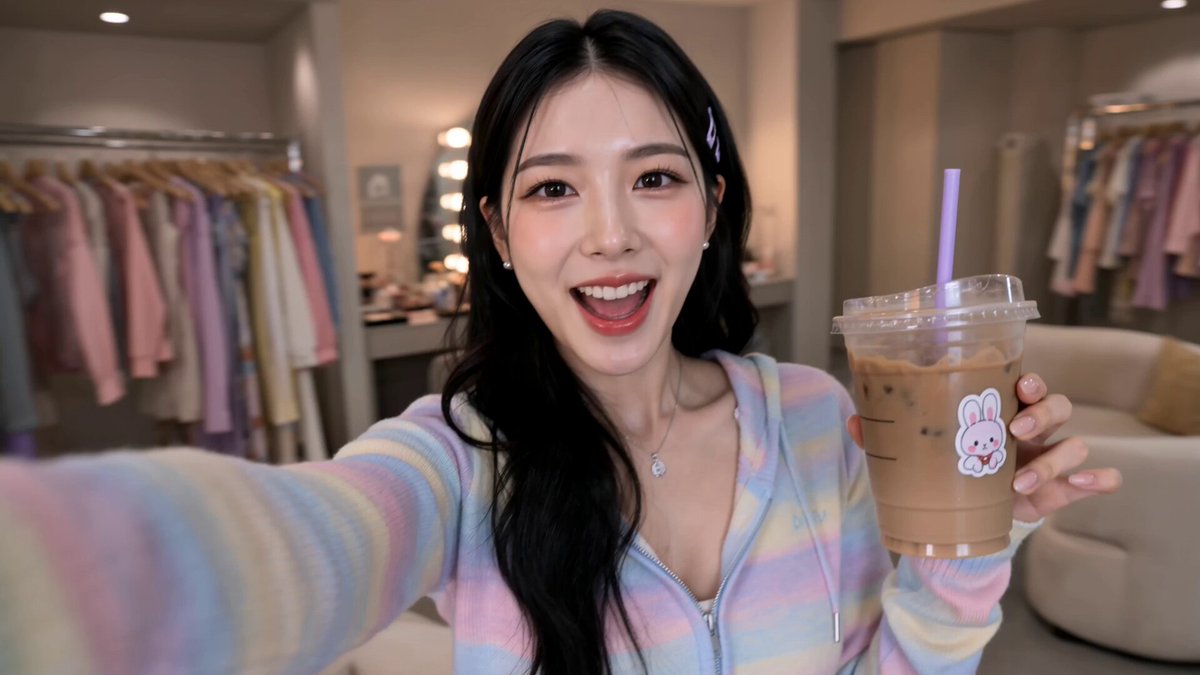
Most people who want to make a video do not start with a script. They start with a picture: a portrait shot on a phone, a product photo left over from an old listing, a character sketch, a frame grabbed from a camera roll. For years that picture was a dead end unless you could animate it by hand. Today it is a legitimate first frame, and the workflow that turns it into motion is one of the most practical things to learn in creative software.
Photo-to-video generation is the art of taking one still image and producing believable movement from it. The model has to invent what happens next: how fabric folds when a shoulder turns, how water distorts when a hand passes through it, how light shifts when a subject walks away from a window. The best tools do this without changing the thing you liked about the original image, which is the whole reason you chose that photo in the first place.
This guide is a practical walkthrough. It covers how the underlying approach works, where it breaks, how to write prompts for it, how to build a repeatable workflow, and when a still-image animation tool is the wrong choice for the job entirely.
How Image-to-Video Generation Actually Works
Understanding the mechanism is not academic trivia. Every common failure mode maps to a step in the pipeline, and knowing the step tells you what to change.
The frame is compressed into a latent representation
An image encoder converts your photo into a compact numerical description rather than a grid of pixels. This description preserves structure, texture, colour, and rough spatial layout, but it discards fine detail the model considers noise. A sharp 12-megapixel file and a moderate 2-megapixel file often produce near-identical results because the encoder downsamples anyway. This is why adding resolution beyond a certain point stops improving output quality.
Motion is invented, not recovered
There is no hidden video inside a still. The model predicts a plausible sequence of future states conditioned on the image and your prompt. Two mechanisms matter:
- Temporal attention lets the model compare frames against each other so that a face stays the same face across the clip.
- A motion prior learned from training footage biases results toward movement that looks physically reasonable: gravity pulls, joints rotate within limits, liquids flow.
Because motion is predicted, ambiguity is resolved by the prompt. If you say nothing about camera behaviour, the model picks, and it does not always pick what you wanted.
Conditioning signals steer the prediction
Text prompts are the most common control, but they are not the only one. Keyframe inputs, depth or pose extraction, motion brushes painted over a region, and reference images for style or identity all act as conditioning. Stronger conditioning means less drift and more predictability, at the cost of flexibility.
Temporal consistency is the real battleground
Any single generated frame can look excellent. The difficulty is keeping a subject recognisable across a whole clip. Short clips hide consistency problems well. Longer clips accumulate small errors until faces soften, backgrounds shift, and objects quietly change identity. Treat clip length as a difficulty dial, not a duration setting you set and forget.
Where the approach reliably breaks
- Multiple subjects overlapping: the model swaps limbs between people.
- Hands and fingers in close-up: joints bend the wrong way under fast motion.
- Reflective surfaces and mirrors: reflections desynchronise from the subject.
- Text in frame: lettering mutates even when the original is crisp.
- Fast lateral camera movement across a detailed background: detail smears and geometry warps.
None of these are permanent limits, but all of them are predictable, and predictable problems have workarounds.
Choosing the Right Approach for Your Shot
Not every moving image needs the same technique. Choosing badly is the most common reason people conclude a tool "does not work".
Decision criteria
Work through these questions before you generate anything:
- Does the subject need to move, or does the camera need to move? Camera-only moves are far easier and much more reliable.
- Does the subject's identity matter across the whole clip? If yes, prioritise tools with strong first-frame adherence and keep the clips short.
- Will there be dialogue or lip-sync? That is usually a separate step layered on top of a generated clip rather than something to request from the base model.
- Is the final use a three-second social hook or a ten-second insert in a longer edit? Different lengths justify different tolerance for artefacts.
- Do you need it today or can you iterate for a week? Longer iteration cycles forgive weak prompting; same-day delivery does not.
Tool categories worth knowing
- Single-image animators: take one photo, add mild motion. Best for portraits, product beauty shots, and slow atmospheric moves.
- First-and-last-frame models: you supply the start and end states and the model interpolates. Excellent for controlled transitions and before/after reveals.
- Text-to-video generators: no input image, full creative freedom, weakest identity control. Useful for b-roll and abstract sequences.
- Performance transfer tools: map a driving video onto a still of a person to reuse an existing performance.
- Image editors with motion features: add parallax and depth animation to a still without generating new content. The safest option when the photo is the product.
A sensible default for most commercial work is to start with single-image animation, then escalate to first-and-last-frame control when the shot needs a defined destination.
Writing Prompts That Actually Control Motion
A photo gives the model everything it needs to know about appearance. Your prompt should give it everything it needs to know about behaviour. Splitting the prompt into four slots makes this mechanical rather than mystical.
Slot one: subject action
State one primary action, in one clause. "She turns her head slowly toward the window" works. Three chained actions in one sentence produce mush.
Slot two: camera behaviour
Always specify. Choose from a small vocabulary and reuse it:
- locked-off static shot
- slow push in
- slow pull out
- gentle handheld drift
- slight orbit to the left
- tilt up
Naming one of these removes the biggest source of unwanted movement.
Slot three: pace and duration feel
Words like "slow", "measured", "gradual", "even" change the distribution of motion across frames. If you want the clip to loop, ask for motion that returns rather than motion that resolves.
Slot four: atmospheric continuity
Add one lighting or environment note so the generated frames stay in the same world as the source. "Overcast daylight from the left" or "warm interior light, soft shadows" is enough.
Prompt patterns that underperform
- Stacking style words: "cinematic, 4k, hyperreal, masterpiece" adds nothing when the source image already defines the look.
- Negative-only prompts: telling the model what not to do is weak compared to describing what should happen.
- Ambiguous pronouns: with two people in frame, "he turns" is a coin flip.
- Vague nouns: "the object moves" tells the model nothing about which region to animate.
Three prompts that work, with reasoning
- Portrait, locked-off camera: "Slow, even push in on the subject's face. Eyeblinks natural, hair moving faintly in a breeze from the left. Overcast daylight, soft shadows. No camera shake." The locked camera isolates the model's attention on facial micro-motion, which is where single-image animators are strongest.
- Product still: "Static camera. Light sweeps slowly across the object from upper right to upper left. Specular highlights travel with the light. Dark seamless background unchanged." Light movement creates the impression of a filmed commercial without asking the model to invent geometry.
- Landscape: "Slow orbit to the right, constant speed, horizon level. Clouds drift left to right. Water surface ripples in the foreground." An orbit reads as a real camera move and gives the model an easy, consistent cue for parallax.
A Repeatable Workflow From Still to Finished Clip
The difference between hobbyist output and professional output is usually process, not the model. Here is a sequence that holds up across projects.
Step 1: Prepare the source image
Fix the frame before you generate. Crop to the final aspect ratio, straighten horizons, and clean obvious blemishes. If the image has heavy compression artefacts, lightly denoise. Do not over-sharpen: sharpening halos get amplified into visible crawling edges once motion begins.
Step 2: Decide the shot length before generating
Pick the shortest length that serves the edit. A two-second insert is often enough in a real sequence. Generate short, then extend or cut rather than generating long and hoping.
Step 3: Write the four-slot prompt
Fill subject action, camera behaviour, pace, and atmosphere. Keep it under roughly forty words. Longer prompts dilute the important instructions.
Step 4: Generate three variations, not one
Never judge a model on a single roll. Generate three takes with the same prompt and settings, then choose. Randomness is a feature: the second take often has better motion than the first.
Step 5: Review against a checklist
- Is the subject recognisably the same person or product throughout?
- Does the background hold still where it should?
- Do edges stay clean, especially at the frame border?
- Does motion start and end cleanly, or is there a jolt at the loop point?
- Is the reveal of the subject delayed, or does the first frame already show the best composition?
Step 6: Fix, do not restart
Most problems are fixable by narrowing scope: shorten the clip, simplify the prompt, lower motion strength, or freeze part of the frame. Only re-roll from scratch when the composition itself is wrong.
Step 7: Upscale and finish outside the generator
Generated clips benefit from a finishing pass. Apply light upscaling, add a touch of motion blur if the movement looks sterile, and grade for consistency with the rest of your edit. A short clip that matches its neighbours reads as professional; a technically better clip that visibly changes look mid-sequence does not.
Step 8: Record your settings
Keep a small log: source image, prompt, settings, model, take number, verdict. After twenty clips you will have personal evidence about which settings actually work for your subject matter, which beats any general advice including this article.
Common Problems and How to Fix Them
This is the troubleshooting list to keep open while you work.
The subject's face changes halfway through
Cause: the model is losing identity adherence as temporal error accumulates. Fix: shorten the clip, add an explicit reference for identity, and reduce motion magnitude. Avoid camera moves that rotate the head away from the original angle.
Flickering or pulsing brightness
Cause: per-frame exposure estimates drifting independently. Fix: describe one constant light source in the prompt and avoid mixed lighting descriptions. Post-production flicker removal also handles mild cases.
Unwanted zoom
Cause: the model interprets "make it dynamic" as movement. Fix: state "locked-off static camera" explicitly. Prompting for one clear camera behaviour is more reliable than hoping the default is neutral.
Warped straight lines and architecture
Cause: generated motion applied to rigid geometry. Fix: reduce motion strength, animate only a foreground region, or use a parallax/depth approach rather than full generation.
The clip looks like a slideshow with a filter
Cause: motion magnitude too low. Fix: raise motion strength in small increments, add an explicit secondary motion such as drifting clouds or moving light, and prefer verbs of travel over verbs of existence.
Text on a sign or shirt becomes gibberish
Cause: generative models treat lettering as texture. Fix: crop text out, mask it and composite the real lettering back in afterwards, or accept a locked camera with minimal motion so the text stays legible.
Clip runs too long and quality drops at the end
Cause: error accumulation. Fix: generate at a length the model handles well and cover longer durations with multiple clips and cuts. Editors hide more than generators fix.
Quality Control: Judging a Clip Before It Ships
Learning to reject quickly is a skill. Run every clip through the same short review.
- Identity check: does the subject survive the whole clip?
- Geometry check: do straight edges stay straight?
- Motion check: is the movement driven by your prompt, or is it generic drift?
- Loop check: can the clip repeat without a visible seam?
- First-frame check: is the opening frame a usable thumbnail?
- Fit check: does it match the surrounding footage in tone and grain?
A clip does not need to be perfect. It needs to be invisible. If a viewer watches the sequence and never thinks about the generation, the clip passed.
Practical Use Cases That Pay Off Immediately
The highest-return applications are rarely the most ambitious ones.
Product and e-commerce
Turn existing catalogue photos into short loops for listings and paid social. Because the source is a controlled studio image, the model has little room to fail. Slow light sweeps and gentle camera pushes are enough to outperform a static image in almost any feed.
Portraits and personal branding
A single good headshot can produce a set of subtle clips for a profile banner, a channel intro, or a slide. Keep motion minimal: a blink, a slight turn, a small breath. Restraint here reads as confidence; a wide smile generated from a neutral photo reads as uncanny.
Concept pitches and storyboards
When you need to show a client how a shot will feel, a photo animated into a three-second moving frame communicates far more than a static board. The imperfection of the motion is acceptable in a pitch context, which makes this one of the fastest wins available.
Historical and archival material
Old photographs can be given gentle parallax and depth movement without inventing details, provided you keep motion conservative and avoid animating faces heavily. The safest version treats the image as a physical object being filmed rather than a scene being reconstructed.
Social hooks
A three-second animated still of your strongest product or character image is a cheap, reliable scroll-stopper. Build a small library of these and reuse them across campaigns.
When not to use it
Skip generated motion when the photo is your legal or evidentiary product, when the shot requires precise choreography, when real footage exists and is cheaper than three rounds of iteration, and when a still genuinely communicates better. A well-chosen still beats a badly animated one every time.
Scaling From One Clip to a Repeatable System
Once one clip works, the temptation is to make everything. A little structure prevents the mess.
- Build a source library. Curate twenty to thirty images that animate well for your niche and keep them organised by use case: portrait, product, environment, abstract.
- Save prompts that worked alongside the images they worked with. Prompt and image are a matched pair; separating them loses most of the value.
- Standardise aspect ratios per channel before generating so you never have to re-crop finished clips.
- Version your outputs with a clear naming convention that records source, prompt version, and take number.
- Review weekly. Delete your low performers and keep the shortlist small enough that you actually remember it.
- Watch for platform-visible artefacts and re-check clips after any model update, since quality can shift in either direction.
The goal is not a big archive. It is a small set of shots you can reproduce reliably under deadline.
Frequently Asked Questions
How long should a generated clip be?
As short as the edit allows. Two to four seconds covers most inserts and keeps consistency problems away. Generate at whatever length the tool handles cleanly, then assemble longer sequences in the editor rather than fighting the model for duration.
Can I use a photo I did not take?
Rights do not change because the output is generated. If you would not be comfortable publishing the still, generating motion from it does not make it safe. Use images you own, images you have licensed, or images created for the purpose.
Why does the same prompt give different results each time?
Generation is stochastic. That variability is useful for exploration and annoying for production. Once you find a setup you like, record the settings exactly and expect minor differences even when everything is identical.
Do I need a powerful computer?
Usually not for cloud tools, since generation runs on the provider's hardware. Local setups trade convenience for hardware cost. For most creators, a cloud workflow plus a modest editing machine is the practical combination.
Is it better to animate a still or to shoot real footage?
Footage wins whenever it exists and is affordable, because it carries real physics and real lighting for free. Generated motion wins when the image does not exist yet, when shooting is prohibitively expensive, or when you need ten variations of the same shot in an afternoon.
How do I stop the camera from moving on its own?
State the camera behaviour explicitly in every prompt and lower any motion-strength control. If drift persists, crop the frame slightly inward after generation so the edges, where drift is most visible, never appear on screen.
Should motion be added before or after editing?
Generate first, then cut. Motion added after grading and timing means redoing that work every time a clip needs a re-roll. Keep the generator upstream of the timeline and treat clips as raw material.
The Bottom Line
Photo-based video generation is mature enough to use on real work and narrow enough that discipline matters more than enthusiasm. The reliable pattern is straightforward: prepare a clean source image, choose the simplest technique that achieves the shot, write a short prompt that names one action and one camera move, generate a handful of takes, judge them against a fixed checklist, and finish the winner in an editor. Keep clips short, keep the subject's identity sacred, and record what worked.
Do that and the still photo sitting in your folder stops being a limitation and becomes the first frame of something moving.
