


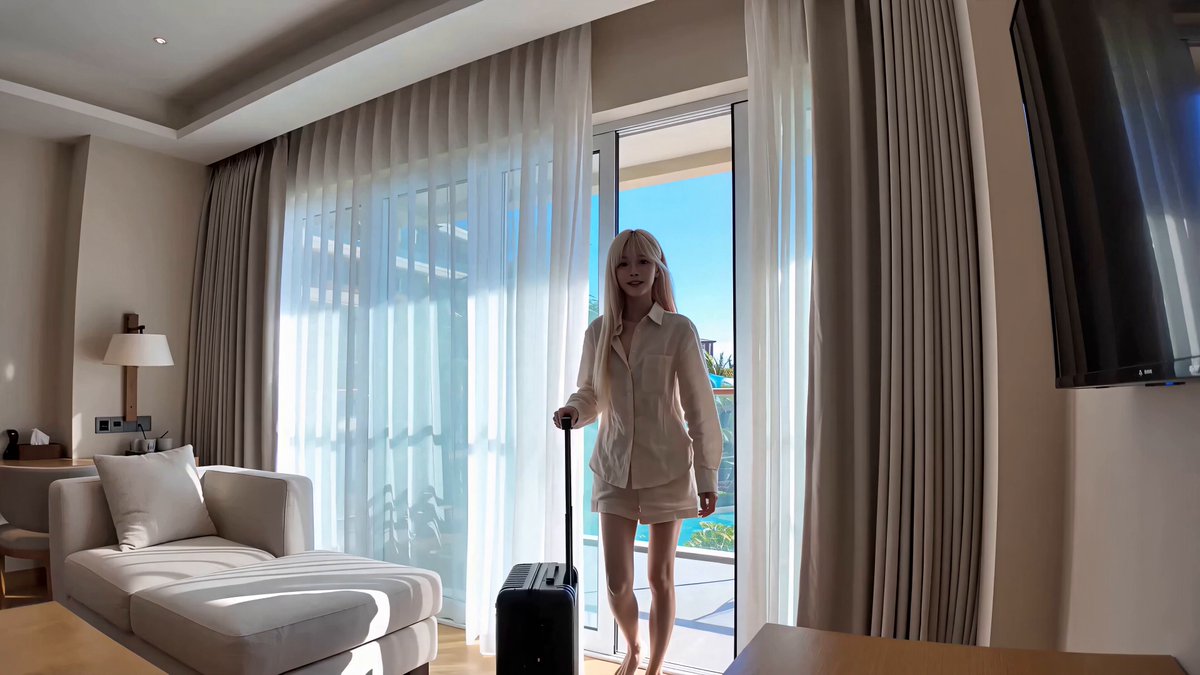
Business owners no longer need a film crew, a studio, or a six-week production calendar to publish video. What they need is a system: a repeatable way to decide what to make, generate it, review it, and ship it without losing the brand voice that makes the content worth watching. AI video generators have moved from novelty to infrastructure, and the businesses getting the most out of them are not the ones with the most tools — they are the ones with the clearest process.
This guide walks through that process end to end. You will see how to choose a generator, how to structure a shot list before you ever write a prompt, how to keep characters and products consistent across a campaign, how to control render costs and queue times, and how to run reviews that don't turn into endless revision loops. It is written for owners and small marketing teams who need output, not experiments.
Why Video Became the Default Format for Small Businesses
Video is now the format that platforms reward, audiences finish, and search engines index richly. A product explainer that once lived as a paragraph in a brochure becomes a 30-second clip that answers a question before the customer thinks to ask it. The shift is not just about attention; it is about trust. Seeing a product in motion, with real pacing and real context, reduces the mental gap between "interesting" and "purchasable."
The historic barrier was cost. A single filmed testimonial could consume a meaningful share of a small marketing budget once you accounted for talent, location, editing, and reshoots. That arithmetic changed. Generative tools compress the expensive parts — setup, iteration, and re-editing — into software cycles. A concept that would have needed a shoot day can now be tested in an afternoon, and if it fails, you have lost hours rather than thousands.
What has not changed is the need for judgment. A generator can produce a hundred plausible clips; it cannot tell you which one matches your positioning. That judgment is the actual job of the business owner in this workflow, and it is what separates brands that look intentional from brands that look auto-generated.
Choosing the Right AI Video Generator for Your Business
The market splits into roughly four families, and most businesses need two of them rather than one perfect tool.
Text-to-video models turn a written description into footage. They are strongest for mood pieces, abstract backdrops, lifestyle b-roll, and anything where the specific identity of a person matters less than the atmosphere.
Image-to-video models animate a still frame. This is the workhorse family for product marketing, because you already control the product photography and the model supplies motion, camera drift, and lighting continuity.
Avatar and presenter tools generate a talking person from a script. They work well for training content, internal announcements, and localized versions of the same message, provided you accept that the performance is synthetic and plan your editing around that.
Editing and assembly layers handle the unglamorous work: cutting selects, adding captions, mixing music, and exporting ratios for each channel. Some suites bundle this; many teams pair a generative tool with a dedicated editor.
Evaluation criteria that actually predict satisfaction
| Criterion | What to test | Why it matters |
|---|---|---|
| Subject consistency | Generate the same character or product in three separate prompts | Campaigns fall apart when the hero changes appearance between clips |
| Camera control | Ask for a specific move, such as a slow push-in or a locked-off shot | Gives you editing variety instead of identical motion every time |
| Duration and resolution | Produce your longest realistic shot at your target output size | Reveals whether you will need upscaling or frame interpolation |
| Iteration speed | Time how long a revision takes after one prompt change | Determines how many concepts you can afford to test |
| Commercial terms | Confirm usage rights before publishing anything | Avoids a launch-week surprise |
| Export flexibility | Check aspect ratios, codecs, and audio handling | Prevents re-rendering the same clip five times |
Match the model to the message
A useful rule: the more specific the claim, the less generative freedom you should give the model. A brand-awareness clip can be fully generated. A demonstration of a physical product should start from your own photography. A testimonial should use a real person, because synthetic delivery undermines the credibility the format depends on. Deciding this per asset, rather than per brand, keeps quality high without slowing everything down.
Building a Repeatable AI Video Workflow
The teams that publish consistently are not faster at prompting. They are faster at deciding. A five-stage loop keeps decisions front-loaded.
Stage 1: Define the job of the video
Write one sentence that names the audience, the platform, and the action. "Convince first-time visitors that our onboarding takes under ten minutes, for the homepage hero, driving trial signups" is a brief. "Make a cool brand video" is a wish. If the sentence cannot name a measurable action, the video will not have a shape.
Stage 2: Write the shot list before the prompt
A shot list is a list of beats, not sentences. Four to eight beats is enough for most short-form pieces. Each beat gets a duration, a subject, a camera intention, and an emotional tone. Only then do you convert beats into prompts. This order matters because prompts describe frames, while stories need sequence — and models cannot infer sequence for you.
A practical beat template:
- Hook (0–3s): one visually surprising element, no dialogue required
- Problem (3–8s): the friction your customer recognizes
- Turn (8–14s): the moment your product enters
- Proof (14–22s): a detail, number, or demonstration
- Action (22–30s): one instruction, one destination
Stage 3: Generate in batches and lock your selects
Generate three variations per beat, not thirty. Then choose one and treat it as locked. The most common cause of a stalled AI video project is re-generating a shot that was already good enough because a later shot changed tone. Locking selects early gives you a fixed spine, and the spine tells you what the remaining shots need to look like.
Name files with a consistent convention — campaign, beat number, version, aspect ratio — so that a collaborator can find the right clip without a conversation. This small habit saves more time than any prompt trick.
Stage 4: Assemble, sound, and caption
Silent video is unfinished video. Add music at low volume, a single voice or text-based narration, and captions burned in or uploaded as a separate track. Captions are not an accessibility afterthought; on most social platforms they are the primary reading surface, since a large share of viewers watch without sound.
Keep the audio identity consistent across a campaign. Reusing the same music bed, the same transition style, and the same caption font does more for brand recognition than any single generated shot.
Stage 5: Review once, then publish
One review round, one decision-maker, a fixed checklist. Reviewing in a comment thread with five stakeholders converts a two-hour task into a two-week one. If the checklist passes, the video ships even if it is not perfect, because the next video will be better and the audience will never compare them side by side.
Prompting for Consistency: Characters, Products, and Brand Look
Consistency is the difference between a portfolio and a pile. Three levers control it.
Reference images. Most modern generators accept one or more reference frames. Supply a clean front-facing image of your product or character and keep using the same reference across every shot in a campaign. Changing references mid-campaign is the fastest way to break visual continuity.
Descriptive anchors. Repeat the same short description in every prompt: age range, hair, clothing color, distinctive prop, lighting quality. Models weight repeated attributes more reliably than long, poetic descriptions. Three specific anchors beat fifteen adjectives.
Locked look-and-feel language. Create a reusable phrase for your brand look — for example, "soft window light, muted warm palette, shallow depth of field, handheld micro-movement" — and paste it into every prompt. Treat it as a style token you never paraphrase.
Handling products that must be accurate
When the product must be recognizable, generate the environment and let the product come from a still image, or composite the product in during editing. Generative models are excellent at atmosphere and unreliable at logos, labels, and hardware details. The hybrid approach — generated background, real product — is faster than correcting a hallucinated label and far safer for compliance.
Keeping Render Time and Budget Under Control
Generative video is cheap per attempt and expensive per habit. Two habits dominate cost.
Batch by scene, not by idea
Group all prompts that share a reference image, style phrase, and resolution into one session. Batching reduces the number of times you re-establish context, and it makes comparison easier because every clip in the batch is evaluated against the same standard.
Choose resolution and duration deliberately
Longer clips at higher resolution multiply processing time and often reduce quality, since the model has more frames to keep coherent. A practical default: generate short, then assemble long. Four four-second clips at a moderate resolution will usually beat one sixteen-second clip, and you get editing flexibility as a bonus. Reserve high-resolution passes for the final hero shot that appears full-screen.
Design for the queue
If you share rendering capacity with a team, establish three priorities: campaign-blocking shots, assembly-ready b-roll, and experiments. Experiments go last. When a shoot is blocked, everyone notices; when an experiment waits an hour, nobody does.
Review, Collaboration, and Approval Without Chaos
A clear approval structure has three roles and no more.
- The brief owner decides whether the video does its job. This is usually the business owner or the marketing lead.
- The brand reviewer checks voice, claims, and visual consistency. This person should be able to reject a clip without generating an alternative.
- The publisher handles captions, ratios, and scheduling, and reports back on performance.
When one person holds two roles, keep the checklists separate. Mixing a strategy question with a font question in the same review comment is how feedback threads double in length.
Use a single source of truth for feedback. A shared folder with numbered beats and a short written verdict per beat is faster than a live call, and it creates a record you can reuse when the next campaign starts.
Common Mistakes That Kill AI Video Projects
Starting with the tool instead of the message. Owners often generate a beautiful clip first, then try to invent a use for it. The result is a library of visuals that never becomes a campaign.
Chasing realism instead of clarity. A slightly stylized look reads as intentional; a near-realistic look with one wrong detail reads as broken. Stylization is a risk-management decision, not just an aesthetic one.
Ignoring the first three seconds. If the hook is a logo animation, most viewers never see the message. Lead with movement, contrast, or a question.
Changing style between platforms. Vertical crops with a different palette and different music make the same brand look like three brands. Adapt the framing, keep the identity.
Skipping the audio pass. Music and captions are what make a generated clip feel produced rather than assembled.
Publishing without usage confirmation. Check commercial terms and disclosure requirements before a paid campaign, not after.
Scaling AI Video Across Channels
Once the workflow holds, scaling becomes a remix problem rather than a production problem. From one master piece, you can derive:
- A vertical cut for short-form feeds, front-loading the hook
- A square cut for social profiles and email headers
- A silent, caption-only cut for autoplay environments
- A longer version for the website, with an extra proof beat
- A localized version with translated captions and a regenerated voice track
The efficient move is to design the master with these derivatives in mind. Keep the subject centered enough to survive a crop, keep key text away from the edges, and avoid cutting so fast that a shortened version loses its meaning.
On measurement, watch completion rate before watch time and watch time before impressions. Completion rate tells you whether the hook and pacing work. If completion is high but conversions are flat, the problem is usually the final beat: the call to action is vague, or it arrives after attention has already been spent.
Frequently Asked Questions
Do I need design or editing experience to start?
Not to start, but yes to scale. The first videos are mostly prompt writing and clip selection. As volume grows, basic editing skills — trimming, captioning, audio balancing — become the bottleneck. Most owners either learn those fundamentals or bring in an editor for a few hours a week.
How long should an AI-generated marketing video be?
Match the format, not a fixed number. Short-form social clips work best between 15 and 35 seconds. Website explainers can run 45 to 90 seconds because the visitor has already chosen to engage. Anything longer should justify itself with real demonstration or narrative.
Can I use AI video for paid advertising?
Yes, provided you confirm the platform's disclosure rules and the tool's commercial usage terms. Many advertisers also test a fully generated concept first, then reshoot the winning concept with real footage once the message is proven.
How do I keep my brand from looking generic?
Fix three things and never improvise them: a color treatment, a motion style, and an audio signature. Generic output usually comes from changing all three between posts, not from the generator itself.
What if the model keeps producing the wrong product details?
Stop prompting for accuracy and start compositing. Generate the environment, drop your real product photography in, and match the lighting in editing. This is faster and more reliable than rerunning prompts until a label happens to read correctly.
How often should we publish?
Consistency beats volume. One well-produced piece per week for a quarter will outperform a burst of twelve in one month, both with audiences and with the internal habit-building that keeps the workflow alive.
Key Takeaways
AI video generation removes the production bottleneck, not the strategic one. The businesses that win with it treat the tool as one stage in a defined loop: brief, shot list, batched generation, locked selects, assembly, one review, publish. Consistency comes from reusable style phrases and stable reference images, not from luck. Cost control comes from generating short clips in batches and reserving high-resolution passes for the shots that earn them. And longevity comes from measuring completion rate and iterating on the hook and the closing beat, which are the two parts of the video a generator can never decide for you.
Start with one campaign, one audience, and four beats. Document what you did. The second video will take half the time, and by the fifth you will have something more valuable than any single clip: a repeatable engine for turning ideas into published video.
