
Why manual editing is the bottleneck, not the idea
Ask a room of short-form creators what stops them from posting daily and almost nobody says "ideas." They say time. The idea usually arrives in under a minute — a hook, a visual gag, a product angle. Then the real work begins: importing footage, cutting dead air, hunting for a beat that lands on the drop, burning captions, re-framing a widescreen clip for a vertical feed, re-exporting because the safe zones swallowed the text.
That pipeline is where momentum dies. A single 30-second vertical clip can eat two to four hours of careful timeline work if you shoot your own footage, and the economics get brutal once you multiply it by a posting schedule. The uncomfortable truth about short-form platforms is that volume is structural, not optional. An account posting twice a week competes against accounts posting twice a day, and the algorithm rewards the second group because it has more shots at finding an audience.
Generative video tools change the shape of that problem. Instead of asking "how do I edit faster," you ask "what is the shortest path from an idea to a finished vertical clip." Sometimes that path still runs through a timeline. Often it does not.
This guide is a working map of that shift: which categories of AI video tools exist, how to choose between them, how a realistic prompt-to-post workflow looks, where quality still breaks, and how to review AI output before it reaches an audience.
The four categories of AI video tooling you actually choose between
Most confusion in this space comes from treating every AI video product as the same thing. They are not. Group them by what they replace and the decision becomes much easier.
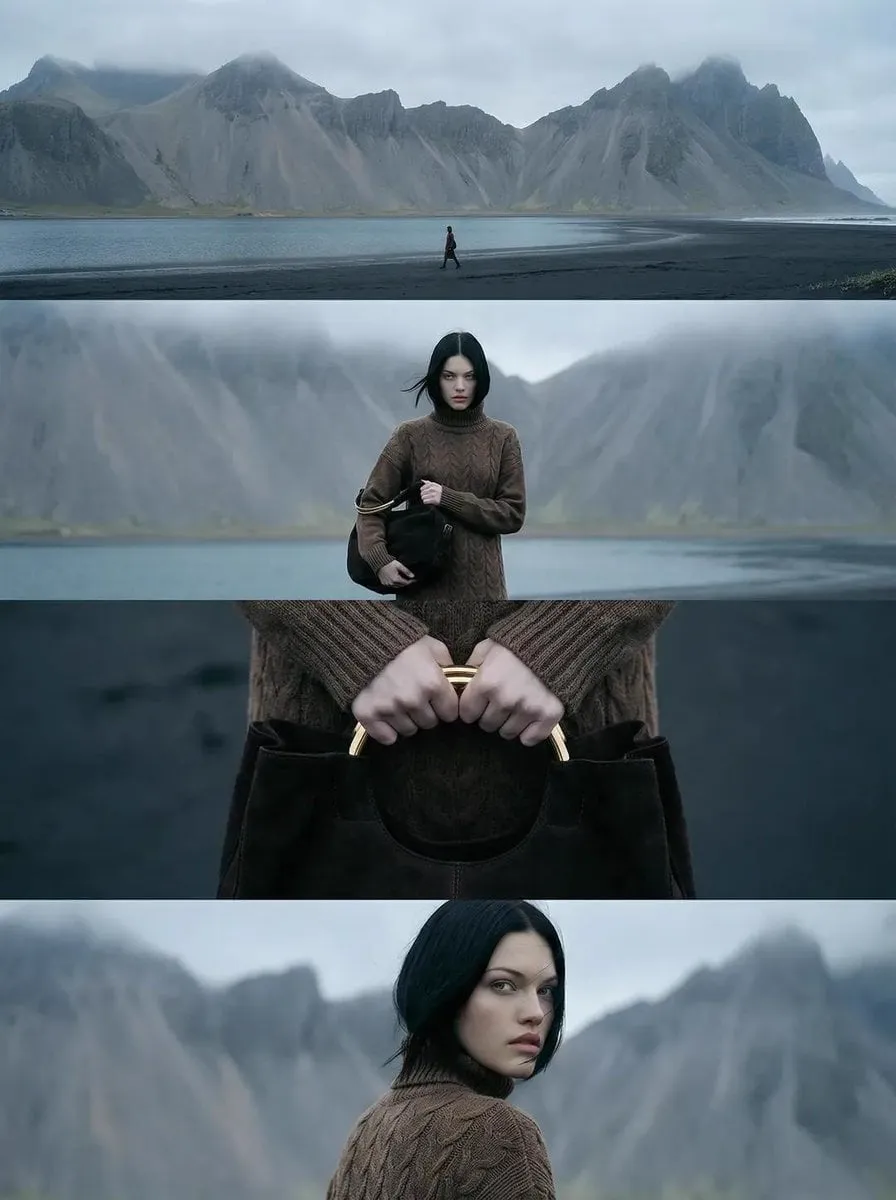
Text-to-video generators. You describe a scene and the model produces moving footage: camera motion, subject action, environment. These are strongest for B-roll, abstract sequences, mood pieces, and concept shots you could never practically film. They are weakest at precise choreography and at anything requiring a specific person's likeness without additional setup.
Image-to-video animators. You supply a still — a photo, an illustration, a product shot, a character design — and the system animates it with a described motion or camera move. This category is quietly the most useful for brand work, because it lets you keep visual consistency while adding motion. If you already have a library of stills, this is your highest-leverage tool.
Template and caption pipelines. These take raw footage and handle the unglamorous layer: auto-captioning, beat-synced cuts, reframing to 9:16, safe-zone-aware text placement, hook overlays. They do not generate new footage. They remove the two hours of mechanical work that surround it. For creators who shoot real footage, this category may deliver more return than any generator.
Director-style agent systems. The newest and most interesting group. Instead of producing a single clip from a single prompt, these take a higher-level brief and orchestrate multiple steps: planning shots, generating or sourcing assets, assembling sequences, layering audio, keeping characters consistent across shots. You act as the creative director; the system handles production logistics.
Choosing well means being honest about which part of your current process hurts most. If your pain is "I have no footage and no way to shoot it," you need generator categories one and two. If your pain is "I have footage and no time to cut it," you mainly need category three. If your pain is "I need a coherent 45-second narrative with recurring characters," you want category four.
Vertical-first thinking: designing for 9:16 from the first prompt
The single most common mistake with generative video for short-form is generating in the wrong aspect ratio and cropping later. Vertical is not a crop of horizontal — it is a different compositional language.
In a 9:16 frame:
- The subject should fill roughly the middle 60 percent of the height, with headroom for overlays at the top and captions at the bottom.
- Text safe zones are real. Platform interfaces cover the lower portion of the screen with captions, usernames, and interaction buttons. Put nothing important there.
- Motion reads differently. A slow horizontal pan that looks cinematic in widescreen can look like a nauseating drift in vertical. Push in and pull out tend to read better.
- Close framing wins. In a full-screen vertical feed, a medium shot becomes a wide shot. Generate tighter than instinct suggests: faces, hands, products, textures.
- The first 0.5 seconds must carry information. There is no establishing shot in short-form; the scroll decision happens before a wide shot can do any work.
Practical rule: write your prompt with the aspect ratio baked into the description, not left to a setting. If you describe "an overhead shot of a kitchen counter with a slow push-in on a knife," the model has compositional instructions. If you describe "a kitchen," you get a lottery result and you'll be cropping it anyway.
Also decide your text strategy before generation. Text on generated video is usually a mistake — models render lettering poorly and inconsistently. Generate the visual, then overlay typography in the edit. This is the one place where AI output should be treated as raw material rather than a finished asset.
A repeatable prompt-to-post workflow
Here is a workflow that holds up whether you generate everything or mix generated footage with filmed clips. Budget roughly 40 to 70 minutes for the first pass on a new format, and 15 to 25 minutes once the format is established.
Step 1 — Write the hook as a single sentence, out loud. Not "a video about coffee brewing" but "the reason your pour-over tastes sour." The hook determines the visual. If you cannot say the hook in one sentence, the video is not ready to generate.
Step 2 — Break the video into 3 to 6 beats. Each beat is one shot or one visual idea, lasting 2 to 6 seconds. Six beats at 5 seconds each is a 30-second video. Write each beat as its own prompt line. Long single prompts produce drifting, incoherent output; short beat prompts produce controllable sequences.
Step 3 — Generate the beats, not the video. Generate two or three variants per beat and keep the strongest. Treat this like shooting coverage. Reject anything where hands are malformed, faces morph mid-shot, or the motion contradicts the beat's purpose. Do not try to rescue a bad generation with editing.
Step 4 — Lock the vertical reframe before you fall in love with a clip. Check every selected clip in a 9:16 preview with your caption style applied. Composition that looked great in a neutral preview can collapse once overlays claim the top and bottom bands.
Step 5 — Cut to a beat grid. Place clips on a 2-second grid first, then adjust. Short-form pacing is rhythm, and rhythm is easier to feel against a grid you can then break deliberately. Cut on motion: if a subject moves toward frame-right, cut to the next clip as the movement peaks.
Step 6 — Add sound before you add polish. Choose a track, mark the drop, and align your strongest visual beat to it. Generated video has no inherent rhythm; the audio track supplies it. Almost every "this feels flat" problem in AI-generated short-form is actually an audio-alignment problem.
Step 7 — Caption and overlay. Auto-generate captions, then correct them by hand. Names, numbers, and domain terms are where automatic transcription fails, and those are exactly the words viewers care about. Style captions for legibility at thumb size: high contrast, one or two lines max, positioned inside the safe zone.
Step 8 — Run the rejection pass. Watch the finished clip on a phone, with sound off, at arm's length. If you cannot follow it muted, add on-screen text. Then watch it once at 2x speed. Anything that feels slow at 2x should be cut without debate.
Where AI generation still breaks, and what to do about it
Honest limitations matter more than marketing claims. These are the failure modes you will hit, roughly in order of frequency.
Hands and fine manipulation. Objects held, poured, folded, or manipulated by hands remain the weakest area in most generative models. Workaround: frame hands partially out of shot, use wider shots where hands are small, or cut away before the manipulation completes. Cutting before completion is a legitimate editorial choice, not a cheat.
Text inside the frame. Signage, labels, packaging, and screen content will often render as plausible-looking nonsense. Workaround: generate the scene without legible text and composite real text in the editor, or compose shots where text is out of focus in the background.
Character consistency across shots. Without deliberate control, a character's face, hair, and clothing drift between generations. Workarounds: keep a locked reference image and use image-to-video for every shot featuring that character; reduce the number of distinct characters per video; shoot characters from angles where defining features are less exposed to drift; or embrace the drift by making each shot a distinct visual style.
Motion that contradicts the brief. A prompt asking for a slow push-in may produce a static shot with slight wobble. Workaround: describe the motion as the subject's action rather than the camera's, or specify speed explicitly with comparative language ("slowly, over several seconds").
Over-smooth, plastic texture. Some models produce footage that reads as slightly unreal — too clean, too even. Workaround: add texture language to prompts (grain, natural light, handheld feel), or add a subtle grain and halation layer in post to unify generated and filmed material.
Continuity and physics. Liquids, cloth, and complex intersections behave unpredictably. Workaround: keep generated shots short, cut away from physics problems, and use filmed footage for any shot where physical realism is the point.
A useful mental model: treat generative video the way a documentary editor treats archive footage. You do not get to direct what happened. You choose which fragments to use and what story they tell together.
Director-style automation: when it is worth it
The most substantial leap in this space is not better single clips — it is systems that accept a brief and return an assembled sequence. These director-style workflows typically handle four things a single-clip generator cannot.
Shot planning from intent. Given "a 40-second explainer about why indoor plants die in winter," the system proposes a shot list: establishing interior, close on a drooping leaf, hands adjusting a blind, a thermometer, a resolved final frame. Shot planning is the part most creators underrate; a good shot list is most of the creative work.
Cross-shot consistency. Character references, colour treatment, and framing logic are held constant across shots so the resulting sequence reads as one video rather than a mood board.
Audio integration. Narration, music bed, and sound effects layered against the visual rhythm. Generated video is silent by default, and silence is why so much AI short-form feels unfinished. An integrated audio layer is a disproportionate quality multiplier.
Assembly and pacing. Sequencing, transitions, and duration control, delivered as an editable timeline rather than a locked file. Editability matters: the moment a system hands you a rendered file with no timeline, your ability to iterate collapses.
Where director-style systems are worth the setup cost: recurring formats, series content, brand explainers, anything where you will produce more than a handful of videos with a consistent look. Where they are not: one-off concepts, quick trend reactions, and anything where you genuinely enjoy the timeline. Automated planning is a force multiplier on volume, not a substitute for taste.
Building a comparison checklist before you commit to a tool
Tool choices age fast; decision criteria do not. Evaluate any AI video product against this list and you will avoid the expensive mistakes.
- Aspect ratio control. Can you generate natively in 9:16, and preview true safe zones?
- Clip duration. What is the maximum single-generation length, and does quality degrade as it grows?
- Image-to-video support. Can you drive motion from your own stills or reference frames? This determines whether you can maintain visual consistency.
- Timeline export. Do you get an editable project, or only a rendered file? Export flexibility is the difference between a tool and a slot machine.
- Character and style references. Can you lock a person, product, or look across multiple generations?
- Audio handling. Narration, music, and effects — integrated or bolted on afterward?
- Commercial usage terms. What are you actually licensed to publish, and on which platforms?
- Iteration speed. How long from prompt to usable variant, and can you queue multiple variants without babysitting?
- Cost structure transparency. Are you paying per generation, per minute, per seat, or all three simultaneously? Model your real monthly volume before committing.
- Learning curve. Can a non-editor produce something publishable in the first session, or does it demand a specialist?
Score each tool on those ten dimensions against your actual posting schedule. A tool that excels at cinematic quality but requires a specialist editor is the wrong choice for a solo creator posting daily, and the right choice for a production team running brand campaigns.
Reviewing AI output before it reaches an audience
Generative speed creates a new failure mode: publishing something you never really watched. Build a review pass into the workflow as a fixed step, not an afterthought.
Watch it once with full attention, sound on. Look for continuity breaks, malformed details, and moments where motion contradicts intent. Watch on the smallest screen you own — thumb-size viewing is unforgiving about clarity.
Check for accidental brand or IP residue. Generated frames occasionally contain recognizable logos, signage fragments, or design elements that closely echo existing brands or characters. If something looks like a real trademark, regenerate it. This is a legal exposure question, not an aesthetic one.
Verify every factual claim. AI-generated visuals invite confident narration. If your script says a product reduces waste by a specific percentage, that number needs a real source. Generated visuals do not make generated claims acceptable.
Confirm your disclosure practice. Be aware of platform and jurisdictional expectations about synthetic media disclosure, and be consistent about labelling. Consistency is easier to maintain than case-by-case judgement.
Test the hook separately. Show the first two seconds to someone unfamiliar with the topic and ask what they think it is about. If they cannot answer, the hook has failed regardless of what happens later.
Keep a recovery plan. Preserve your generation prompts and variant files. When a clip performs well, you want to regenerate a sequel in the same visual language, and when it performs badly you want to know precisely what you tried last time.
Putting it together: a sustainable weekly rhythm
The real advantage of generative tooling is not that it makes one video cheaper. It is that it makes a different production cadence economically viable.
A workable structure for a solo creator:
- One planning block per week. Write ten hooks, pick five, break each into 3 to 6 beats. This is the only step that requires uninterrupted creative attention.
- One generation block. Batch all beat prompts across all five videos in a single session. Batch generation is dramatically more efficient than generating per video, because you are already in the prompt-writing headspace and you can keep one reference set loaded.
- One assembly block. Cut all five videos to their beat grids, then add audio, then captions. Doing the same task five times in a row is faster than switching tasks five times.
- One review block. Run the full review pass on all finished clips, then schedule them out.
- A rotating experimentation slot. One video per week should test something you do not know the answer to: a new framing style, a different pacing grid, an unfamiliar audio treatment. Without deliberate experimentation, a workflow optimises itself into staleness.
That rhythm turns short-form production from a daily emergency into a weekly system, which is the only version of this that survives contact with a real calendar.
Frequently asked questions
Do I need any editing skill to use AI video generators?
You need editorial judgement more than technical skill. Choosing which generated variants work, cutting on motion, and aligning visuals to audio are taste problems, not software problems. Familiarity with a basic editor still helps enormously, because text overlays and captions are almost always better done after generation.
Can AI-generated video match footage I shoot myself?
For abstract, atmospheric, and concept shots, yes — often closely enough that viewers will not distinguish them. For anything involving hands doing precise work, consistent human characters across many shots, or physical realism like liquid behaviour, filmed footage still wins. The strongest results come from mixing both.
How long should a generated clip be for short-form platforms?
Keep individual generations short — 2 to 6 seconds is the sweet spot for control and quality. Assemble those into a finished piece of 20 to 45 seconds. Longer single generations tend to lose coherence and are harder to cut around when something drifts.
What is the most common reason AI short-form videos flop?
Weak hooks and missing audio rhythm, in that order. Production quality rarely causes a flop; a first two seconds with no clear promise and a visual sequence that does not lock to its music track will kill an otherwise well-made video.
Should I generate in vertical or horizontal?
Vertical, from the first prompt, for any short-form platform. Generate horizontal only when you specifically intend to publish the same material in a landscape format elsewhere, and treat the vertical version as a separate composition rather than a crop.
How do I keep a character consistent across a series?
Lock a single reference image and drive every shot featuring that character through image-to-video animation rather than text-to-video generation. Reduce the number of distinct characters per video, and avoid extreme close-ups on faces unless you are prepared to generate many variants and select carefully.
Is it worth using a director-style automated system for a small account?
It becomes worth it when you are producing a recurring format at volume — roughly three or more videos a week with a consistent look. Below that, individual generators plus a light edit will usually get you there faster and with less setup.
