

Why the First Three Seconds Decide Everything
Every short-form feed runs the same silent test. If a viewer stops scrolling, the video gets shown to more people. If they swipe away, distribution collapses. That decision happens almost entirely in the opening moments, before your story has a chance to explain itself. A hook is not a trick or a gimmick — it is a compressed promise. The viewer needs to understand what they will get and why it matters before their thumb makes the call for them.
Generative video has changed the economics of that opening moment. Shots that once required a crew, a location permit, and a lighting rig can now be produced from a text prompt in a browser tab. Tools like Sora, Runway, Kling, Luma Dream Machine, Pika, and Veo can generate believable faces, weather, camera moves, and product shots on demand. The bottleneck has moved. The question is no longer "can I shoot this?" It is "can I describe it precisely enough, and can I cut fast enough to test several versions?"
That shift rewards a specific skill set: writing tight opening sentences, translating them into visual instructions, and iterating on small variants instead of rebuilding everything. This guide walks through that skill set as a practical workflow you can reuse for any short-form channel.
The Anatomy of an AI Hook
Before touching a generator, break the hook into three layers. Most weak openings fail at one of them, and knowing which layer is broken saves hours of regeneration.
The visual anchor
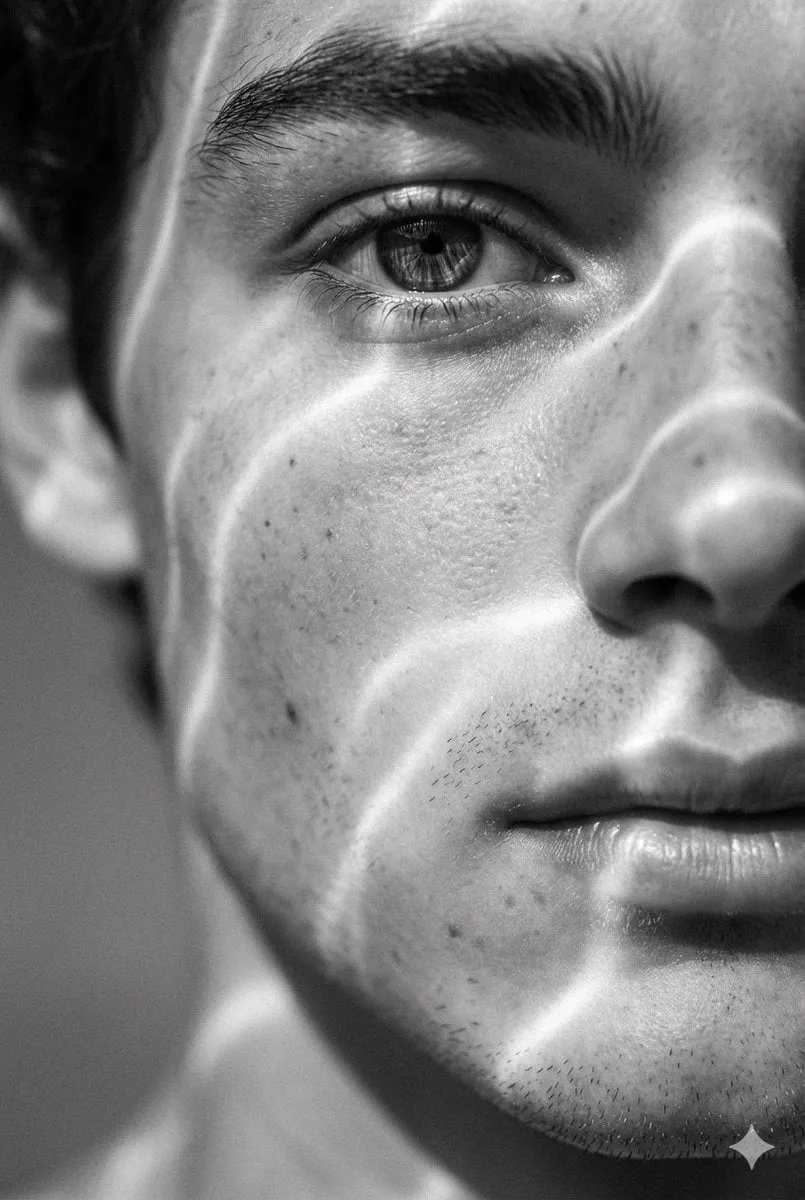
The anchor is the single element the eye locks onto in frame one: a face mid-expression, a strange object, an unexpected scale relationship, an extreme close-up of texture. If a viewer screenshots your first frame, the anchor should still be interesting as a still image. Generated footage often looks impressive in motion but thin as a still — a sign the anchor was never designed, only generated.
The motion promise
Motion signals that something is about to happen. A slow push-in, a hand entering frame, a door opening, a liquid pouring, a subject turning toward camera. Motion is what converts a pretty image into a reason to keep watching. Crucially, the promise must pay off within the video. A dramatic camera lunge into a room that never reveals anything trains viewers to distrust your openings.
The audio jolt
Sound reaches the viewer faster than conscious visual processing. A sharp inhale, a needle drop, an abrupt silence after noise, a single clean word — these create a physical reaction. When audio and image land on the same beat, retention curves flatten noticeably. When they arrive a half-second apart, the hook feels amateurish even if the visuals are excellent.
A Hook-First Production Workflow
The most common production mistake is building a video and then looking for a hook inside it. Reverse the order. Design the opening as its own deliverable, then build the rest of the video around it.
Step 1: Write the hook line before the story
Compose one sentence that a stranger would repeat to a friend. If you cannot write it in under fifteen words, the idea is not yet sharp. Keep a running file of hook lines and mark which ones survived contact with an audience; patterns emerge quickly and they are more useful than any general advice about "being engaging."
Step 2: Storyboard the opening as a still
Describe the first frame in concrete nouns: subject, age range, wardrobe, environment, time of day, lens character, dominant color. Generate three to five stills before generating any motion. Stills are cheap and fast; discovering a bad composition after a video render wastes far more time. Choose the still that reads clearly even at thumbnail size on a phone.
Step 3: Generate short, controlled clips
Treat each shot as a small unit — three to six seconds. Long generations drift, mutate faces, and invent details you did not ask for. Short clips keep the subject consistent and give you more usable coverage per attempt. Generate two or three takes per shot and select on framing and motion clarity rather than realism alone.
Step 4: Assemble to the beat, then trim to the frame
Place the hook, the payoff, and the close on the timeline first. Fill the middle last. Then trim aggressively: remove the first three frames of the hook clip, because generators often ease into motion and the true start of action is a few frames later. That tiny trim is frequently the difference between a hook that lands and one that feels soft.
Prompt Craft: Getting the Frame You Imagined
A prompt is a shot list written in the present tense. Vague prompts produce generic footage that looks like everyone else's generic footage. Specific prompts produce footage with a point of view.
Build prompts from five slots
Use a consistent order so you can debug one slot at a time: subject and action, camera and lens, light and time, environment and texture, mood and grade. For example: "A ceramicist lifts a wet bowl from a wheel, hands in frame, 50mm lens at chest height, cool morning window light from the left, dust motes visible, muted teal and clay tones." Every slot is doing work. Nothing is decorative.
Prefer physical description over emotional adjectives
"Sad" gives a model almost nothing. "Shoulders lowered, gaze down and to the right, breath visible in cold air" gives it everything. When you find yourself writing adjectives about feelings, stop and translate them into posture, gaze, distance, and light.
Lock continuity with a reusable style block
Append the same style block — grade, grain, aspect ratio, lens character — to every prompt in a video. This is the cheapest way to make multi-shot AI footage feel like one piece rather than a slideshow of unrelated clips. Keep the block short; long style blocks start competing with the shot description.
Camera, Light, and Motion in Practice
Camera language is the most underused hook tool in AI video. Most creators generate a static medium shot because it is the safest output. Instead, choose a camera move that implies meaning: a slow dolly in for revelation, a handheld follow for urgency, a locked-off symmetrical frame for comedy or unease, a whip pan for transition energy.
Lighting does more for perceived production value than resolution. A single motivated source — window, lamp, screen glow, sunset — reads as cinematic. Flat even illumination reads as a stock asset, which is exactly the impression that gets scrolled past. Ask for direction and contrast explicitly: "single warm source from frame left, deep shadow on the right side of the face."
Motion blur and imperfect movement are features, not flaws. Perfectly smooth generated motion can feel synthetic and slightly hypnotic in a bad way. A little handheld imperfection, a subject who slightly over-rotates, or a focus pull that arrives late makes footage feel observed rather than computed.
Audio and Voice: The Half of the Hook People Forget
Many creators spend hours on visuals and then drop in a default music track. That inverts the priority. In short-form video, audio is frequently what makes someone stop.
A practical approach is to build an audio bed with three elements: a texture layer (room tone, crowd, wind, machine hum), a rhythmic layer (music, pulse, percussion), and a human layer (voice, breath, laugh). The human layer usually carries the hook. Even a single syllable — a sharp inhale before a reveal — outperforms an elaborate soundtrack because it signals a real person is present.
Synthesized voice works best when it is treated as a performance rather than a narration. Vary pace, insert pauses, and cut before the sentence resolves. If you are using voice cloning or text-to-speech tools such as ElevenLabs or similar, generate three takes with different emotional directions and pick the one with the most edge. Clean, neutral delivery is safe and forgettable.
Always check the mix on a phone speaker. Bass-heavy tracks vanish on small speakers, and a hook that relied on a low thud disappears with it. If the hook still works on a laptop speaker at low volume, it will work almost anywhere.
Building a Testing Loop That Actually Teaches You Something
Hooks are an empirical problem. Taste helps, but data decides. Set up a loop where each test answers one question.
Test one variable at a time
Change either the first frame, the first spoken word, or the first musical beat — never all three. If you change everything at once and a version performs better, you learn nothing you can reuse. Keep a simple log: variant, variable changed, retention at three seconds, retention at completion.
Read the right metrics
Three-second retention tells you whether the hook worked. Completion rate tells you whether the promise was honored. Shares tell you whether the hook was worth repeating to someone else. A high three-second retention with a weak completion rate almost always means an over-promised opening — dramatic tension with no payoff.
Retire hooks deliberately
When a hook format works, run it three or four more times with different subjects, then move on. Repetition builds recognition, and recognition eventually becomes fatigue. Keep a rotation of three to five active formats so your channel does not become a single joke told repeatedly.
Mistakes That Quietly Kill AI Hooks
Starting with a logo or title card. Nobody has agreed to watch yet. Earn the first three seconds before you spend them on branding.
Explaining before showing. Setup sentences like "In this video I'm going to talk about..." give the viewer permission to leave. Remove them entirely.
Chasing realism instead of clarity. A slightly stylized shot with a clear subject beats a photorealistic shot with three competing focal points.
Ignoring aspect ratio and safe zones. Generate in vertical when the destination is vertical. Cropping a wide shot to vertical usually destroys the composition and pushes the subject into interface clutter.
Over-generating before choosing. Twenty mediocre variants are not better than three considered ones. Decide on the still, then commit.
Letting generation artifacts survive into the hook. Hands, text, and reflections still break down. If a flaw lands in the first frame, regenerate rather than hope nobody notices. They notice.
Choosing Tools Without Getting Trapped
Use selection criteria instead of chasing the newest release. Ask four questions: Does it give me reliable control over the first frame? Can I keep a subject consistent across several shots? How long does a usable take take to produce? And can I export at the aspect ratio and codec I need without a second tool?
A workable stack is usually three or four tools, not one. A still-image generator for composition and style exploration, a video generator for motion, a voice or audio tool, and a timeline editor for assembly and trimming. If a tool only helps with the middle of the video, it is optional. If it helps with the first three seconds, it deserves a place in your workflow.
Frequently Asked Questions
How long should an AI-generated hook clip be?
Between two and four seconds of usable motion is plenty. The hook's job is to trigger a decision, not to tell the story. Anything past five seconds is usually the beginning of the body, not the hook.
Do I need a real person on camera?
No, but you need a human signal: a voice, a hand, a reaction, or an implied point of view. Fully dehumanized footage with no voice and no gesture struggles to hold attention regardless of how good it looks.
What if my generated first frame looks great but the video flops?
Check the audio layer first, then the payoff. A strong first frame with a slow second shot is the most common cause of rapid drop-off. Cut the second shot in half and see what changes.
How many hook variants should I make per video?
Two or three. One is a guess, five is a project. Generate alternate openings while the project is fresh, publish one, and keep the others in a folder for a future post on the same theme.
Can I reuse the same hook line with different visuals?
Yes, and it is one of the most efficient tests available. If the line performs with one visual and fails with another, you have learned that the visual anchor, not the wording, was doing the work.
Is it worth scripting before generating?
Always. A prompt written without a script becomes footage looking for a purpose. Write the opening line, then describe the frame that makes that line land, then generate.
